

P0234 on 2024-2025 Chevrolet Trax: Engine Overboost Causes and Fixes
On a 2024-2025 Trax, code P0234 almost always points to a problem with the turbocharger's boost control system, not the turbo itself. The most likely causes are a binding wastegate actuator or a faulty wastegate regulator solenoid, often costing between $50 and $250 for the part. This issue is common across platform mates like the Buick Envista, Encore GX, and Chevy Trailblazer.
- P0234 on a 2024-2025 Trax indicates the turbo is creating excessive boost pressure.
- Do not immediately assume the turbocharger has failed. The most common causes are a sticking wastegate actuator or a faulty control solenoid, as confirmed by GM's own service bulletins.
- Diagnosis should begin with checking the movement of the wastegate arm and testing the control solenoid, especially in cold weather.
- This code often appears with P0299 (Underboost), which points to an intermittent problem in the same boost control system.
- Addressing this code promptly is important to prevent potential engine damage from the high-pressure condition.
What's Unique About the 2024-2025 Chevrolet TRAX
The 2024-2025 Trax uses a small 1.2L 3-cylinder turbocharged engine (RPO: LBP) shared with the Buick Envista. Similar GM engines are used in the Buick Encore GX and Chevy Trailblazer, which are known to suffer from the same P0234 issues. For this new generation and similar GM engines, the manufacturer has issued Technical Service Bulletins (TSBs) that point directly to specific failures causing the P0234 code. These bulletins highlight issues with the turbo wastegate actuator binding or the control solenoid freezing in cold weather, which can lead to an incorrect diagnosis of a complete turbocharger failure.
Diagnostic Flowchart
Tap your situation to follow the diagnostic path that matches what you're seeing on this vehicle.
Symptoms You May Notice
- Check Engine Light is on
- Reduced engine power or "limp mode"
- Unusual whooshing, hissing, or rattling noises from the engine bay
- Poor acceleration
- Engine running rough or misfiring
- Loud noises from the engine
- Replacing the entire turbocharger assembly. The provided TSBs strongly indicate that the issue is far more likely to be a less expensive, external component like the wastegate actuator or control solenoid.
- Replacing the TCV or turbo without performing the "Intake System Learned Values Reset" with a GDS2 scan tool. TSB #PIP5892B warns that failing to perform this reset can cause the P0234 code to return immediately after the repair.
Most Likely Causes
- Sticking/Binding Turbocharger Wastegate Actuator 🔴 High Probability GM has identified this as a specific issue on 2024 models in TSB #PIP6058A. The actuator arm can fail to move freely, causing it to get stuck in a position that creates too much boost. This is a well-documented problem on the platform.
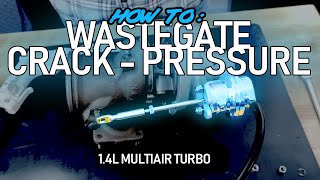
How to confirm: With the engine off and cool, disconnect the actuator rod from the wastegate arm. Attempt to move the arm by hand; it should move smoothly without binding. Also, apply vacuum to the actuator with a hand pump 🎬 See how to check and adjust wastegate crack-pressure. to see if the rod moves correctly and holds vacuum. A bent actuator rod can also cause this issue.
Typical fix: If the actuator is binding or fails the vacuum test, it needs to be replaced. In some cases, the wastegate arm on the turbo itself may be the source of the binding, which is a more complex repair.
Est. part cost: $100-$250 - Faulty Turbocharger Wastegate Regulator Solenoid Valve (TCV) 🔴 High Probability TSB #PIP5812C notes that oil and moisture can freeze inside this solenoid in cold weather, causing it to malfunction. It can also fail electronically or become clogged with hardened deposits from oil, impeding plunger movement.
How to confirm: Inspect the solenoid and its vacuum lines for moisture or blockages. TSB #PIP5812C provides a specific test: remove the valve, turn it upside down to drain, and blow 15-20 PSI of air through its ports to check for free movement. A scan tool can also command the solenoid on and off while checking for an audible click.
Typical fix: Replacement of the wastegate regulator solenoid valve. Per TSB #PIP5892B, after replacing this part, an "Intake System Learned Values Reset" must be performed with a GM-specific scan tool (GDS2) to prevent the code from returning.
Est. part cost: $40-$150 - Damaged or Leaking Vacuum/Boost Hoses 🟡 Medium Probability Hoses connected to the turbo control system can become brittle from heat, leading to cracks, or they can become disconnected or blocked. This can prevent the wastegate from being controlled correctly.
How to confirm: Visually and physically inspect all vacuum lines running between the intake manifold, the wastegate solenoid, and the wastegate actuator. Check for cracks, loose connections, or blockages. A smoke test can help identify hard-to-see leaks.
Typical fix: Replace the damaged section of hose.
Est. part cost: $10-$50
Rare But Worth Checking
- Faulty Boost Pressure (MAP) Sensor: If the sensor that measures boost pressure is sending incorrect data to the ECM, it can falsely trigger an overboost code. This should be considered if the wastegate and solenoid are confirmed to be working properly. This may also set a P0236 code.
- Internal Turbocharger Failure: While possible, this is the least likely cause. TSB #PIP5495N specifically warns against replacing the turbocharger before thoroughly diagnosing the external control components like the actuator and solenoid.
- Restricted Exhaust: A clogged catalytic converter or damaged exhaust pipe can cause a backup of pressure that may contribute to an overboost condition. This would typically be accompanied by other symptoms like a severe loss of power and potentially other codes.
Diagnosis Steps
- Read the fault codes with an OBD-II scanner and confirm P0234 is present. Note any other codes, especially P0299 or P0236.
- Perform a thorough visual inspection of the turbocharger area. Look for disconnected, cracked, or blocked vacuum lines connected to the wastegate actuator and control solenoid.
- With the engine cool, manually check the movement of the wastegate actuator arm to ensure it moves freely without sticking or binding, as suggested by TSB #PIP6058A.
- Inspect the Turbocharger Wastegate Regulator Solenoid Valve (TCV) for signs of moisture or oil contamination, particularly in cold climates (per TSB #PIP5812C).
- Test the TCV using the air-flow method described in TSB #PIP5812C or use a scan tool to command it on and off, listening for a click. Verify its function with a vacuum pump and gauge.
- Use a scan tool to monitor live data from the boost pressure (MAP) sensor. Check its reading with the key on/engine off, and observe its behavior during a controlled test drive to see if it spikes erratically.
- If a component like the TCV or turbocharger is replaced, perform the "Intake System Learned Values Reset" using a GM-specific scan tool to ensure the ECM properly controls the new part.
- If all external components test correctly, the final step would be to inspect the turbocharger itself for internal mechanical faults.
Parts You'll Likely Need
- Turbocharger Wastegate Regulator Solenoid Valve
(OEM #55599331)— This solenoid is a common failure point, especially in cold climates where moisture can freeze inside it, causing it to stick. This is a known issue per TSB #PIP5812C.
Trusted brands: ACDelco, Dorman
OEM price range: $70-$150
Aftermarket price range: $40-$90 - Turbocharger Wastegate Actuator
(OEM #55490967)— TSB #PIP6058A specifically calls out a binding wastegate as a cause for this code on the 2024 Trax. The actuator controls the wastegate and is often the point of failure.
Trusted brands: ACDelco
OEM price range: $100-$250
Aftermarket price range: $80-$180
Related Codes That Often Appear With This One
- P0299 — This code means "Turbocharger Underboost." All three cited TSBs (#PIP6058A, #PIP5812C, #PIP5495N) mention P0234 and P0299 together. A component like a sticking wastegate or faulty solenoid can cause both conditions at different times: if it's stuck closed it causes overboost (P0234), and if it's stuck open it causes underboost (P0299).
- P0236 — This code for "Turbocharger Boost Sensor 'A' Circuit Range/Performance" can indicate a problem with the sensor itself or its wiring, which can be a root cause for a false P0234 reading.
Technical Service Bulletins (TSBs) & Recalls
- PIP6058A: Communicates the possibility of DTC P0234 setting due to wastegate binding.
- PIP5812C: Mentions P0234 setting due to oil/moisture condensate freezing in the Turbocharger Wastegate Regulator Solenoid Valve (TCV) in cold weather.
- PIP5495N: Provides a list of causes of misdiagnosis leading to returned Turbochargers with no trouble found for P0234/P0299 codes.
- PIP5892B: Instructs technicians to perform an 'Intake System Learned Values Reset' after replacing the turbo or TCV to prevent the code from returning.
Platform-Specific Known Issues
- TSB #PIP6058A: Specifically for 2024 models, this bulletin warns that DTC P0234 and P0299 can be set due to a binding turbocharger wastegate.
- TSB #PIP5812C: This bulletin notes that on similar GM engines, P0234 and P0299 can occur when oil/moisture condensate freezes in the Turbocharger Wastegate Regulator Solenoid Valve (TCV) during cold weather. It provides a specific procedure for cleaning and testing the valve.
- TSB #PIP5495N: An older bulletin for a previous generation, but its warning is highly relevant: it cautions against misdiagnosing the problem and replacing the entire turbocharger when the fault is often an external component.
- TSB #PIP5892B: This bulletin is critical for post-repair success. It states that after replacing the turbocharger or wastegate solenoid valve, the 'Intake System Learned Values Reset' procedure must be performed with a dealer-level scan tool to prevent P0234 from reoccurring.
Mechanic-Grade Diagnostic Values
- MAP (Boost) Sensor Voltage — expected: Key On, Engine Off: ~4.5-4.8V at sea level, decreasing with altitude. Engine at idle: ~1.0-1.5V.. Failure: Voltage is fixed and does not change with engine RPM/load, or is outside the expected range (e.g., 0V or 5V constantly).
- Turbocharger Wastegate Regulator Solenoid Coil Resistance — expected: ~9-14 Ohms. Failure: Resistance is infinite (open circuit) or near zero (short circuit).
Hidden / Shadow Codes Worth Checking
- P0234 5A: The '5A' is a GM-specific symptom byte indicating a 'Signal Plausibility Failure'. This means the ECM is seeing a boost pressure reading that is not logical or possible under the current engine operating conditions, pointing towards a sensor or control system fault rather than just a simple over-limit condition. (see via GM GDS2 (Global Diagnostic System 2) or other high-end bidirectional scan tool with manufacturer-specific data.)
Scan Tool Commands That Help
- GDS2 (GM Dealer Tool): Intake System Learned Values Reset — Required after replacing the turbocharger or wastegate control solenoid to make the ECM relearn the characteristics of the new component, as stated in TSB #PIP5892B.
- GDS2 (GM Dealer Tool): Turbocharger Wastegate Solenoid Valve Control — This bidirectional test allows a technician to command the solenoid's duty cycle from 0-100% while monitoring the actual boost pressure to see if the solenoid and wastegate are responding correctly. This can isolate a faulty solenoid or a stuck wastegate.
- GDS2 (GM Dealer Tool): Turbocharger Learn — A procedure used after component replacement to allow the ECM to learn the physical travel limits and response rate of the wastegate actuator, ensuring precise boost control.
Wiring & Ground Locations
- G103 / G105 — Common GM engine ground locations, typically found on the cylinder head or engine block near the front of the engine.. The MAP sensor and wastegate solenoid rely on a clean ground connection to function. A corroded or loose ground at G103 or G105 can cause erratic signals, leading to incorrect readings and false P0234 codes.
- X125 — The main engine wiring harness-to-body wiring harness connector, often located near the firewall.. This is a critical junction for all engine sensor signals going to the various control modules. Corrosion or pin damage in this connector can disrupt the MAP sensor or wastegate solenoid circuits.
- MAP Sensor Connector (B101) — Plugged directly into the Manifold Absolute Pressure sensor on the intake manifold.. The 3-wire connector provides the sensor with a 5V reference, a ground, and returns the signal to the ECM. Damage to these wires or the connector itself will directly cause incorrect boost pressure readings.
Real Owner Repair Stories
- TrailblazerTalk.com forum user (2021 Chevrolet Trailblazer 1.3L (mechanically similar turbo system)) — Check engine light with codes P0234 and P0299, significant lack of power.
❌ Tried (didn't work) Dealer initially replaced the turbocharger wastegate regulator solenoid valve, but the codes returned.
✅ What actually fixed it The dealer replaced the entire turbocharger assembly. The root cause was determined to be a binding wastegate linkage internal to the turbocharger, which could not be serviced separately. This aligns with TSB #PIP6058A's mention of a binding wastegate. - Reddit r/MechanicAdvice user (2013 Chevrolet Cruze 1.4L (different engine, but common GM turbo issue)) — P0234 and P0299 codes present simultaneously, poor acceleration, unable to maintain highway speed.
❌ Tried (didn't work) Owner was considering replacing the turbocharger assembly as a first step.
✅ What actually fixed it Community diagnosis pointed to a sequence of checks: 1) Inspect all vacuum lines for leaks. 2) Test/replace the wastegate actuator solenoid. 3) Test the wastegate actuator itself. This approach follows the TSBs, starting with the cheapest and most common external components before condemning the expensive turbocharger.
OEM Part Supersession History
55599331→55599331— No supersession found. The original part number is still the current part number for the Turbocharger Wastegate Regulator Solenoid Valve.
Heads up: This part requires programming/special setup procedures after installation, as noted by GM.
Helpful Videos


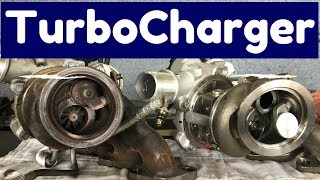
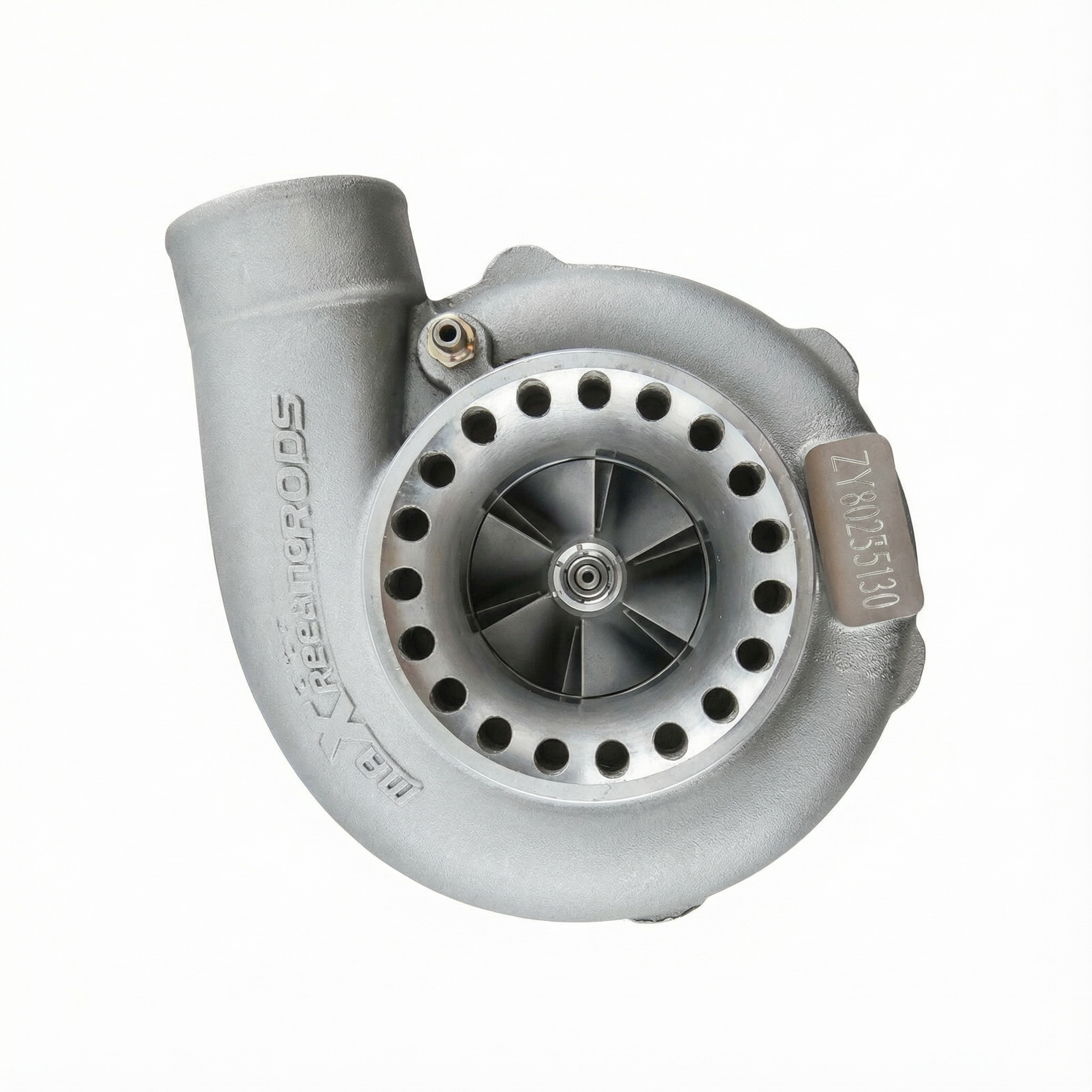
We Have This Part in Stock

The information in this article is provided for general reference and educational purposes only. Vehicle specifications, procedures, and part compatibility can vary by production date, trim level, and region. Always consult your vehicle's factory service manual and verify part numbers before purchasing or performing repairs. Safety-critical components such as airbags, seat belts, and braking systems should be installed by a qualified professional.
- Chevrolet TRAX:
- 🎬 Helpful Videos
- 🛍️ Shop This Part
- What's Unique About the 2024-2025 Chevrolet TRAX
- Diagnostic Flowchart
- Symptoms You May Notice
- Most Likely Causes
- Rare But Worth Checking
- Diagnosis Steps
- Parts You'll Likely Need
- Related Codes That Often Appear With This One
- Technical Service Bulletins (TSBs) & Recalls
- Platform-Specific Known Issues
- Mechanic-Grade Diagnostic Values
- Hidden / Shadow Codes Worth Checking
- Scan Tool Commands That Help
- Wiring & Ground Locations
- Real Owner Repair Stories
- OEM Part Supersession History
- 🎟️ Get 5% Off