

P0234 on 2021-2022 Chevrolet TRAX: Turbo Overboost Causes and Fixes
On a 2021-2022 Chevy Trax, P0234 means the turbo is creating too much boost. The most common cause, especially in cold climates, is the Turbocharger Wastegate Regulator Solenoid Valve freezing or sticking due to moisture, a known issue cited in GM TSB #PIP5812C. This is often a simple part to replace and costs around $40-$100.
- P0234 on a 2021-2022 Trax means the turbo is creating excessive pressure.
- If you live in a cold climate, the most likely cause is a frozen Turbocharger Wastegate Regulator Solenoid Valve (TCV), as documented by GM.
- Do not immediately assume the turbocharger has failed; the problem is almost always a less expensive, external control part.
- Check for a sticking wastegate actuator and inspect all related vacuum hoses for leaks.
- The vehicle will protect itself by entering a low-power 'limp mode,' but the issue should be fixed promptly to avoid engine damage.
What's Unique About the 2021-2022 Chevrolet TRAX
The 2021-2022 Trax uses the 1.4L LE2 turbo engine. For this specific vehicle and engine, GM has issued technical service bulletins (TSBs) that directly address code P0234, particularly in cold weather below 0°F / -18°C. The primary issue identified is oil and moisture freezing inside the Turbocharger Wastegate Regulator Solenoid Valve (TCV), causing it to stick. A related TSB, 17-NA-221, also points to ice accumulation in the Charge Air Cooler (CAC) which can cause similar symptoms and may require an ECM calibration update to alter transmission shift patterns in the cold to keep engine temperatures higher. This makes these cold-weather-related issues highly probable causes compared to other vehicles where P0234 might point to a wider range of issues.
🎬 Watch: Common causes and fixes for the P0234 overboost code.Diagnostic Flowchart
Tap your situation to follow the diagnostic path that matches what you're seeing on this vehicle.
Symptoms You May Notice
- Check Engine Light is on
- Reduced engine power (limp mode)
- Engine running rough or hesitating
- Unusual whining or whooshing sounds from the engine bay
- Hesitation on acceleration, especially in cold weather.
- Smoke from the tailpipe or a burning oil smell if crankcase pressure increases and causes oil leaks.
- Replacing the entire turbocharger assembly without first diagnosing the external control components like the wastegate solenoid (TCV) or actuator. GM specifically warns against this in service bulletins like PIP5495.
Most Likely Causes
- Frozen or Sticking Turbocharger Wastegate Regulator Solenoid Valve (TCV) 🔴 High Probability GM TSB #PIP5812C and #17-NA-221 specifically state that oil/moisture condensate can freeze inside the TCV during cold weather (below 0°F / -18°C), causing it to malfunction and trigger P0234. This is a well-documented issue for the LE2 engine.
How to confirm: The issue is most prevalent in freezing temperatures. TSB #PIP5812C suggests a diagnostic procedure: remove the valve, turn it upside down to drain any liquid, and use low-pressure shop air (15-20 PSI) to blow through the ports to check for blockages. A scan tool can also be used to command the solenoid and check its response.
Typical fix: Cleaning or replacing the Turbocharger Wastegate Regulator Solenoid Valve. GM also recommends a thermal wrap for the TCV in some cases as part of the fix outlined in TSB 17-NA-221.
Est. part cost: $40-$100 - Sticking or Binding Wastegate Actuator or Linkage 🟡 Medium Probability The wastegate assembly on these 1.4L turbo engines is a common point of failure. The actuator rod or the wastegate valve itself can seize from carbon buildup or corrosion, preventing it from opening to relieve excess boost. Wear in the linkage can also cause excessive play, leading to improper control.
How to confirm: With the engine off and cool, disconnect the actuator rod from the wastegate arm. Attempt to move the arm by hand; it should move freely without binding. Apply vacuum to the actuator with a hand pump to verify it moves smoothly and holds vacuum.
Typical fix: If the actuator is binding, it may need to be replaced. Sometimes, the linkage can be cleaned and lubricated, but replacement is often necessary. If the internal wastegate flap is the issue, the entire turbocharger assembly may need replacement.
Est. part cost: $50-$150 - Leaking or Disconnected Vacuum/Boost Hoses ⚪ Low Probability The rubber and plastic hoses in the engine bay are exposed to heat and can become brittle, cracked, or disconnected over time, affecting the boost control system. This is a common issue on many turbocharged vehicles.
How to confirm: Visually inspect all vacuum lines connected to the turbocharger, wastegate actuator, and control solenoid for cracks, splits, or loose connections. A smoke test can help identify hard-to-see leaks.
Typical fix: Replace the damaged or leaking hose sections.
Est. part cost: $10-$50
Rare But Worth Checking
- Faulty Manifold Absolute Pressure (MAP) Sensor: The MAP sensor reports boost pressure to the ECM. If it sends an inaccurate, lower-than-actual reading, the ECM may not command the wastegate to open, causing an overboost condition. A faulty MAP sensor can also trigger codes like P0106.
- Restricted Exhaust System: A clogged catalytic converter can increase exhaust backpressure, preventing the wastegate from effectively controlling turbo speed, which may lead to overboost. This is often a symptom of another failure, like a turbo leaking oil into the exhaust.
- Failed Turbocharger: While possible, complete turbocharger failure is less common than issues with its external control components. Do not replace the turbo until all other causes have been ruled out, as advised by GM TSB #PIP5495N.
- Icing in Charge Air Cooler (CAC): TSB 17-NA-221 notes that in extreme cold, ice can build up inside the charge air cooler, restricting airflow. This can cause a variety of codes, including P0234. The fix may involve thawing the vehicle, replacing the CAC, and getting an ECM update.
Diagnosis Steps
- Scan the ECM for any other stored trouble codes. Address other codes first if present, especially P0299 or P2227.
- Check for Technical Service Bulletins (TSBs) related to P0234 for this vehicle, specifically #PIP5812C and #17-NA-221, which point to the TCV freezing in cold weather.
- Visually inspect all vacuum lines and hoses connected to the turbocharger, wastegate, and boost control solenoid for cracks, leaks, or loose connections.
- With the engine off, manually check the turbocharger wastegate actuator arm for free movement after disconnecting the actuator rod. It should not be seized or sticky.
- Using a capable scan tool, monitor the Manifold Absolute Pressure (MAP) sensor reading while driving. Compare the desired boost pressure with the actual boost pressure to confirm the overboost condition. A difference of more than 2-4 PSI can indicate a problem.
- Test the Turbocharger Wastegate Regulator Solenoid Valve (TCV) for proper operation. If cold weather is a factor, follow the TSB procedure of removing, draining, and blowing out the valve with low-pressure air.
- Apply vacuum to the wastegate actuator with a hand pump to ensure the rod moves smoothly and holds vacuum without leaking down.
- If all external components and wiring are confirmed to be working correctly, the issue may be with the turbocharger itself (internal wastegate) or a restriction in the exhaust, but this should be the last resort.
Parts You'll Likely Need
- Turbocharger Wastegate Regulator Solenoid Valve
(OEM #12684242)— This is the most cited cause in GM's own service bulletins for P0234 on this vehicle, especially in cold climates where it is prone to freezing.
Trusted brands: ACDelco, GM Genuine Parts
OEM price range: $60-$100
Aftermarket price range: $40-$70 - Turbocharger Wastegate Actuator — This component can seize or fail, preventing the wastegate from opening to regulate boost pressure. It's a common failure point on this engine platform.
Trusted brands: ACDelco, Dorman
OEM price range: $100-$150
Aftermarket price range: $50-$90
Related Codes That Often Appear With This One
- P0299 — This code indicates an underboost condition. Seeing both P0234 and P0299 suggests an intermittent or erratic problem with the boost control system, such as a sticking wastegate or faulty solenoid that sometimes fails closed (overboost) and sometimes fails open (underboost). Multiple TSBs confirm these codes often appear together.
- P2227 — This code for Barometric Pressure Sensor Performance can appear alongside P0234, especially in cold weather icing conditions as noted in TSB 17-NA-221. The ECM uses both sensors for boost calculations, so a fault in one system can affect the other.
Technical Service Bulletins (TSBs) & Recalls
- PIP5812C: Communicates the possibility of DTC P0234 setting due to oil/moisture condensate freezing in the Turbocharger Wastegate Regulator Solenoid Valve (TCV)
Platform-Specific Known Issues
- TSB #PIP5812C: Documents that oil and moisture can collect and freeze in the Turbocharger Wastegate Regulator Solenoid Valve (TCV) during cold weather, causing P0234. Provides a specific air-flow test to confirm if the valve is stuck.
- TSB #17-NA-221: Addresses poor engine performance in extreme cold, including P0234, caused by ice accumulation in the charge air cooler (CAC) and freezing of the TCV. It may recommend an ECM calibration update for 2021 models to change transmission shift patterns to keep engine temperatures higher, reducing the chance of icing.
- A Reddit user with a 2020 Trax reported getting P0234 along with P2227, highlighting the connection between the overboost condition and the barometric pressure sensor circuit, which is consistent with TSB 17-NA-221.
Mechanic-Grade Diagnostic Values
- Turbocharger Wastegate Regulator Solenoid Valve Coil Resistance — expected: 29-32 ohms. Failure: A reading significantly outside this range, or an open circuit, indicates a faulty solenoid coil.
- MAP Sensor Voltage (Key On, Engine Off) — expected: ~4.5 V at sea level. Failure: Voltage significantly different from the expected reading for your altitude indicates a sensor or wiring issue.
- MAP Sensor Voltage (Engine at Idle) — expected: ~1.0 - 1.5 V. Failure: Voltage that does not drop from the KOEO reading, or is significantly higher than 1.5V, suggests a vacuum leak or faulty sensor.
- Vacuum Supply to Wastegate Solenoid (at idle) — expected: -50 kPa (15 in Hg). Failure: If the vacuum reading is not steady or doesn't reach this level, the vacuum pump or its hoses may be faulty.
Scan Tool Commands That Help
- GDS2 (GM Global Diagnostic System): Turbocharger Boost Control Test — This is a specific diagnostic routine recommended by GM to be performed when P0234 or P0299 is set and no obvious physical faults (like boost leaks) are found. It actively tests the boost control system's response before condemning the turbocharger itself.
Wiring & Ground Locations
- G103 — Located on the cowl in the engine compartment, often near or above the brake booster.. This is a primary ground for the Engine Control Module (ECM). A poor or corroded connection here can cause a wide range of erratic sensor readings and communication issues, potentially affecting the MAP sensor's ground reference or the ECM's ability to control the wastegate solenoid correctly.
- MAP Sensor Connector — On the intake manifold, near the throttle body.. This 3-pin connector provides the MAP sensor with a 5V reference, ground, and returns the signal to the ECM. A poor connection, oil contamination, or damaged wiring here will cause incorrect boost pressure readings, directly leading to codes like P0234 or P0236.
Real Owner Repair Stories
- CruzeTalk Forum & YouTube (2015 Chevrolet Cruze 1.4L Turbo (LUV engine, a predecessor to the LE2 with similar turbo architecture)) — Intermittent low power, Check Engine Light with both P0299 (Underboost) and P0234 (Overboost) codes.
❌ Tried (didn't work) Initial diagnosis focused on external boost control components like the solenoid and actuator.
✅ What actually fixed it The internal turbine of the turbocharger was not spinning freely. Replacing the entire turbocharger assembly resolved both codes. This is a counterexample to the common advice that the turbo itself is rarely the cause.
"I Checked Everything" — The Actual Cause
- While more common for the P0299 (Underboost) code on this engine family, a critical and often-missed failure is an internal leak within the PCV system. A failed non-return check valve inside the intake manifold allows boost pressure to leak directly back into the turbo inlet. This creates a boost control loop issue that a standard smoke test of the charge pipes will not detect. If P0234 is intermittent and seen with P0299, and all external components test good, this internal leak should be investigated.
When the Usual Fixes Don't Work
- While the vast majority of P0234 cases on this platform are caused by external components like the wastegate solenoid, do not completely rule out the turbocharger itself. A documented case on a similar GM 1.4L engine showed that intermittent P0234 and P0299 codes were ultimately caused by a binding internal turbine, and the only fix was a full turbocharger replacement. This should be considered a last resort after all external control systems and potential leaks (including internal PCV leaks) have been thoroughly tested per GM bulletins.
OEM Part Supersession History
12684242→Unknown— The OEM part number for the Turbocharger Wastegate Regulator Solenoid Valve provided in Pass 2 (12684242) is correct, but other numbers like 55587751 are also listed for this application, suggesting possible revisions or alternative suppliers used by GM. Ensure the replacement part is verified by VIN for the specific vehicle.
Heads up: Using a solenoid with incorrect resistance, even if it fits, can cause continued issues. One source noted an aftermarket part with 28 ohms (vs OEM spec of ~32 ohms) caused problems.
Model Year Variations Within This Range
- 2021: TSB 17-NA-221, which addresses cold-weather issues including P0234, recommends a potential ECM calibration update for 2021 models. This update revises the transmission shift pattern to keep engine temperatures higher, reducing the likelihood of ice forming in the charge air cooler (CAC) and wastegate solenoid.
- 2021-2022: The 2021-2022 Trax uses the 1.4L LE2 engine (155 hp), an upgrade from the 1.4L LUV engine (138 hp) used in prior years. While the TSBs for cold weather issues apply to the LE2, it's a distinct engine from its predecessor.
Helpful Videos

Used OEM Parts in Stock
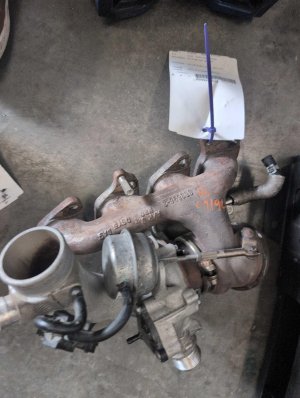
New Aftermarket Parts Available


The information in this article is provided for general reference and educational purposes only. Vehicle specifications, procedures, and part compatibility can vary by production date, trim level, and region. Always consult your vehicle's factory service manual and verify part numbers before purchasing or performing repairs. Safety-critical components such as airbags, seat belts, and braking systems should be installed by a qualified professional.
- Chevrolet TRAX:
- 🎬 Helpful Videos
- 🛍️ Shop This Part
- What's Unique About the 2021-2022 Chevrolet TRAX
- Diagnostic Flowchart
- Symptoms You May Notice
- Most Likely Causes
- Rare But Worth Checking
- Diagnosis Steps
- Parts You'll Likely Need
- Related Codes That Often Appear With This One
- Technical Service Bulletins (TSBs) & Recalls
- Platform-Specific Known Issues
- Mechanic-Grade Diagnostic Values
- Scan Tool Commands That Help
- Wiring & Ground Locations
- Real Owner Repair Stories
- "I Checked Everything" — The Actual Cause
- When the Usual Fixes Don't Work
- OEM Part Supersession History
- Model Year Variations Within This Range
- 🎟️ Get 5% Off