

P0234 on 2013-2020 Chevrolet Trax: Turbo Overboost Causes and Fixes
P0234 on a Chevy Trax indicates the turbocharger is creating too much pressure. This is often caused by a sticking wastegate control solenoid or a faulty wastegate actuator, not necessarily the turbo itself. Expect to spend $50-$150 on parts for a DIY repair.
- P0234 means the turbo is creating too much boost, which can damage your engine.
- Do not assume the turbocharger itself has failed. The most common causes are cheaper, external parts like the boost control solenoid or wastegate actuator.
- Thoroughly inspect all vacuum lines connected to the turbo control system for cracks or leaks, as this is a simple and common fix.
- If you live in a very cold climate, the problem could be related to ice forming in the intake system or control valves.
- This code is often seen with P0299 (Underboost), pointing to an intermittent fault in the same boost control system.
What's Unique About the 2013-2020 Chevrolet TRAX

The 1.4L turbo engine (RPO LUV) used in the first-generation Trax and its platform mates (Buick Encore, Chevy Sonic, Chevy Cruze) is known for issues within its boost control system. While P0234 means overboost, the more common code on this platform is P0299 🎬 Watch: A deep dive into the common P0299 underboost code. (Underboost). Both codes often point to the same group of failure-prone components: the wastegate, its actuator, and the control solenoid. GM has issued service bulletin #PIP5495N that specifically warns technicians against immediately replacing the entire turbocharger for this code, as the fault often lies with less expensive, external control parts that are serviceable. Problems can also arise in very cold climates, where moisture can freeze in control lines or the charge air cooler (CAC), leading to boost regulation issues.
Diagnostic Flowchart
Tap your situation to follow the diagnostic path that matches what you're seeing on this vehicle.
Generation note: The 2013-2020 year range covers the first generation of the Chevrolet Trax, which received a significant facelift for the 2017 model year. However, the 1.4L LUV turbo engine and its associated boost control system remained largely the same, so the causes and fixes for P0234 are consistent across this entire period.
Symptoms You May Notice
- Check Engine Light is on
- Reduced engine power or entering "limp mode"
- Noticeable loss of acceleration, especially when going uphill.
- Unusual whistling or siren-like sounds from the engine bay that change with engine speed.
- Hesitation during acceleration.
- Inability to maintain highway speeds.
- Replacing the entire turbocharger assembly. GM Technical Service Bulletin #PIP5495N explicitly warns that P0234 is often misdiagnosed and that external components like the wastegate solenoid, actuator, or hoses should be thoroughly checked before condemning the turbo.
Most Likely Causes

- Sticking or Faulty Wastegate Control Solenoid (Boost Control Valve) 🔴 High Probability The solenoid that controls the vacuum to the wastegate actuator is a frequent failure point. It can stick internally, become clogged with oil/sludge, or fail electronically. This prevents it from properly signaling the wastegate to open and relieve excess pressure.
How to confirm: With a scan tool, command the solenoid on and off to see if it clicks. However, a click does not guarantee it's working correctly. A vacuum gauge should be used to test if it's holding and releasing vacuum according to commands. Visual inspection may reveal contamination in the valve or hoses.
Typical fix: Replace the wastegate control solenoid and its associated vacuum hoses.
Est. part cost: $40-$80 - Faulty or Sticking Turbocharger Wastegate Actuator 🟡 Medium Probability The diaphragm inside the actuator can fail, or the rod can bind, preventing it from opening the wastegate flap. GM notes in TSB #PIP5495N that a bent actuator port is a reason to replace the actuator, not the whole turbo. The plastic components can become brittle from heat cycles and fail.
How to confirm: Apply vacuum directly to the actuator with a hand pump. The rod should move smoothly through its full range of travel and hold vacuum without leaking down. Check that the wastegate arm on the turbo itself is not seized by moving it manually (once disconnected from the actuator).
Typical fix: Replace the wastegate actuator. Some aftermarket actuators from brands like ZZPerformance or Dorman offer more robust designs than the original.
Est. part cost: $60-$120 - Leaking or Clogged Vacuum Lines 🟡 Medium Probability The vacuum lines that control the wastegate actuator are made of rubber and are exposed to high engine bay temperatures, causing them to become brittle, cracked, or collapse over time. A leak in the line prevents the actuator from receiving the vacuum signal to open the wastegate.
How to confirm: Visually inspect all vacuum lines connected to the turbo, wastegate solenoid, and intake manifold for cracks, splits, or soft spots. A smoke test can also reveal hard-to-see leaks. Pay close attention to the connections at the solenoid and actuator nipples.
Typical fix: Replace the damaged vacuum lines.
Est. part cost: $15-$30 - Sticking Turbocharger Wastegate Flap ⚪ Low Probability Carbon buildup or mechanical failure can cause the internal wastegate flap inside the turbo's exhaust housing to stick in the closed position. This is less common than control system failures but does happen. TSB #PIP5495N lists a seized wastegate linkage as a reason to replace the turbocharger.
How to confirm: After disconnecting the actuator rod, attempt to move the wastegate lever on the turbocharger by hand. It should move freely through its range of motion without binding. If it is seized, the turbocharger needs repair or replacement.
Typical fix: In most cases, this requires replacement of the entire turbocharger assembly.
Est. part cost: $400-$900
Rare But Worth Checking
- Faulty Manifold Absolute Pressure (MAP) Sensor: A MAP sensor that is reading incorrectly can report lower-than-actual boost, causing the ECM to command more boost than is safe, leading to an overboost condition. This is less common than a control failure but is a known issue.
- Aftermarket Engine Tuning: An aggressive engine tune that requests higher-than-stock boost levels without proper supporting modifications can easily trigger an overboost code if the stock components cannot handle the demand. TSB #PIP5495N advises checking for signs of tampering if the wastegate arm adjustment paint seal is broken.
- Icing in Charge Air Cooler (CAC) or Control Lines: In extremely cold weather (-18°C / 0°F or below), moisture can freeze inside the charge air cooler or the wastegate solenoid valve, causing boost regulation problems and triggering P0234.
- Restricted Exhaust System: A clogged catalytic converter or collapsed exhaust pipe can increase backpressure, preventing the wastegate from effectively controlling turbo speed, which can lead to an overboost condition.
Diagnosis Steps

- Read the fault codes with an OBD-II scanner and note any other codes present, such as P0299, P2227, or P1101.
- Check for any aftermarket engine tuning or boost controllers. If present, return the vehicle to the stock calibration for diagnosis.
- Visually inspect all vacuum lines connected to the turbocharger wastegate actuator and the boost control solenoid for cracks, leaks, blockages, or improper routing.
- Inspect the electrical connector and wiring for the boost control solenoid and the MAP sensor for damage or corrosion.
- Using a scan tool, monitor the MAP sensor reading with the key on, engine off. It should be close to the barometric pressure reading.
- Test the wastegate control solenoid. Command it on and off with a scan tool to listen for a click. Use a vacuum pump and gauge to verify it opens, closes, and holds vacuum correctly.
- Test the wastegate actuator. Disconnect the vacuum line and apply vacuum with a hand pump (typically around 15 psi). The actuator rod should move smoothly and hold vacuum without leaking down.
- If the actuator works, disconnect its rod from the turbo's wastegate arm. Manually move the arm to ensure the internal wastegate flap is not seized or sticking. It should move freely.
- If all control components are working correctly, the issue may be a faulty MAP sensor or a restriction in the exhaust system (e.g., clogged catalytic converter).
Parts You'll Likely Need

- Turbocharger Boost Control Solenoid
(OEM #55574902)— This solenoid is a very common failure point that directly causes improper wastegate operation, leading to overboost. It is also referred to as a bypass valve or intercooler bypass valve.
Trusted brands: ACDelco, Dorman
OEM price range: $60-$90
Aftermarket price range: $40-$70 - Turbocharger Wastegate Actuator
(OEM #Not sold separately by GM; included with turbo assembly.)— The actuator's internal diaphragm can fail or the linkage can bind, preventing it from opening the wastegate. It is often serviceable separately with aftermarket parts, avoiding a full turbo replacement.
Trusted brands: Dorman, ZZPerformance
OEM price range: N/A
Aftermarket price range: $60-$120
Related Codes That Often Appear With This One
- P0299 — P0299 (Turbo Underboost) is often seen with P0234 because a component like a sticking wastegate or faulty control solenoid can cause both intermittent overboost and underboost conditions depending on how it fails.
- P2227 — P2227 (Barometric Pressure Sensor Performance) can appear with P0234 because the ECM uses both the barometric pressure and manifold pressure (boost) sensors to calculate expected boost levels. A fault in one can lead to a fault code for the other.
- P1101 — P1101 (Intake Air Flow System Performance) is often stored alongside boost-related codes on this engine, as the ECM cross-checks airflow readings from the MAF sensor with expected values based on MAP and throttle position. A boost control problem can cause this code to set.
Technical Service Bulletins (TSBs) & Recalls

- PIP5495N: Check Engine Light On With P0299 Or P0234. Warns against unnecessary turbo replacement and provides a diagnostic checklist for external components.
- PI0466: Malfunction Indicator Lamp On, DTCs P0234 or P0238 Set. Mentioned within PIP5495N regarding obstructions in the wastegate solenoid valve or hoses.
Platform-Specific Known Issues
- GM Technical Service Bulletin #PIP5495N: This TSB is critical for diagnosing P0234 and P0299. It explicitly states that the turbocharger is often replaced unnecessarily. It instructs technicians to first inspect external components like the wastegate solenoid (for broken ports or obstructions), the wastegate actuator (for bent ports or missing clips), and vacuum lines before condemning the turbo. It provides a clear diagnostic path to prevent misdiagnosis.
Mechanic-Grade Diagnostic Values
- MAP Sensor Voltage (Key On, Engine Off) — expected: ~4.5 V at sea level (atmospheric pressure). Failure: Voltage significantly different from expected atmospheric pressure reading.
- MAP Sensor Voltage (Engine Running at Idle) — expected: ~1.0 V (at ~21 inHg of vacuum). Failure: Voltage does not drop from the KOEO reading, or is significantly higher than 1.0-1.5V at idle.
- MAP Sensor 5V Reference Wire — expected: 5.0 V. Failure: Voltage is not present or is significantly lower than 5.0V, indicating a wiring or ECM issue.
- MAP Sensor Ground Wire — expected: Close to 0 V (e.g., < 0.03 V). Failure: Any significant voltage reading indicates a bad ground connection.
Scan Tool Commands That Help
- GDS2 (GM Dealer Tool): ECM Induction Data List & Graph — Per TSB #PIP5495N, this function is used to graph 'Desired Boost Pressure' vs. 'Actual Boost Pressure' during a wide-open throttle acceleration from a stop through the 1-2 shift. A difference of more than 14 kPa (2 PSI) can indicate a malfunctioning turbocharger or control system.
Wiring & Ground Locations
- Engine Block to Firewall Ground Strap — On the driver's side of the engine bay, a braided strap connects from the top of the engine block to the firewall.. A poor ground connection at this point can cause erratic behavior from various engine sensors that use the block as a ground reference, potentially affecting sensor readings related to boost control.
- MAP Sensor Connector — On the intake manifold, typically on the backside of the engine on the 1.4L Turbo. It is a 3-pin connector held by a single T20 Torx screw.. This is the direct connection for the sensor that measures boost pressure. The three pins are the 5V reference, ground, and signal wire, all of which must be tested during diagnosis.
Real Owner Repair Stories
- Reddit user in r/cruze (2014 Chevrolet Cruze 1.4L Turbo) — P0234 code returned for the third time.
❌ Tried (didn't work) Replaced the MAP sensor., Replaced the wastegate solenoid (boost control valve) and associated hoses.
✅ What actually fixed it The user did not post a final resolution, but confirmed they had tested the wastegate actuator and found it to be moving correctly, and the wastegate arm itself was not seized. This highlights a scenario where the most common fixes do not resolve the issue, pointing towards a more intermittent or complex problem.
OEM Part Supersession History
Unknown, multiple revisions exist→55574902— GM regularly updates part designs to integrate new materials and technologies for improved durability and performance.
Heads up: While Dorman offers an alternative (e.g., 911-082), this part number is often listed for the EVAP system purge valve, not the turbo boost control solenoid. Care must be taken to order the correct valve, as they are visually similar but functionally different.
Model Year Variations Within This Range
- 2017-2020: The 2017 model year introduced a significant cosmetic facelift with new front/rear fascias and a redesigned interior dashboard with an updated MyLink screen. However, the powertrain, including the 1.4L LUV turbo engine and its boost control system, remained mechanically unchanged from the 2013-2016 models.
Helpful Videos


Used OEM Parts in Stock
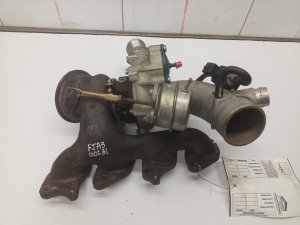
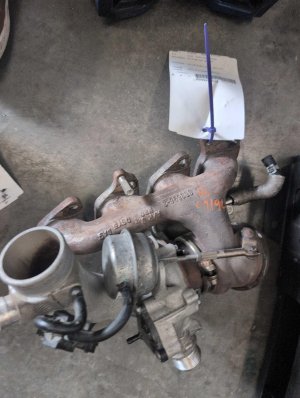
New Aftermarket Parts Available

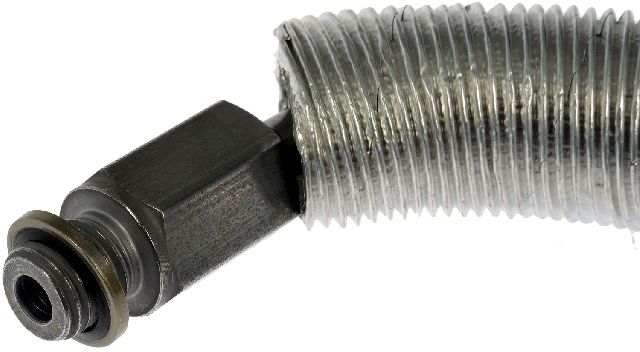
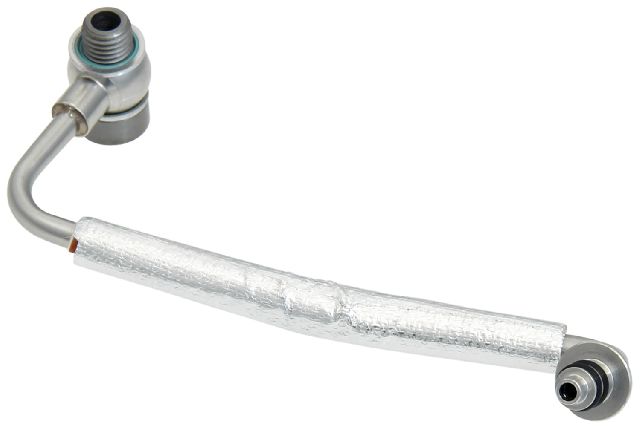


The information in this article is provided for general reference and educational purposes only. Vehicle specifications, procedures, and part compatibility can vary by production date, trim level, and region. Always consult your vehicle's factory service manual and verify part numbers before purchasing or performing repairs. Safety-critical components such as airbags, seat belts, and braking systems should be installed by a qualified professional.
- Chevrolet TRAX:
- 🎬 Helpful Videos
- 🛍️ Shop This Part
- What's Unique About the 2013-2020 Chevrolet TRAX
- Diagnostic Flowchart
- Symptoms You May Notice
- Most Likely Causes
- Rare But Worth Checking
- Diagnosis Steps
- Parts You'll Likely Need
- Related Codes That Often Appear With This One
- Technical Service Bulletins (TSBs) & Recalls
- Platform-Specific Known Issues
- Mechanic-Grade Diagnostic Values
- Scan Tool Commands That Help
- Wiring & Ground Locations
- Real Owner Repair Stories
- OEM Part Supersession History
- Model Year Variations Within This Range
- 🎟️ Get 5% Off