

P0234 on 2020 Chevrolet Sonic: Turbo Overboost Causes and Fixes
P0234 on a 2020 Sonic means the turbo is creating too much boost. This is most often caused by a faulty turbocharger boost control solenoid or a sticking wastegate, not the turbo itself. Expect to spend $50-$150 on parts for a DIY repair of the solenoid or actuator.
- P0234 means your engine's turbo is creating too much pressure, which can cause damage.
- Do NOT immediately assume you need a new turbo. The problem is most likely a cheaper part like a boost control solenoid or a vacuum hose.
- The most common fix is replacing the turbocharger boost control solenoid and its vacuum lines.
- If you also get code P0299 (underboost), it strongly points to a faulty, sticking component in the boost control system.
- Driving with this code is not recommended as the engine will be in a low-power mode and there is a risk of engine damage.
What's Unique About the 2020-2020 Chevrolet SONIC
The 1.4L turbo engine used in the Sonic and its platform mates (Cruze, Trax, Encore) is well-known for issues within its boost control system. While P0234 indicates an overboost, 🎬 Watch: Understanding how the P0234 overboost code works. the related code P0299 (Underboost) is also common, and both often point to the same set of failure-prone components. GM has issued a specific Technical Service Bulletin (TSB #PIP5495N) warning technicians not to immediately replace the entire turbocharger for this code. The TSB highlights common misdiagnoses, such as minor cracks at the wastegate port (which are normal) or issues with external components like a broken wastegate solenoid port, clogged solenoid/hoses, or a missing actuator clip, all of which should be addressed before condemning the turbo.
Diagnostic Flowchart
Tap your situation to follow the diagnostic path that matches what you're seeing on this vehicle.
Symptoms You May Notice
- Check Engine Light is on
- Reduced engine power or "limp mode"
- Sluggish or poor acceleration, especially when trying to maintain highway speeds or go uphill
- Unusual noises from the engine or turbo area, like a whooshing, whining, or siren-like sound
- Hesitation on acceleration, sometimes only at sustained highway speeds (>65mph)
- Rough idle
- Engine pinging or knocking during acceleration
- Replacing the entire turbocharger assembly. Per TSB #PIP5495N, the root cause is often a much cheaper, external component like a solenoid, actuator, or vacuum line. Technicians are advised to rule out these simpler causes before condemning the turbo. One owner on a forum was quoted $1900 for a new turbo when the issue was likely a smaller component.
Most Likely Causes
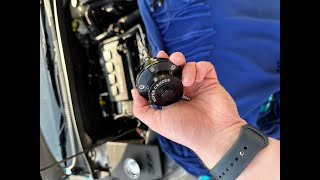
- Sticking or Faulty Turbocharger Wastegate Solenoid (Boost Control Valve) 🔴 High Probability This solenoid controls the vacuum sent to the wastegate actuator. It is a very common failure point on the 1.4L turbo platform and can get stuck, fail electronically, or have its plastic ports break off, preventing the wastegate from opening to relieve excess boost. In cold climates, moisture and oil residue can freeze inside the valve, causing it to stick (see TSB #PIP5812C).
How to confirm: Test the solenoid's operation using a vacuum pump and a 12v power source. Check if it holds vacuum and releases it when voltage is applied/removed. Also inspect the associated vacuum hoses for cracks, leaks, or blockages. TSB #PIP5495N specifically calls out checking for obstructions or deposits in the solenoid and hoses.
Typical fix: Replace the boost control solenoid and its associated vacuum hoses.
Est. part cost: $40-$85 - Sticking or Faulty Turbocharger Wastegate Actuator 🟡 Medium Probability The wastegate is a mechanical flap that diverts exhaust gas away from the turbo's turbine to regulate boost. The actuator rod can seize from rust, or the internal diaphragm can rupture, causing the wastegate to remain stuck closed. This is a frequent issue on the 1.4L platform.
How to confirm: With the engine off, attempt to move the wastegate actuator arm by hand or with pliers. It should move freely against spring pressure. Apply vacuum to the actuator with a hand pump; the arm should move smoothly and hold vacuum. If it is seized, doesn't move, or the diaphragm leaks, it is faulty.
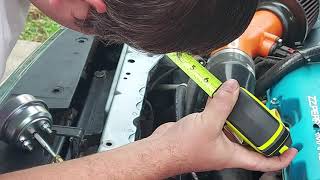
Typical fix: Replace the wastegate actuator. On this platform, the actuator is serviceable separately from the turbocharger, which is a much more affordable repair. 🎬 See this DIY walkthrough for replacing the wastegate actuator.
Est. part cost: $55-$190 - Leaking or Blocked Wastegate Control Hoses 🟡 Medium Probability The small rubber/plastic hoses that connect the boost control solenoid to the wastegate actuator and a vacuum source are exposed to high engine bay temperatures, causing them to become brittle, crack, or collapse. This is a very common and inexpensive failure point.
How to confirm: Visually inspect all vacuum lines connected to the turbo control system for cracks, splits, or soft/collapsed sections. A user on a Cruze forum noted replacing a hose with a small, hard-to-see slice resolved their P0234 code. A smoke test can also be used to find small leaks.
Typical fix: Replace the damaged vacuum lines. It is often sold as a kit with the boost control solenoid.
Est. part cost: $20-$40 - Faulty Boost Pressure (MAP) Sensor ⚪ Low Probability While less common for P0234, a faulty MAP sensor can send incorrect pressure readings to the ECM, causing it to miscalculate boost levels. However, a bad MAP sensor on this engine more commonly triggers codes like P0236, P0237, or P0238. A Reddit user with a P0234 code replaced the MAP sensor first, which did not solve the problem.
How to confirm: Use a scan tool to compare the MAP sensor reading to the Barometric Pressure (BARO) sensor reading with the key on, engine off. They should be nearly identical.
Typical fix: Replace the MAP sensor.
Est. part cost: $30-$100
Rare But Worth Checking
- Restricted Exhaust System: A clogged catalytic converter or crushed exhaust pipe can trap exhaust pressure, preventing the wastegate from effectively regulating turbo speed, which can lead to an overboost condition. This would typically be accompanied by other symptoms like a severe loss of power and potentially a P0420 code.
- Internal Turbocharger Failure: While possible, a mechanical failure within the turbocharger itself (like a seized wastegate flap) is a less frequent cause of overboost compared to the control components. TSB #PIP5495N specifically warns against assuming the turbo has failed without thorough diagnosis of external parts first.
- Failed PCV Check Valve in Intake Manifold: A known issue on the 1.4L engine involves the internal PCV check valve failing and getting sucked into the engine. This allows boost pressure to enter the crankcase, which can disrupt the engine's vacuum and pressure balance, sometimes contributing to boost control codes like P0299 and P0234.
Diagnosis Steps
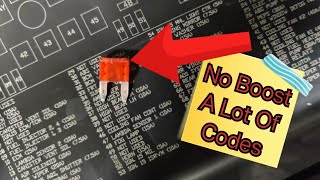
- Scan for Codes: Read all stored DTCs. Note if P0234 is present alone 🎬 Watch: Diagnosing a 1.4L engine with multiple trouble codes. or with other codes like P0299, which points towards an intermittent control issue.
- Inspect Vacuum Hoses: Visually and physically inspect all vacuum lines connected to the turbocharger, wastegate actuator, and boost control solenoid for any signs of cracks, brittleness, collapse, or loose connections. This is a common, cheap fix.
- Check Sensor Readings: With the key on and engine off, use a scan tool to compare the Manifold Absolute Pressure (MAP) sensor reading with the Barometric Pressure (BARO) reading. They should be very close. If not, the MAP sensor may be faulty.
- Test the Wastegate Actuator: Apply vacuum to the wastegate actuator with a hand pump. The actuator arm should move smoothly through its full range of motion and hold vacuum without leaking down. If it doesn't move or leaks, the actuator diaphragm is bad.
- Inspect Wastegate Linkage: With the engine off, manually check that the wastegate arm on the turbocharger itself is not seized or binding. You should be able to move it with pliers; it will be stiff due to the internal spring but should not be stuck solid.
- Test the Boost Control Solenoid: Disconnect the solenoid and test its function. It should hold vacuum on one port and allow it to pass when 12V is applied (or vice-versa depending on design). A faulty solenoid will not switch states correctly or may be clogged with oil/carbon deposits.
- Check for Exhaust Restrictions: If all else checks out, inspect the exhaust system for restrictions, particularly the catalytic converter, which can cause backpressure and lead to overboost.
Parts You'll Likely Need
- Turbocharger Boost Control Solenoid
(OEM #55574902)— This is the most common failure point for boost control issues on the 1.4L Turbo engine, leading to P0234. It's an electronic valve that frequently fails due to internal sticking, electronic failure, or broken ports.
Related Codes That Often Appear With This One
- P0299 — This code indicates an 'Underboost' condition. Seeing both P0234 and P0299 intermittently strongly suggests a component in the boost control system (like the wastegate solenoid or actuator) is sticking or failing erratically, causing boost to be both too high and too low at different times.
- P1101 — This code for 'MAF Sensor Out of Self-Test Range' often appears with boost issues because a significant vacuum leak or incorrect boost level causes airflow readings that the ECM deems implausible.
- P0171 — This code for 'System Too Lean' can be caused by a vacuum leak in the turbo control hoses, which introduces unmetered air. It is also a common symptom of a failed PCV system check valve in the intake manifold.
Technical Service Bulletins (TSBs) & Recalls
- PIP5495N: Warns technicians against prematurely replacing the entire turbocharger for P0234 or P0299. It lists common misdiagnoses like mistaking normal wastegate port cracks for a failure and emphasizes checking external components like the solenoid, actuator, and hoses first.
- PIP5812C: Specifically addresses P0234 in cold climates on the 1.4L engine. It notes that oil/moisture can freeze inside the wastegate regulator solenoid, causing it to stick. It provides a procedure for testing and cleaning the valve.
Platform-Specific Known Issues
- GM Technical Service Bulletin #PIP5495N directly addresses P0234 and P0299 on this vehicle, warning against the misdiagnosis of turbocharger failure and pointing towards issues like a broken wastegate solenoid valve port or obstructed hoses.
Mechanic-Grade Diagnostic Values
- MAP Sensor Voltage (Key On, Engine Off) — expected: ~4.0-4.9 Volts at sea level. Failure: Voltage is stuck, does not match BARO sensor, or is significantly different from the expected atmospheric pressure reading.
- MAP Sensor Voltage (Engine at Idle) — expected: ~1.0-2.0 Volts. Failure: Voltage does not drop from the KOEO reading or is significantly higher than expected at idle.
- MAP Sensor 5V Reference Wire — expected: 5.0 Volts. Failure: Voltage is not present or is significantly lower than 5.0V, indicating a wiring or ECM issue.
- Desired vs. Actual Boost Pressure (Live Data) — expected: Actual boost should closely track desired boost.. Failure: A consistent difference of more than 14 kPa (2 PSI) between the actual and desired boost pressure can indicate a malfunctioning turbocharger system.
Scan Tool Commands That Help
- GDS2 (GM Dealer Tool): Turbocharger Boost Control Solenoid Valve Test — Use this bidirectional control to command the solenoid's duty cycle (5-95%) and listen for clicks to verify it is mechanically responding to the ECM. This helps isolate a faulty solenoid from a wiring or ECM driver issue.
- GDS2 / High-End Scan Tool: Turbocharger Learn / Intake System Learned Values Reset — This function should be performed after replacing the turbocharger, wastegate actuator, or boost control solenoid to clear adaptive values and allow the ECM to calibrate control for the new component.
Wiring & Ground Locations
- Engine & Battery Ground Studs — On the chassis frame rail beneath the battery tray, in front of the transmission mount. The engine block ground and battery ground attach to two separate but nearby studs.. Poor grounding can cause erratic sensor readings and control module behavior. A forum user suggests moving both ground cables to the same stud to improve conductivity, which could help resolve intermittent electronic issues.
- ECM Fuse F25 — In the engine compartment fuse block, position 25, rated at 20A.. This fuse provides power to the Engine Control Module. While a blown fuse would likely cause a no-start, a poor connection here could lead to intermittent ECM power loss and unpredictable behavior, including fault codes.
- ECM Connector X1, Pins 17, 30, 31 — At the 56-way Engine Control Module connector.. Pin 17 (L-GN/GY wire) is the Turbo Boost Pressure Sensor Signal. Pin 30 (YE wire) is the 5V Reference. Pin 31 (L-GN/GY wire) is the Low Reference. These pins are critical for testing the boost sensor circuit directly at the ECM.
- Wiring Harness Chafe Point — The wiring harness section located below the battery tray.. A GM TSB notes that this harness can rub on the bracket for the Transmission Control Module (TCM), causing wires to chafe and short. This could affect circuits related to engine management and trigger various fault codes.
Real Owner Repair Stories
- Reddit user Blackstinger1993 in r/cruze (2016+ Chevrolet Cruze (Gen 2 with 1.4L Turbo)) — Check Engine Light with 'Engine Power Reduced' message and code P0234. No noticeable change in performance.
❌ Tried (didn't work) Checked air filter and MAF sensor for dirt/debris.
✅ What actually fixed it Found a torn vacuum hose going to the wastegate actuator. A temporary patch with aluminum tape resolved the issue and the Check Engine Light turned off after a day of driving.
"I Checked Everything" — The Actual Cause
- A common scenario for P0234/P0299 on the 1.4L engine is having a smoke test of the charge air pipes come back clean, yet the problem persists. The hidden cause is often the internal PCV check valve inside the intake manifold failing. This allows boost pressure to enter the crankcase, which a smoke test of the intake tract will not reveal. A key diagnostic indicator of this failure is if the crankcase becomes pressurized (e.g., oil cap pops off) during a boost leak test.
Model Year Variations Within This Range
- 2012-2020: The 1.4L LUV engine and its associated turbocharger control system are largely consistent across the entire generation of the Chevrolet Sonic. Parts like the boost control solenoid (55574902) and MAP sensor fit the full 2012-2020 range, meaning diagnostic procedures and common failures are highly similar for all years.
Helpful Videos
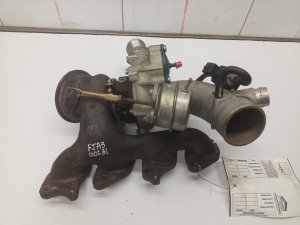
Used OEM Parts in Stock
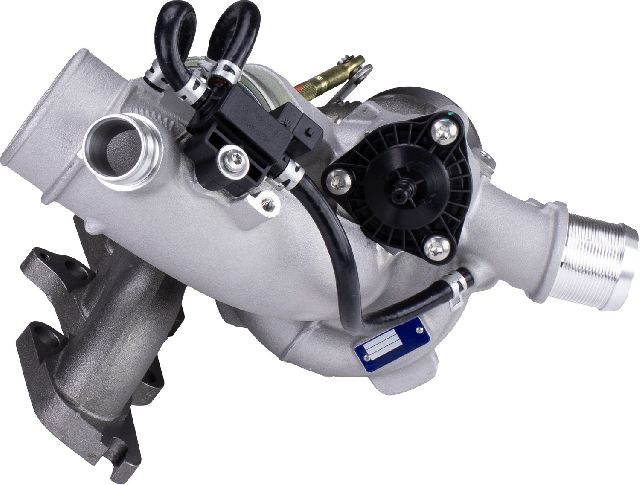
New Aftermarket Parts Available


The information in this article is provided for general reference and educational purposes only. Vehicle specifications, procedures, and part compatibility can vary by production date, trim level, and region. Always consult your vehicle's factory service manual and verify part numbers before purchasing or performing repairs. Safety-critical components such as airbags, seat belts, and braking systems should be installed by a qualified professional.
- Chevrolet SONIC:
- 🎬 Helpful Videos
- 🛍️ Shop This Part
- What's Unique About the 2020-2020 Chevrolet SONIC
- Diagnostic Flowchart
- Symptoms You May Notice
- Most Likely Causes
- Rare But Worth Checking
- Diagnosis Steps
- Parts You'll Likely Need
- Related Codes That Often Appear With This One
- Technical Service Bulletins (TSBs) & Recalls
- Platform-Specific Known Issues
- Mechanic-Grade Diagnostic Values
- Scan Tool Commands That Help
- Wiring & Ground Locations
- Real Owner Repair Stories
- "I Checked Everything" — The Actual Cause
- Model Year Variations Within This Range
- 🎟️ Get 5% Off