

P0234 on 2018-2022 Chevrolet Equinox: Turbo Overboost Causes & Fixes
On a 2018-2022 Equinox, P0234 is almost always caused by a faulty Turbocharger Wastegate Regulator Solenoid Valve, especially in cold weather. This part can freeze or get stuck due to moisture and oil condensate. A critical secondary cause is outdated ECM software that allows ice to form in the charge air cooler. The comprehensive fix often involves both replacing the solenoid and getting an ECM software update from a dealer per GM TSB 22-NA-002.
- P0234 on a 2018-2022 Equinox means the turbo is creating too much boost, which will trigger a 'Reduced Power' mode.
- Before suspecting the expensive turbocharger, inspect the Turbocharger Wastegate Regulator Solenoid Valve. It is the most likely cause, especially in cold weather, per GM TSB PIP5812C.
- Check for related codes like P0299, as they often point to the same faulty component.
- Inspect vacuum lines for cracks and ensure the mechanical wastegate arm isn't seized.
- An ECM update may be available from the dealer to help prevent the issue from recurring in cold climates, as mentioned in TSB 22-NA-002.
What's Unique About the 2018-2022 Chevrolet EQUINOX

The 1.5L turbocharged LYX engine in this generation of Equinox and its platform mates (GMC Terrain, Chevrolet Malibu) is particularly susceptible to this code due to specific issues identified by General Motors. Two key Technical Service Bulletins (TSBs) exist: PIP5812C points to oil and moisture condensate freezing inside the Turbocharger Wastegate Regulator Solenoid Valve during cold weather. TSB 22-NA-002 expands on this, noting that moisture can also freeze inside the Charge Air Cooler (CAC) and that an ECM software update is required to change transmission shift patterns, which helps prevent ice buildup. This makes the combination of the solenoid and ECM software the primary focus, more so than on other vehicles.
🎬 Watch: Real-world case study of this overboost code on the LYX engine.Diagnostic Flowchart

Tap your situation to follow the diagnostic path that matches what you're seeing on this vehicle.
Symptoms You May Notice

- Check Engine Light illuminated
- Vehicle enters "Reduced Power" or "Limp Mode"
- Noticeable loss of engine power and sluggish acceleration
- Erratic acceleration or surging
- Hissing or whistling sounds from the turbo/engine area, especially when letting off the accelerator
- Replacing the entire turbocharger assembly when only the external wastegate solenoid valve is faulty. A Reddit user reported this exact scenario, where a new turbo was installed for a P0299 (underboost) code, but a P0234 code appeared immediately after, suggesting the original problem was likely the control solenoid.
- Replacing the wastegate solenoid without performing the mandatory ECM software update from TSB 22-NA-002. This often results in the code returning during the next cold season as the root cause (CAC icing) was not addressed.
Most Likely Causes

- Outdated Engine Control Module (ECM) Software 🔴 High Probability GM TSB 22-NA-002 identifies that the original transmission shift strategy can allow moisture to freeze in the Charge Air Cooler (CAC) during cold weather. The fix is a software update that keeps engine RPMs higher to generate more heat and prevent icing.
How to confirm: A GM dealer can check your vehicle's VIN against their service records to see if the update from TSB 22-NA-002 has been performed. This is often the first step in a proper diagnosis.
Typical fix: Have a GM dealer perform the ECM software update. This is covered under the federal emissions warranty for 8 years/80,000 miles.
Est. part cost: $0 - Faulty Turbocharger Wastegate Regulator Solenoid Valve (TCV) 🔴 High Probability As documented in GM TSB PIP5812C, this valve is known to collect oil/moisture condensate which can freeze in cold weather, causing the valve to stick closed and not regulate boost properly. This is a concurrent issue with the CAC freezing.
How to confirm: Follow the cleaning and testing procedure in TSB PIP5812C. Remove the valve, turn it upside down to drain any fluid, and use low-pressure shop air (15-20 PSI) to blow through the ports. If air does not pass correctly through port #2 (feels like it's dead-heading), the valve is stuck and faulty.
Typical fix: Replace the Turbocharger Wastegate Regulator Solenoid Valve. TSB 22-NA-002 recommends this be done in conjunction with the ECM update.
Est. part cost: $50-$150 - Sticking Wastegate Actuator Rod or Linkage 🟡 Medium Probability
How to confirm: With the engine off and cool, attempt to move the actuator rod by hand or with a hand-held vacuum pump. It should move smoothly without binding. If it is seized, it cannot regulate boost.
Typical fix: Free up the linkage if possible. If the actuator itself has failed, it may need to be replaced. On some models, this is part of the turbocharger assembly.
Est. part cost: $70-$200 for the actuator if sold separately - Cracked or Disconnected Vacuum Hoses 🟡 Medium Probability Rubber hoses become brittle over time with exposure to heat cycles in the engine bay.
How to confirm: Visually inspect all vacuum lines connected to the wastegate solenoid and actuator for cracks, holes, or loose connections.
Typical fix: Replace the damaged section of vacuum hose.
Est. part cost: $5-$20 - Faulty Boost Pressure (MAP) Sensor ⚪ Low Probability
How to confirm: Use a scan tool to monitor the live data from the MAP sensor. The readings should be logical and correspond to engine load. If the sensor reads high pressure when none is present, it is likely faulty.
Typical fix: Replace the MAP sensor.
Est. part cost: $40-$100
Rare But Worth Checking
- Internal Turbocharger Failure: A failure of the internal wastegate flap itself or excessive wear in the linkage can cause it to stick closed. This is less common than the external control components failing and is a much more expensive repair. TSB 23-NA-058 provides inspection criteria for linkage wear.
- Restricted Charge Air Cooler (CAC): While TSB 22-NA-002 focuses on freezing, the CAC can also become restricted by oil buildup or debris, leading to erratic boost readings. The primary fix is still the ECM update to prevent the conditions that lead to buildup.
Diagnosis Steps
- Connect an OBD-II scanner and confirm P0234 is the active code. Note any other codes, especially P0299.
- Contact a GM dealer with your VIN to determine if the software update from TSB 22-NA-002 has been performed. If not, this is the first and most critical step. The dealer must be informed of the new shift patterns to relay to the customer.
- If the software is up to date, or if the problem persists, locate the Turbocharger Wastegate Regulator Solenoid Valve (TCV). It is typically mounted on the engine, near the turbo, with two small vacuum hoses and an electrical connector.
- Follow the test procedure from TSB PIP5812C: Remove the valve, drain any fluid, and use low-pressure shop air (15-20 PSI) to test the ports. If the valve is stuck or doesn't allow air to pass correctly through port #2, it needs to be replaced.
- Visually inspect all vacuum lines connected to the TCV and the turbocharger wastegate actuator. Look for any cracks, loose fittings, or blockages.
- If the solenoid tests good, check the mechanical wastegate actuator arm. With the engine off, ensure it moves freely without binding.
- Using a scan tool, monitor live data for the MAP/Boost sensor to ensure its readings are plausible both at idle and under load.
- If all control components are functioning, inspect the Charge Air Cooler and its piping for restrictions or blockages, including the outlet tube connection at the throttle body, which is another known failure point per TSB 22-NA-224.
Parts You'll Likely Need
- Turbocharger Wastegate Regulator Solenoid Valve
(OEM #25204790)— This is the most frequent point of failure for this code on this specific vehicle, as identified by GM's own technical service bulletins for freezing and sticking issues.
Trusted brands: ACDelco, GM Genuine Parts
OEM price range: $70-$150
Aftermarket price range: $50-$100 - Turbocharger Wastegate Actuator
(OEM #12679396)— If the solenoid is working but the wastegate itself is stuck, the mechanical actuator can be the cause due to corrosion or binding.
Trusted brands: ACDelco, SKP
OEM price range: $100-$200
Aftermarket price range: $70-$150
Related Codes That Often Appear With This One
- P0299 — This code means 'Turbocharger Underboost.' Both TSBs PIP5812C and 22-NA-002 mention that P0299 and P0234 can be set by the same root cause: a sticking wastegate solenoid or frozen charge air cooler. Depending on whether the component is stuck open or closed, the system may experience underboost or overboost.
Technical Service Bulletins (TSBs) & Recalls
- PIP5812C: Communicates that DTC P0234/P0299 can set due to oil/moisture condensate freezing in the Turbocharger Wastegate Regulator Solenoid Valve (TCV) during cold weather.
- 22-NA-002: Addresses P0234/P0299 in cold weather caused by moisture freezing in the Charge Air Cooler (CAC) and recommends an ECM software update as the primary fix.
Platform-Specific Known Issues
- TSB #22-NA-002: This is the most critical bulletin. It addresses P0234/P0299 in cold weather caused by moisture freezing inside the Charge Air Cooler (CAC). The primary fix is an ECM software update to change transmission shift patterns, which raises engine RPMs to prevent ice buildup. It also advises inspecting/replacing the TCV solenoid per PIP5812C as a secondary step. The ECM update is covered under the emissions warranty (8yr/80k miles).
- TSB #PIP5812C: This bulletin directly addresses DTC P0234 and P0299 setting in cold weather. It identifies the cause as oil/moisture condensate freezing in the Turbocharger Wastegate Regulator Solenoid Valve (TCV) and provides a specific diagnostic procedure using low-pressure air to confirm the failure.
- Owner Complaint ODI #11442734: An owner of a 2021 model reported experiencing code P0234 and reduced power. This real-world report confirms the symptoms and the code's direct link to a 'turbocharge overboost' condition on this vehicle.
- Real-world forum experience: A user on BobIsTheOilGuy.com with a 2018 Equinox reported getting a P0234 code and 'Reduced Engine Power' message. The dealer resolved the issue by replacing the wastegate solenoid under warranty, confirming this is a common dealer fix.
Mechanic-Grade Diagnostic Values
- MAP Sensor Signal Voltage (Key On, Engine Off) — expected: ~4.5V at sea level. Failure: Voltage is stuck high (near 5V), low (near 0V), or does not change when applying vacuum with a hand pump.
- MAP Sensor 5V Reference Voltage — expected: 4.8V to 5.2V. Failure: Voltage is significantly lower than 4.8V or absent, indicating a wiring or ECM issue.
- MAP Sensor Ground Circuit Voltage — expected: Less than 100mV (0.1V). Failure: Voltage higher than 100mV indicates a poor ground connection, which can skew sensor readings.
Scan Tool Commands That Help
- GDS2 (GM Global Diagnostic System 2): Turbocharger Learn — After replacing the turbocharger or the wastegate actuator, this function allows the ECM to learn the new component's position and travel limits for accurate boost control.
- GDS2 (GM Global Diagnostic System 2): Boost Pressure Sensor Live Data — Used during diagnosis to monitor and compare the 'desired boost pressure' commanded by the ECM against the 'actual boost pressure' reported by the sensor during a test drive. A significant deviation confirms the overboost or underboost condition.
- GDS2 (GM Global Diagnostic System 2): Wastegate Solenoid Actuation Test — This bidirectional control allows a technician to command the solenoid on and off to verify its mechanical and electrical operation, helping to determine if it is sticking.
Wiring & Ground Locations
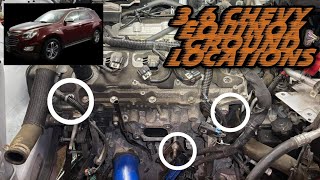
- G103 — Located at the left rear of the engine compartment on the cowl, above the brake booster.. This ground point serves the Engine Control Module (ECM). A poor connection here can cause erratic behavior from the ECM and incorrect sensor readings, potentially contributing to false fault codes.
Real Owner Repair Stories
- BobIsTheOilGuy.com user 'road_rascal' (2018 Equinox 1.5L Turbo) — Car started cutting out/surging, Check Engine Light came on with a "Reduced Engine Power" message, and code P0234 was stored.
❌ Tried (didn't work) The user immediately took the vehicle to the dealer for diagnosis.
✅ What actually fixed it The dealer replaced the wastegate solenoid under warranty, which resolved the issue. - Reddit user in r/mechanics (2018 Chevy Equinox) — Initially had a P0299 (underboost) code. After the turbo was replaced, the car began intermittently setting a P0234 (overboost) code and entering limp mode.
❌ Tried (didn't work) Replacing the entire turbocharger assembly for the initial P0299 code.
✅ What actually fixed it The user was still in the process of diagnosing the new P0234 code, but the story highlights a common misdiagnosis where the entire turbo is replaced when the control components (like the solenoid or actuator) were likely the original fault.
OEM Part Supersession History
12679372, 12679420→12679396— Part has been updated by the manufacturer.
Model Year Variations Within This Range
- 2022: The 2022 model year received a significant facelift with new front and rear fascias, new grille designs, and updated LED headlamps. The 2.0L turbo engine option was discontinued, leaving the 1.5L turbo as the only available engine.
- 2023+: Starting in 2023, the 1.5L engine was updated to the LSD variant (from the LYX), which increased horsepower slightly from 170 to 175. While fundamentally similar, some parts may differ from the 2018-2022 LYX engine.
Helpful Videos


Used OEM Parts in Stock


New Aftermarket Parts Available


The information in this article is provided for general reference and educational purposes only. Vehicle specifications, procedures, and part compatibility can vary by production date, trim level, and region. Always consult your vehicle's factory service manual and verify part numbers before purchasing or performing repairs. Safety-critical components such as airbags, seat belts, and braking systems should be installed by a qualified professional.
- Chevrolet EQUINOX:
- 🎬 Helpful Videos
- 🛍️ Shop This Part
- What's Unique About the 2018-2022 Chevrolet EQUINOX
- Diagnostic Flowchart
- Symptoms You May Notice
- Most Likely Causes
- Rare But Worth Checking
- Diagnosis Steps
- Parts You'll Likely Need
- Related Codes That Often Appear With This One
- Technical Service Bulletins (TSBs) & Recalls
- Platform-Specific Known Issues
- Mechanic-Grade Diagnostic Values
- Scan Tool Commands That Help
- Wiring & Ground Locations
- Real Owner Repair Stories
- OEM Part Supersession History
- Model Year Variations Within This Range
- 🎟️ Get 5% Off