

P0234 on 2013-2020 Buick Encore: Turbo Overboost Causes and Fixes
Code P0234 on a Buick Encore usually means the turbocharger wastegate control solenoid is sticking or its vacuum lines are leaking. This is especially common in cold weather when moisture can freeze in the solenoid. Expect to pay $40-$80 for a new solenoid and replace it yourself in under an hour. A faulty wastegate actuator or MAP sensor are less common but possible causes.
- P0234 on a 2013-2020 Buick Encore indicates the turbo is producing too much boost.
- The most likely cause is a faulty Turbocharger Wastegate Regulator Solenoid Valve (part #55573362), especially in cold climates.
- Always check the solenoid and its vacuum hoses before considering a costly turbocharger replacement.
- This code is serious and can lead to engine damage if ignored, so address it promptly.
- This repair is generally DIY-friendly and can often be completed for under $100.
What's Unique About the 2013-2020 Buick ENCORE

The 1.4L turbo engine in the Buick Encore and its platform mates (Chevy Cruze, Sonic, Trax) is known for specific issues that trigger P0234. A key problem, identified in multiple GM Technical Service Bulletins (including PIP5812C and 17-NA-221), is the tendency for oil and moisture to freeze inside the Turbocharger Wastegate Regulator Solenoid Valve during cold weather, causing it to stick. This leads to improper wastegate control and an overboost condition. This specific failure mode means that unlike other vehicles, the first part to check on an Encore with a P0234 code, especially in winter, should be this solenoid. Additionally, failures in the PCV system, such as a ruptured diaphragm in the valve cover or a failed check valve in the intake manifold, can lead to over-pressurization of the crankcase, forcing oil past turbo seals and affecting boost control components.
Diagnostic Flowchart

Tap your situation to follow the diagnostic path that matches what you're seeing on this vehicle.
Symptoms You May Notice

- Check Engine Light is on
- Reduced engine power or "limp mode"
- Noticeable hesitation or sluggish acceleration, especially on the highway
- A whooshing, whining, or siren-like sound from the engine bay during acceleration
- Engine cutting out or surging under load
- Engine pinging or knocking during acceleration.
- In some cases, the engine may have difficulty starting or run poorly
- Replacing the entire turbocharger assembly. A GM Technical Service Bulletin (PIP5495N) specifically warns that P0234 is often misdiagnosed, leading to unnecessary turbocharger replacements when the actual fault is a much cheaper component like the wastegate solenoid valve, its hoses, or the wastegate actuator.
Most Likely Causes

- Sticking/Failed Turbocharger Wastegate Regulator Solenoid Valve (TCV) 🔴 High Probability A manufacturer TSB (PIP5812C) explicitly states that oil/moisture condensate can freeze in this valve during cold weather, causing it to malfunction and trigger P0234 or P0299. Hardened deposits from hot operating conditions can also cause the internal plunger to stick.
How to confirm: With the engine off, disconnect the vacuum lines and electrical connector. The solenoid is typically located in the back corner of the engine bay. Apply 12V to the electrical pins and listen for a distinct click; lack of a click indicates failure. Per TSB PIP5812C, you can also test it by blowing low-pressure air (15-20 PSI) through the ports. Air applied to port #2 should not dead-head, and a small amount of air should be felt at the other ports; if not, the valve is stuck and needs replacement.
Typical fix: Replace the Turbocharger Wastegate Regulator Solenoid Valve. In some cases described by GM, simply removing the valve, draining moisture, and blowing it out with compressed air may resolve the issue temporarily.
Est. part cost: $40-$80 - Cracked, Leaking, or Blocked Vacuum Hoses 🟡 Medium Probability The vacuum hoses that control the wastegate actuator are made of rubber and are exposed to high engine bay temperatures, causing them to become brittle and crack over time.
How to confirm: Visually inspect all vacuum lines connected to the wastegate solenoid and the turbo wastegate actuator for cracks, splits, or loose connections. A smoke test can also be used to find small leaks. A user on cruzetalk.com noted that these hoses can become clogged or collapse internally.
Typical fix: Replace the damaged section of vacuum hose.
Est. part cost: $5-$20 - Sticking Turbocharger Wastegate Actuator Arm ⚪ Low Probability The mechanical arm on the turbocharger itself can seize due to carbon buildup or corrosion, preventing it from moving freely to regulate boost. This can happen intermittently, causing both overboost and underboost conditions.
How to confirm: With the engine cool, locate the actuator arm on the turbocharger. Attempt to move it by hand; it should move smoothly through its range of motion. Use a vacuum pump to apply vacuum to the actuator's nipple to see if the rod retracts smoothly. If it is stuck, difficult to move, or doesn't hold vacuum, it has failed.
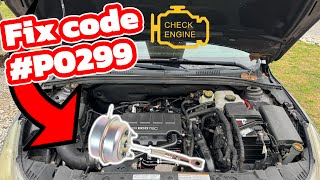
Typical fix: Attempt to free the arm with penetrating oil. If the diaphragm inside the actuator has failed or the arm cannot be freed, the wastegate actuator must be replaced. Aftermarket adjustable actuators are available. 🎬 See this walkthrough on replacing the wastegate actuator
Est. part cost: $0-$150 - Faulty Manifold Absolute Pressure (MAP) Sensor ⚪ Low Probability While not a common failure, a faulty MAP sensor can send incorrect pressure readings to the ECM, causing it to believe the engine is overboosting when it isn't. On this platform, the MAP sensor also functions as the boost sensor.
How to confirm: Use an OBD-II scanner to monitor live MAP sensor data. The pressure reading should be steady at idle and increase smoothly with engine RPM. Compare the reading to a known good sensor or specification. Check for any damage to the sensor's wiring or connector. With the ignition on and engine off, the sensor voltage should be around 0.5V.
Typical fix: Replace the MAP sensor.
Est. part cost: $30-$70
Rare But Worth Checking
- Restricted Exhaust System: A clogged catalytic converter can increase exhaust backpressure, affecting turbocharger operation and potentially causing an overboost condition. This will usually be accompanied by other codes (like P0420) and more severe performance loss.
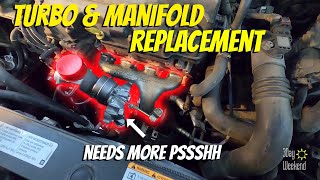
- Internal Turbocharger Failure: While often misdiagnosed, an actual internal failure of the turbocharger can cause this code. However, this is less likely than control system components failing and should be the last item to consider after all 🎬 Watch: A complete guide to replacing the turbocharger external parts have been verified as working.
- Faulty PCV System (Valve Cover or Intake Manifold Check Valve): A known issue on the 1.4L engine is the failure of the PCV check valve in the intake manifold or the diaphragm in the valve cover. This can cause abnormal crankcase pressure, forcing oil past turbo seals and potentially affecting the operation of boost control components, leading to codes like P0234 or P0299.
Diagnosis Steps
- Read the trouble codes with an OBD-II scanner and note any other codes present. Freeze frame data can show the engine conditions when the code was set.
- Visually inspect all vacuum hoses running from the intake manifold to the wastegate control solenoid and from the solenoid to the turbocharger wastegate actuator. Look for cracks, breaks, loose fittings, or signs of collapse.
- If in cold weather, suspect a frozen wastegate solenoid per TSB PIP5812C. Remove the solenoid, drain any moisture, and test its function with a 12V source and low-pressure air as described in the 'Common Causes' section.
- With the engine cool, manually check the turbocharger wastegate actuator arm for free movement. It should not be seized. Use a vacuum pump to confirm the actuator diaphragm holds vacuum and moves the arm. 🎬 Watch: How to test a vacuum-type wastegate actuator
- If the solenoid, hoses, and actuator arm are good, use a scan tool to monitor the MAP sensor reading while driving to ensure it is providing plausible data that correlates with engine load.
- Inspect the PCV system. Check for a ruptured diaphragm in the valve cover (often causes a hissing sound) or a missing check valve inside the intake manifold port.
- Check for restrictions in the air intake system (air filter, ducts) and the exhaust system (clogged catalytic converter).
- If all control components test good, the issue may be an internal failure of the turbocharger, though this is the least likely cause.
Parts You'll Likely Need
- Turbocharger Wastegate Regulator Solenoid Valve
(OEM #55573362)— This is the most common failure point for P0234 on this vehicle, as identified by multiple GM service bulletins for issues with freezing and sticking. It is also referred to as a Turbocharger Boost Solenoid.
Trusted brands: ACDelco, Dorman, Standard Motor Products
OEM price range: $60-$90
Aftermarket price range: $40-$60 - Vacuum Hose — The rubber hoses that control the wastegate are prone to cracking from heat and age, causing boost control problems. They are an inexpensive and common point of failure.
Trusted brands: Continental
OEM price range: $10-$25
Aftermarket price range: $5-$15 - Turbocharger Wastegate Actuator
(OEM #55589100)— If the wastegate arm is stuck or the internal diaphragm ruptures, the actuator will need to be replaced. This is a less common but significant cause of P0234.
Trusted brands: GM Genuine Parts, Dorman
OEM price range: $150-$175
Aftermarket price range: $130-$150
Related Codes That Often Appear With This One
- P0299 — P0299 is an 'Underboost Condition'. It's common to see both P0234 and P0299 because a sticking wastegate solenoid or actuator can cause both conditions at different times. If it sticks closed, it causes overboost (P0234); if it sticks open, it causes underboost (P0299). Multiple TSBs (PIP5495N, PIP5812C, 17-NA-221) confirm these codes often appear together.
- P0171 — P0171 (System Too Lean) can appear if a faulty PCV system creates a vacuum leak, which is a common root cause for turbo issues on this engine.
Technical Service Bulletins (TSBs) & Recalls
- PIP5495N: Informs technicians about misdiagnosis leading to unnecessary turbocharger replacements for code P0234 or P0299.
- PIP5812C: Highlights the possibility of P0234 setting due to oil/moisture condensate freezing in the Turbocharger Wastegate Regulator Solenoid Valve in cold weather and provides a diagnostic procedure.
- 17-NA-221: Addresses poor engine performance in extreme cold, including codes P0234/P0299, caused by charge air cooler icing and recommends potential ECM calibration updates.
Platform-Specific Known Issues
- TSB #PIP5812C specifically calls out that oil and moisture can freeze in the Turbocharger Wastegate Regulator Solenoid Valve during cold weather, causing P0234. The TSB provides a specific air-flow test to confirm if the valve is stuck internally.
- TSB #PIP5495N warns against the common misdiagnosis of replacing the entire turbocharger for code P0234 when the fault is often a less expensive external control component.
Mechanic-Grade Diagnostic Values
- MAP Sensor Voltage (Key On, Engine Off) — expected: ~0.5 V. Failure: Values significantly outside the 0.4-2.0V range may indicate a faulty sensor or wiring issue.
- Desired vs. Actual Boost Pressure (Live Data) — expected: Actual pressure should closely track desired pressure under load.. Failure: If actual boost exceeds desired boost by more than 2.0-4.0 PSI for several seconds, it confirms an overboost condition.
Scan Tool Commands That Help
- GDS2 (GM Dealer Tool): Turbocharger Boost Control Test — This is a specific drive cycle procedure outlined in TSB PIP5495D to be used when P0299 (underboost) is set and no obvious cause is found. It involves graphing desired vs. actual boost during a wide-open throttle 1-2 shift to measure turbo performance. A similar data logging approach can be used to verify a P0234 overboost condition.
- Advanced Scan Tool (e.g., GDS2): Wastegate Solenoid Command — A bidirectional scan tool can be used to command the wastegate solenoid on and off. While commanding the solenoid, a technician can visually inspect the wastegate actuator linkage for movement, confirming if the solenoid is functioning and if the actuator arm is stuck.
Real Owner Repair Stories
- CruzeTalk Forum & YouTube (2015 Chevrolet Cruze 1.4L Turbo (same LUV engine and platform)) — Intermittent low power, Check Engine Light with codes P0299 and P0234.
❌ Tried (didn't work) Initial diagnosis pointed towards boost control components.
✅ What actually fixed it The internal turbine of the turbocharger was not spinning freely. Replacing the entire turbocharger assembly resolved both the P0299 and P0234 codes. This represents a case where the failure was, in fact, internal to the turbo itself, contrary to the more common external component failures.
OEM Part Supersession History
55563534, 55558101→55573362— Part has been updated by the manufacturer over time.
Heads up: The part numbers 55563534 and 55558101 are older numbers that have been superseded by 55573362 for the Turbocharger Wastegate Regulator Solenoid Valve.N/A→N/A— N/A
Heads up: The higher-output LE2 engine, available from 2016-2019, may use a different wastegate solenoid (e.g., ACDelco part #55573259 or #55499323) than the standard LUV engine. It is critical to verify the correct part number by VIN or engine code (LUV vs. LE2).
Model Year Variations Within This Range
- 2016-2019: Beginning with the 2016 Sport Touring and expanding as an option on other trims in 2017, a new 1.4L direct-injection turbo engine (RPO code: LE2) with 153 hp was offered. The base engine remained the 138 hp port-injected 1.4L (RPO code: LUV). While the causes for P0234 are fundamentally the same (boost control), some specific parts like the wastegate solenoid may have different part numbers between the LUV and LE2 engines.
Helpful Videos
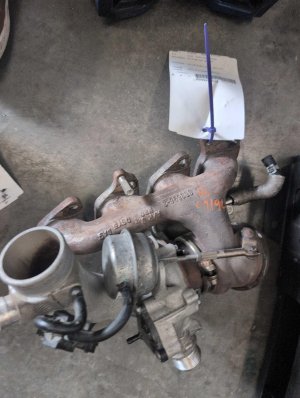
Used OEM Parts in Stock
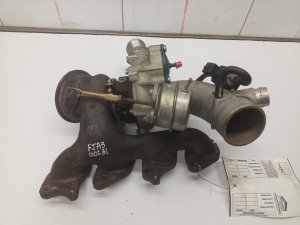
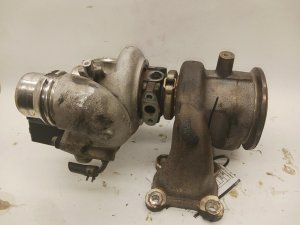
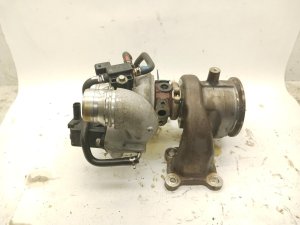
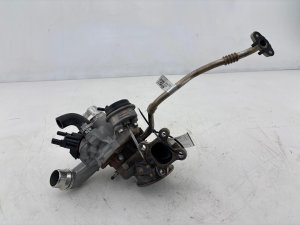
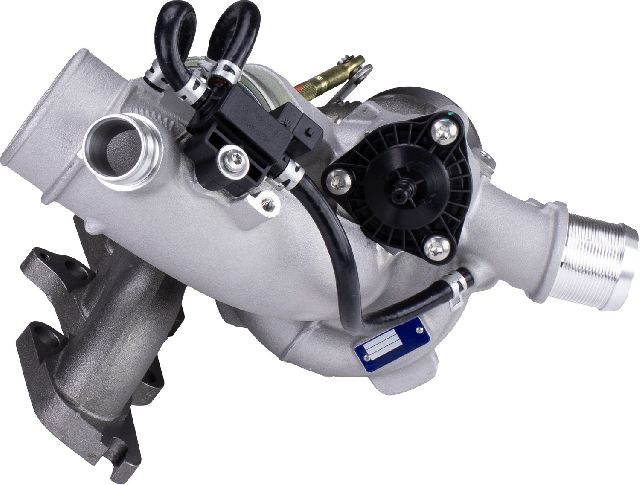
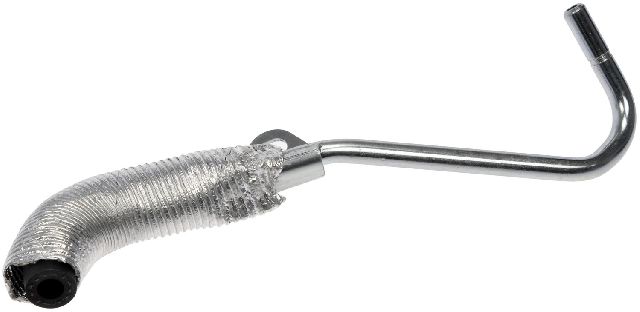
New Aftermarket Parts Available


The information in this article is provided for general reference and educational purposes only. Vehicle specifications, procedures, and part compatibility can vary by production date, trim level, and region. Always consult your vehicle's factory service manual and verify part numbers before purchasing or performing repairs. Safety-critical components such as airbags, seat belts, and braking systems should be installed by a qualified professional.
- Buick ENCORE:
- 🎬 Helpful Videos
- 🛍️ Shop This Part
- What's Unique About the 2013-2020 Buick ENCORE
- Diagnostic Flowchart
- Symptoms You May Notice
- Most Likely Causes
- Rare But Worth Checking
- Diagnosis Steps
- Parts You'll Likely Need
- Related Codes That Often Appear With This One
- Technical Service Bulletins (TSBs) & Recalls
- Platform-Specific Known Issues
- Mechanic-Grade Diagnostic Values
- Scan Tool Commands That Help
- Real Owner Repair Stories
- OEM Part Supersession History
- Model Year Variations Within This Range
- 🎟️ Get 5% Off