

P0234 on 2009-2012 Audi Q5: Turbo Overboost Causes and Fixes
P0234 on a 2.0T Audi Q5 indicates the turbo is creating too much boost. The most common causes are a faulty N75 boost control valve or a failing turbo diverter valve. Less common, but possible, are a stuck turbo wastegate, a faulty boost pressure (G31) sensor, or vacuum leaks.
- P0234 means your Audi Q5's engine is experiencing dangerously high turbo boost pressure.
- Do not ignore this code; continued driving can lead to severe engine damage.
- The most likely cause is a faulty N75 boost control valve, which is a relatively inexpensive and accessible part to replace.
- Also inspect the turbo diverter valve for tears, as this is another common failure point on the 2.0T engine.
- If those parts are good, check for vacuum leaks before assuming the expensive turbocharger has failed.
What's Unique About the 2009-2012 Audi Q5

The 2009-2012 Audi Q5 uses the first generation EA888 2.0T TFSI engine (engine code CAEB), which is known for specific failure points related to boost control. While the turbo itself can fail, the more frequent culprits for P0234 are the external control components like the N75 valve, which regulates the wastegate, and the electronic diverter valve. There is also a well-documented issue covered by Technical Service Bulletin (TSB) 2031245 regarding excessive wastegate linkage play on these engines. While this TSB more commonly addresses an underboost (P0299) code, the poor wastegate control can also lead to erratic behavior and overboost spikes, triggering P0234.
Diagnostic Flowchart
Tap your situation to follow the diagnostic path that matches what you're seeing on this vehicle.
Symptoms You May Notice
- Check Engine Light (CEL) and/or EPC (Electronic Power Control) light is on.
- Sudden loss of engine power as the vehicle enters "limp mode".
- Reduced power output and poor acceleration.
- Unusual whistling, whining, or hissing sounds from the engine bay, indicating a boost leak or failing turbo.
- Engine knocking or pinging sounds under acceleration due to detonation.
- Jerking or surging during acceleration as boost control becomes erratic.
- Slight engine misfire may be felt in some conditions.
- Replacing the turbocharger immediately. The issue is often with a much cheaper, external control component like the N75 valve or diverter valve. Always diagnose these components first before condemning an expensive turbocharger.
Most Likely Causes

- Faulty Boost Pressure Control Valve (N75) 🔴 High Probability The N75 valve is an electronic solenoid that actively manages the turbo's wastegate by bleeding off pressure. It operates under high frequency and heat, and can fail electrically or mechanically, causing it to get stuck and no longer regulate boost pressure correctly, leading to an overboost condition.
How to confirm: Test the solenoid's resistance with a multimeter (should be 25-35 ohms). Use a capable scan tool (like VCDS) to perform an output test on the N75 valve; you should hear it clicking. Check for brittle or cracked wiring and vacuum lines leading to the valve.
Typical fix: Replace the N75 valve. It is a relatively accessible part on top of the engine.
Est. part cost: $40-$80 - Faulty Turbocharger Diverter Valve (DV) 🟡 Medium Probability The original diaphragm-style diverter valves on these engines are notoriously prone to tearing. A torn diaphragm can cause boost leaks (typically underboost P0299), but can also fail in a way that disrupts normal pressure regulation, contributing to boost spikes and P0234.
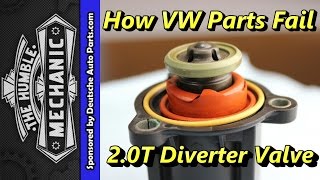
How to confirm: Remove the diverter valve from the turbocharger housing (three bolts) and inspect the rubber diaphragm for tears or ruptures. 🎬 Watch: See how the original 2.0T diverter valve fails. An updated piston-style valve (part number 06H145710D) is the recommended replacement and is much more durable.
Typical fix: Replace the diverter valve with the updated piston-style version. This is a common DIY repair.
Est. part cost: $80-$150 - Sticking or Seized Turbocharger Wastegate 🟡 Medium Probability Carbon buildup or corrosion can cause the internal wastegate flap to stick closed, preventing it from opening to release excess exhaust pressure. Additionally, the actuator rod and linkage can wear, leading to improper movement or excessive play, a known issue on the CAEB engine. This can cause the wastegate to not open when commanded, resulting in overboost.
How to confirm: With the engine off and cool, attempt to move the wastegate actuator rod by hand or with a vacuum pump applied to the actuator. It should move freely without binding. If it is stuck, the turbocharger may need to be removed for cleaning or replacement. A rattling noise from the turbo area at idle or on deceleration can be a sign of a loose wastegate flap.
Typical fix: In some cases, the wastegate can be freed up with penetrating oil and manipulation. More often, significant wear or a seized flap requires replacement of the entire turbocharger assembly, as the wastegate is an integral part.
Est. part cost: $900-$2000 - Leaking or Blocked Vacuum Hoses ⚪ Low Probability The engine bay heat causes the small rubber and braided vacuum lines that control the N75 valve and wastegate actuator to become brittle, crack, or collapse over time. A leak in the line to the wastegate actuator will prevent it from seeing the pressure signal needed to open, directly causing an overboost condition.
How to confirm: Visually inspect all vacuum lines connected to the N75 valve, wastegate actuator, and intake manifold for cracks, splits, or loose connections. Perform a smoke test to find leaks that are not visible. Pay close attention to the hose that runs from the N75 to the wastegate actuator.
Typical fix: Replace the damaged sections of vacuum hose.
Est. part cost: $10-$30
Rare But Worth Checking
- Faulty Boost Pressure Sensor (MAP Sensor / G31): A faulty MAP sensor can send incorrect (artificially low) pressure readings to the ECM, causing it to command more boost than necessary, resulting in a real overboost condition. If the sensor fails and reads a constant low pressure, the ECM will not know to open the wastegate.
- Aftermarket ECU Tune: An aggressive or poorly written ECU tune can request boost levels that are too high or have overly aggressive ramp rates, leading to an overboost code even with a mechanically sound system. If the code appeared shortly after a reflash, the tune is the likely culprit.
- Restricted Catalytic Converter: A clogged or failing catalytic converter can create excessive backpressure in the exhaust system. This can prevent the wastegate from effectively bleeding off exhaust gas, causing the turbo to continue building boost beyond the specified limit.
Diagnosis Steps

- Read the fault codes with an OBD-II scanner (preferably VCDS/VAG-COM) to confirm P0234 is present and check for any other related codes. Note the VAG-specific code, which is often 5670.
- Using a scan tool, monitor live data, specifically Measuring Block 115 (or equivalent labels in modern VCDS like IDE00190/IDE00191), to graph 'Requested Boost' vs. 'Actual Boost'. Confirm that actual boost is significantly exceeding requested boost under load, triggering the fault.
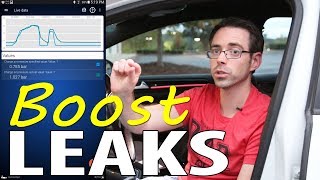
- Visually inspect all vacuum lines and boost hoses between the turbo, intercooler, and intake manifold for cracks, loose connections, or leaks. A smoke test is highly recommended. 🎬 Watch: How to check your Audi for boost leaks.
- Inspect the electrical connector and wiring for the N75 valve for damage or corrosion.
- Test the N75 valve. Check its resistance (should be 25-35 ohms). Use a scan tool's output test function to verify it clicks.
- Remove and inspect the turbocharger diverter valve. Check for a torn rubber diaphragm if it's the old style. If it's the updated piston style, ensure it's not seized.
- Check the turbocharger wastegate actuator for free movement. Apply vacuum with a hand pump to ensure the actuator arm moves smoothly through its full range of motion and holds vacuum. The rod should not be stuck or binding.
- If all other components are functional, the issue may be an internally stuck wastegate inside the turbocharger or excessive play in the linkage, which often requires turbo replacement per TSB 2031245.
Parts You'll Likely Need
- Boost Pressure Control Valve (N75)
(OEM #06F906283F)— This solenoid is the primary regulator for the wastegate and is a very common failure point for boost control issues on this engine.
Trusted brands: Pierburg (OEM), Bosch, Genuine VW/Audi
OEM price range: $60-$90
Aftermarket price range: $40-$70 - Turbocharger Diverter Valve (Piston Style Update)
(OEM #06H145710D)— The original diaphragm valve is a known weak point. The updated piston-style valve is more durable and reliable, preventing boost control problems. This is a preventative upgrade even if it hasn't failed yet.
Trusted brands: Pierburg (OEM), GFB (Go Fast Bits), Genuine VW/Audi
OEM price range: $100-$150
Aftermarket price range: $80-$120
Related Codes That Often Appear With This One
- P0299 — This code for 'Turbo Underboost' can sometimes appear alongside or intermittently with P0234 if a component like the diverter valve or wastegate actuator is failing erratically, causing both boost spikes and losses.
- P2015 — This code for 'Intake Manifold Runner Position Sensor' has been reported by some owners to appear at the same time as P0234. This may indicate a shared wiring harness issue, as the N75, diverter valve, and intake runner control valve can share a power supply.
- P0243 — This code for 'Wastegate Solenoid A Malfunction' directly points to an issue with the N75 valve's circuit or the solenoid itself, making it a strong companion code to P0234.
Technical Service Bulletins (TSBs) & Recalls

- TPI 2031245 / MC-10123586-9999: Addresses excessive wastegate play on the CAEB engine, which primarily causes P0299 but is relevant to overall boost control problems including P0234.
- 01133020270825: Confirms the definition of P0234 as 'Turbo/Super Charger Overboost Condition' for this vehicle.
Platform-Specific Known Issues
- TSB for Wastegate Linkage Wear: Audi Technical Service Bulletin (TPI) 2031245 (also listed as MC-10123586-9999) specifically addresses excessive wear on the turbocharger wastegate linkage for the CAEB engine in 2009-2012 models. This wear causes play at the wastegate flap. While the TSB is primarily for the P0299 (underboost) code, the erratic control and inability of the flap to seal or actuate properly can also lead to boost spikes and the P0234 overboost code. The official fix is often turbocharger replacement, though some specialists offer linkage repair kits.
Mechanic-Grade Diagnostic Values
- N75 Valve (Boost Pressure Control Valve) Coil Resistance — expected: 25 to 35 Ohms. Failure: A reading outside this range indicates a faulty internal coil.
- G31 Sensor (Boost Pressure Sensor) Voltage, Key On Engine Off — expected: Approx. 0.5 V at rest (atmospheric pressure). Failure: A value significantly outside the 0.4-2.0V operational range suggests a faulty sensor or wiring issue.
- G31 Sensor (Boost Pressure Sensor) Power Supply — expected: 4.5 to 5.0 Volts from the ECU. Failure: Lack of proper voltage indicates a wiring or ECU problem, not a sensor failure.
- VCDS Live Data: Requested vs. Actual Boost (Load Condition) — expected: Actual boost should closely track requested boost.. Failure: When actual boost consistently and significantly exceeds requested boost (e.g., actual is 1750 mbar when requested is 1400 mbar), it confirms an overboost condition is occurring.
Hidden / Shadow Codes Worth Checking
- 5670: This is the VAG-specific fault code number that corresponds to P0234, 'Boost Pressure Regulation: Limit Exceeded (Overboost Condition)'. (see via A VAG-specific scan tool like VCDS (VAG-COM) will display this number alongside the standard P-code.)
Scan Tool Commands That Help

- VCDS (VAG-COM): Output Test: N75 Valve — To functionally test the N75 solenoid. When activated, you should hear a distinct clicking sound from the valve, indicating the solenoid is mechanically actuating. A lack of clicking points to a failed valve or wiring issue.
- VCDS (VAG-COM): Basic Settings / Adaptation: Turbocharger — This procedure is critical after installing a new turbocharger. It allows the ECU to learn the flow characteristics and electronic wastegate position of the new unit to ensure accurate boost control and prevent immediate overboost or underboost faults.
Wiring & Ground Locations
- N75 Valve Hose Orientation — On the N75 valve itself, which is mounted on the engine.. Incorrectly connecting the three vacuum/boost hoses on the N75 valve will cause incorrect wastegate operation, leading directly to severe overboost or underboost. The rule of thumb is: the long nipple connects to the turbo intake pipe (TIP), the nipple opposite the long one goes to the wastegate actuator, and the perpendicular nipple connects to the charge pipe (boost source).
"I Checked Everything" — The Actual Cause
- A standard intake smoke test may come back clean, showing no boost leaks. However, the cause can be a very small crack or leak in the specific vacuum line running from the N75 valve to the wastegate actuator. This leak prevents the pressure signal from opening the wastegate, causing overboost, but is often missed because it's part of the control system, not the main charge air path.
OEM Part Supersession History
Various diaphragm-style DVs (e.g., 06F145710G)→06H145710D (Piston-style)— The original diaphragm design was prone to tearing, causing boost leaks (P0299) or erratic boost control (P0234). The updated piston-style valve is far more durable.06F906283F (N75 Valve)→No major supersession, this part number remains largely consistent.— The original equipment manufacturer for this part is Pierburg. When replacing, using the Pierburg-branded part is equivalent to the Genuine Audi part.
Model Year Variations Within This Range
- 2009-2012: No significant variations related to the P0234 fault code are commonly documented within this specific model year range for the 2.0T engine. The primary failure points (N75, Diverter Valve, Wastegate) are consistent across these years.
Helpful Videos
We Have This Part in Stock



The information in this article is provided for general reference and educational purposes only. Vehicle specifications, procedures, and part compatibility can vary by production date, trim level, and region. Always consult your vehicle's factory service manual and verify part numbers before purchasing or performing repairs. Safety-critical components such as airbags, seat belts, and braking systems should be installed by a qualified professional.
- Audi Q5:
- 🎬 Helpful Videos
- 🛍️ Shop This Part
- What's Unique About the 2009-2012 Audi Q5
- Diagnostic Flowchart
- Symptoms You May Notice
- Most Likely Causes
- Rare But Worth Checking
- Diagnosis Steps
- Parts You'll Likely Need
- Related Codes That Often Appear With This One
- Technical Service Bulletins (TSBs) & Recalls
- Platform-Specific Known Issues
- Mechanic-Grade Diagnostic Values
- Hidden / Shadow Codes Worth Checking
- Scan Tool Commands That Help
- Wiring & Ground Locations
- "I Checked Everything" — The Actual Cause
- OEM Part Supersession History
- Model Year Variations Within This Range
- 🎟️ Get 5% Off