

P0234 on 2009-2012 Audi A5: Turbo Overboost Causes and Fixes
P0234 on a 2009-2012 Audi A5 usually means there's a problem with the turbo's boost control system. The most common fixes are replacing the N75 boost control solenoid or addressing a stuck or worn turbocharger wastegate. Expect to pay $70-$150 for a new N75 valve, while turbo repairs can be significantly more expensive.
- P0234 on your A5 indicates the turbo is creating dangerously high pressure, and the car is entering limp mode to protect itself.
- Before considering an expensive turbo replacement, thoroughly check the most common culprits: the N75 boost control valve, all related vacuum hoses, and the diverter valve.
- A known issue on this engine is a loose wastegate actuator rod, which can often be fixed with an inexpensive, specialized clip.
- A proper diagnosis involves using a scan tool to compare requested vs. actual boost pressure to confirm the overboost is happening before you start replacing parts.
What's Unique About the 2009-2012 Audi A5

On the 2.0T TFSI engine (most commonly the CAEB variant in this era) common in the B8 generation Audi A5, code P0234 is frequently tied to specific, well-documented failure points in the boost control system. Unlike generic causes, issues like a failing N75 boost control solenoid, a worn turbo wastegate actuator rod causing rattle and poor sealing, or a faulty diverter valve are extremely common on this platform. Audi has issued Technical Service Bulletins (TSBs) related to boost pressure regulation components, including one that addresses an ECU software update for inadvertent P0234 codes and another that details issues with excessive wastegate play.
Diagnostic Flowchart

Tap your situation to follow the diagnostic path that matches what you're seeing on this vehicle.
Symptoms You May Notice
- Check Engine Light is illuminated.
- EPC (Electronic Power Control) warning light is on.
- Vehicle enters a low-power "limp mode".
- Noticeable loss of power, especially during acceleration, followed by a sudden drop.
- Erratic acceleration, hesitation, or surging.
- Audible whistling or "siren" noise from the engine bay, especially under load.
- Abrupt or harsh transmission shifting as the engine power is cut.
- Replacing the entire turbocharger when only the N75 valve, diverter valve, or a vacuum hose is at fault.
- Replacing the MAP sensor when the issue is with the mechanical or vacuum control of the wastegate.
- Assuming a tune is bad when a supporting hardware component (like the N75 or DV) has failed.
Most Likely Causes


- Faulty N75 Boost Pressure Control Valve 🔴 High Probability The N75 solenoid is an electro-mechanical part that cycles frequently and is exposed to high engine bay temperatures, leading to internal failure or sticking. It is a very common failure point on VAG 2.0T engines that directly causes overboost by failing to properly regulate the vacuum/pressure signal to the wastegate actuator.
How to confirm: Use a capable scan tool (like VCDS) to perform an output test on the N75 valve; you should hear it click. You can also test the solenoid's resistance, which should be between 25-35 ohms. A reading significantly outside this range indicates a faulty coil. Inspect associated vacuum lines for leaks.
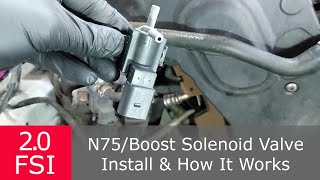
Typical fix: Replace the N75 valve. It is mounted on the front of the turbocharger and is accessible for DIY replacement, though space is tight. 🎬 See how to replace a broken N75 valve on this engine.
Est. part cost: $70-$150 - Sticking or Worn Turbocharger Wastegate 🔴 High Probability The internal wastegate flap can stick due to carbon buildup, or the actuator rod and linkage can develop excessive play, causing a rattle. A stuck-closed wastegate will not allow exhaust to bypass the turbine, causing uncontrolled boost. Excessive play prevents the wastegate from opening correctly to regulate boost.
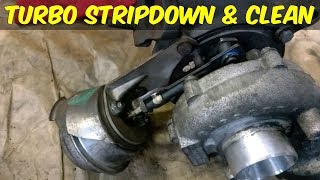
How to confirm: With the engine off, attempt to move the wastegate actuator rod by hand or with a vacuum pump. It should move smoothly without binding. Visually inspect the linkage for excessive looseness or rattle. A video guide shows that a stiff or immobile actuator arm when trying to move it by hand is a clear sign of internal carbon buildup. 🎬 Watch this step-by-step guide to diagnosing and repairing turbo overboost.
Typical fix: For excessive play/rattle, a special clip (OEM Part # 06J145220A) can be installed on the actuator rod to restore tension. 🎬 Watch how to install the anti-rattle clip on your turbo. If the wastegate is stuck internally due to carbon, the turbo must be removed and disassembled for cleaning. In severe cases, the entire turbocharger requires replacement.
Est. part cost: $15 (for clip) - $1200+ (for turbo replacement) - Faulty Diverter Valve (DV) 🟡 Medium Probability The original diaphragm-style diverter valves are notoriously prone to tearing. While this more often causes an underboost code (P0299), a torn or leaking DV can cause erratic boost behavior and sometimes contribute to overboost spikes as the system attempts to compensate, triggering P0234.
How to confirm: Remove the diverter valve (typically three bolts on the turbo compressor housing) and inspect the rubber diaphragm for tears or holes. The updated OEM part is a more robust piston-style design.
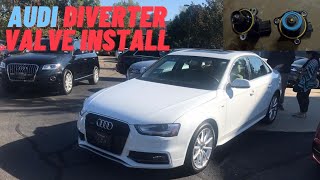
Typical fix: Replace the diverter valve with the updated OEM piston-style version (Part # 06H145710D) or a reputable aftermarket upgrade like the GFB DV+.
Est. part cost: $80-$140 - Leaking or Disconnected Vacuum Hoses 🟡 Medium Probability The rubber and plastic hoses that control the N75 valve and wastegate actuator become brittle and crack from heat and age, causing vacuum leaks that disrupt boost control signals. A leak in the line to the wastegate actuator is a direct cause of overboost.
How to confirm: Visually inspect all small vacuum lines connected to the turbo, N75 valve, and wastegate actuator. Perform a smoke test to find leaks that are not visible.
Typical fix: Replace the cracked or broken hose sections. It's often wise to replace all related vacuum lines at once.
Est. part cost: $10-$50 - Faulty Boost Pressure Sensor (G31/MAP) ⚪ Low Probability While less common than control valve failures, the sensor that measures boost pressure can fail and send incorrect, artificially high readings to the ECM, causing a false overboost code. Oil and carbon buildup can also foul the sensor, leading to inaccurate readings.
How to confirm: Use a scan tool to monitor the boost pressure reading with the engine off (it should read atmospheric pressure, around 1000 mbar). Compare its live data readings under load to a known good mechanical gauge. Check the sensor's 5V reference signal and ground.
Typical fix: Replace the boost pressure sensor. It is typically located on the charge pipe just before the throttle body.
Est. part cost: $40-$100
Rare But Worth Checking
- Aggressive Aftermarket Engine Tune: If the vehicle has been tuned ('chipped'), the software may be requesting boost levels that are too high or have too aggressive a ramp rate, causing the ECM to trigger the overboost protection. This can sometimes happen after replacing a hardware component like an N75 valve.
- Restricted Exhaust: A clogged catalytic converter can increase exhaust backpressure, preventing the turbo's wastegate from effectively regulating turbine speed, which can potentially cause an overboost condition. This will usually be accompanied by other fault codes and more severe power loss.
- ECU Software Issue: Audi TSB 2027082/5 notes that DTC P0234 can be set inadvertently by the software application without a physical fault. The fix is a software update for the Engine Control Module (ECM).
Diagnosis Steps
- Read the fault codes with an OBD-II scanner. Note P0234 and any other codes present.
- Using a scan tool with live data capability (like VCDS), monitor 'Specified Boost' vs. 'Actual Boost' while driving. Confirm that actual boost is significantly exceeding the specified value during acceleration.
- Visually inspect all vacuum lines running to and from the N75 valve, wastegate actuator, and diverter valve for cracks, brittleness, or disconnection.
- With the engine cool, reach down to the turbo wastegate actuator rod. Check for excessive play or looseness in the linkage. Use a hand-held vacuum pump on the actuator to verify it moves the rod smoothly.
- Perform an output test on the N75 (Boost Pressure Control Valve) using your scan tool to ensure it clicks and functions. Check resistance across its terminals (should be 25-35 ohms).
- Remove and inspect the diverter valve for a torn diaphragm. This is a very common failure point.
- If a software issue is suspected, check with an Audi dealer or specialist shop for any available ECU updates as per TSB 2027082/5.
- If all control components seem to work, perform a boost leak/smoke test to check the entire charge air system for hidden leaks.
- If the cause is still not found, the issue may be an internally sticking wastegate due to carbon buildup, requiring turbocharger removal for inspection or replacement.
Parts You'll Likely Need

- Boost Pressure Control Valve (N75)
(OEM #06F906283F)— This solenoid is the primary controller for the wastegate and is a frequent failure point causing P0234. - Diverter Valve (Piston Style Update)
(OEM #06H145710D)— The original diaphragm version is prone to tearing; the updated piston design is a crucial reliability upgrade. - Wastegate Actuator Rod Clip
(OEM #06J145220A)— A low-cost OEM part specifically designed to fix wastegate rattle and minor sealing issues that can contribute to boost control problems. - Boost Pressure Sensor (G31/MAP)
(OEM #038906051C)— Though less common, a faulty sensor can send incorrect data, leading to a false P0234 code.
Related Codes That Often Appear With This One
- P0299 — This code for 'Underboost Condition' can sometimes appear intermittently with P0234 if the boost control system (like a faulty N75 valve or sticking wastegate) is behaving erratically, causing both spikes and drops in pressure.
- P0243 — This code indicates a malfunction in the wastegate solenoid 'A' circuit, pointing directly to an electrical problem with the N75 valve or its wiring, which is a primary cause of P0234.
- P0106 — This code for Manifold Absolute Pressure/Barometric Pressure Sensor Range/Performance can appear alongside P0234, indicating the MAP sensor is providing readings that are out of the expected range, which could be the cause of the overboost detection or a symptom of it.
Technical Service Bulletins (TSBs) & Recalls
- TSB 2027082/5 (also listed as 01-13-30): Addresses DTC P0234 being set inadvertently by the ECU software. Recommends a software update.
- TPI 2031245: Referenced for the 2009-2012 Audi CAEB engine, this bulletin details issues with excessive turbocharger wastegate play, a direct cause of boost regulation faults.
Platform-Specific Known Issues
- A known issue of excessive play in the turbocharger wastegate linkage can cause boost deviation faults. Audi released a TSB and a retaining clip (Part No. 06J145220A) to address this without replacing the entire turbo.
- The original diaphragm-style diverter valve is a common failure point and was superseded by a more reliable piston-style valve from the manufacturer.
Mechanic-Grade Diagnostic Values
- N75 Boost Pressure Control Valve Resistance — expected: 25 to 35 Ohms. Failure: A reading outside this range indicates a faulty internal coil.
- G31 Boost Pressure Sensor Supply Voltage — expected: ~5.0V. Failure: If the 5V reference signal from the ECU is missing, there is a wiring or ECU fault.
- G31 Boost Pressure Sensor Signal Voltage (Key On, Engine Off) — expected: ~0.5V (at atmospheric pressure). Failure: A significantly different voltage at rest can indicate a biased or failed sensor.
- G31 Boost Pressure Sensor Signal Voltage (Max Boost) — expected: Up to ~4.5V - 4.7V. Failure: The ECU may set P0238 (Signal too High) if voltage exceeds the expected maximum, which can be related to the P0234 overboost condition.
- VCDS Live Data Logging (Engine) — expected: Monitor Measuring Blocks IDE00190 (Charge air pressure: specified value) and IDE00191 (Charge air pressure: actual value).. Failure: When actual pressure (IDE00191) consistently and significantly exceeds specified pressure (IDE00190) under load, it confirms an overboost condition.
Scan Tool Commands That Help
- VCDS (VAG-COM): Engine -> Output Tests -> Boost Pressure Control Valve (N75) — This command cycles the N75 solenoid, allowing a technician to listen for an audible click, which provides a quick check of its electrical actuation.
- VCDS (VAG-COM): Engine -> Basic Settings — After certain repairs, such as wastegate adjustment or replacement, a basic settings procedure may be required to allow the ECU to re-learn the component's operating range. This is mentioned as a general diagnostic step for the charge pressure control system.
- VCDS (VAG-COM): Acceleration Measurement (from Measuring Blocks screen) — While logging boost pressure, this feature can be used to create a timed run (e.g., 40-80 mph) to consistently reproduce the fault condition while capturing high-speed data logs of specified vs. actual boost.
Wiring & Ground Locations
- G31 (Boost Pressure Sensor) — On the driver's side of the vehicle, located on the intercooler charge pipe that runs up just under the coolant expansion tank. Access can be tight, and it may be easier to reach through the driver-side fog light grille opening.. This sensor provides the primary 'Actual Boost' reading to the ECU. A faulty sensor, corroded connector, or damaged wiring at this location can send false high-pressure signals, directly causing a P0234 code.
- N75 (Boost Pressure Control Valve) — Mounted directly on the front of the turbocharger assembly, below the intake pipe. It has an electrical connector and three hose connections.. This is the solenoid that directly controls the wastegate. Its location exposes it to significant heat, making its wiring and connector susceptible to degradation over time, which can cause intermittent or total failure of boost control.
- G31 Sensor Wiring (to ECU) — The four wires from the G31 sensor run directly to the Engine Control Unit (ECU). In one documented case on a similar VAG vehicle, the wires passed through a 14-pin connector (T14) at pins 8 and 10.. Damage or corrosion to the wiring harness between the sensor and the ECU can cause signal integrity issues, leading to incorrect boost readings and fault codes like P0238 (Signal too High) or P0234.
Real Owner Repair Stories
- Ross-Tech Forums user (2012 Audi TT Quattro (MK2 8J) with APR Stage 3 tune) — Getting a P0234 code during mild to aggressive acceleration (3-4k RPM), but not at full throttle. Also occasionally getting a P0106 (MAP sensor performance) code.
❌ Tried (didn't work) The owner replaced the stock G71 (MAP/Boost) sensor with a new Bosch unit, but the issue persisted.
✅ What actually fixed it The diagnosis pointed towards the aftermarket tune potentially having a boost map set lower than the car's actual output, or a second faulty MAP sensor. The final resolution was to contact the tuner (APR) for support with their tune, as the hardware (N75, wastegate) was not showing obvious faults during logging, suggesting a software or sensor calibration issue. - Ross-Tech Forums user (2012 Audi A4 B8 Quattro) — EPC light and limp mode when accelerating hard onto a freeway. Fault code P0234 - Limit Exceeded (Overboost Condition).
❌ Tried (didn't work) The owner first replaced the N75 valve (referred to as N72 in the post), which seemed to fix it temporarily, but the code returned a few days later.
✅ What actually fixed it The user performed data logging with VCDS and observed that while the requested boost would decrease after a peak, the actual boost pressure was slow to respond and remained high, triggering the overboost fault. The discussion pointed towards a mechanical issue with the wastegate not reacting quickly enough, rather than the N75 or sensor. The final fix was not explicitly stated, but the diagnosis moved away from the previously replaced electronic parts toward a mechanical turbo issue.
OEM Part Supersession History
06F145710B, 06F145710C, 06F145710G→06H145710D— The original diverter valve (DV) revisions used a rubber diaphragm that was highly prone to tearing, causing boost leaks and erratic performance. The updated 'D' revision (and later) uses a more durable and reliable piston-style design.N/A→06J145220A— This is not a supersession but an OEM fix. This clip is designed to be added to the wastegate actuator rod to add tension, compensating for wear in the linkage. It reduces wastegate rattle and helps the flap seal more tightly, which can resolve minor boost control issues.
Model Year Variations Within This Range
- 2009-2011: Early B8 models with the 2.0T TFSI engine were particularly susceptible to a significant oil consumption issue related to piston ring design. While not directly related to P0234, this can lead to increased carbon buildup in the engine and turbocharger system over time, potentially contributing to issues like a sticking wastegate.
- 2012 (B8) vs 2013+ (B8.5): The 2013 model year marked the 'B8.5' facelift. While the core 2.0T engine is mechanically very similar, the B8.5 received aesthetic updates and some mechanical tweaks, including changes to the transmission. However, the primary causes for P0234 (N75, wastegate, DV) remain consistent across the B8.0 and B8.5 generations.
Helpful Videos
![Audi a4 2.0t anti rattle turbo clip b8 [FIX]](https://img.youtube.com/vi/rntsf6ymiG4/mqdefault.jpg)
Used OEM Parts in Stock


New Aftermarket Parts Available


The information in this article is provided for general reference and educational purposes only. Vehicle specifications, procedures, and part compatibility can vary by production date, trim level, and region. Always consult your vehicle's factory service manual and verify part numbers before purchasing or performing repairs. Safety-critical components such as airbags, seat belts, and braking systems should be installed by a qualified professional.
- Audi A5:
- 🎬 Helpful Videos
- 🛍️ Shop This Part
- What's Unique About the 2009-2012 Audi A5
- Diagnostic Flowchart
- Symptoms You May Notice
- Most Likely Causes
- Rare But Worth Checking
- Diagnosis Steps
- Parts You'll Likely Need
- Related Codes That Often Appear With This One
- Technical Service Bulletins (TSBs) & Recalls
- Platform-Specific Known Issues
- Mechanic-Grade Diagnostic Values
- Scan Tool Commands That Help
- Wiring & Ground Locations
- Real Owner Repair Stories
- OEM Part Supersession History
- Model Year Variations Within This Range
- 🎟️ Get 5% Off