

P0234 on 2009-2012 Audi A4: Turbo Overboost Causes and Fixes
P0234 on a B8 Audi A4 almost always points to a problem with the turbo's boost control system. The most likely culprits are a faulty N75 boost control solenoid, a sticking turbocharger wastegate actuator, or a torn diverter valve. A cheap and effective fix for a loose wastegate rod is installing a simple clip (p/n 06J145220A). Expect to pay $50-$150 for a new N75 valve, which is a common DIY fix.
- P0234 on a B8 Audi A4 means the turbo is creating too much pressure, and the car is entering limp mode to protect itself.
- Do not immediately assume the turbo has failed. The cause is most often a cheaper, external part.
- Start your diagnosis with the most likely culprits: the N75 boost control valve, the diverter valve, and the vacuum lines connected to them.
- A handheld vacuum pump is an essential tool for testing the turbo's wastegate actuator, another very common point of failure.
- If you replace the diverter valve, use the upgraded piston-style 'Revision D' part (06H145710D) to prevent future failures.
What's Unique About the 2009-2012 Audi A4

The 2009-2012 (B8 generation) Audi A4 with the 2.0T TFSI CAEB engine is well-known for issues with its boost regulation components and other related problems like excessive oil consumption and timing chain tensioner failures. Unlike some vehicles where P0234 might point to a wide array of issues, on this specific platform, the problem is almost always isolated to a few key parts: the N75 boost control valve, the diverter valve, or the turbocharger's wastegate actuator itself. Audi has issued technical bulletins (TPI 2031245) regarding excessive wastegate play on these IHI turbos, highlighting it as a known issue that can be fixed with a simple clip.
Diagnostic Flowchart

Tap your situation to follow the diagnostic path that matches what you're seeing on this vehicle.
Symptoms You May Notice
- Check Engine Light and/or EPC (Electronic Power Control) light is on.
- Flashing glow plug light (on TDI models, but sometimes reported on TFSI as a symptom of limp mode).
- Vehicle enters 'limp mode,' with a severe lack of power and acceleration, especially during hard acceleration.
- Sudden loss of power that can be temporarily reset by turning the car off and on again.
- Jerky or inconsistent power delivery.
- Audible 'whooshing' sounds from the turbo area as it surges or a rattling noise from the wastegate actuator rod between 1800-3000 RPM.
- Replacing the turbocharger immediately. The issue is very often a much cheaper, external component like the N75 valve, wastegate clip, or diverter valve. Always diagnose these components first.
Most Likely Causes

- Faulty N75 Boost Pressure Control Valve (Solenoid) 🔴 High Probability This electro-pneumatic valve is constantly working and is a very common failure point on VW/Audi vehicles of this era. It can fail electrically (incorrect resistance when hot) or mechanically (sticking internally), preventing it from properly controlling the vacuum to the wastegate.
How to confirm: Use a capable scan tool (like VCDS) to perform an output test on the N75 valve. You can also test its resistance with a multimeter (should be 25-35 ohms cold). A simple physical test is to remove the valve and try to blow air through the bottom port; if air comes out the long side port (to the intake), the valve has failed internally.
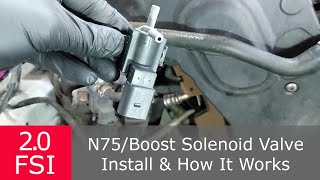
Typical fix: Replacement of the N75 valve. This is a relatively simple and accessible part to replace, often taking less than an hour. 🎬 Watch: How the N75 valve works and how to install it.
Est. part cost: $50-$150 - Sticking or Failed Turbocharger Wastegate Actuator / Loose Rod 🔴 High Probability The actuator rod can seize from corrosion or the internal diaphragm can fail. More commonly, the linkage between the actuator rod and the wastegate arm develops excessive play, causing a rattle and preventing the wastegate from opening correctly to bleed off excess boost. This is a known issue documented in Audi TPI 2031245.
How to confirm: With the engine off, use a handheld vacuum pump to apply vacuum to the actuator. The rod should move smoothly through its full range of motion and hold vacuum. Visually inspect and physically wiggle the linkage for excessive looseness or rattle.
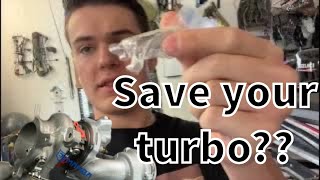
Typical fix: If the actuator is faulty, it must be replaced. If the linkage is simply loose and rattling, install the OEM wastegate actuator clip (Part No. 06J145220A). This inexpensive clip removes the slack and can resolve the overboost issue without turbo replacement. 🎬 See how to install the anti-rattle clip on your turbo actuator.
Est. part cost: $20-$30 for clip, $100-$300 for actuator, $1000+ for turbo - Failed or Torn Diverter Valve (DV) 🟡 Medium Probability The original factory DV uses a rubber diaphragm that is notoriously prone to tearing, creating a boost leak. While this often causes an underboost code (P0299), it can disrupt the entire boost control system and contribute to erratic behavior and overboost spikes.
How to confirm: Remove the diverter valve from the turbocharger (typically three bolts) and physically inspect the diaphragm for any rips or tears. The valve is located on the front of the turbocharger housing.
Typical fix: Replace the valve. It is highly recommended to upgrade to the revised piston-style DV (OEM Part No. 06H145710D, often called 'Revision D') which is far more durable. Aftermarket options like the GFB DV+ (T9351) are also popular upgrades that replace failure-prone plastic parts with metal.
Est. part cost: $80-$160 - Leaking or Blocked Vacuum Hoses 🟡 Medium Probability The small rubber and plastic hoses that control the N75 valve and wastegate become brittle from engine heat and time, leading to cracks and leaks. A leak in the line to the wastegate actuator will prevent it from opening, directly causing an overboost condition.
How to confirm: Visually inspect all vacuum lines connected to the turbocharger, N75 valve, and intake manifold. Perform a smoke test on the vacuum system to find leaks that aren't visible.
Typical fix: Replace the cracked or broken sections of hose. It's often wise to replace all related vacuum lines at once.
Est. part cost: $20-$60
Rare But Worth Checking
- Faulty Boost Pressure Sensor (G31/MAP): While not as common as mechanical failures, a faulty sensor can send incorrect high-pressure readings to the ECU, falsely triggering the P0234 code. If actual boost feels normal but the code appears, the sensor is a likely suspect.
- Sticking Internal Turbocharger Wastegate Flap: Carbon buildup inside the turbo's exhaust housing can cause the wastegate flap itself to stick closed. This is a serious issue that typically requires removing and either cleaning or replacing the entire turbocharger assembly. Some owners have reported success using in-situ cleaning methods with products like oven cleaner, though this is a high-risk repair.
Diagnosis Steps
- Read Fault Codes: Use an OBD-II scanner (VCDS is preferred for VAG vehicles) to confirm P0234 is the primary code. Note any other codes present.
- Visual Inspection: Thoroughly inspect all vacuum lines and charge pipes around the turbocharger for cracks, disconnections, or oil residue indicating a leak.
- Test the Wastegate Actuator & Rod: With the engine off, use a handheld vacuum pump on the actuator port; the arm should move smoothly and hold vacuum. Manually check the actuator rod for excessive play or rattling. If it's loose, the wastegate clip (06J145220A) is the likely solution.
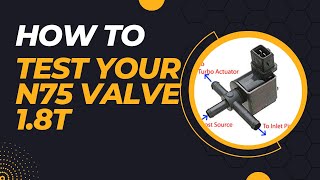
- Test the N75 Valve: Using a scan tool, perform an output test on the N75 valve. Alternatively, remove it and test resistance (25-35 ohms) and perform a blow-through test as described in the causes section. 🎬 Watch this quick guide on testing your N75 valve for failure.
- Inspect the Diverter Valve (DV): Remove the DV from the turbo housing (three M6 bolts) and inspect its diaphragm for tears. If it's the original diaphragm type, consider upgrading to the piston 'Revision D' regardless.
- Log Boost Pressure: With a capable scan tool like VCDS, log measuring block 115 (or advanced measuring values for 'Charge air pressure: specified value' and 'Charge air pressure: actual value') during a 3rd gear pull from low RPM. If actual boost consistently and significantly exceeds requested boost, the overboost is real. If actual boost seems normal but the code sets, suspect a faulty boost pressure sensor.
- Check Sensor Data: If the MAP sensor is suspected, check its reading with the key on, engine off. It should read close to atmospheric pressure (e.g., ~990 mbar at sea level). If the reading is illogical, the sensor is likely bad.
Parts You'll Likely Need
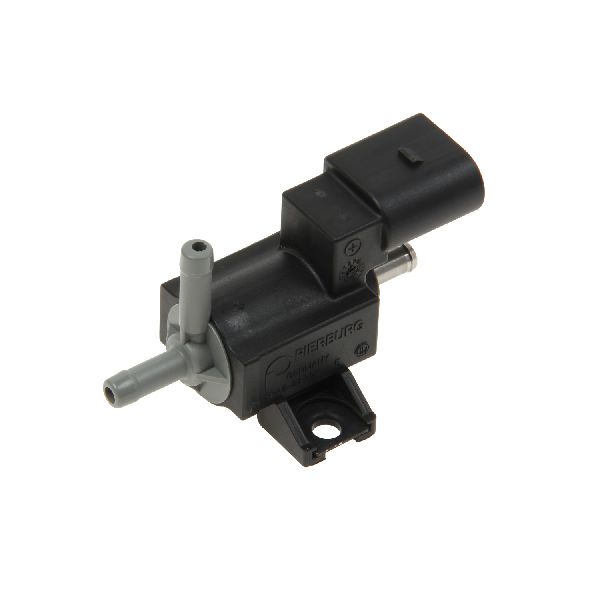
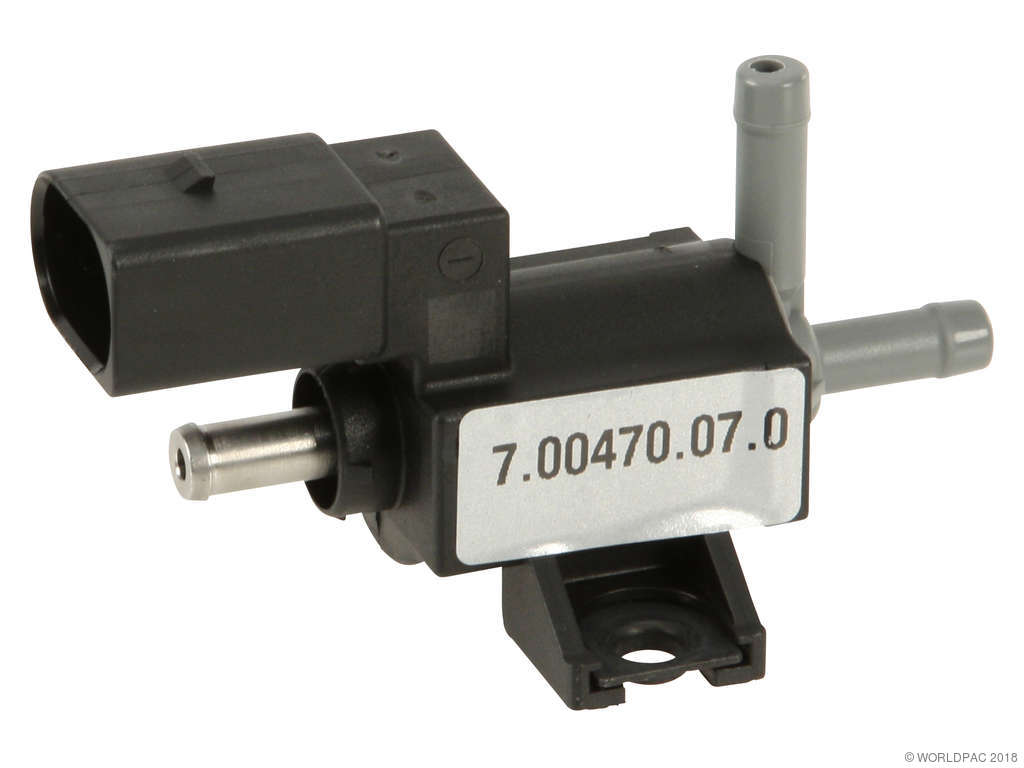
- Turbocharger Boost Control Valve (N75 Valve)
(OEM #06F906283F)— This is the most common failure point for P0234 on this engine. It directly controls the wastegate and is a frequent and inexpensive fix.
Trusted brands: Pierburg (OEM Supplier), Bosch, Genuine Volkswagen/Audi
OEM price range: $100-$150
Aftermarket price range: $40-$80 - Turbocharger Wastegate Actuator Rattle Clip
(OEM #06J145220A)— A specific OEM fix for the common issue of a loose/rattling wastegate rod, which prevents proper wastegate function and can cause overboost. This is a very cheap and highly effective first step if rattle is present.
Trusted brands: Genuine Volkswagen/Audi
OEM price range: $20-$30
Aftermarket price range: $15-$25 - Turbocharger Diverter Valve (Piston-Style Upgrade)
(OEM #06H145710D)— The original diaphragm-style valve is a known failure point. Upgrading to the robust 'Revision D' piston-style valve is a common preventative measure and a likely fix if the original has failed.
Trusted brands: Pierburg (OEM Supplier), Genuine Volkswagen/Audi, GFB (Go Fast Bits)
OEM price range: $80-$120
Aftermarket price range: $60-$160
Related Codes That Often Appear With This One
- P0299 — This code for 'Underboost Condition' can appear intermittently with P0234 if a component like a faulty diverter valve or sticking wastegate is causing erratic boost control, sometimes too high and sometimes too low.
- P2015 — This code for 'Intake Manifold Runner Position Sensor/Switch Circuit Range/Performance' can sometimes appear with P0234. While not directly causal, some boost control solenoids share a power supply with the intake runner control valve, suggesting a potential wiring harness issue.
Technical Service Bulletins (TSBs) & Recalls

- Rattling Noises from Engine Compartment or Exhaust: This technical service bulletin addresses customer complaints of a rattling noise from the engine bay, typically between 1800-3000 RPM. The cause is excessive play in the turbocharger wastegate actuator rod. The prescribed fix is the installation of a retaining clip, part number 06J145220A, which reduces the vibration. While this TSB is for rattle, the excessive play can also lead to improper wastegate sealing, contributing to boost control issues like P0234.
Platform-Specific Known Issues
- A Technical Service Bulletin (TSB) from Audi, #01133020270825, specifically addresses the P0234 code on these vehicles.
- Another technical document, TPI 2031245, points to excessive wastegate play on the turbocharger as a known cause for boost regulation faults on the 2.0T CAEB engine.
Mechanic-Grade Diagnostic Values
- N75 Valve Duty Cycle (VCDS) — expected: Should cycle rapidly between a low percentage (e.g., <10%) and a high percentage (e.g., >90%) under load. At idle, it may sit at a high percentage.. Failure: A duty cycle that is stuck at 0% or 100% regardless of engine load, or does not respond during an output test, indicates a faulty valve or wiring.
- Boost Pressure Sensor (G31/MAP) Voltage at KOEO (Key On, Engine Off) — expected: Approximately 1.5V at sea level, corresponding to atmospheric pressure (~1000 mbar).. Failure: A voltage significantly outside the 0.5V - 4.5V operating range, or a reading that doesn't correlate with atmospheric pressure, points to a bad sensor.
- N75 Valve Coil Resistance — expected: 25-35 Ohms when cold.. Failure: A reading of infinite resistance (open circuit) or very low resistance (short circuit). The failure can be intermittent, so testing when the engine is hot may be necessary.
Scan Tool Commands That Help
- VCDS (VAG-COM): Engine -> Output Tests -> Charge Pressure Control Solenoid Valve (N75) — This test directly commands the N75 valve to cycle on and off. You should hear an audible clicking from the valve. A lack of clicking indicates a failed valve or a problem in the wiring harness.
- VCDS (VAG-COM): Engine -> Basic Settings -> Throttle Body Alignment (TBA) — While not a direct turbo function, performing a TBA after replacing boost-related components like the N75 or turbocharger can help the ECU reset its learned adaptations for airflow control, which can be beneficial.
Wiring & Ground Locations
- Main Engine Ground Strap — Under the battery and battery tray, connecting the chassis to the engine block.. Corrosion at this primary ground point is common and can cause a floating ground, leading to erratic voltage and unpredictable behavior from sensors (MAP) and solenoids (N75) controlled by the ECU.
- N75 Valve Connector — The 2-pin connector on the N75 valve itself, located on the turbocharger.. Pin 1 is the 12V+ supply (often shared with other components like the N249 and N316) from the fuel pump relay, and Pin 2 is the ground-side signal wire controlled by the ECU. Checking for 12V at Pin 1 (KOEO) and continuity to ground on Pin 2 can diagnose wiring issues.
- G12 Ground Connection — Located at the center of the firewall in the engine compartment.. This ground point serves the ECM. A poor connection here can cause a wide range of engine management faults, including incorrect calculations for boost control.
Real Owner Repair Stories
- Audizine & AudiWorld forum user reports (2010 Audi A4 2.0T (CAEB)) — P0234 code, EPC light, and limp mode under hard acceleration.
❌ Tried (didn't work) Replaced N75 valve, Replaced Diverter Valve (DV) with updated 'D' revision, Smoke tested for boost/vacuum leaks (none found)
✅ What actually fixed it The internal wastegate flap inside the turbocharger's exhaust housing was seized with carbon buildup, preventing it from opening to relieve boost. The entire turbocharger had to be removed and either cleaned or replaced. - Ross-Tech forum user report (2012 Audi A4 Quattro) — P0234 overboost, EPC light, limp mode on freeway.
❌ Tried (didn't work) Replaced N75 valve (initially seemed to fix it, but the code returned).
✅ What actually fixed it After data logging showed actual boost significantly exceeding specified boost even after the N75 replacement, the final cause was identified as a faulty Boost Pressure Sensor (G31/MAP) that was providing inaccurate readings to the ECU.
"I Checked Everything" — The Actual Cause
- A failed PCV (Positive Crankcase Ventilation) valve can cause P0234. While a smoke test of the intake and vacuum lines will show no leaks, a failed PCV diaphragm creates excessive, unregulated vacuum in the crankcase. This can interfere with the proper operation of vacuum-actuated components and, in some edge cases, disrupt the delicate balance of the boost control system, leading to overboost. The diagnostic is to check for extreme suction at the oil filler cap when the engine is running.
When the Usual Fixes Don't Work
- While the most common causes for P0234 are inexpensive external components, there are documented cases where owners have replaced the N75 valve, diverter valve, and MAP sensor without resolving the issue. In several of these instances, the ultimate culprit was a mechanical failure within the turbocharger itself, specifically a wastegate flap sticking due to carbon buildup. This serves as a reminder that if all common, external parts check out and data logs still confirm a real overboost condition, the turbocharger assembly itself must be inspected as the final point of failure.
OEM Part Supersession History
06H145710C (and earlier diaphragm versions)→06H145710D— The original diverter valves used a rubber diaphragm that was prone to tearing, causing boost leaks. The 'D' revision replaces this with a much more durable piston-style design.
Heads up: The 'D' version is a direct, bolt-on upgrade for all 2009-2012 A4 2.0T models. Later revisions like 'J' also exist but 'D' is the well-documented, reliable upgrade.06F906283F (N75 Valve)→06F906283F (part number has remained stable)— N/A
Heads up: While the OEM part number is stable, the OEM supplier is Pierburg (p/n 7.00470.07.0). It is highly recommended to use the Pierburg or Genuine VW/Audi part, as cheap aftermarket versions are known for premature failure.
Model Year Variations Within This Range
- 2009-2012: Within this range, all Audi A4 2.0T models use the CAEB engine code, and the turbocharger (IHI) and boost control components are consistent. Therefore, the causes and fixes for P0234 are not subject to significant variation between these model years. The major changes came with the B8.5 facelift in 2013.
Helpful Videos
Used OEM Parts in Stock


New Aftermarket Parts Available



The information in this article is provided for general reference and educational purposes only. Vehicle specifications, procedures, and part compatibility can vary by production date, trim level, and region. Always consult your vehicle's factory service manual and verify part numbers before purchasing or performing repairs. Safety-critical components such as airbags, seat belts, and braking systems should be installed by a qualified professional.
- Audi A4:
- 🎬 Helpful Videos
- 🛍️ Shop This Part
- What's Unique About the 2009-2012 Audi A4
- Diagnostic Flowchart
- Symptoms You May Notice
- Most Likely Causes
- Rare But Worth Checking
- Diagnosis Steps
- Parts You'll Likely Need
- Related Codes That Often Appear With This One
- Technical Service Bulletins (TSBs) & Recalls
- Platform-Specific Known Issues
- Mechanic-Grade Diagnostic Values
- Scan Tool Commands That Help
- Wiring & Ground Locations
- Real Owner Repair Stories
- "I Checked Everything" — The Actual Cause
- When the Usual Fixes Don't Work
- OEM Part Supersession History
- Model Year Variations Within This Range
- 🎟️ Get 5% Off