

OBD-II Code P0233: Fuel Pump Secondary Circuit Intermittent
The Ultimate Guide to Diagnosing and Fixing P0233
- P0233 indicates an intermittent power loss to the fuel pump, creating an immediate safety risk of sudden engine stalling at highway speeds.
- Never replace the fuel pump first; over 80% of P0233 codes stem from control components like a $30 faulty relay, a corroded Fuel Pump Driver Module (FPDM), or a melted fuse.
- On 2009-2014 Ford F-150s, a melted Fuse 27 is the primary culprit requiring a $25 relocation kit, while 2004-2008 models typically suffer from a corroded FPDM above the spare tire.
- Dodge, Chrysler, and Jeep owners should test the Totally Integrated Power Module (TIPM); installing a $30 external bypass cable often fixes the internal relay failure without a $1,200 module replacement.
- Pinpoint the exact failure point by performing a 'wiggle test' on the wiring harness while monitoring a multimeter for any voltage drop below 12.0V.
What Does P0233 Mean?

P0233 indicates the Powertrain Control Module (PCM) detects an unstable power signal in the fuel pump circuit. When the PCM commands the fuel pump on, it monitors a feedback circuit for steady voltage; if voltage drops out unexpectedly, it triggers this code. This intermittent signal disrupts fuel delivery from the tank to the engine, causing immediate stalling and severe drivability issues.
Technical definition: The SAE/OBD-II definition for P0233 is 'Fuel Pump Secondary Circuit Intermittent'. The PCM sets this when it detects unstable voltage on the fuel pump's secondary power circuit while the relay is activated. The 'secondary circuit' is the high-current path delivering battery power through a fuse and relay directly to the fuel pump or Fuel Pump Driver Module (FPDM).
Can I Drive With P0233?
No — Do Not Drive. Do not drive with this code. The intermittent fault causes sudden engine stalling without warning. Stalling at highway speeds or in intersections results in immediate loss of power steering and brake assist, creating a severe collision risk.
Common Causes


- Faulty Fuel Pump Driver Module (FPDM) (Very Common) — The FPDM controls fuel pump voltage and speed on many Ford, GM, and VW vehicles. Mounted on the exposed frame, these modules suffer from road salt corrosion and vibration, leading to internal electronic failure and intermittent pump signals.
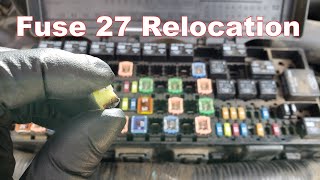
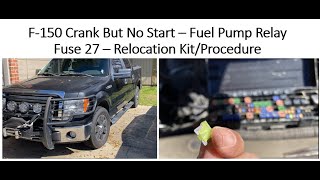
- Overheating/Melted Fuel Pump Fuse (Very Common) — On 2009-2014 Ford F-150s, the 20A fuel pump fuse (F27) uses undersized terminals that create high resistance. The fuse and housing melt, causing an intermittent connection before the fuse blows, requiring a permanent fuse relocation kit. 🎬 Watch: How to install the Ford F-150 Fuse 27 relocation kit.
- Failing Fuel Pump Relay (Common) — The PCM uses this electromagnetic switch to power the fuel pump. Internal relay contacts wear out, burn, or pit over time, creating an intermittent connection that directly triggers P0233.
- Damaged Wiring or Corroded Grounds (Common) — The wiring harness running to the fuel pump or FPDM chafes against the frame or melts near exhaust components. Additionally, a corroded or loose chassis ground wire near the fuel tank creates high resistance and an intermittent voltage drop.
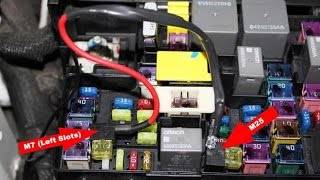
- Faulty Totally Integrated Power Module (TIPM) (Common) — On many Chrysler, Dodge, and Jeep vehicles, the fuel pump relay is soldered internally to the main fuse box (TIPM). Failure of this internal relay causes intermittent power to the fuel pump, requiring a TIPM repair or an external bypass kit. 🎬 Watch: How to test and bypass a faulty TIPM fuel relay.
- Failing Fuel Pump (Less Common) — The electric motor inside the fuel pump develops an internal short or open circuit when hot or under heavy load. While possible, circuit and control module issues are far more frequent causes for an intermittent fault code like P0233.
- Faulty Inertia Fuel Shutoff (IFS) Switch (Rare) — Present on many Fords, the IFS switch cuts pump power in an accident. These switches become overly sensitive or develop internal faults, intermittently tripping during normal driving.
- Faulty Powertrain Control Module (PCM) (Rare) — The internal driver circuit within the PCM that controls the fuel pump relay fails. This is a rare last resort after exhaustively testing all wiring, grounds, relays, and modules.
Symptoms

- Engine Stalls Unexpectedly — The engine runs perfectly and then suddenly shuts off while driving or idling. It often requires a cool-down period before restarting.
- Engine Will Not Start or is Hard to Start — The vehicle cranks but refuses to start because the fuel pump receives no power. This happens intermittently; it starts fine one day and fails the next.
- Poor Engine Performance & Rough Idle — The car hesitates, sputters, surges, or loses significant power during acceleration. At idle, the engine stumbles or runs rough as the fuel pump momentarily loses power.
- Check Engine Light is On (also visible on scanner) — The PCM illuminates the Malfunction Indicator Lamp (MIL) immediately upon detecting the intermittent voltage drop in the secondary circuit.
Diagnostic Flowchart
Tap your situation to follow the diagnostic path that matches what you're seeing on this code.
Common Fixes & Costs
- Replace Fuel Pump Relay — Parts: $20-$60, Labor: $25-$75, ~0.2 hr book time (DIY)
- Replace Fuel Pump Driver Module (FPDM) — Parts: $70-$250, Labor: $75-$150, ~1.0 hr book time (Intermediate)
- Perform Ford Fuse 27 Relocation (TSB 15-0137) — Parts: $20-$40, Labor: $150-$250, ~1.5 hr book time (Intermediate)
- Install TIPM Bypass Cable or Repair TIPM — Parts: $30-$500, Labor: $50-$200, ~1.0 hr book time (Intermediate)
- Repair Damaged Wiring or Ground Connection — Parts: $10-$50, Labor: $150-$500+, ~2.5 hr book time (Professional)
- Replace Fuel Pump Assembly — Parts: $300-$800, Labor: $300-$600, ~3.5 hr book time (Professional)
Used vs. New Parts: Buying Guide
When a used part is worth it: For electronic modules like a Fuel Pump Driver Module (FPDM) or a complete TIPM assembly, a used part from a low-mileage, non-corroded donor vehicle is a cost-effective option for older vehicles where new OEM parts are prohibitive.
Donor-vehicle mileage cap: roughly under 80000 miles for the part to have meaningful remaining life.
Donor quality checklist:
- Verify the exact part number matches; modules often look identical but have different internal programming.
- For chassis-mounted parts like FPDMs, avoid donors from rust-belt states to minimize the risk of corrosion.
- Ask about the donor vehicle's history; parts from accident-damaged cars are better than those from vehicles scrapped for electrical issues.
Decision logic:
- If The part is a simple, non-programmed relay → Always buy new as the cost is low and it is a common wear item.
- If The part is an expensive electronic module (FPDM, TIPM) and the vehicle is over 10 years old → A warrantied remanufactured unit offers the best cost-to-reliability balance.
- If The part is known to have a high failure rate (e.g., original design Ford FPDM) → Favor a new, redesigned aftermarket part with standoffs over a used OEM part with the same design flaw.
Warranty tradeoff: Used parts typically come with a 30-90 day functional warranty. New aftermarket parts offer 1-year to lifetime warranties. Labor for re-installation is almost never covered by a used part warranty.
Worst-case if a used part fails: $200-$600 if a used electronic module fails after installation, representing the repeat labor cost plus diagnostic time.
What Happens If You Wait — Timeline
- 0-1 month: Code P0233 sets. Rare, momentary engine hesitation occurs during acceleration. (MPG impact: 0-2%% · Added cost: $0)
- 1-4 months: Hesitation increases. Engine becomes hard to start intermittently. Occasional stalling at idle. (MPG impact: 2-5%% · Added cost: $20-$80 in wasted fuel)
- 4-8 months: Sudden engine stalling while driving creates a significant safety risk. Lean conditions begin overheating oxygen sensors. (MPG impact: 5-10%% · Added cost: $250-$600 (potential O2 sensor replacement))
- 8+ months: Vehicle is unreliable and frequently stalls. Prolonged lean conditions cause catastrophic failure of the catalytic converter or burned valves. (MPG impact: 10-15%% · Added cost: $1200-$3000+ (catalytic converter and/or engine valve damage))
Cost of Not Fixing It
- Immediate: Sudden engine stalling creates a severe collision risk due to loss of power steering and brakes. The vehicle also fails to start, leaving you stranded. (Added cost: 0)
- 1-3 months: Intermittent fuel supply causes a lean running condition, increasing combustion temperatures and prematurely wearing out oxygen sensors. (Added cost: $200-$600)
- 3-12 months: Prolonged lean conditions overheat and destroy the catalytic converter. Repeated stalling and hard starting damages the starter motor and battery. (Added cost: $1200-$2800)
Diagnosis Steps

- Check Codes & Review Freeze Frame Data
Use an OBD-II scanner to confirm P0233 and check for related codes (P0230, P0231, P0232). Analyze the freeze frame data to pinpoint the exact engine conditions (RPM, speed, temperature) when the fault occurred.
Tools: OBD-II Scanner (Beginner) - Inspect Fuses, Relays, and TSBs
Locate the fuel pump fuse and relay. Visually inspect the fuse (especially F27 on 2009-2014 F-150s for melting). Swap the fuel pump relay with an identical non-essential relay (like the horn) to see if the problem resolves. Check for relevant Technical Service Bulletins (TSBs).
Tools: Owner's Manual, Fuse Puller (Beginner) - Inspect the Fuel Pump Driver Module (FPDM)
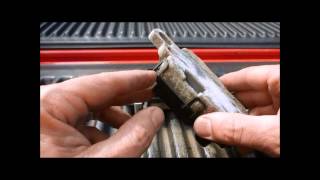
If equipped (common on Ford, GM, VW), unbolt the FPDM from the frame rail. Inspect the aluminum backplate for heavy white powder or cracks caused by galvanic corrosion against the steel frame, a definitive sign of failure.
Tools: Socket/Wrench Set (Intermediate) - Test Voltage Under Load (Wiggle Test)
Connect a multimeter to the power feed wire at the fuel pump or FPDM. With the key on (engine off), monitor for steady battery voltage (12.0-12.6V). Wiggle the wiring harness and tap the relay/FPDM; a sudden drop to 0V isolates the fault location.
Tools: Multimeter (Advanced) - Thorough Visual Inspection of Wiring and Grounds
Trace the wiring harness from the fuse box to the FPDM and fuel pump. Look for chafing against the frame, melting near exhaust, or corrosion at connectors. Ensure the chassis ground wire is clean, tight, and rust-free.
Tools: Flashlight, Inspection Mirror (Intermediate) - Pro Tip: Bypass the Fuel Pump Relay
Remove the fuel pump relay and use a fused jumper wire to connect the two high-current terminals (usually 30 and 87). If the fuel pump runs consistently, the problem is the relay itself or the low-current control circuit.
Tools: Fused Jumper Wire, Wiring Diagram (Advanced) - Pro Tip: Perform a Voltage Drop Test
Connect the multimeter's positive lead to the pump's ground terminal and negative to the battery negative. With the pump running, the reading must be under 0.2 volts. Repeat for the power side. Readings above 0.2V indicate excessive circuit resistance.
Tools: Multimeter with long leads (Advanced) - Pro Tip: Analyze Scan Tool Live Data PIDs
Use an advanced scan tool to monitor 'FPDM Duty Cycle' and 'Fuel Pump Monitor Voltage'. If the voltage PID shows sudden drops to zero correlating with engine stumbles, it confirms the intermittent electrical fault.
Tools: Advanced OBD-II Scan Tool (Advanced) - Pro Tip: Check Fuel Pump Resistance
Disconnect the fuel pump and measure resistance across the motor terminals. Normal resistance is typically 0.2 to 3.0 ohms. An 'OL' reading indicates an internal open circuit, while zero ohms indicates a direct short.
Tools: Multimeter (Ohmmeter) (Advanced) - Pro Tip: Lab Scope Waveform Analysis
Connect a lab scope to the fuel pump's power and ground wires. A healthy pump shows a consistent commutator pattern. An intermittent open circuit shows a sharp drop to zero voltage, catching split-second dropouts a multimeter misses.
Tools: Automotive Oscilloscope (Lab Scope) (Professional)
When This Code Triggers (Freeze-Frame Conditions)
- Engine Coolant Temp: 180-200°F (The fault frequently appears after the engine is fully warmed up, pointing to heat-related failures in relays or electronic modules.)
- RPM: 1500-2500 (Intermittent cut-outs are common during steady-state cruising. The constant vibration of normal driving exposes loose connections or corroded grounds.)
- Engine Load: 30-60% (Occurs under moderate load, requiring a sustained current draw that causes weak connections or failing fuses to overheat and drop voltage.)
- Vehicle Speed: 35-65 mph (Triggers at city and highway speeds where the fuel pump runs continuously, resulting in sudden hesitation or a complete stall.)
Related Codes
- P0232 — Fuel Pump Secondary Circuit High. P0233 is a loss of power when ON, while P0232 is the presence of power when OFF (e.g., a stuck-closed relay).
- P0231 — Fuel Pump Secondary Circuit Low. P0231 is a constant lack of voltage, whereas P0233 is an intermittent voltage drop.
- P0230 — Fuel Pump Primary Circuit. P0230 indicates a fault in the low-current control signal from the PCM to the relay, not the high-current power to the pump.
- P0627 — Fuel Pump 'A' Control Circuit /Open. On Ford F-150s, this code frequently accompanies P0233 during the melting Fuse 27 issue.
Climate & Environmental Factors
- Road Salt / Humidity: In the 'Salt Belt', chassis-mounted components like the FPDM and ground connections suffer accelerated corrosion, creating the high resistance that causes P0233.
- Extreme Cold: Cold weather makes wires and plastic connectors brittle, increasing the chance of breakage. Weak batteries in cold weather also cause unstable system voltage.
- High Heat: High ambient and exhaust heat increases the electrical load on the fuel pump circuit, causing failing components (like Ford Fuse 27) to overheat and drop connection.
How to Talk to a Mechanic About This Code
Say this: "I have a P0233 code and intermittent stalling. Please test the fuel pump relay, FPDM, TIPM, and related wiring before recommending a fuel pump replacement."
This directs the technician to perform a proper electrical diagnosis first, preventing the common misdiagnosis of replacing the expensive fuel pump unnecessarily.
Avoid saying:
- 'My car is stalling, just fix it.'
- 'My check engine light is on, can you look at it?'
- 'I think I need a new fuel pump.'
Questions to ask before authorizing the repair:
- Did you perform a voltage drop test on the power and ground circuits to the pump?
- Did you test the fuel pump relay and inspect the fuse for heat damage?
- If you are recommending a module (FPDM/TIPM) or pump replacement, what specific test confirmed that part has failed?
- Can you provide a printout of the freeze-frame data from the original code?
Where to Take It: Dealer vs Independent vs Chain
- Dealer:
Recommended only if the vehicle is under warranty or requires proprietary software for module programming. Otherwise, an independent shop is more cost-effective.
Best for: Vehicles still under powertrain or emissions warranty., Known manufacturer-specific issues that require proprietary software for module programming (e.g., GM FPDM).
Downsides: Significantly higher labor rates (up to 40-50% more) and parts costs., Defaults to expensive assembly replacements (e.g., entire TIPM) when a simpler fix is available. (Typical cost: +40% vs. baseline) - Independent Shop:
Best fit for most P0233 scenarios. Experienced technicians easily diagnose common electrical faults like relays, wiring, and FPDMs cost-effectively.
Best for: Out-of-warranty vehicles where cost is a major factor., Diagnosing common electrical faults, as they have more flexibility and experience with creative troubleshooting.
Downsides: Shop quality and diagnostic skill vary greatly; vet shops based on reviews and ASE certifications., Lacks specific programming tools for certain replacement modules on newer vehicles. (Typical cost: +0% vs. baseline) - Chain Shop:
Avoid for initial diagnosis. Their business model is not suited for complex, intermittent electrical problems.
Best for: Simple, clear-cut parts replacement like a battery or an easily accessible, swappable relay.
Downsides: Technicians lack the deep electrical diagnostic skills needed for an intermittent fault., High pressure to sell parts leads to misdiagnosis (e.g., selling a fuel pump when the relay is bad). (Typical cost: -10% vs. baseline)
When to Walk Away From the Repair
If the total estimated repair cost exceeds 50% of the car's private-party value, sell or trade in the vehicle.
- Car worth $4000, fix is $2200: Walk away. The repair cost is over 50% of the car's value. It's not a sound financial decision.
- Car worth $12000, fix is $750: Fix it. The repair cost is well below the 50% threshold and restores a valuable asset.
- Car worth $3000, fix is $1600: Walk away. The repair cost is too high relative to the car's low value. Put that money toward a more reliable vehicle.
What Scan Tool You Need for This Code
Minimum: A scanner that reads codes, Freeze Frame data, and Live Data streams to catch voltage dropouts.
A basic $20 code reader only gives you the 'P0233' code. To find an intermittent electrical fault, you need to see the conditions when the fault happened (Freeze Frame) and watch the fuel pump voltage in real-time (Live Data).
Budget: BlueDriver Bluetooth Pro (~$100) — Provides excellent live data graphing essential for watching fuel pump voltage. It also provides detailed freeze frame data and generates repair reports.
Mid-range: Innova 5610 or Foxwell NT510 Elite (~$250) — Views manufacturer-specific PIDs like FPDM duty cycle and offers limited bidirectional controls to test components like relays.
Professional: Autel MaxiCOM MK808S / MK808BT Pro (~$450-550) — Offers full bidirectional control to command the fuel pump on and off directly. This confirms if the control module and wiring are working correctly, saving immense diagnostic time.
Rent vs buy: Most auto parts stores have a tool loaner program where you can borrow a basic OBD-II scanner for free. However, to diagnose an intermittent issue using live data, you will need to purchase a scanner.
How to Clear the Code After You Fix It
- Reconnect battery if disconnected for repair.
- Use an OBD-II scan tool to clear the P0233 fault code.
- Perform a complete OBD-II drive cycle to allow readiness monitors to run.
Drive cycle (~30 minutes): A generic drive cycle includes a cold start (after sitting 8+ hours), 2-3 minutes of idling, a period of mixed city driving (stop-and-go), and about 10-15 minutes of steady highway speed driving (around 55 mph). The goal is to operate the vehicle under various conditions to allow the onboard computer to self-test all emission-related systems.
Readiness monitors affected: Catalyst Monitor, Evaporative System (EVAP) Monitor, Oxygen (O2) Sensor Monitor
Before emissions retest: drive at least 100 miles to fully set monitors.
Watch out for:
- Simply disconnecting the battery clears the code but resets all emissions monitors to 'Not Ready', causing an automatic emissions test failure.
- The code returns immediately if the underlying intermittent electrical fault remains unaddressed.
- Failing to drive a varied cycle prevents EVAP or Catalyst monitors from setting to 'Ready'.
Will This Fail Emissions / State Inspection?
Yes — this code typically fails an OBD-II emissions inspection.
- California: An active P0233 code is an automatic smog check failure. A full drive cycle must set all readiness monitors to 'Ready' before a re-test.
- New York: Vehicles automatically fail the NYS emissions inspection with an illuminated Check Engine Light. Readiness monitors must be reset after clearing the code.
- Texas: In the 17 emissions-testing counties, an active P0233 code causes an automatic OBD-II test failure.
Most Commonly Affected Vehicles
- Ford F-150 (2004-2014) — 2004-2008 models suffer FPDM corrosion against the steel frame. 2009-2014 models experience melting at fuel pump fuse F27, requiring TSB 15-0137 relocation.
- Ford Expedition / Lincoln Navigator (2005-2008) — Shares the vulnerable FPDM design and mounting location as the F-150, making it highly susceptible to corrosion failure.
- Ford Explorer / Mercury Mountaineer (2006-2010) — Utilizes an FPDM prone to water intrusion and corrosion, leading to intermittent fuel pump operation.
- Chevrolet Silverado / GMC Sierra (2007-2013) — The Fuel Pump Flow Control Module above the spare tire fails from exposure, or its connector packs with dirt.
- Dodge Ram 1500/2500/3500 (2009-2012) — The non-serviceable fuel pump relay inside the TIPM fails. Owners often use third-party bypass kits instead of replacing the entire TIPM.
- Volkswagen Jetta / GTI / Passat (2006-2015) — The fuel pump control module under the rear seat cushion fails internally, leading to stalling and no-start issues.
- Nissan Titan / Frontier / Altima (2004-2015) — P0233 links to a failing fuel pump relay located in the Intelligent Power Distribution Module (IPDM).
- Subaru Outback / Forester / Impreza (2005-2014) — Caused by a failing conventional fuel pump relay or corrosion in the wiring harness connectors near the tank.
Manufacturer-Specific Notes
- Ford: 2009-2014 F-150s melt the #27 20A fuel pump fuse (TSB 15-0137). 2004-2008 F-150s corrode the bare aluminum FPDM against the steel frame. Aftermarket FPDMs include standoffs to prevent this.
- Chrysler/Dodge/Jeep: Late 2000s/early 2010s models use a TIPM with a non-serviceable internal fuel pump relay. Failure sparked a class-action lawsuit. Aftermarket bypass cables are the standard affordable fix.
- General Motors (Chevrolet/GMC): 2007-2013 trucks mount the Fuel Pump Flow Control Module above the spare tire. The module fails or the connector fills with debris. Replacement modules often require VIN programming.
- Volkswagen/Audi: The Fuel Pump Control Module is located inside the cabin under the rear seat. While protected from rust, they fail from internal electronic faults and require scan tool coding after replacement.
Real Owner Stories
2011 Ford F-150 5.0L at 169k miles
Truck would crank strong but not start, especially on cold mornings or after sitting. No check engine light was on initially. Problem became progressively worse.
What they tried:
- Replaced the Fuel Pump Driver Module (FPDM) over the spare tire, but the truck would not fire at all with the new part, so the old one was reinstalled.
- Visually inspected fuse #27; it did not appear melted or fried, but some corrosion was noted in the terminal.
Outcome: Owner ordered the Ford Fuse 27 relocation kit (Part #EL3Z-14293-A) as a preventative measure based on forum advice, suspecting the beginning of the common fuse box failure.
Lesson: On 2009-2014 F-150s, even if Fuse 27 doesn't look completely melted, intermittent no-start issues are the classic symptom. The connection fails internally before showing dramatic visual evidence. The $25 kit is the definitive fix.
2011 Dodge Ram at ~100k miles
Truck would intermittently fail to start. Eventually, the owner noticed the fuel pump would continue running even with the truck turned off, draining the battery.
What they tried:
- Took it to a repair shop which diagnosed and replaced a bad fuel pump.
- The next day, the fuel pump was still running with the truck off. The shop then diagnosed a failed TIPM and quoted $1200 for a replacement.
Outcome: The owner declined the expensive TIPM replacement. A technician privately recommended a TIPM bypass kit. The owner purchased a bypass cable online for about $30, installed it in 5 minutes, and resolved the issue permanently.
Lesson: Misdiagnosis is common. A shop may replace the fuel pump when the root cause is the TIPM relay. If you have a Chrysler/Dodge/Jeep with intermittent fuel pump issues, a $30 TIPM bypass cable is a cheap diagnostic step and a viable long-term fix.
2006 Ford F-150 in a rust-belt state
Truck experienced sudden stalling and a no-start condition. Owner found code P0233 and began investigating.
What they tried:
- Lowered the spare tire to access the Fuel Pump Driver Module (FPDM).
- Found the aluminum body of the FPDM was severely corroded and had cracked in half due to galvanic corrosion against the steel frame.
Outcome: Replaced the broken FPDM with an aftermarket Dorman unit for about $58. The new part came with rubber standoffs to create an air gap between the module and the frame, preventing future corrosion. The truck started and ran perfectly.
Lesson: On 2004-2008 Fords, the FPDM is the number one cause of P0233. Always inspect it visually. The aftermarket replacement parts are considered an upgrade because they include spacers to fix the original design flaw.
How to Prevent This Code From Triggering
- Apply Dielectric Grease to Connectors (Any time a relevant connector is disconnected) — Apply to seals and pins of FPDM and pump connectors to seal out moisture and prevent corrosion.
- Inspect and Protect the FPDM (Ford/GM) (Every 2 years, especially in the Salt Belt) — Visually inspect chassis-mounted FPDMs. Add rubber spacers to lift it off the steel frame to prevent galvanic corrosion.
- Clean Battery Terminals and Chassis Grounds (Annually) — Clean battery terminals and main chassis ground points annually to ensure stable system voltage.
- Use a Fuel System Additive (Periodically, per product instructions) — Using a quality fuel additive helps keep the fuel system clean and protects against corrosion inside the tank caused by water in the fuel, reducing stress on the pump.
- Preemptively Relocate Ford Fuse 27 (Once, for any 2009-2014 F-150) — Install the $25 fuse relocation kit on any 2009-2014 F-150 before symptoms appear to prevent stranding.
Frequently Asked Questions
I replaced the fuel pump, but P0233 came back. What now?
P0233 is an electrical circuit code, not a fuel pressure code. The fault is almost always in the components controlling the pump. Investigate the fuel pump relay, the Fuel Pump Driver Module (FPDM), and all related wiring and grounds.
What is the 'secondary circuit' of the fuel pump?
The fuel pump system has two circuits. The 'primary circuit' is the low-current control side where the PCM signals a relay. The 'secondary circuit' is the high-current power side that carries battery voltage through the relay to run the pump motor.
What is a TIPM and why does it fail?
A TIPM (Totally Integrated Power Module) is the main computer-controlled fuse box in many Chrysler, Dodge, and Jeep vehicles. The internal fuel pump relay is soldered directly to the circuit board and cannot be individually replaced. When this relay fails from heat and electrical cycles, it causes intermittent fuel pump issues like P0233.
What are the most common misdiagnosis mistakes for P0233?
The single biggest mistake is immediately replacing the fuel pump without testing the electrical circuit. Other errors include overlooking a corroded ground wire, ignoring known TSBs (like the Ford fuse relocation), and failing to perform a wiggle test.
Can a bad battery cause a P0233 code?
Yes. A failing battery, weak alternator, or corroded terminals cause system-wide voltage to become unstable and drop intermittently. Always ensure your battery is fully charged and terminals are clean before diagnosing a complex circuit.
Where is the Fuel Pump Driver Module (FPDM) located?
On the most commonly affected vehicles (Ford and GM trucks), the FPDM is mounted to a frame crossmember above the spare tire. On some sedans or SUVs, it is located under the rear seat or in the trunk area.
What is the difference between a TSB and a recall?
A recall is issued for a safety-related defect and the manufacturer performs the repair for free. A Technical Service Bulletin (TSB) is an internal document providing dealers with instructions to fix a known problem. TSB repairs are typically only free if the vehicle is under warranty.
Key Takeaways
- P0233 indicates an intermittent power loss to the fuel pump, creating an immediate safety risk of sudden engine stalling at highway speeds.
- Never replace the fuel pump first; over 80% of P0233 codes stem from control components like a $30 faulty relay, a corroded Fuel Pump Driver Module (FPDM), or a melted fuse.
- On 2009-2014 Ford F-150s, a melted Fuse 27 is the primary culprit requiring a $25 relocation kit, while 2004-2008 models typically suffer from a corroded FPDM above the spare tire.
- Dodge, Chrysler, and Jeep owners should test the Totally Integrated Power Module (TIPM); installing a $30 external bypass cable often fixes the internal relay failure without a $1,200 module replacement.
- Pinpoint the exact failure point by performing a 'wiggle test' on the wiring harness while monitoring a multimeter for any voltage drop below 12.0V.
Helpful Videos

The information in this article is provided for general reference and educational purposes only. Vehicle specifications, procedures, and part compatibility can vary by production date, trim level, and region. Always consult your vehicle's factory service manual and verify part numbers before purchasing or performing repairs. Safety-critical components such as airbags, seat belts, and braking systems should be installed by a qualified professional.
- 🎬 Helpful Videos
- What Does P0233 Mean?
- Can I Drive With P0233?
- Common Causes
- Symptoms
- Diagnostic Flowchart
- Common Fixes & Costs
- Used vs. New Parts: Buying Guide
- What Happens If You Wait — Timeline
- Cost of Not Fixing It
- Diagnosis Steps
- When This Code Triggers (Freeze-Frame Conditions)
- Related Codes
- Climate & Environmental Factors
- How to Talk to a Mechanic About This Code
- Where to Take It: Dealer vs Independent vs Chain
- When to Walk Away From the Repair
- What Scan Tool You Need for This Code
- How to Clear the Code After You Fix It
- Will This Fail Emissions / State Inspection?
- Most Commonly Affected Vehicles
- Manufacturer-Specific Notes
- Real Owner Stories
- 2011 Ford F-150 5.0L at 169k miles
- 2011 Dodge Ram at ~100k miles
- 2006 Ford F-150 in a rust-belt state
- How to Prevent This Code From Triggering
- Frequently Asked Questions
- I replaced the fuel pump, but P0233 came back. What now?
- What is the 'secondary circuit' of the fuel pump?
- What is a TIPM and why does it fail?
- What are the most common misdiagnosis mistakes for P0233?
- Can a bad battery cause a P0233 code?
- Where is the Fuel Pump Driver Module (FPDM) located?
- What is the difference between a TSB and a recall?
- Key Takeaways
- 🎟️ Get 5% Off