

OBD-II Code P0231: Fuel Pump Secondary Circuit Low
The Ultimate Guide to P0231: What it means, why it triggers, and how to fix it for good
- Code P0231 indicates a low voltage condition in the fuel pump's secondary circuit, guaranteeing a no-start or sudden stalling event.
- Never drive with an active P0231 code, as the engine will stall without warning at highway speeds when fuel pressure drops.
- Over 80% of P0231 codes stem from external electrical failures like a $20 faulty relay or a corroded Fuel Pump Driver Module, not the fuel pump itself.
- Start diagnosis by swapping the fuel pump relay with an identical non-essential relay (like the horn) to instantly rule out the most common failure point in under 5 minutes.
What Does P0231 Mean?

Code P0231 means the Powertrain Control Module (PCM) detects low voltage in the fuel pump's secondary power supply circuit. The fuel pump is not receiving the stable electricity required to deliver fuel to the engine, resulting in immediate no-start conditions, stalling, and severe power loss.
Technical definition: The SAE/OBD-II definition is "Fuel Pump Secondary Circuit Low". The PCM detects voltage on the secondary circuit dropping below the expected threshold (typically 9-12V) when the fuel pump is commanded on. The secondary circuit is the high-current power feed running from the fuel pump relay directly to the fuel pump motor.
Can I Drive With P0231?
No — Do Not Drive. Driving with code P0231 is highly dangerous. The engine will likely fail to start or stall unexpectedly at highway speeds. This presents a severe safety hazard, causing an immediate loss of power steering and braking assist, leaving you stranded.
Common Causes

- Faulty Fuel Pump Relay (Very Common) — The fuel pump relay is an electromagnetic switch controlling high-current power to the pump. Internal contacts wear out, corrode, or burn from constant high current loads, preventing proper voltage delivery.
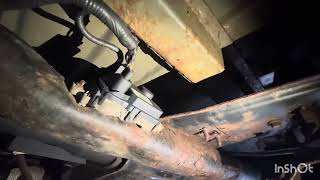
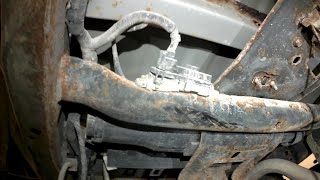
- Faulty Fuel Pump Driver Module (FPDM) (Very Common) — On modern vehicles (especially Ford trucks), the FPDM regulates fuel pump voltage. Frame-mounted modules suffer severe galvanic corrosion from road salt 🎬 Watch: How to replace a corroded Ford fuel pump driver module. and moisture, destroying the internal circuitry and causing a low voltage condition.
- Wiring Harness and Ground Issues (Common) — Wiring to the fuel pump frays, chafes, or corrodes. Additionally, the chassis ground connection rusts or loosens. Both create high electrical resistance, causing a massive voltage drop before power reaches the pump.
- Blown Fuel Pump Fuse (Less Common) — A blown fuse instantly cuts power. While replacing it is simple, a repeatedly blowing fuse indicates a dead short to ground or a failing fuel pump drawing excessive amperage.
- Faulty Inertia Switch (Less Common) — This safety device cuts fuel pump power during a collision. Internal failure or accidental tripping (e.g., hitting a massive pothole) creates an open circuit, stopping all power delivery.
- Failing Fuel Pump (Less Common) — The electric motor inside the fuel pump develops an internal short or high resistance as it degrades. It draws excessive current, dropping circuit voltage and triggering P0231. Electrical components usually fail before the pump itself.
- Clogged Fuel Filter or Strainer (Rare) — A severely clogged filter forces the fuel pump to work harder to maintain pressure. This increased mechanical effort spikes electrical current draw, overheating the circuit and causing a voltage drop.
- Faulty Powertrain Control Module (PCM) (Rare) — The internal driver or monitoring circuit within the PCM fails, incorrectly reporting a low voltage condition or failing to control the relay. Suspect this only after exhausting all wiring and component tests.
Symptoms

- Engine will not start — The engine cranks normally but refuses to fire because it receives zero fuel.
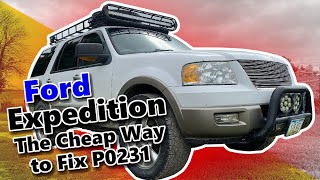
- Engine stalls unexpectedly — The engine starts and runs normally before suddenly shutting off while driving 🎬 Watch this diagnosis of a Ford Expedition stalling from P0231. or idling, without warning.
- Loss of engine power and hesitation — The vehicle feels sluggish, bogs down during acceleration, or stutters under load due to an intermittent fuel supply interruption.
- No humming sound from the fuel tank — When turning the key to 'ON', the standard 1-2 second priming hum of the fuel pump is completely absent.
- Check Engine Light is on — The PCM illuminates the Malfunction Indicator Lamp to alert the driver of the electrical fault.
Diagnostic Flowchart

Tap your situation to follow the diagnostic path that matches what you're seeing on this code.
Common Fixes & Costs
- Replace Fuel Pump Relay — Parts: $15-$40, Labor: $40-$80, ~0.5 hr book time (DIY)
- Replace Fuel Pump Driver Module (FPDM) — Parts: $50-$150, Labor: $75-$150, ~1 hr book time (Intermediate)
- Repair Wiring Harness or Ground Connection — Parts: $10-$50, Labor: $150-$400, ~2.5 hr book time (Intermediate)
- Replace Fuel Pump Assembly — Parts: $200-$600, Labor: $300-$600, ~3.5 hr book time (Professional)
- Replace TIPM / Central Junction Box (Fuse Box) — Parts: $450-$1200, Labor: $150-$300, ~2 hr book time (Professional)
DIY vs Professional
- Replace Fuel Pump Relay — Beginner:
Tools: None, or fuse puller. - Replace Fuel Pump Driver Module (FPDM) — Beginner:
Tools: Basic socket set, flashlight. - Repair Wiring Harness or Ground Connection — Beginner:
Tools: Multimeter, wire cutters/strippers, crimpers, heat gun, soldering iron, wire brush. - Replace Fuel Pump Assembly — Beginner:
Tools: Floor jack, jack stands, fuel line disconnect tools, locking ring removal tool, fuel siphon/pump, fire extinguisher. - Replace TIPM / Central Junction Box — Beginner:
Tools: Basic socket set, trim removal tools.
Used vs. New Parts: Buying Guide
When a used part is worth it: For expensive modules like an FPDM on an older vehicle, a used part from a dry-climate donor saves money. Never buy used relays or fuses.
Donor-vehicle mileage cap: roughly under 80000 miles for the part to have meaningful remaining life.
Donor quality checklist:
- Verify the donor was not scrapped for electrical fires.
- Avoid frame-mounted modules from rust-belt states.
- Match the OEM part number exactly.
Decision logic:
- If The part is a simple relay or fuse → Always buy new; cost savings are negligible.
- If The part is an FPDM on a vehicle with >120K miles and a tight budget → A used part from a verified low-mileage, rust-free donor is acceptable.
- If The part is a fuel pump assembly → Always buy new OEM or premium aftermarket to avoid paying 3 hours of labor twice.
Warranty tradeoff: Salvage yards offer 30-90 days. New aftermarket offers 1-year. New OEM offers 24 months/unlimited miles.
Worst-case if a used part fails: $400-$700 (Paying for a second pump and double the labor).
What Happens If You Wait — Timeline
- 0-1 month: Intermittent hesitation or a single stall. Code P0231 is stored. Often mistaken for bad gas. (MPG impact: 0-5%% · Added cost: $0)
- 1-3 months: Stalling becomes frequent when warm. Check Engine Light stays on permanently. The failing relay or FPDM is heat-stressed. (MPG impact: 5-10%% · Added cost: $100-$250 (Towing fee when it finally leaves you stranded))
- 3-6 months: Vehicle frequently fails to start. Driver resorts to banging on the tank or fuse box to force a connection. (MPG impact: N/A (vehicle is often undriveable)% · Added cost: $250-$500 (Cost of towing plus potential damage to the battery from repeated cranking))
- 6+ months: Complete circuit failure. A dead short may back-feed and destroy the PCM driver circuit, turning a $100 repair into a $1,500 nightmare. (MPG impact: N/A% · Added cost: $1500-$2500 (Potential PCM replacement and programming))
Cost of Not Fixing It
- Immediate: Sudden engine stalling at highway speeds, causing loss of power steering and braking assist. Stranding is guaranteed. (Added cost: Towing fees ($100-$250))
- 1-3 months: Inconsistent fuel supply causes a lean air/fuel mixture, spiking combustion temperatures and melting spark plugs. (Added cost: $50-$300)
- 3+ months: Chronic lean conditions burn exhaust valves and destroy the catalytic converter. Repeated cranking kills the starter and battery. (Added cost: $1500-$4000+)
Diagnosis Steps

- Listen for the Fuel Pump
Have a helper turn the ignition to 'ON' (engine off) while you listen at the fuel tank. You must hear a distinct humming sound for 1-2 seconds. Absolute silence confirms a power delivery failure.
Tools: A helper (Beginner) - Swap the Fuel Pump Relay
Locate the fuel pump relay in the fuse box. Swap it with an identical relay used for a non-essential system (like the horn). If the vehicle starts, the original relay is dead. Replace it.
Tools: None (Beginner) - Check the Fuses
Inspect the fuel pump fuse. If blown, replace it once. If it blows again immediately, stop; you have a dead short or a seized fuel pump motor.
Tools: Fuse puller or needle-nose pliers (Beginner) - Check the Inertia Switch
Locate the inertia fuel shutoff switch (check the manual for trunk or kick panel location). Ensure the top button is fully depressed. A tripped switch cuts all pump power.
Tools: Flashlight (Beginner) - Test for Voltage at the Fuel Pump
Disconnect the fuel pump electrical connector. Using a multimeter set to DC volts, check for voltage while a helper turns the key to 'ON'. A reading below 9V confirms an upstream wiring, relay, or FPDM problem.
Tools: Multimeter (Intermediate) - Inspect the Wiring Harness and Grounds
Visually trace wiring from the fuse box to the pump. Look for chafing, melted insulation, or loose connectors. Remove, wire-brush, and re-secure the main fuel pump chassis ground.
Tools: Flashlight, basic hand tools, wire brush (Intermediate) - Test the Fuel Pump Driver Module (FPDM)
Inspect the frame-mounted FPDM for cracks or severe corrosion. Use a multimeter to verify 12V entering the module and the correct duty-cycle voltage exiting to the pump.
Tools: Multimeter, basic hand tools (Advanced) - Pro Tip: Perform a Voltage Drop Test
Connect the multimeter positive lead to the battery positive and the negative lead to the pump's power wire. Energize the circuit. A reading over 0.5V indicates excessive resistance on the power side. Repeat for the ground side.
Tools: Multimeter with long leads (Advanced) - Pro Tip: Measure Fuel Pump Amperage Draw
Clamp a low-amp probe around the fuel pump power wire. A healthy port-injected pump draws 4-8 amps. Readings over 10 amps indicate a failing pump or clogged filter; under 3 amps confirms high circuit resistance.
Tools: Low-amp clamp, multimeter (Advanced) - Pro Tip: Check Fuel Pressure
Connect a fuel pressure gauge to the service port on the fuel rail. With the key on, engine off (KOEO), typical PFI systems should hit 35-45 PSI. Low pressure alongside normal voltage and amperage confirms a mechanical pump failure.
Tools: Fuel pressure gauge set (Advanced) - Pro Tip: Check Fuel Pump Resistance
Disconnect the fuel pump and measure resistance between the power and ground terminals on the pump itself. A reading below 4 Ohms indicates an internal short circuit in the pump motor.
Tools: Multimeter (Advanced)
When This Code Triggers (Freeze-Frame Conditions)
- Engine Coolant Temp: 180-200°F (Engine at full operating temperature, maximizing electrical resistance in failing relays.)
- RPM: 1500-2500 (Occurs during cruise when consistent fuel pressure and electrical current are demanded.)
- Engine Load: 30-60% (Under moderate load, such as climbing a hill, when fuel volume requirements peak.)
- Vehicle Speed: 35-55 mph (Often triggered during normal driving, resulting in sudden and dangerous stalling.)
Related Codes
- P0230 — Primary Circuit. P0230 means the relay isn't getting the 'on' signal from the PCM. P0231 means the relay gets the signal, but high-current power isn't reaching the pump.
- P0232 — Secondary Circuit High. The opposite of P0231. Usually caused by a short-to-power, making the fuel pump run continuously even with the key off.
- P0233 — Secondary Circuit Intermittent. Indicates an erratic voltage signal, pointing to a loose ground, chafed wire, or bouncing relay contacts. A precursor to P0231.
- P0627 — Fuel Pump 'A' Control Circuit/Open. An open circuit is a primary cause of zero voltage. These codes appear together when a wire breaks or a connector unplugs.
Climate & Environmental Factors
- High Humidity / Road Salt (Rust Belt): Moisture and salt accelerate galvanic corrosion on frame-mounted components like Ford's FPDM and GM's FPCM, destroying internal circuits and ground connections.
- High Ambient Heat: Heat increases electrical resistance and deforms internal contact springs inside integrated fuse boxes (like Chrysler TIPMs), causing premature relay failure.
- Cold Weather: Freezing temperatures make old wiring insulation and plastic connectors brittle, causing them to crack and expose wires to moisture and short circuits.
How to Talk to a Mechanic About This Code
Say this: "I have a P0231 code with a no-start condition. Please perform electrical tests on the fuel pump circuit, relay, and FPDM before recommending a fuel pump replacement."
Directs the shop to perform proper electrical diagnosis, preventing them from jumping to the most expensive conclusion without evidence.
Avoid saying:
- 'My car won't start, just fix it.'
- 'My check engine light is on, can you look at it?'
- 'I think I need a new fuel pump.'
Questions to ask before authorizing the repair:
- What was the voltage reading at the pump connector?
- Did you perform a voltage drop test on the power and ground sides?
- What was the amperage draw of the old pump?
- If the TIPM/FPDM is bad, what are my bypass or repair options?
Where to Take It: Dealer vs Independent vs Chain
- Dealer:
A safe, but expensive, choice. Recommended if the issue is a known manufacturer quirk with an integrated control module.
Best for: Vehicles still under powertrain warranty., Complex, manufacturer-specific issues like a failed TIPM or Central Junction Box that may require programming or a specialized bypass., Newer German vehicles (BMW, VW, Audi) with sophisticated control modules.
Downsides: Highest labor rates and part costs., May default to replacing an entire expensive module (e.g., TIPM) when a more affordable bypass or repair is possible. (Typical cost: +50% vs. baseline) - Independent Shop:
Best fit for most P0231 repairs. A good independent shop with strong electrical skills can diagnose and fix this code effectively and more affordably than a dealer.
Best for: Out-of-warranty vehicles where cost is a factor., Diagnosing common P0231 causes like a bad relay, corroded wiring/grounds, or a faulty FPDM on a Ford., Getting a second opinion on a dealership's expensive diagnosis.
Downsides: Shop quality and electrical diagnostic skill can vary widely. Vet the shop by checking reviews for mentions of solving tough electrical problems., May not have the specific programming tools for the newest or most complex vehicles. (Typical cost: +0% vs. baseline) - Chain Shop:
AVOID for P0231 diagnosis. The risk of an incorrect diagnosis and being sold an unnecessary, expensive fuel pump replacement is very high.
Best for: Simple, unambiguous repairs like a battery or tire replacement.
Downsides: Technician skill is highly variable., High pressure to meet sales targets can lead to misdiagnosis and upselling a new fuel pump without proper electrical testing., Often lack the advanced diagnostic tools or experience for complex electrical circuit tracing. (Typical cost: -10% vs. baseline)
When to Walk Away From the Repair
If the repair cost exceeds 40-50% of the vehicle's value, consider selling.
- Car worth $3000, fix is $1500: Walk away. Sell as a mechanic special.
- Car worth $10000, fix is $1200: Fix it. Critical safety repair.
- Car worth $4500, fix is $1800: Borderline. Get a second opinion from an independent shop.
What Scan Tool You Need for This Code
Minimum: Basic code reader and a digital multimeter.
A $20 scanner cannot test circuits. A multimeter is mandatory for voltage drop tests. Advanced scanners command the pump on/off for easier testing.
Budget: BlueDriver Pro or Foxwell NT301 (~$70) — Reads codes and live voltage. Must be paired with a multimeter.
Mid-range: Autel AL619 or Innova 5610 (~$250) — Adds bidirectional control to command the fuel pump relay on/off without a helper.
Professional: Autel MaxiCOM MK808S or XTOOL D8S (~$500) — Full bidirectional control, live data graphing, and topology mapping for complex module diagnostics.
How to Clear the Code After You Fix It
- Use an OBD-II scan tool to clear the P0231 code.
- Perform a complete OBD-II drive cycle to reset readiness monitors.
- Verify the fuel pump primes audibly on the first key turn.
Drive cycle (~30 minutes): Start cold. Idle 3 minutes with A/C on. Drive 10 minutes at steady 35-45 mph. Drive 15 minutes at 55-65 mph. Coast down without braking.
Readiness monitors affected: Catalyst Monitor, Oxygen (O2) Sensor Monitor, EVAP System Monitor
Before emissions retest: drive at least 100 miles to fully set monitors.
Watch out for:
- Testing before monitors are 'Ready' guarantees failure.
- Clearing the code without fixing the electrical fault causes immediate return.
- Failing to let the vehicle sit overnight prevents cold-start monitors from running.
Will This Fail Emissions / State Inspection?
Yes — this code typically fails an OBD-II emissions inspection.
- California: Active P0231 is an automatic failure. After repair, drive 100-200 miles to set readiness monitors.
- New York: OBD-II scan detects stored P0231, resulting in automatic failure.
- Texas: Fails OBD-II inspection in the 17 testing counties if the MIL is illuminated for P0231.
Most Commonly Affected Vehicles
- Ford F-150 (2004-2014) — Extremely common due to the frame-mounted Fuel Pump Driver Module (FPDM). The aluminum back corrodes against the steel frame. Fix requires a new module with stand-off spacers.
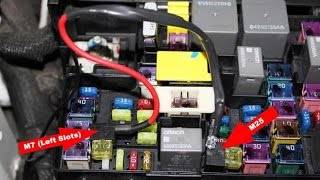
- Ford Expedition, Lincoln Navigator (2003-2006) — Notorious for a failed, non-serviceable fuel pump relay soldered directly into the Central Junction Box. Requires replacing the entire box or a complex external relay bypass.
- Chevrolet / GMC Silverado / Sierra (2007-2013) — Prone to wiring harness corrosion and poor ground connections at the frame rail for the Fuel Pump Control Module (FPCM).
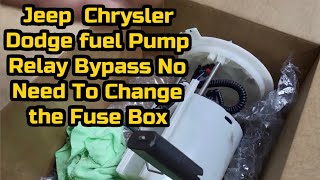
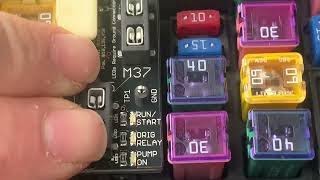
- Dodge / Chrysler / Jeep Ram 1500, Grand Cherokee, various models (2005-2014) — Totally Integrated Power Module (TIPM) internal fuel pump relay failures are highly documented, often requiring a TIPM bypass cable or full replacement.
- BMW 3 Series, 5 Series, X3, X5 (2000-2015) — P0231 traces to a faulty blue fuel pump relay or a failing EKP (Elektronische Kraftstoffpumpensteuerung) module that overheats and drops voltage.
- Volkswagen / Audi Golf, Passat, Tiguan, A4, Q5 (2006-2017) — Failures in the dedicated fuel pump control module (J538) under the rear seat are the primary culprit.
- Hyundai Tucson, Santa Fe (2008-2012) — The ECM monitors the relay control circuit directly. Internal failure of the main fuel pump relay is the standard cause.
- Subaru Outback, Forester, Impreza (2005-2014) — Failing fuel pump controllers or severe corrosion at the controller's rear electrical connector cause the voltage drop.
Manufacturer-Specific Notes
- Ford: Early 2000s models solder the fuel pump relay directly into the Central Junction Box. Failure requires a $500+ fuse box replacement or a professional external relay bypass.
- Dodge/Jeep/Chrysler: TIPM internal solder joints fail. NHTSA Recall P54 covers some models for a free external relay, but un-recalled models require aftermarket bypass kits.
- Chevrolet/GMC: The FPCM ground wire attached to the frame crossmember is highly prone to rust. Always clean this ground to bare metal before replacing the module.
- BMW/Volkswagen: Sophisticated EKP/J538 modules vary pump speed based on demand. Diagnosis requires an advanced scan tool to check PCM duty-cycle commands versus actual module output.
Real Owner Stories
2001 Ford F-150 with intermittent no-start and stalling
The truck sporadically failed to start or stalled while driving at low speeds. The issue became more frequent over time, eventually throwing code P0231.
What they tried:
- The owner suspected the PCM relay, which had been replaced recently.
- Based on forum advice, the owner replaced the fuel filter and the fuel pump relay.
Outcome: Replacing the $20 fuel pump relay resolved the no-start. The relay shared a part number with a previously failed PCM relay.
Lesson: Start with the cheapest failure points. A faulty relay mimics a dead fuel pump perfectly.
1999 Crown Victoria with P0231 and a persistent no-start condition
The vehicle cranked but would not start, and the P0231 code was present. The owner could not hear the fuel pump priming.
What they tried:
- Replaced the fuel pump fuse.
- Replaced the fuel pump relay.
- Replaced the entire fuel pump assembly.
Outcome: Despite replacing all common components, the no-start condition persisted, indicating a deeper electrical issue.
Lesson: Never fire the parts cannon. If the relay and fuse are good, you must test for voltage and ground at the pump connector before replacing the pump.
2003 Ford Expedition with random stalling and P0231
The vehicle ran for 5-20 minutes and then stalled randomly. It usually restarted but set a P0231 code.
What they tried:
- A technician monitored fuel pressure and voltage to the fuel pump simultaneously.
- They observed voltage dropping out, immediately followed by a loss of fuel pressure.
Outcome: The technician traced the failure to the internal CJB relay. The repair required a professional external relay bypass.
Lesson: On early 2000s Fords and Dodges, the relay is soldered into the fuse box. P0231 requires a module replacement or external bypass.
2006 Ford F-150 with no-start and a physically broken FPDM
The truck would not start, and the owner found the Fuel Pump Driver Module (FPDM) on the frame rail was so corroded that it had broken in half.
What they tried:
- The owner replaced the failed FPDM with a Dorman aftermarket part.
Outcome: The truck started and ran correctly. The Dorman part featured stand-off spacers to prevent future corrosion.
Lesson: On 2004-2014 F-150s, visually inspect the FPDM above the spare tire first. It is the most common cause of P0231.
How to Prevent This Code From Triggering
- Don't consistently run the fuel tank below 1/4 full. (Every fill-up) — Fuel cools the electric pump motor. Running low overheats the pump, accelerating wear.
- Replace the fuel filter at recommended intervals. (Every 30,000-60,000 miles (check manual)) — Clogged filters force the pump to draw excessive amperage, overheating the circuit and triggering P0231.
- Periodically inspect and clean critical ground connections. (Every 2-3 years, especially in Rust Belt states) — Remove the FPDM or pump ground bolt, clean to bare metal, and apply dielectric grease to prevent voltage drops.
- For Ford owners, proactively inspect the FPDM. (Once, then every 2-3 years) — Replace the original flat-backed FPDM with an updated spacer kit before it corrodes and strands you.
- Use high-quality fuel. (Every fill-up) — Prevents strainer clogs that increase mechanical strain and electrical current draw.
Frequently Asked Questions
What is a common misdiagnosis for P0231?
The most common mistake is immediately replacing the fuel pump without performing electrical tests. P0231 is an electrical circuit code, frequently caused by a cheap relay, corroded wire, or faulty FPDM. Always diagnose the circuit before condemning the pump.
Can I just replace the fuse to fix P0231?
Replacing a blown fuse provides a temporary fix, but fuses blow due to short circuits or failing components drawing excessive current. If the new fuse blows immediately, you have a deeper electrical problem requiring diagnosis.
What's the difference between the primary and secondary fuel pump circuits?
The primary circuit is the low-power control side where the PCM activates the fuel pump relay. The secondary circuit is the high-power side where the relay sends full battery voltage directly to the fuel pump. P0231 specifically flags a voltage drop on this high-power secondary side.
Could a bad battery cause a P0231 code?
A weak battery lowers the entire vehicle's system voltage, potentially dropping the fuel pump voltage below the PCM's minimum threshold to trigger P0231. Always ensure your battery is fully charged (12.6V) and the alternator is working (13.5V+) before diagnosing circuit faults.
How much does it cost to diagnose a P0231 code?
Most repair shops charge a diagnostic fee ranging from $100 to $180. This covers the technician's time to perform electrical testing with a multimeter or bidirectional scan tool to pinpoint the fault. This fee is typically credited toward the final repair cost.
Will P0231 clear itself?
No, P0231 indicates a hard electrical fault in a critical system and will not clear itself. The underlying issue, such as a bad relay or broken wire, must be repaired before the code stays cleared.
Can bad fuel cause a P0231 code?
Indirectly, heavily contaminated fuel clogs the fuel pump's strainer and filter. This forces the pump to work harder, increasing current draw until it overheats wiring, damages the relay, and causes the voltage drop that triggers P0231.
Key Takeaways
- Code P0231 indicates a low voltage condition in the fuel pump's secondary circuit, guaranteeing a no-start or sudden stalling event.
- Never drive with an active P0231 code, as the engine will stall without warning at highway speeds when fuel pressure drops.
- Over 80% of P0231 codes stem from external electrical failures like a $20 faulty relay or a corroded Fuel Pump Driver Module, not the fuel pump itself.
- Start diagnosis by swapping the fuel pump relay with an identical non-essential relay (like the horn) to instantly rule out the most common failure point in under 5 minutes.
Helpful Videos

The information in this article is provided for general reference and educational purposes only. Vehicle specifications, procedures, and part compatibility can vary by production date, trim level, and region. Always consult your vehicle's factory service manual and verify part numbers before purchasing or performing repairs. Safety-critical components such as airbags, seat belts, and braking systems should be installed by a qualified professional.
- 🎬 Helpful Videos
- What Does P0231 Mean?
- Can I Drive With P0231?
- Common Causes
- Symptoms
- Diagnostic Flowchart
- Common Fixes & Costs
- DIY vs Professional
- Used vs. New Parts: Buying Guide
- What Happens If You Wait — Timeline
- Cost of Not Fixing It
- Diagnosis Steps
- When This Code Triggers (Freeze-Frame Conditions)
- Related Codes
- Climate & Environmental Factors
- How to Talk to a Mechanic About This Code
- Where to Take It: Dealer vs Independent vs Chain
- When to Walk Away From the Repair
- What Scan Tool You Need for This Code
- How to Clear the Code After You Fix It
- Will This Fail Emissions / State Inspection?
- Most Commonly Affected Vehicles
- Manufacturer-Specific Notes
- Real Owner Stories
- 2001 Ford F-150 with intermittent no-start and stalling
- 1999 Crown Victoria with P0231 and a persistent no-start condition
- 2003 Ford Expedition with random stalling and P0231
- 2006 Ford F-150 with no-start and a physically broken FPDM
- How to Prevent This Code From Triggering
- Frequently Asked Questions
- What is a common misdiagnosis for P0231?
- Can I just replace the fuse to fix P0231?
- What's the difference between the primary and secondary fuel pump circuits?
- Could a bad battery cause a P0231 code?
- How much does it cost to diagnose a P0231 code?
- Will P0231 clear itself?
- Can bad fuel cause a P0231 code?
- Key Takeaways
- 🎟️ Get 5% Off