

OBD-II Code P0229: Throttle/Pedal Position Sensor 'C' Circuit Intermittent
The Ultimate Guide to Diagnosing and Fixing P0229
- P0229 triggers when the Powertrain Control Module detects an intermittent voltage drop in the 'C' circuit of the throttle or pedal position sensor.
- Replacing the throttle body assembly or accelerator pedal sensor resolves this code in over 70% of cases, costing between $150 and $850.
- Driving with an active P0229 code forces the vehicle into a dangerous 'limp mode' and destroys a $1,500 catalytic converter within months due to unburned fuel.
- Before buying parts, perform a 5-minute 'wiggle test' on the throttle wiring harness while watching live scanner data to rule out a $50 connector failure.
What Does P0229 Mean?
Code P0229 indicates the Powertrain Control Module (PCM) detected an intermittent or unreliable voltage signal from the 'C' circuit of the throttle position sensor (TPS) or accelerator pedal position (APP) sensor. These sensors dictate how much to open the throttle plate based on your pedal input. An intermittent signal means communication cuts in and out, confusing the PCM and triggering immediate drivability failures.
Technical definition: The SAE/OBD-II definition is "Throttle/Pedal Position Sensor/Switch 'C' Circuit Intermittent." The PCM flags this fault when the voltage signal from the 'C' sensor circuit becomes erratic, unstable, or drops out sporadically. The PCM requires a smooth, continuous 0.5V to 4.5V sweep to safely control the electronic throttle; any micro-second dropout triggers P0229.
Can I Drive With P0229?
No — Do Not Drive. You can physically drive, but it is highly risky and not recommended. The vehicle unpredictably enters a reduced power 'limp mode,' causing severe acceleration lag and creating a safety hazard in traffic. Continuing to drive with erratic throttle signals forces a rich fuel condition, destroying the catalytic converter. This secondary failure adds $1,200 to $3,000 to your total repair cost. Diagnose and repair the issue immediately.
Common Causes
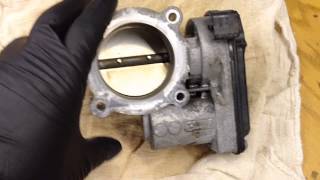
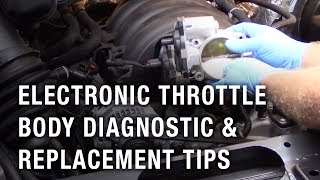
- Faulty Throttle Body Assembly (Integrated TPS) (Very Common) — Modern vehicles integrate the TPS into the throttle body. Internal resistive strips wear out over time, creating dead spots and erratic electrical contacts. This is the most frequent mechanical cause of P0229.
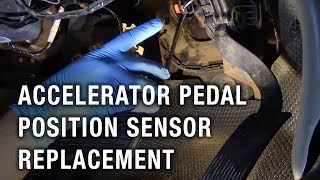
- Faulty Accelerator Pedal Position (APP) Sensor (Very Common) — Similar to the TPS, the pedal sensor's internal contacts degrade from constant physical movement, causing the signal to drop out when the pedal reaches specific angles. 🎬 See this walkthrough for replacing an accelerator pedal sensor.
- Wiring Harness or Connector Damage (Common) — Engine vibrations, extreme heat, or rodents damage wires and loosen connector pins. This physically interrupts the signal between the sensors and the PCM.
- Dirty or Carbon-Fouled Throttle Body (Common) — Heavy carbon buildup forces the throttle plate to stick. The sensor reports erratic angles as the internal motor fights the blockage, triggering the code.
- Intermittent Ground or Voltage Loss (Less Common) — A corroded engine ground, failing alternator, or weak battery disrupts the stable 5V reference required by the sensors, causing signal dropouts.
- Aftermarket Modifications (Rare) — Performance pedal commanders or cold air intakes alter electrical signals or airflow, confusing the PCM and triggering false sensor codes.
Symptoms
- Vehicle Enters 'Limp Mode' — The PCM activates a safety protocol, severely limiting engine power and capping vehicle speed to roughly 20-40 mph.
- Check Engine Light is On — The dashboard Malfunction Indicator Lamp illuminates immediately upon the PCM logging the P0229 fault.
- Poor, Erratic, or Delayed Acceleration — The car hesitates, stumbles, surges unexpectedly, or exhibits a massive delay when pressing the gas pedal.
- Rough or Unstable Idle — The engine idles erratically, fluctuating RPMs, and feels like it will stall when stopped at a light.
- Engine Stalling — A complete, sudden loss of the throttle signal causes the engine to shut off entirely, particularly at low speeds.
Diagnostic Flowchart
Tap your situation to follow the diagnostic path that matches what you're seeing on this code.
Common Fixes & Costs
- Replacing the Throttle Body Assembly — Parts: $150-$400, Labor: $100-$250, ~1.5 hr book time (Intermediate)
- Replacing the Accelerator Pedal Position (APP) Sensor — Parts: $70-$250, Labor: $75-$150, ~1 hr book time (DIY)
- Repairing Damaged Wiring or Connectors — Parts: $20-$50, Labor: $150-$300, ~2.0 hr book time (Professional)
- Cleaning the Throttle Body — Parts: $10-$20, Labor: $75-$150, ~0.8 hr book time (DIY)
- Performing a Throttle Body Relearn Procedure — Parts: $0, Labor: $50-$150, ~0.5 hr book time (DIY)
Used vs. New Parts: Buying Guide
When a used part is worth it: Buying used electronic throttle bodies is a high-risk strategy best reserved for vehicles over 150,000 miles where minimizing immediate cost is the absolute top priority.
Donor-vehicle mileage cap: roughly under 80000 miles for the part to have meaningful remaining life.
Donor quality checklist:
- Verify the donor vehicle was not scrapped for electrical problems.
- Match the OEM part number exactly; visual similarity guarantees failure.
- Choose recyclers offering at least a 90-day warranty.
Decision logic:
- If Vehicle is under 10 years old or has less than 100,000 miles → Buy new (OEM or high-quality aftermarket). The risk of premature failure outweighs the savings.
- If Vehicle is over 10 years old and budget is the primary concern → A low-mileage used part is an acceptable gamble.
- If The specific part is known for a high failure rate (e.g., Ford EcoBoost throttle bodies) → Buy new. A used part already possesses significant internal wear.
Warranty tradeoff: Used parts offer a 30-90 day functional warranty covering the part only. New aftermarket parts offer 1-year to lifetime warranties.
Worst-case if a used part fails: $300-$650 if a used part fails, representing the cost of a new part plus repeated labor charges.
What Happens If You Wait — Timeline
- 0-1 month: Intermittent Check Engine Light. Occasional, brief hesitation during acceleration. No 'limp mode' yet. (MPG impact: 0-5%% · Added cost: $0-$30 (in wasted fuel))
- 1-3 months: Check Engine Light stays on. Vehicle unpredictably enters 'limp mode' weekly. Noticeable acceleration lag. (MPG impact: 5-15%% · Added cost: $50-$150 (in wasted fuel))
- 3-6 months: Limp mode becomes a daily occurrence. The engine runs consistently rich, causing the catalytic converter to overheat and degrade. (MPG impact: 15-25%% · Added cost: $1200-$2500 (Catalytic converter replacement required))
- 6+ months: The catalytic converter substrate melts and clogs the exhaust. The engine struggles to stay running and cannot exceed 30 mph. (MPG impact: 25-50%+% · Added cost: $2000-$4000+ (Includes converter, O2 sensors, and engine diagnostics))
Cost of Not Fixing It
- 0-1 month: Erratic acceleration and 'limp mode' create a severe safety hazard. Fuel economy drops by 15% due to inefficient throttle control. (Added cost: $30-$50 (in wasted fuel))
- 1-6 months: Persistent rich fuel mixtures overheat the catalytic converter, melting its internal substrate. This is a guaranteed secondary failure if ignored. (Added cost: $1200-$2500)
- 6+ months: A clogged catalytic converter creates massive exhaust backpressure, choking the engine. This fouls oxygen sensors and blows exhaust manifold gaskets. (Added cost: $2000-$4000+)
Diagnosis Steps
- Scan for All Codes and Review Freeze Frame Data
Read all stored codes. Pay close attention to companion codes (like P0299 Underboost or P2135 Correlation). Review freeze-frame data to identify the exact engine speed, temperature, and load when the P0229 code triggered.
Tools: OBD-II Scanner (Beginner) - Analyze Sensor Voltage with Live Data (Wiggle Test)
Graph the voltage from the 'C' circuit of both the APP and TPS sensors using live data. Slowly press the gas pedal; the line must be smooth. While watching the graph, aggressively wiggle the wiring harnesses at the connectors and firewall. A sudden spike or drop on the screen confirms a wiring fault.
Tools: Advanced OBD-II Scanner with Live Data (Intermediate) - Thorough Visual Inspection of Wiring and Connectors
Inspect the wiring harness for the pedal sensor and throttle body. Look for chafing, melted insulation, or green corrosion. Disconnect the plugs and verify no pins are bent or pushed out of the plastic housing.
Tools: Flashlight, Mirror (Beginner) - Inspect and Clean the Throttle Body
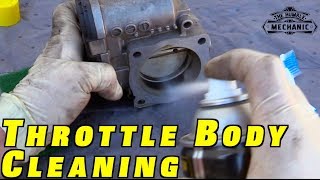
Remove the air intake hose. Inspect the throttle plate for heavy carbon buildup. Clean it using throttle body cleaner and a soft brush. Do not force the electronic plate open by hand; have a helper turn the key 'ON' (engine off) and press the gas pedal.
Tools: Basic hand tools, Throttle body cleaner, Soft brush (Intermediate) - Test Sensor Circuit and Resistance (Multimeter)
Verify a stable 5V reference and solid ground at the sensor connector. Back-probe the signal wire to ensure a smooth voltage sweep (~0.5V to ~4.5V) as the pedal is pressed. Disconnect the sensor and measure resistance (Ohms) across the sweep; an 'OL' (infinite) reading indicates a dead spot and a failed sensor.
Tools: Digital Multimeter, Vehicle Service Manual, Backprobe Kit (Advanced) - Check for Ground Path Integrity (Voltage Drop Test)
Place one multimeter lead on the negative battery terminal and the other on the ground pin at the connected sensor (key on). The reading must be under 100 millivolts (0.1V). Higher readings indicate high resistance in the ground path.
Tools: Digital Multimeter, Backprobe Kit (Advanced) - Analyze Waveform with an Oscilloscope
Connect an oscilloscope to the sensor's signal wire. Operate the pedal. A micro-second glitch too fast for a multimeter to catch appears clearly on a scope, definitively proving a failing sensor or wire.
Tools: Automotive Oscilloscope, Backprobe Kit (Advanced) - Perform a Smoke Test for Intake/Vacuum Leaks
If P0299 is also present, an unmetered air leak mimics a sensor failure. Force low-pressure smoke into the intake system to reveal leaks from cracked hoses, bad gaskets, or a faulty intercooler.
Tools: Automotive Smoke Machine (Advanced)
When This Code Triggers (Freeze-Frame Conditions)
- Engine Coolant Temp: 180-210°F (Engine at full operating temperature.)
- RPM: 1500-2500 RPM (Steady-state cruise or light acceleration.)
- Engine Load: 20-50% (Maintaining speed on a flat road or slight incline.)
- Vehicle Speed: 35-60 mph (City or highway cruising speed.)
Related Codes
- P0120-P0124 — Relates to the throttle/pedal position sensor 'A' circuit. Seeing these with P0229 confirms a total failure of the sensor assembly or a shared ground/power wire.
- P2135 — Indicates 'Throttle/Pedal Position Sensor Voltage Correlation'. Triggers when the redundant signals from two sensor circuits disagree, pointing directly to a failed pedal or throttle body.
- P0299 — Indicates 'Turbo/Supercharger Underboost'. A boost leak causes erratic airflow that the PCM misinterprets as a throttle position error. Fix the boost leak first.
Climate & Environmental Factors
- High Humidity: Moisture penetrates sensor connectors, causing corrosion and intermittent short circuits. Using dielectric grease in connectors prevents this intrusion.
- Extreme Cold: In temperatures below 0°F (-18°C), GM vehicles frequently experience ice buildup in the charge air cooler. This restricts airflow and triggers P0229 alongside P0299, requiring a specific winter cover kit, not a sensor replacement.
How to Talk to a Mechanic About This Code
Say this: "I have a P0229 code with intermittent limp mode. Please perform a live-data wiggle test on the wiring and check the sensor grounds before recommending a full throttle body replacement."
This signals you understand P0229 is often a connection fault. It directs the technician to perform a thorough diagnosis, preventing them from blindly swapping the most expensive component.
Avoid saying:
- 'My gas pedal is acting weird.'
- 'My check engine light is on, can you look at it?'
- 'Just replace the throttle sensor.'
Questions to ask before authorizing the repair:
- Were you able to replicate the fault on a test drive?
- Did you perform a 'wiggle test' on the harness while watching live data?
- Did you perform a voltage drop test on the sensor's ground circuit?
- What is the warranty on this specific repair, including labor?
Where to Take It: Dealer vs Independent vs Chain
- Dealer:
A safe choice if cost is not the primary concern or if the issue is covered by warranty.
Best for: Vehicles under powertrain or emissions warranty., Known manufacturer-specific issues covered by a TSB., Complex electrical issues requiring proprietary software.
Downsides: Labor rates are 40-50% higher than independent shops., Dealers default to replacing entire assemblies rather than repairing a single wire. (Typical cost: +50% vs. baseline) - Independent Shop:
Best overall fit. An experienced independent technician effectively traces circuit faults without dealership markups.
Best for: Out-of-warranty vehicles where cost-effectiveness is important., Diagnosing common intermittent electrical faults., Vehicles with well-documented ground issues.
Downsides: Diagnostic skill varies widely; vetting the shop's ASE certifications is crucial. (Typical cost: +0% vs. baseline) - Chain Shop:
High risk for misdiagnosis. Avoid for initial diagnosis of an intermittent electrical problem.
Best for: Simple part replacements if the diagnosis is already certain.
Downsides: Technician experience with complex electrical diagnostics is limited., High pressure to sell parts leads to unnecessary throttle body replacements. (Typical cost: -10% vs. baseline)
When to Walk Away From the Repair
If the estimated repair cost exceeds 50% of the car's private-party value, seriously consider selling the vehicle.
- Car worth $4000, fix is $2200: Walk away. The repair cost is over 50% of the car's value.
- Car worth $12000, fix is $850: Fix it. The repair cost is a fraction of the vehicle's value and restores critical safety.
- Car worth $2500, fix is $800: Borderline. At 32% of the car's value, the decision depends on the car's overall condition.
What Scan Tool You Need for This Code
Minimum: A scanner that displays and graphs live sensor data (PIDs) for the throttle and accelerator pedal position sensors.
A basic $20 code reader only shows the P0229 code. It cannot display the live voltage signal, which is essential for spotting the micro-second dropouts that cause this specific code.
Budget: BlueDriver Pro (~$100) — Connects to a smartphone to graph live data from the throttle sensors, allowing a DIYer to watch for signal dropouts during a wiggle test.
Mid-range: Autel MaxiCheck MX808S (~$350) — Provides detailed live data graphing on a tablet interface and accesses all vehicle modules for comprehensive diagnostics.
Professional: Autel MaxiCOM MK808BT (~$500) — Offers full bidirectional control to command the throttle actuator, making testing definitive. Provides fast graphing capabilities to catch rapid glitches.
Rent vs buy: AutoZone's free loaner scanners pull codes but lack live data graphing. If you diagnose issues yourself, buying a budget pick like the BlueDriver is mandatory for P0229.
How to Clear the Code After You Fix It
- Use an OBD-II scan tool to clear diagnostic trouble codes.
- Perform a throttle body relearn procedure if the throttle body was cleaned or replaced.
- Complete a full OBD-II drive cycle to run all readiness monitors.
Drive cycle (~30 minutes): A generic drive cycle includes: 1) A cold start (vehicle sits for 8+ hours). 2) Idle for 2-3 minutes. 3) 10-15 minutes of mixed city/suburban driving with smooth acceleration and stops. 4) 5-10 minutes of steady highway driving at 55-60 mph. 5) Safely coasting to a lower speed.
Readiness monitors affected: Catalyst (CAT) Monitor, Oxygen (O2) Sensor Monitor, EVAP System Monitor
Before emissions retest: drive at least 100 miles to fully set monitors.
Watch out for:
- Simply clearing the code does not fix the electrical fault, and the code returns immediately.
- Disconnecting the battery resets all readiness monitors to 'Not Ready,' causing an automatic emissions failure.
- Skipping the throttle body relearn procedure causes persistent idle surging.
Will This Fail Emissions / State Inspection?
Yes — this code typically fails an OBD-II emissions inspection.
- California: An illuminated Check Engine Light results in an automatic smog check failure. A full drive cycle must be completed post-repair.
- New York: An active P0229 code causes an automatic failure during the OBD-II scan portion of the NYS DMV inspection.
- Texas: In emissions-testing counties, the vehicle cannot be registered until the P0229 is repaired and a passing re-inspection is obtained.
Most Commonly Affected Vehicles
- Ford F-150, Explorer, Focus (2011-2020) — Prone to electronic throttle body failures. On EcoBoost models, P0229 alongside P0299 usually indicates a boost leak, not a throttle sensor failure.
- Chevrolet / GMC Silverado, Malibu, Trax, Cruze (2007-2017) — Frequently experience accelerator pedal assembly failures, triggering a 'Reduced Engine Power' message. On 1.4L turbos, a failed PCV check valve causes related boost codes.
- Hyundai / Kia Santa Fe, Sonata, Optima, Sorento (2011-2019) — On turbocharged GDI engines, cracked plastic end tanks on the intercooler create massive boost leaks, triggering erratic throttle codes.
- Volkswagen / Audi Jetta, GTI, A3, A4 (2008-2015) — On 2.0T engines, a torn diaphragm in the diverter valve or a sticking wastegate actuator rod frequently causes throttle and boost correlation faults.
- Dodge / Ram Ram 1500, Charger, Challenger (2009-2016) — Suffer from integrated throttle position sensor failures within the throttle body. Symptoms include a red lightning bolt symbol on the dash.
Manufacturer-Specific Notes
- Ford: On EcoBoost engines, always smoke test for a boost leak before condemning the throttle body when P0229 and P0299 are present.
- General Motors (Chevy/GMC): The 'Reduced Engine Power' message is synonymous with throttle issues. However, always inspect the main PCM ground wire on the passenger side of the engine block; it frequently breaks and causes this exact code.
- Hyundai/Kia: The plastic end tanks on the factory intercooler crack easily. Always pressure test the intercooler before replacing the throttle body on turbo models.
Real Owner Stories
2016 Ford F-150 3.5L EcoBoost at 80,000 miles
While driving on a bumpy road, the truck lost throttle response, entered limp mode, and displayed 'Service AdvanceTrac'. The issue was intermittent and temporarily fixed by restarting the truck.
What they tried:
- Scanned codes, revealing P2112 and P0229.
- Inspected the throttle body, which appeared clean, ruling out carbon buildup.
Outcome: Replaced the entire throttle body assembly. The internal motor gears were worn. After clearing codes, the problem was permanently resolved.
Lesson: Intermittent throttle failures triggered by bumps point to internal electronic or mechanical failure within the throttle body itself, not just dirt.
2011 Chevy Silverado with 'Reduced Engine Power'
The truck intermittently entered 'Reduced Engine Power' mode. The engine sometimes died after hitting a bump. The owner heard the fuel pump cycling erratically.
What they tried:
- Scanned for codes, revealing throttle actuator control (TAC) performance faults.
- Performed a 'wiggle test' on the wiring harness.
Outcome: The main PCM ground wire on the passenger side of the engine block was broken inside the insulation. The owner cut the wire, soldered a new section, and re-grounded it. This permanently fixed the problem.
Lesson: For 'Reduced Engine Power' on GM trucks, thoroughly inspect the main PCM ground wire before replacing expensive parts. A wiggle test saves hundreds.
2014 Audi Q5 at 115,000 miles with P0299 and P0229
The Check Engine Light illuminated during uphill acceleration. Codes read P0299 (Underboost) and P0229. There was no major loss of performance.
What they tried:
- Investigated the relationship between throttle, boost pressure, and the codes.
- Listened for boost leaks and found no obvious hissing.
Outcome: Concluded that slight wear on the turbo wastegate caused a minor drop in boost pressure, tripping the sensitive ECU threshold for both codes. The root cause was normal turbo wear, not a throttle failure.
Lesson: On high-mileage turbos, P0229 appearing with P0299 is a symptom of an underboost condition. Diagnose boost leaks or wastegate function before replacing the throttle body.
Chevy Cruze 1.4L Turbo with recurring limp mode
Car frequently entered limp mode with 'Service StabiliTrak' warnings during city driving.
What they tried:
- Cleaned the throttle body multiple times, which solved the problem for a few weeks before it returned.
- Disconnected the battery to reset the computer.
Outcome: Replaced the entire throttle body assembly. The internal sensor components were worn beyond what cleaning could fix.
Lesson: If cleaning the throttle body provides only a temporary fix, the internal electronic sensors are failing. Cleaning removes carbon but cannot repair worn resistive strips.
How to Prevent This Code From Triggering
- Clean the Throttle Body (Every 30,000-50,000 miles) — Cleaning carbon buildup prevents the plate from sticking, ensuring smooth mechanical operation and accurate sensor reporting.
- Inspect and Clean Engine Ground Connections (Every 50,000 miles) — Sensors require a stable ground reference. Cleaning the main engine-to-chassis grounds prevents intermittent voltage drops.
- Apply Dielectric Grease to Sensor Connectors (Whenever a sensor connector is disconnected) — Dielectric grease seals out moisture, preventing corrosion on connector pins and stopping intermittent signals caused by water intrusion.
- Change Engine Air Filter (Every 12,000-15,000 miles) — A clean filter prevents dirt and oil vapor from depositing on the throttle body, keeping it cleaner for longer.
Frequently Asked Questions
What is the difference between a Throttle Position Sensor and an Accelerator Pedal Position Sensor?
The APP sensor connects to your gas pedal and tells the PCM your acceleration intent. The TPS mounts on the throttle body and reports the actual angle of the throttle plate. P0229 indicates an intermittent failure in either sensor or their shared wiring.
What is the most common mistake when diagnosing P0229?
The most costly mistake is replacing the throttle body without testing the wiring. Technicians often skip simple checks like inspecting for corroded pins or performing a live-data 'wiggle test'. These 5-minute checks frequently pinpoint a $50 wiring issue, saving hundreds of dollars.
Can I just clean the throttle body to fix P0229?
Sometimes. If heavy carbon buildup causes the throttle plate to stick, a thorough cleaning restores smooth operation and resolves the code. However, cleaning cannot fix an internal electrical failure within the sensor itself.
Do I need to perform a 'relearn' procedure after replacing the throttle body?
Yes. A throttle body relearn procedure is mandatory after replacement or cleaning on most modern vehicles. This calibrates the PCM to the new closed and wide-open throttle positions. Skipping this causes unstable idle and triggers the code to return.
Could a P0229 code be mistaken for a transmission problem?
Yes. Symptoms like hesitation, surging, and 'limp mode' mimic internal transmission failures perfectly. Always diagnose the throttle control system and clear engine codes before assuming you need a $3,000 transmission rebuild.
Why did the P0229 code come back after I cleared it?
Clearing the code only erases the fault from memory; it does not fix the physical electrical break. The PCM's self-diagnostics detect the intermittent signal dropout immediately upon driving. The code and limp mode will return within a single drive cycle.
Can a bad battery cause a P0229 code?
Yes. A failing alternator or weak battery causes voltage fluctuations that disrupt the sensitive 5V reference required by the throttle sensors, triggering false intermittent codes.
Key Takeaways
- P0229 triggers when the Powertrain Control Module detects an intermittent voltage drop in the 'C' circuit of the throttle or pedal position sensor.
- Replacing the throttle body assembly or accelerator pedal sensor resolves this code in over 70% of cases, costing between $150 and $850.
- Driving with an active P0229 code forces the vehicle into a dangerous 'limp mode' and destroys a $1,500 catalytic converter within months due to unburned fuel.
- Before buying parts, perform a 5-minute 'wiggle test' on the throttle wiring harness while watching live scanner data to rule out a $50 connector failure.
Helpful Videos

The information in this article is provided for general reference and educational purposes only. Vehicle specifications, procedures, and part compatibility can vary by production date, trim level, and region. Always consult your vehicle's factory service manual and verify part numbers before purchasing or performing repairs. Safety-critical components such as airbags, seat belts, and braking systems should be installed by a qualified professional.
- 🎬 Helpful Videos
- What Does P0229 Mean?
- Can I Drive With P0229?
- Common Causes
- Symptoms
- Diagnostic Flowchart
- Common Fixes & Costs
- Used vs. New Parts: Buying Guide
- What Happens If You Wait — Timeline
- Cost of Not Fixing It
- Diagnosis Steps
- When This Code Triggers (Freeze-Frame Conditions)
- Related Codes
- Climate & Environmental Factors
- How to Talk to a Mechanic About This Code
- Where to Take It: Dealer vs Independent vs Chain
- When to Walk Away From the Repair
- What Scan Tool You Need for This Code
- How to Clear the Code After You Fix It
- Will This Fail Emissions / State Inspection?
- Most Commonly Affected Vehicles
- Manufacturer-Specific Notes
- Real Owner Stories
- 2016 Ford F-150 3.5L EcoBoost at 80,000 miles
- 2011 Chevy Silverado with 'Reduced Engine Power'
- 2014 Audi Q5 at 115,000 miles with P0299 and P0229
- Chevy Cruze 1.4L Turbo with recurring limp mode
- How to Prevent This Code From Triggering
- Frequently Asked Questions
- What is the difference between a Throttle Position Sensor and an Accelerator Pedal Position Sensor?
- What is the most common mistake when diagnosing P0229?
- Can I just clean the throttle body to fix P0229?
- Do I need to perform a 'relearn' procedure after replacing the throttle body?
- Could a P0229 code be mistaken for a transmission problem?
- Why did the P0229 code come back after I cleared it?
- Can a bad battery cause a P0229 code?
- Key Takeaways
- 🎟️ Get 5% Off