

OBD-II Code P0226: Throttle & Pedal Position Sensor Performance Problem
The Ultimate Expert Guide: What P0226 means, why it triggers, and how to fix it for good.
- Code P0226 triggers a dangerous 'limp mode' capping your speed at 30-35 mph because the engine computer receives erratic signals from the gas pedal or throttle body.
- The two most frequent fixes are replacing the Accelerator Pedal Position (APP) sensor (costing $180-$450) or the Electronic Throttle Body assembly.
- Always verify the sensor is receiving a steady 4.8V to 5.2V reference signal from the computer before spending $300+ on replacement parts.
- Installing a new throttle body requires a mandatory digital 'relearn' procedure using a mid-range OBD-II scanner to calibrate the idle speed.
What Does P0226 Mean?

Your Powertrain Control Module (PCM) is receiving an erratic voltage signal from the sensor tracking your gas pedal position. These sensors send a smooth 0.5V to 4.5V signal as you press the pedal. Code P0226 triggers when the 'C' circuit signal jumps, drops out, or contradicts redundant sensors, forcing the engine to cut power for safety.
Technical definition: The SAE/OBD-II definition is "Throttle/Pedal Position Sensor/Switch 'C' Circuit Range/Performance Problem." The PCM detects the voltage from the 'C' circuit of the throttle position sensor (TPS) or accelerator pedal position (APP) sensor falls outside expected parameters or spikes erratically compared to redundant sensor inputs.
Can I Drive With P0226?
No — Do Not Drive. Driving is highly dangerous. The vehicle suddenly loses acceleration and enters a 'limp mode' capping your speed at 30-35 mph, creating an extreme hazard in traffic. Ignoring the issue dumps unburned fuel into the exhaust, destroying the catalytic converter. Tow the vehicle or drive only short distances on local roads to reach a repair shop.
Common Causes

- Faulty Accelerator Pedal Position (APP) Sensor (Very Common) — Internal resistive tracks wear out over time, sending jumpy voltage signals to the computer. On modern vehicles, this sensor is integrated into the gas pedal assembly and must be replaced as a single unit.
- Failing Electronic Throttle Body (ETB) or TPS (Very Common) — Carbon buildup sticks the throttle plate, or the internal electronic motor/sensor fails, causing incorrect position readings. The TPS is built into the ETB on most modern cars and cannot be serviced separately.
- Damaged Wiring or Corroded Connectors (Common) — Engine vibration and heat chafe wiring harnesses, while moisture corrodes connector pins at the throttle body or pedal. This creates intermittent signal drops the PCM flags as a sensor failure.
- Unstable 5-Volt Reference or Poor Ground (Less Common) — Sensors require a steady 4.8V-5.2V reference signal from the PCM. A weak battery, failing alternator, or corroded engine ground strap fluctuates this voltage, triggering false performance codes.
- Outdated PCM Software (Less Common) — Overly sensitive factory software triggers false codes. Manufacturers frequently issue Technical Service Bulletins (TSBs) with software updates to widen acceptable sensor voltage ranges.
- Faulty Powertrain Control Module (PCM) (Rare) — The internal circuits reading the sensor's voltage fail, misinterpreting a good signal. Consider this only after exhaustively testing the sensors, wiring, and power supply.
Symptoms

- Engine Enters 'Limp Mode' — The vehicle suddenly loses power, caps speed at 30-35 mph, and displays a 'Reduced Engine Power' or wrench icon on the dashboard.
- Dead or Surging Throttle Response — Pressing the gas pedal results in hesitation, stumbling, erratic surging, or zero engine response.
- Check Engine Light Illuminated — The Malfunction Indicator Lamp (MIL) and Electronic Throttle Control (ETC) lights turn on immediately.
- Stalling or Erratic Idle — The engine idles roughly, stutters, or shuts off completely when coming to a stop.
- Plunging Fuel Economy and Black Smoke — Erratic throttle control forces an inefficient air/fuel mixture, tanking MPG and occasionally blowing black smoke from the exhaust.
Diagnostic Flowchart
Tap your situation to follow the diagnostic path that matches what you're seeing on this code.
Common Fixes & Costs
- Replace Accelerator Pedal Position (APP) Sensor Assembly — Parts: $80-$300, Labor: $100-$200, ~1.0 hr book time (DIY)
- Replace Electronic Throttle Body Assembly — Parts: $150-$400, Labor: $150-$300, ~1.5 hr book time (Intermediate)
- Repair Damaged Wiring or Replace Connector — Parts: $20-$50, Labor: $150-$350, ~2.0 hr book time (Advanced)
- Clean the Electronic Throttle Body — Parts: $10-$20, Labor: $75-$150, ~0.8 hr book time (DIY)
Used vs. New Parts: Buying Guide
When a used part is worth it: Never buy used electronic throttle bodies or pedal sensors. The internal resistive tracks wear out based on mileage, meaning a used part is likely near failure.
Donor-vehicle mileage cap: roughly under 40000 miles for the part to have meaningful remaining life.
Donor quality checklist:
- Verify exact part number match.
- Inspect connector pins for any sign of green corrosion.
- Ensure the donor vehicle was not scrapped for electrical fires or flooding.
Decision logic:
- If The part is an electronic throttle body or pedal sensor. → Buy new OEM. The risk of premature failure with used electronics is too high.
- If The cost of a new part is under $250. → Always buy new. Saving $100 is not worth repeating the labor and relearn procedures.
Warranty tradeoff: Salvage yards offer 30-day warranties, which won't cover intermittent electronic faults that appear months later. New OEM parts offer 1-year guarantees.
Worst-case if a used part fails: $400 for repeat labor and a second part purchase when the used sensor fails.
What Happens If You Wait — Timeline
- Immediate: Check Engine Light illuminates. Vehicle experiences sudden, dangerous entry into limp mode with severely reduced power. (MPG impact: 0-5%% · Added cost: $150 for emergency towing.)
- 1-3 months: Limp mode events increase. Fuel economy plunges as the PCM struggles with incorrect air/fuel mixtures, fouling spark plugs. (MPG impact: 10-15%% · Added cost: $100 in wasted fuel and spark plug replacement.)
- 3-6 months: Sustained rich fuel mixtures overheat the catalytic converter, degrading the internal honeycomb substrate. (MPG impact: 15-20%% · Added cost: $300 in wasted fuel; catalytic converter at critical risk.)
- 6+ months: Catastrophic catalytic converter failure. The melted substrate blocks the exhaust, causing severe engine damage. (MPG impact: 25%+% · Added cost: $2,000-$3,000 for catalytic converter and O2 sensor replacement.)
Cost of Not Fixing It
- Immediate: Dangerous loss of acceleration in traffic (limp mode) and potential stalling. (Added cost: $150 for emergency towing.)
- 1-3 months: Erratic air-fuel ratios overheat and degrade the catalytic converter. (Added cost: $100 in wasted fuel and fouled spark plugs.)
- 3+ months: Permanent destruction of the catalytic converter due to melted internal substrates. (Added cost: $2000-$3000 for catalytic converter replacement.)
Diagnosis Steps

- Scan Codes & Review Freeze Frame Data
Use an OBD-II scanner to confirm P0226 and check for related codes (P2135, P0225). Review freeze frame data to identify the exact RPM, speed, and temperature when the fault occurred to replicate the conditions.
Tools: OBD-II Scanner (Beginner) - Visually Inspect Wiring and Connectors
Inspect the wiring harnesses at the throttle body and accelerator pedal. Look for frayed wires, melted insulation, or green/white corrosion on the connector pins. Check where harnesses rub against metal brackets.
Tools: Flashlight (Beginner) - Perform a 'Wiggle Test' with Live Data
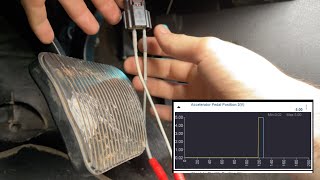
Watch the live voltage data for sensor 'C' on your scanner. Gently wiggle the wiring harness and connectors at the pedal and throttle body. If the voltage drops out or spikes, you have a wiring break, not a bad sensor.
Tools: Advanced OBD-II Scanner (Intermediate) - Analyze Live Sensor Data PIDs
With the key ON and engine OFF, monitor the sensor voltage. It should rest near 0.5V and climb smoothly to 4.5V as you slowly press the pedal. Any jumps, dead spots, or lack of correlation with redundant sensors confirms a fault.
Tools: Advanced OBD-II Scanner (Intermediate) - Test 5V Reference and Ground
Back-probe the sensor connector with a multimeter. Confirm a steady 4.8V-5.2V reference signal from the PCM. Verify the ground circuit shows near 0V (under 100mV). Fluctuations indicate a power supply or PCM issue.
Tools: Digital Multimeter, Back-probe kit (Advanced) - Test for Shorts to Voltage/Ground
Unplug the sensor and probe the signal wire in the harness. It must read 0V. Any voltage indicates a short to power. Check continuity between the signal wire and ground; it should read infinite resistance (O/L).
Tools: Digital Multimeter (Advanced) - Clean the Electronic Throttle Body
Remove the air intake tube and clean carbon buildup restricting the throttle plate. Never force an electronic plate open manually; have a helper press the gas pedal with the key ON (engine off) to open it safely.
Tools: Throttle body cleaner, rags, basic hand tools (Intermediate)
When This Code Triggers (Freeze-Frame Conditions)
- Engine Coolant Temp: 180-200°F (Faults frequently appear after reaching full operating temperature, as heat expands failing internal electronic tracks.)
- RPM: 1500-2500 (Triggers during steady-state cruising or light acceleration, rather than idle or heavy throttle.)
- Engine Load: 30-60% (Occurs under normal driving load when the pedal is held in a consistent mid-range position.)
- Vehicle Speed: 35-55 mph (Sets at cruising speeds when the PCM expects a perfectly stable sensor voltage.)
Related Codes
- P0225 — Indicates a complete loss of signal (open circuit) or short circuit in the 'C' sensor. P0226 means the circuit works but performs erratically.
- P0227 — Indicates voltage is stuck consistently below 0.5V. P0226 is for erratic voltage that jumps around, rather than staying stuck low.
- P0228 — Indicates voltage is stuck consistently above 4.5V. P0226 covers performance deviations, while P0228 is strictly for high voltage.
- P2135 — Indicates sensors 'A' and 'B' disagree. Appears alongside P0226 when internal hardware failure causes multiple redundant sensors to fail simultaneously.
Climate & Environmental Factors
- High Humidity / Moisture: Accelerates corrosion on electrical connector pins, introducing unwanted resistance that skews the sensor's voltage signal.
- Extreme Heat Cycles: Bakes wiring harness insulation until it becomes brittle and cracks, exposing wires to short circuits against the engine block.
How to Talk to a Mechanic About This Code
Say this: "I have a P0226 code and limp mode. Please perform a live-data wiggle test on the harness and verify the 5-volt reference signal before recommending any part replacements. I also need to know if your labor includes the digital idle relearn."
Signals you understand wiring mimics sensor failure, preventing shops from blindly swapping expensive parts. Confirms they have the tools for the mandatory relearn.
Avoid saying:
- 'My car won't accelerate.' (Invites expensive guesses)
- 'Just fix the check engine light.' (Gives a blank check)
- 'I need a new throttle body.' (Bypasses diagnosis entirely)
Questions to ask before authorizing the repair:
- Did the voltage drop out during the harness wiggle test?
- Is the 5-volt reference signal stable?
- Are you using an OEM or aftermarket replacement part?
- Does the labor quote include the digital throttle relearn procedure?
Where to Take It: Dealer vs Independent vs Chain
- Dealer:
Recommended only if covered by warranty/TSBs, or if independent shops lack the software for the relearn procedure.
Best for: Vehicles under warranty., Ford or GM vehicles with known TSBs or extended coverage programs., German brands requiring specialized relearn software.
Downsides: Highest labor rates., Defaults to replacing entire expensive assemblies rather than repairing wiring. (Typical cost: +50% vs. baseline) - Independent Shop:
Best choice. Ensure they have strong electrical diagnostic skills and the equipment to perform the relearn.
Best for: Out-of-warranty vehicles., Shops specializing in electrical diagnostics.
Downsides: May lack the specific scan tool required for the digital idle relearn. (Typical cost: +0% vs. baseline) - Chain Shop:
Avoid. This code requires multimeter testing and digital calibration beyond their scope.
Best for: Routine maintenance (oil, tires).
Downsides: Lacks advanced electrical diagnostic capabilities., Cannot perform mandatory relearn procedures. (Typical cost: -10% vs. baseline)
When to Walk Away From the Repair
If the repair cost exceeds 50% of your car's Kelley Blue Book private-party value, do not fix it. For cars over 150,000 miles, drop this threshold to 40%.
- Car worth $4000, fix is $2200: Walk away. The repair is 55% of the car's value. Sell as a 'mechanic special'.
- Car worth $12000, fix is $600: Fix it. The repair is 5% of the value and restores critical function.
What Scan Tool You Need for This Code

Minimum: Must read and graph live sensor data for throttle/pedal position.
A $20 code reader cannot show live voltage signals. Without live data, you cannot perform a wiggle test or see intermittent dropouts.
Budget: BlueDriver Pro (~$100) — Graphs live data to your smartphone, allowing you to catch erratic voltage spikes during a wiggle test.
Mid-range: Foxwell NT510 Elite (~$180) — Includes bidirectional controls required to perform the mandatory digital idle relearn procedure after replacing parts.
Professional: Autel MaxiSys MS906 (~$800) — Provides dealer-level bidirectional control and ultra-fast live data sampling to catch micro-glitches.
Rent vs buy: Buy a mid-range scanner if you plan to replace the throttle body yourself, as you must have bidirectional control for the relearn procedure.
How to Clear the Code After You Fix It
- Use an OBD-II scan tool to clear the P0226 code from the PCM.
- Perform the vehicle-specific digital idle relearn procedure using a capable scan tool.
- Execute a complete drive cycle to reset the vehicle's readiness monitors.
Drive cycle (~25 minutes): Cold start and idle for 3 minutes. Drive in mixed city traffic (stops and starts) for 15 minutes. Transition to steady highway cruising at 55 mph for 10 minutes. Let the vehicle cool down completely.
Readiness monitors affected: Comprehensive Component Monitor, Catalyst Monitor, O2 Sensor Monitor
Before emissions retest: drive at least 50 miles to fully set monitors.
Watch out for:
- Disconnecting the battery clears the code but resets all monitors to 'not ready,' causing an automatic emissions failure.
- Failing to perform the idle relearn guarantees the code returns within the first 10 miles of driving.
Will This Fail Emissions / State Inspection?
Yes — this code typically fails an OBD-II emissions inspection.
- California: An active P0226 code is an automatic failure. All readiness monitors must be 'ready' before a re-test.
- New York: A P0226 code results in an immediate OBD-II emissions test failure.
- Texas: In the 17 emissions-testing counties, an illuminated Check Engine Light with P0226 fails the inspection.
Most Commonly Affected Vehicles
- Ford F-150, Focus, Explorer, Edge (2004-2017) — Electronic throttle body failures are notorious, triggering a 'wrench' light. Ford issued extended warranties (13N03) for this exact defect.
- General Motors Silverado, Equinox, Malibu, Traverse (2007-2018) — Triggers a 'Reduced Engine Power' message. The 2014-2017 Equinox/Terrain are particularly prone to throttle sensor wear.
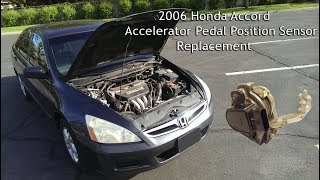
- Honda Accord, Civic, CR-V (2003-2012) — P0226 is almost always caused by a failing Accelerator Pedal Position Sensor (APPS), sold as a complete pedal assembly.
- Nissan Altima, Rogue, Maxima (2007-2018) — Failing integrated throttle bodies are the primary culprit. A digital relearn procedure is strictly mandatory after replacement.
- Volkswagen / Audi Golf, Jetta, A4, Q5 (2005-2015) — Frequently traces to frayed wiring near the throttle connector. Failing O2 sensors can also damage the ECM, causing false P0226 codes.
Manufacturer-Specific Notes
- Ford: Customer Satisfaction Program 13N03 extended ETB warranties to 10 years/150k miles due to internal contact contamination. Often triggers alongside P2112 (Stuck Closed).
- General Motors: Displays a 'Reduced Engine Power' or 'Service StabiliTrak' message. GM issued Special Coverage 14582 for throttle sensor wear on specific models.
- Volkswagen/Audi: A failing Oxygen (O2) sensor causes voltage feedback that damages the Engine Control Module (ECM), leading to a false P0226 code.
- Honda: The Accelerator Pedal Position Sensor (APPS) fails far more frequently than the throttle body. It is sold as a complete pedal assembly (e.g., OEM 37971-RCA-A01).
Real Owner Stories
2007 Infiniti G35 Parts Cannon
Car entered limp mode with P0226. Owner replaced the throttle body and pedal assembly. A shop then replaced and programmed the ECM. The fault returned immediately.
What they tried:
- Replaced throttle body
- Replaced accelerator pedal
- Replaced and programmed ECM
Outcome: The owner finally used a multimeter and found an open circuit (broken wire) between the ECM and pedal connector. Running a new wire permanently fixed the limp mode.
Lesson: Never replace expensive modules without testing continuity. A broken $2 wire perfectly mimics a failed $800 computer.
High-Mileage VW TDI Limp Mode
Car lost all throttle response while driving and would only idle. Scanned code P0226.
What they tried:
- Suspected wiring due to 305k miles.
- Swapped the accelerator pedal assembly.
Outcome: Replacing the pedal assembly restored full throttle response immediately.
Lesson: The Accelerator Pedal Position (APP) sensor is a highly frequent failure point on VW and Honda vehicles, often failing before the throttle body.
2024 Nissan Qashqai Dealer Dispute
New car entered limp mode. Dealer diagnosed P0226 but claimed no hardware fault existed.
What they tried:
- Dealer cleared code and blamed driving habits.
Outcome: Dealer insisted the driver triggered the code by pressing the brake and gas pedals simultaneously for 3 seconds ('double pedaling'), a programmed safety feature.
Lesson: Modern ECU logic triggers limp mode if it receives conflicting inputs. Ensure floor mats aren't pressing the pedal and avoid two-foot driving.
2005 Honda Accord Intermittent Drops
Car lost power on the highway. Shop cleared the code, but the owner felt slight 200 RPM drops during local driving without a Check Engine Light.
What they tried:
- Cleared code, checked transmission.
Outcome: Shop advised driving until the fault became consistent. The intermittent APP sensor failure was highly heat-dependent.
Lesson: Electronic sensors fail intermittently at first. Use a scan tool with live data graphing to catch micro-dropouts while driving.
How to Prevent This Code From Triggering
- Clean the throttle body. (Every 40,000 miles.) — Removes carbon buildup that sticks the throttle plate, preventing the mechanical lag that triggers performance codes.
- Apply dielectric grease to sensor connectors. (Whenever disconnected.) — Seals electrical connectors from moisture and dirt, preventing the pin corrosion that causes intermittent signal drops.
- Replace the engine air filter. (Every 20,000 miles.) — Blocks fine dust from entering the intake, drastically reducing the grime buildup on the throttle plate.
Frequently Asked Questions
What's the difference between a Throttle Position Sensor (TPS) and an Accelerator Pedal Position Sensor (APPS)?
The APPS is on your gas pedal and measures your foot's position, while the TPS is on the engine's throttle body and measures the throttle plate's angle. In modern systems, the APPS tells the computer your desired speed, and the computer commands the throttle body to open. P0226 indicates a performance fault in either sensor's 'C' circuit.
What is the most common mistake when fixing P0226?
The biggest mistake is replacing the expensive throttle body without performing a live-data 'wiggle test' first. A corroded wire perfectly mimics a failed sensor, and testing it saves hundreds of dollars.
Will cleaning the throttle body fix a P0226 code?
It only works if the code is triggered by heavy carbon buildup physically sticking the throttle plate. If the code stems from an internal electronic failure within the sensor, cleaning does nothing.
Do I need to do a 'relearn' procedure after the repair?
Yes. Replacing a throttle body or pedal sensor requires a digital relearn procedure using a scan tool. This calibrates the new part's baseline voltage to the computer, preventing high idle and returning codes.
Can a weak battery cause a P0226 code?
Yes. Throttle sensors require a perfectly stable 5-volt reference signal from the PCM. A weak battery or failing alternator fluctuates system voltage, corrupting this reference signal and triggering false codes.
Why did the code come back after replacing the sensor?
The original problem was likely a damaged wiring harness that was overlooked during diagnosis. Alternatively, you installed a cheap, uncalibrated aftermarket sensor, or failed to perform the mandatory relearn procedure.
Can P0226 cause transmission problems?
While P0226 is an engine code, the sudden loss of power or erratic surging mimics transmission slipping. The engine computer uses throttle position data to control shifting, so an unreliable signal causes harsh or erratic gear changes. However, the root cause remains the throttle control system, not the transmission.
Key Takeaways
- Code P0226 triggers a dangerous 'limp mode' capping your speed at 30-35 mph because the engine computer receives erratic signals from the gas pedal or throttle body.
- The two most frequent fixes are replacing the Accelerator Pedal Position (APP) sensor (costing $180-$450) or the Electronic Throttle Body assembly.
- Always verify the sensor is receiving a steady 4.8V to 5.2V reference signal from the computer before spending $300+ on replacement parts.
- Installing a new throttle body requires a mandatory digital 'relearn' procedure using a mid-range OBD-II scanner to calibrate the idle speed.
Helpful Videos
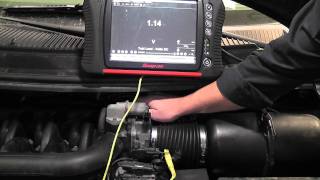
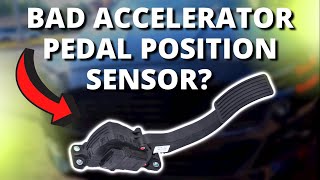
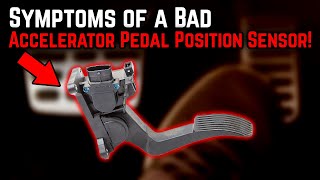
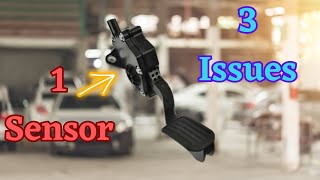

The information in this article is provided for general reference and educational purposes only. Vehicle specifications, procedures, and part compatibility can vary by production date, trim level, and region. Always consult your vehicle's factory service manual and verify part numbers before purchasing or performing repairs. Safety-critical components such as airbags, seat belts, and braking systems should be installed by a qualified professional.
- 🎬 Helpful Videos
- What Does P0226 Mean?
- Can I Drive With P0226?
- Common Causes
- Symptoms
- Diagnostic Flowchart
- Common Fixes & Costs
- Used vs. New Parts: Buying Guide
- What Happens If You Wait — Timeline
- Cost of Not Fixing It
- Diagnosis Steps
- When This Code Triggers (Freeze-Frame Conditions)
- Related Codes
- Climate & Environmental Factors
- How to Talk to a Mechanic About This Code
- Where to Take It: Dealer vs Independent vs Chain
- When to Walk Away From the Repair
- What Scan Tool You Need for This Code
- How to Clear the Code After You Fix It
- Will This Fail Emissions / State Inspection?
- Most Commonly Affected Vehicles
- Manufacturer-Specific Notes
- Real Owner Stories
- 2007 Infiniti G35 Parts Cannon
- High-Mileage VW TDI Limp Mode
- 2024 Nissan Qashqai Dealer Dispute
- 2005 Honda Accord Intermittent Drops
- How to Prevent This Code From Triggering
- Frequently Asked Questions
- What's the difference between a Throttle Position Sensor (TPS) and an Accelerator Pedal Position Sensor (APPS)?
- What is the most common mistake when fixing P0226?
- Will cleaning the throttle body fix a P0226 code?
- Do I need to do a 'relearn' procedure after the repair?
- Can a weak battery cause a P0226 code?
- Why did the code come back after replacing the sensor?
- Can P0226 cause transmission problems?
- Key Takeaways
- 🎟️ Get 5% Off