

P0223 on 2013-2016 Dodge Charger: Throttle Position Sensor 'B' Circuit High Fixes
On a 2013-2016 Dodge Charger, code P0223 is most often caused by a faulty electronic throttle body. However, for 3.6L engines, several Technical Service Bulletins (TSBs) recommend a powertrain control module (PCM) software update as the first step. A dealer reflash costs around $150-$250, while a new throttle body can range from $350 to $700 installed.
- For 2013-2016 Chargers with the 3.6L engine, always check for available PCM software updates before replacing parts.
- P0223 indicates a 'Circuit High' fault in the secondary throttle position sensor (Sensor 'B').
- Symptoms are serious and include the vehicle entering a low-power 'limp mode'.
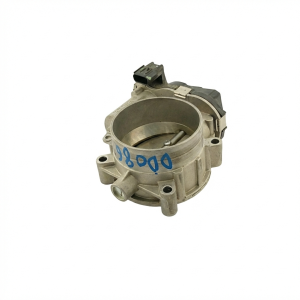
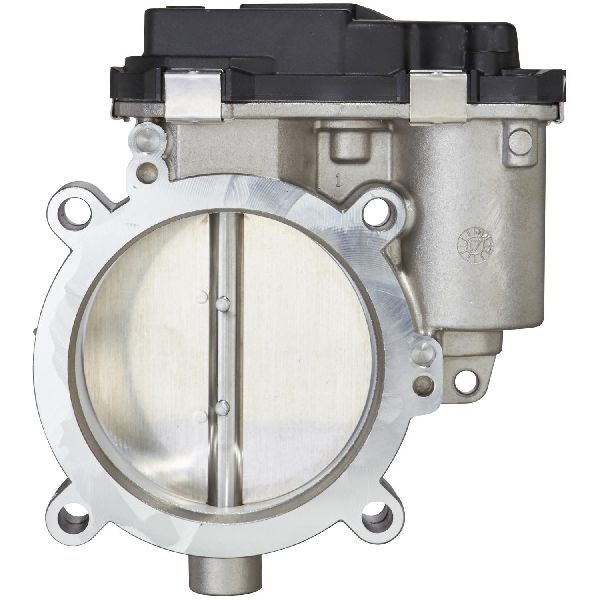
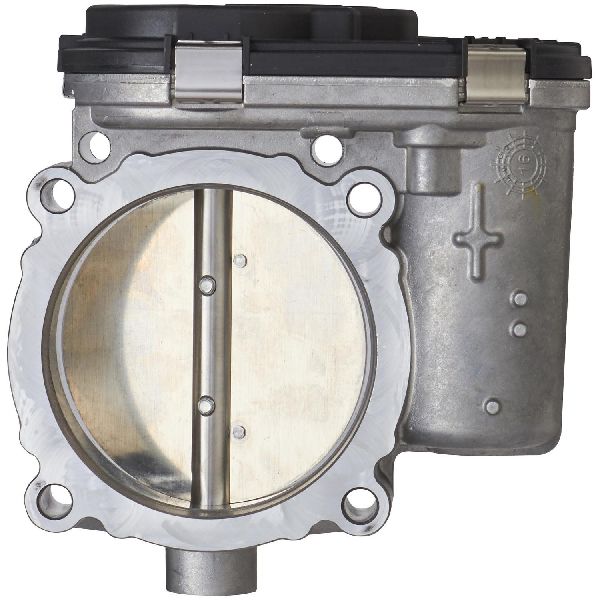
- The most common hardware failure is the entire electronic throttle body assembly, as the sensors are built-in.
- Always inspect the wiring and connector to the throttle body for damage before condemning the part.
What's Unique About the 2013-2016 Dodge CHARGER
For the 2013-2016 Dodge Charger, particularly models with the 3.6L V6 engine, this code doesn't always point to a bad part. Chrysler issued multiple Technical Service Bulletins (TSBs) indicating that the original PCM software was often too sensitive and could set this code erroneously. In many cases, the official fix is a simple software update performed by a dealer, which corrects the issue without replacing any hardware. This is a crucial distinction from many other vehicles where P0223 almost always means a failed throttle body.
Diagnostic Flowchart
Tap your situation to follow the diagnostic path that matches what you're seeing on this vehicle.
Symptoms You May Notice
- Check Engine Light is on
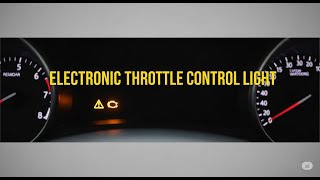
- Electronic Throttle Control (ETC) warning light (red lightning bolt symbol) is illuminated 🎬 Watch: Understanding the ETC light and common fixes.
- Vehicle enters 'limp mode' with drastically reduced engine power
- Poor, hesitant, or no acceleration
- Unstable or rough idle
- Engine may stall or be hard to start
- In some cases, the transmission may exhibit poor shifting behavior
- Replacing the throttle body when only a PCM software update was needed.
- Replacing the accelerator pedal assembly; while it has position sensors, P0223 specifically points to the sensor circuit at the throttle body, not the pedal.
- Cleaning the throttle body and assuming the problem is fixed. While a dirty throttle body can cause issues, P0223 is an electrical fault, and cleaning alone rarely provides a long-term solution.
Most Likely Causes
- Powertrain Control Module (PCM) Software Update Needed 🔴 High Probability As documented in TSBs #18-062-17, #18-045-16 REV. A, #18-074-15 REV A, and #18-032-16, the original PCM calibration for 3.6L engines was prone to incorrectly setting this code. The manufacturer's primary recommended fix is a software update.
How to confirm: A Dodge dealership or a qualified shop with a wiTECH scan tool can check the current software calibration number against the latest version available in the TSBs. This should always be the first step for a 3.6L engine.
Typical fix: Flashing the PCM with the updated software version. Owners report this is a 30-60 minute procedure at a dealership.
Est. part cost: $0 - Faulty Electronic Throttle Body Assembly 🔴 High Probability The throttle position sensors are integrated into the throttle body and cannot be replaced separately. Wear and tear on the internal electronic components or the motor can cause sensor failure. Forum users often report that cleaning the throttle body provides only a temporary fix, with the code returning, indicating the internal electronics are the true point of failure.
How to confirm: After confirming the PCM software is up to date and wiring is intact, a technician can use a scan tool to monitor live voltage from TPS1 and TPS2. If TPS2 voltage is stuck high (near 5V) and doesn't change with throttle input, the throttle body is defective.
Typical fix: Replacement of the entire throttle body assembly, followed by a throttle relearn procedure using a capable scan tool.
Est. part cost: $120-$450 - Wiring or Connector Issue 🟡 Medium Probability The wiring harness to the throttle body is exposed to engine heat and vibration, which can lead to chafed wires, loose pins in the connector, or corrosion over time. Owners have specifically noted issues with pins backing out of the connector housing and wires rubbing near the back of the engine.
How to confirm: Visually inspect the harness for damage. Unplug the connector and check for corrosion or backed-out pins. Use a multimeter to check for continuity and for a short to power on the sensor's signal wire.
Typical fix: Repairing the damaged section of the wiring harness or cleaning/replacing the connector.
Est. part cost: $5-$50
Rare But Worth Checking
- Failed Powertrain Control Module (PCM): This is the least likely cause. The PCM should only be considered after all other possibilities, including software updates, the throttle body, and all related wiring, have been definitively ruled out.
- Torn or Jammed Floor Mats: An improperly placed or bunched-up floor mat can physically obstruct the accelerator pedal's movement, causing a discrepancy between pedal sensor readings and what the PCM expects, potentially triggering a fault. While less common for a 'circuit high' code, it's a simple and important check.
Diagnosis Steps
- Connect an OBD-II scanner to verify code P0223 and document any other codes present.
- For 3.6L engines, the first and most important step is to check if a PCM software update is available per the relevant TSBs. Contact a dealer with your VIN.
- Perform a thorough visual inspection of the throttle body connector and its wiring harness. Look for any signs of chafing, melting, corrosion, or loose pins. Pay special attention to the harness routing near the back of the engine.
- Using a scan tool with live data, observe the voltage readings for both Throttle Position Sensor 1 and Sensor 2. A healthy TPS2 should read approximately 0.5-0.8V at closed throttle and sweep smoothly to ~4.5V at wide-open throttle. P0223 suggests Sensor 2 voltage will be stuck high, likely at or near 5.0 volts.
- Gently press the accelerator pedal with the key on, engine off. The voltage for both sensors should change smoothly and correlate with each other (one may rise while the other falls). If Sensor 2 voltage does not change or is erratic, the problem is confirmed to be in that circuit.
- If wiring appears intact, disconnect the harness and test the wiring between the PCM and the throttle body connector for a short to power, a short to ground, or an open circuit using a digital multimeter and a vehicle-specific wiring diagram.
- If the PCM software is current and the wiring is confirmed to be good, the electronic throttle body assembly is the defective component 🎬 Watch: How to test and replace the electronic throttle body. and should be replaced.
- After replacement, perform a 'Throttle Body Relearn' or 'Reset Adaptive Values' procedure with a capable scan tool to ensure proper idle and performance.
Parts You'll Likely Need
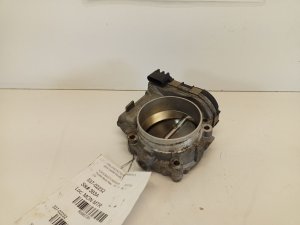
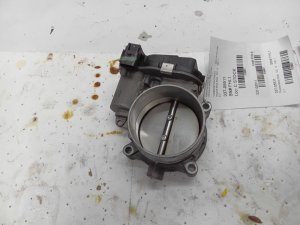
- Electronic Throttle Body Assembly
(OEM #04891735AC, superseded by 04891735AD)— This is the most common hardware failure for code P0223, as the non-serviceable throttle position sensors are integrated within this unit. Always verify the part number with your VIN before ordering.
Trusted brands: Mopar, Bosch, Hitachi, SKP, Cardone (Remanufactured)
OEM price range: $250-$450
Aftermarket price range: $120-$250
Related Codes That Often Appear With This One
- P0123 — This is the 'Circuit High' code for the other throttle position sensor (Sensor 1/A). They often fail or set codes together, strongly pointing to a faulty throttle body assembly. [Bulletin #18-062-17]
- P0222 — This is the 'Circuit Low' code for the same sensor (Sensor 2/B). Seeing both high and low codes can indicate an intermittent wiring problem or a failing sensor. [Bulletin #18-062-17]
- P0122 — This is the 'Circuit Low' code for Sensor 1/A. A combination of codes across both sensors points strongly to a faulty throttle body or a wiring issue. [Bulletin #18-062-17]
- P2299 — This code for 'Brake Pedal Position/Accelerator Pedal Position Incompatible' can be set as a secondary fault when the PCM receives conflicting information from the throttle system. [Bulletin #18-062-17]
- U1424 — This code for 'Implausible Engine Torque Signal' is often linked to throttle position sensor faults in Chrysler TSBs, as the TPS is a primary input for the PCM's torque calculations.
Technical Service Bulletins (TSBs) & Recalls
- 18-062-17: Recommends a PCM reflash for 2016 models with the 3.6L engine to address P0223 and other codes.
- 18-045-16 REV. A: Recommends a PCM reflash for 2015 models with the 3.6L engine.
- 18-074-15 REV A: Recommends a PCM reflash for 2013-2015 models.
- 18-032-16: Recommends a PCM reflash for 2016 models with the 3.6L engine.
Platform-Specific Known Issues
- Multiple TSBs exist for the 3.6L engine that address this specific code with a PCM software update, which should be the first diagnostic check. Ignoring this can lead to unnecessary replacement of the throttle body.
- While cleaning a dirty throttle body is common maintenance, it is rarely a permanent fix for P0223. The code indicates an electrical circuit failure, not a physical blockage. Owners often report the code returns soon after a cleaning-only attempt.
Mechanic-Grade Diagnostic Values
- TPS Sensor 2 (TPS2) Voltage — expected: Sweeps smoothly from a high value (~4.5V) down to a low value (~0.5V) as the throttle opens. This is often opposite of TPS1.. Failure: Voltage is stuck high (at or near 5.0V) and does not change when the accelerator pedal is pressed.
- 5-Volt Reference at Throttle Body Connector — expected: A steady 5.0 Volts with Key On, Engine Off.. Failure: A reading below 4.7V, no voltage, or fluctuating voltage indicates a problem with the PCM's 5V supply circuit or a short in the harness.
- TPS Sensor Ground Circuit Resistance — expected: Below 5.0 Ohms between the throttle body connector's ground pin (Pin 5) and the corresponding pin at the PCM connector.. Failure: Resistance higher than 5.0 Ohms indicates a poor ground connection, which can cause incorrect voltage readings.
Scan Tool Commands That Help
- wiTECH or capable bidirectional scanner: ETC Relearn / Reset Adaptive Values — Required after replacing the throttle body or disconnecting the battery to calibrate the new part to the PCM.
- wiTECH or capable bidirectional scanner: ETC Throttle Follower Test — During diagnosis, this test commands the throttle plate to move, allowing a technician to watch live TPS1 and TPS2 voltage data to see if the sensors respond correctly.
- Manual Procedure (No Scan Tool): Accelerator Pedal Relearn Procedure — A non-scan tool method to attempt a relearn. With ignition ON (engine OFF), slowly press the accelerator pedal to the floor, hold for 10 seconds, slowly release, then turn ignition OFF for 10 seconds before starting the engine.
Wiring & Ground Locations
- Throttle Body 6-Pin Connector — The electrical connector on the electronic throttle body, mounted to the engine's intake manifold.. This connector carries all signals for the throttle control. P0223 relates specifically to the signal from Pin 3. A typical pinout is: Pin 1: TP Signal 1 (K22), Pin 2: 5V Supply (F855), Pin 3: TP Signal 2 (K122), Pin 4: ETC Motor (+), Pin 5: TP Sensor Ground (K922), Pin 6: ETC Motor (-).
- Front Fuse Box / Power Distribution Center — Under the hood, on the passenger side of the engine compartment.. Contains fuses and relays for engine management. Fuses F31, F34, F35, and F37 have been identified as potentially related to the throttle body and sensor circuits.
- Rear Fuse Box — In the trunk, next to the battery under the floor liner.. Contains additional relays (such as Relay 14 and 29) that may be involved in powering the engine control systems.
OEM Part Supersession History
04891735AC→04891735AD— Standard part revision by the manufacturer for improved reliability or sourcing.
Heads up: While this is the common part for the 3.6L engine, different engines (5.7L, 6.4L) and model year changes may use different part numbers. Always verify with the vehicle's VIN before purchasing.
Model Year Variations Within This Range
- 2013-2016: The specific software update required to fix erroneous codes is tied to the model year, as shown by the different TSBs (e.g., TSB #18-062-17 for 2016, #18-045-16 for 2015). A 2013 vehicle will require a different flash file than a 2016 vehicle.
- 2013-2016: Part numbers for the throttle body assembly may differ between the earlier (2013-2014) and later (2015-2016 facelift) models within this generation. VIN verification is critical when ordering a replacement.
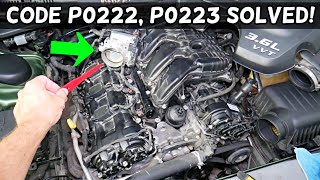
Helpful Videos


Used OEM Parts in Stock
New Aftermarket Parts Available



The information in this article is provided for general reference and educational purposes only. Vehicle specifications, procedures, and part compatibility can vary by production date, trim level, and region. Always consult your vehicle's factory service manual and verify part numbers before purchasing or performing repairs. Safety-critical components such as airbags, seat belts, and braking systems should be installed by a qualified professional.
- Dodge CHARGER:
- 🎬 Helpful Videos
- 🛍️ Shop This Part
- What's Unique About the 2013-2016 Dodge CHARGER
- Diagnostic Flowchart
- Symptoms You May Notice
- Most Likely Causes
- Rare But Worth Checking
- Diagnosis Steps
- Parts You'll Likely Need
- Related Codes That Often Appear With This One
- Technical Service Bulletins (TSBs) & Recalls
- Platform-Specific Known Issues
- Mechanic-Grade Diagnostic Values
- Scan Tool Commands That Help
- Wiring & Ground Locations
- OEM Part Supersession History
- Model Year Variations Within This Range
- 🎟️ Get 5% Off