

P0223 on 2013-2016 Dodge Challenger: Throttle Position Sensor 'B' Circuit High Fixes
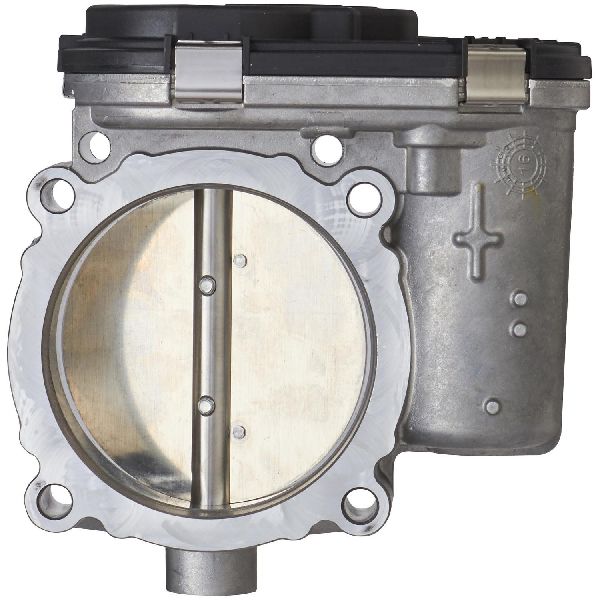
P0223 on your Challenger indicates a 'Circuit High' fault from the secondary throttle position sensor. This almost always means the entire throttle body assembly has failed and needs replacement. Expect the vehicle to enter a low-power 'limp mode', signified by a flashing lightning bolt on the dash. The sensors are integrated and not sold separately.
- P0223 means the secondary throttle position sensor is sending a voltage signal that is too high.
- This fault will cause your Challenger to enter a reduced-power 'limp mode' for safety.
- The most frequent solution is to replace the entire electronic throttle body assembly, as the sensors are built-in.
- Always inspect the wiring and connector to the throttle body for damage before replacing parts.
- Check with a dealer if a PCM software update is available for your vehicle, as TSBs suggest this can sometimes resolve the issue.
What's Unique About the 2013-2016 Dodge CHALLENGER
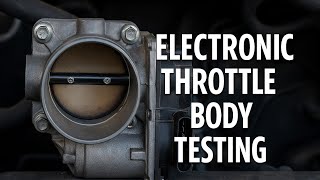
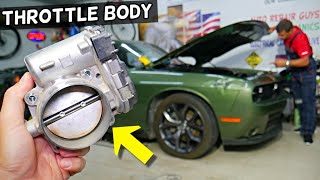
On this generation of Dodge Challenger and its platform mates (Dodge Charger, Chrysler 300), the dual throttle position sensors are integrated directly into the electronic throttle body and are not sold or serviced as separate components. This means a sensor failure requires replacing the entire throttle body assembly. 🎬 Watch: Step-by-step guide to removing and replacing the throttle body. Several Technical Service Bulletins (TSBs) from Dodge list P0223 alongside other throttle-related codes, often pointing towards a need for a PCM software update in conjunction with hardware checks, indicating a known sensitivity in the system's calibration that can sometimes be resolved with a reflash.
Diagnostic Flowchart
Tap your situation to follow the diagnostic path that matches what you're seeing on this vehicle.
Symptoms You May Notice
- Check Engine Light is on
- Flashing Electronic Throttle Control (ETC) light (red lightning bolt symbol)
- Vehicle enters 'limp mode' with drastically reduced engine power
- Poor, delayed, or no acceleration
- Engine may hesitate, surge, or stall
- Rough or unstable idle
- Unresponsive accelerator pedal
- Harsh or incorrect automatic transmission shifting
- Replacing the accelerator pedal position sensor (APPS). While the APPS is part of the overall throttle control system, P0223 specifically points to the sensor at the throttle body ('B' circuit), not the pedal sensor. A user on Reddit replaced the pedal for a similar issue with no success before further diagnosing the system.
Most Likely Causes
- Failed Throttle Body Assembly 🔴 High Probability The throttle position sensors are integrated into the throttle body assembly and are a common failure point. The internal electronic components (potentiometer) wear out or develop internal shorts, causing a 'circuit high' reading that is not repairable separately.
How to confirm: Using a diagnostic scan tool, observe the live data for TPS1 and TPS2 voltage. If TPS2 voltage is stuck high (e.g., near 5V) regardless of throttle pedal input, while TPS1 sweeps normally, the throttle body is faulty.
Typical fix: Replace the entire throttle body assembly. A throttle body relearn procedure must be performed after installation to calibrate the new part with the PCM.
Est. part cost: $150-$400 - Wiring Harness Damage 🟡 Medium Probability The wiring harness leading to the throttle body is exposed to engine heat and vibration. Wires can chafe against the engine or other components, or the connector pins can become corroded or loose, leading to a short to power or an open circuit.
How to confirm: Visually inspect the wiring harness between the PCM and the throttle body for any signs of melting, chafing, or breaks. Check the connector for corrosion or pushed-out pins. Perform a 'wiggle test' on the connector and harness while monitoring TPS2 voltage on a scan tool; if the reading changes, a wiring issue is likely.
Typical fix: Repair the damaged section of the wiring harness and secure it away from heat sources or sharp edges. Replace the connector if it is corroded or damaged.
Est. part cost: $20-$100 - Powertrain Control Module (PCM) Issue ⚪ Low Probability Multiple TSBs (#18-062-17, #18-045-16 REV. A, #18-074-15 REV A, #18-032-16) mention P0223 in a list of codes that may be resolved with a PCM software update. This suggests that software glitches can sometimes misinterpret sensor data or that the thresholds for setting the fault are too sensitive in older software versions.
How to confirm: After ruling out the throttle body and wiring, a dealership or qualified shop must check if a PCM software update is available for your vehicle's VIN. A Reddit user reported a dealership reflashed the PCM for a similar issue, but the problem returned, indicating it's often a temporary fix if a hardware issue is present.
Typical fix: Update the PCM software (reflash). In very rare cases, the PCM itself may have a failed internal driver circuit and require replacement.
Est. part cost: $100-$250 for a reflash, $800+ for PCM replacement
Rare But Worth Checking
- Dirty Throttle Body:
Diagnosis Steps
- Connect an OBD-II scanner and confirm P0223 is present. Check for any other related codes like P0123, P0222, or U1424 and review freeze frame data.
- View live data on the scanner. Monitor the voltage readings for 'TPS Sensor 1' and 'TPS Sensor 2'. With the key on and engine off, TPS 1 should be around 0.5V at closed throttle and sweep smoothly up to ~4.5V. For P0223, you will likely see TPS Sensor 2 stuck at a high voltage (e.g., 4.9V-5.0V), while its normal operation is to start high (~4.3V) and decrease to ~0.7V as the throttle opens.
- Inspect the throttle body electrical connector. Check for a secure connection, corrosion on the pins, or backed-out wires. Ensure the red locking tab is engaged.
- Inspect the wiring harness leading to the throttle body for any visible signs of chafing, melting, or breaks, especially where it might rub against the engine.
- If wiring appears intact, perform a wiggle test: while watching the live TPS 2 voltage, gently move the wiring harness and connector. If the voltage fluctuates or corrects itself, a wiring or connector pin issue is confirmed.
- If voltage remains high, test the circuit at the connector. Using a multimeter, verify the 5V reference voltage and ground circuits are functioning correctly. A short to voltage on the signal wire can also be tested for.
- If the wiring and connector are confirmed to be good and the TPS2 voltage is still stuck high, the throttle body assembly is the primary suspect and should be replaced.
- After replacement, perform the throttle body relearn procedure. This can often be done manually by turning the ignition on, slowly pressing the gas pedal to the floor, slowly releasing it, and then turning the ignition off before starting the engine.
- If the problem persists after replacing the throttle body, consult a dealer to check for any available PCM software updates as indicated by Dodge TSBs.
Parts You'll Likely Need
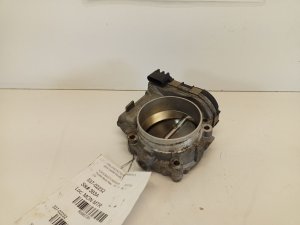
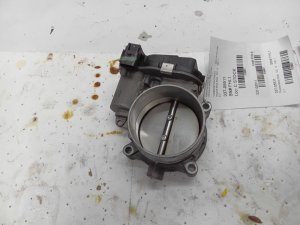
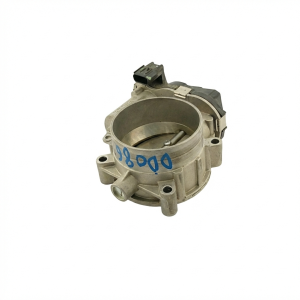
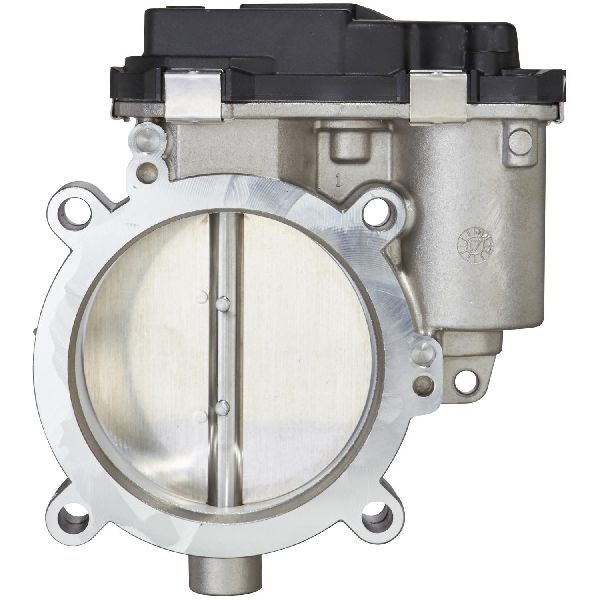
- Electronic Throttle Body Assembly
(OEM #4861661AB (for 3.6L V6, supersedes 4861661AA))— This is the most common cause of P0223, as the internal throttle position sensors fail and are not serviceable separately. The entire unit must be replaced.
Trusted brands: Mopar, Bosch, Standard Motor Products, Dorman, Hitachi
OEM price range: $250-$450
Aftermarket price range: $150-$300
Related Codes That Often Appear With This One
- P0123 — P0123 is 'Throttle Position Sensor 1 Circuit High'. Seeing both P0123 and P0223 together strongly indicates a failure within the throttle body assembly or its main connector/power supply, as both sensors are affected simultaneously.
- P0222 — P0222 is 'Throttle Position Sensor 2 Circuit Low'. Seeing opposite codes (high and low) for the same sensor might suggest an intermittent wiring problem, a connector with a loose pin, or a failing sensor that is fluctuating wildly between open and shorted states.
- P2111 — P2111 is 'Throttle Actuator Control System - Stuck Open'. This code can be triggered as a secondary fault because the PCM cannot trust the position sensor data (due to P0223) and has lost control over the throttle plate's position.
- U1424 — U1424 is 'Implausible Engine Torque Signal Received'. This code is often seen with throttle body codes because the PCM's calculated torque value (based on throttle angle, RPM, etc.) does not match the expected value. TSB #18-062-17 explicitly lists P0223 and U1424 together.
Technical Service Bulletins (TSBs) & Recalls
- 18-062-17: Lists P0223 as 'Throttle Position Sensor 2 Circuit High' among other powertrain codes, including U1424, that can be addressed by a PCM flash.
- 18-045-16 REV. A: Includes P0223 in a list of potential throttle-related DTCs.
- 18-074-15 REV A: Mentions P0223 as a possible electrical system fault code.
- 18-032-16: Groups P0223 with other engine and engine cooling system codes.
Platform-Specific Known Issues
- A series of Technical Service Bulletins (TSBs) including #18-062-17, #18-045-16 REV. A, and #18-032-16 indicate that P0223 is a known issue, often grouped with other PCM and throttle-related codes that may be addressed by a software update.
Mechanic-Grade Diagnostic Values
- TPS Sensor 1 (TP1) Voltage — expected: Approx. 0.5V at closed throttle, sweeping smoothly to approx. 4.5V at wide-open throttle.. Failure: No sweep, erratic voltage, or voltage outside the expected range.
- TPS Sensor 2 (TP2) Voltage — expected: Approx. 4.3V-4.5V at closed throttle, sweeping smoothly down to approx. 0.7V at wide-open throttle.. Failure: For P0223, the voltage is stuck high (above 4.65V) and does not decrease when the throttle plate is opened.
- 5-Volt Reference Circuit at Throttle Body Connector — expected: Approx. 5.0 volts (Key On, Engine Off).. Failure: Voltage above 5.2V indicates a short to voltage; no voltage indicates an open circuit or PCM fault.
Scan Tool Commands That Help
- Professional Scan Tool (e.g., wiTECH): ETC Throttle Follower Test — This is a guided active test to monitor the TPS 1 and TPS 2 voltages while the scan tool commands the throttle plate to move. It's used to verify if the sensor signals respond correctly to throttle movement, helping to isolate a faulty sensor from a wiring issue.
- Professional Scan Tool (e.g., wiTECH): Throttle Body Relearn / ETC Relearn — This function must be used after replacing the throttle body assembly. It commands the PCM to learn the new closed and wide-open throttle positions of the replacement part to ensure accurate idle and throttle control.
Wiring & Ground Locations
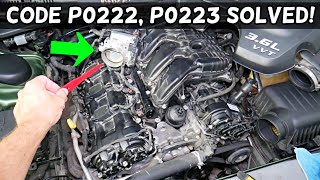
- Throttle Body Connector (6-Pin) — Directly on the electronic throttle body, located at the front of the intake manifold after the air filter housing.. This is the primary connection point for all power, ground, and signal wires for both throttle position sensors and the throttle motor. A loose connection, corrosion, or damaged pin here is a common cause of P0223.
- Throttle Body Connector Pinout (3.6L Engine) — At the throttle body harness connector.. Knowing the pinout is essential for testing. Pin 1: (DK BLU/ORG) ETC Motor (+), Pin 2: (PNK/RED) TP Sensor 1 Signal, Pin 3: (BRN/LT GRN) TP Sensor 2 Signal, Pin 4: (BRN/WHT) TP Sensor Return (Ground), Pin 5: (TAN/YEL) ETC Motor (-), Pin 6: (PNK/YEL) 5V Supply. P0223 specifically relates to the circuit on Pin 3.
- Ground G102 — On the engine block, typically near the front of the engine on the passenger side.. This is a major ground point for the engine control system. A loose or corroded G102 can cause erratic sensor readings and various engine control faults, including throttle position sensor codes.
- Engine Control Fuses — In the main engine bay fuse box (located on the passenger side of the engine bay).. The throttle body and its sensors are powered via fuses related to the PCM and engine controls. Specifically, fuses F31, F34, F35, and F37 in the front fuse box should be checked as they supply power to various engine management components.
OEM Part Supersession History
4861661AA→4861661AB— Standard part revision by the manufacturer, likely for improved reliability or minor design changes.
Heads up: The parts are interchangeable; 4861661AB is the correct service replacement for 4861661AA.
Model Year Variations Within This Range
- 2013-2016: While the core 3.6L engine and throttle body part number remain the same, the 2015 model year received a significant interior and exterior facelift. However, the electrical architecture and diagnostic procedures for a P0223 code are consistent across this range. The TSBs provided cover vehicles both before and after the 2015 refresh, indicating the issue is not specific to one sub-generation.
Helpful Videos



Used OEM Parts in Stock
New Aftermarket Parts Available



The information in this article is provided for general reference and educational purposes only. Vehicle specifications, procedures, and part compatibility can vary by production date, trim level, and region. Always consult your vehicle's factory service manual and verify part numbers before purchasing or performing repairs. Safety-critical components such as airbags, seat belts, and braking systems should be installed by a qualified professional.
- Dodge CHALLENGER:
- 🎬 Helpful Videos
- 🛍️ Shop This Part
- What's Unique About the 2013-2016 Dodge CHALLENGER
- Diagnostic Flowchart
- Symptoms You May Notice
- Most Likely Causes
- Rare But Worth Checking
- Diagnosis Steps
- Parts You'll Likely Need
- Related Codes That Often Appear With This One
- Technical Service Bulletins (TSBs) & Recalls
- Platform-Specific Known Issues
- Mechanic-Grade Diagnostic Values
- Scan Tool Commands That Help
- Wiring & Ground Locations
- OEM Part Supersession History
- Model Year Variations Within This Range
- 🎟️ Get 5% Off