

P0222 on 2013-2016 Jeep Grand Cherokee: Throttle Position Sensor Fixes
This code usually means the entire throttle body assembly needs to be replaced because the sensor is integrated. Expect to pay $470-$615 for the part and 1-2 hours of labor. Before replacing, check the wiring harness for damage, ensure the throttle body is clean, and see if a PCM software update is available, as noted in several TSBs.
- P0222 on a 2013-2016 Grand Cherokee points to a low voltage signal from the secondary throttle position sensor.
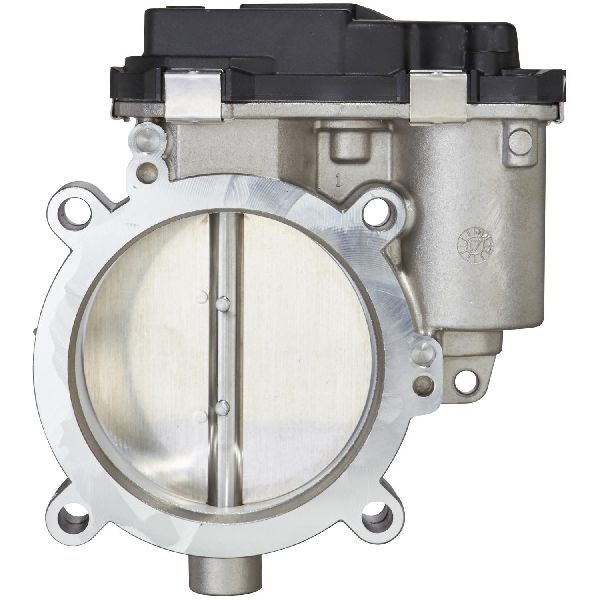
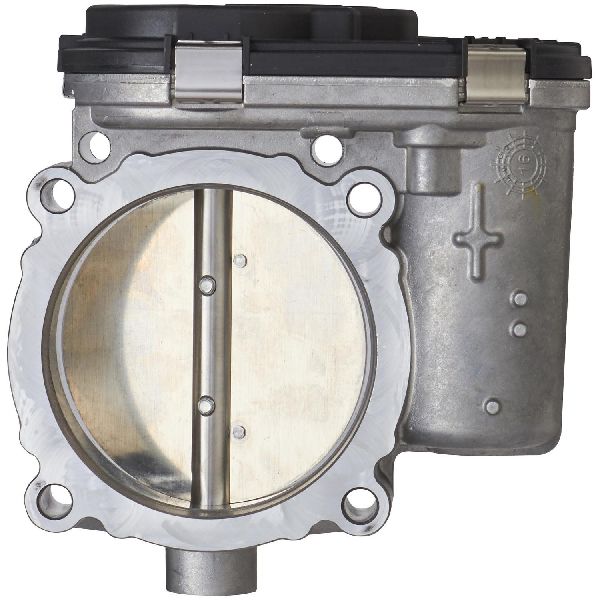
- The most common fix is replacing the entire electronic throttle body assembly, as the sensor is not sold separately.
- Before replacing parts, check for damaged wiring near the throttle body connector.
- Ask a dealer to check for any available PCM software updates, as TSBs indicate this can sometimes be the sole cause.
- The vehicle will likely enter a reduced power 'limp mode,' making it unsafe for normal driving.
What's Unique About the 2013-2016 Jeep GRAND CHEROKEE

For the 2013-2016 (WK2) Grand Cherokee, the P0222 code is frequently associated with a series of other sensor circuit codes, as documented in multiple Technical Service Bulletins (TSBs). This pattern suggests the root cause is often not just a simple sensor failure, but can be related to PCM software logic or intermittent electrical issues. Unlike some vehicles where the TPS is a separate, inexpensive part, on this Grand Cherokee it is integrated into the electronic throttle body, making the repair more costly. This issue is also common on platform mates like the Dodge Durango and Chrysler 300 that share the same engines and electronic architecture.
Diagnostic Flowchart

Tap your situation to follow the diagnostic path that matches what you're seeing on this vehicle.
Symptoms You May Notice
- Check Engine Light is on
- Flashing Electronic Throttle Control (ETC) or 'lightning bolt' light
- Vehicle enters 'limp mode' with drastically reduced engine power
- Poor, jerky, or hesitant acceleration
- Unresponsive accelerator pedal
- Rough or unstable idle
- Engine may stall or be hard to start
- Surging or erratic acceleration
- Replacing the accelerator pedal assembly. While the pedal also has position sensors (APP sensors), a P0222 code specifically points to the sensor circuit at the throttle body, not the pedal. Codes like P2122 or P2127 would point to the pedal assembly.
Most Likely Causes

- Faulty Throttle Body Assembly 🔴 High Probability The Throttle Position Sensor (TPS) is integrated into the throttle body and is not sold as a separate component. The entire electronic assembly is a common failure point across many Chrysler/Jeep/Dodge vehicles using this design.
How to confirm: With a scan tool, monitor live data for TPS1 and TPS2 voltage. If TPS2 voltage is stuck near zero (or below 0.16V) and does not respond when the accelerator pedal is pressed (with the key on, engine off), the sensor inside the throttle body has likely failed.
Typical fix: Replace the entire throttle body assembly. 🎬 Watch: Step-by-step guide to replacing the throttle body assembly. A throttle relearn procedure is required after installation.
Est. part cost: $470-$615 - Wiring Harness or Connector Issue 🟡 Medium Probability The wiring harness leading to the throttle body is subject to engine heat and vibration, which can cause wires to chafe, break, or corrode at the connector pins. A video for a 2014 Grand Cherokee with P0123/P0222 showed the root cause to be a loose pin in the connector, which was resolved by tightening the pin. 🎬 Watch: How to diagnose and fix a loose connector pin.
How to confirm: Visually inspect the wiring harness for any signs of damage, such as melted insulation or chafing. Unplug the connector at the throttle body and check for corrosion or bent/loose pins. Perform a 'wiggle test' on the harness while monitoring TPS voltage on a scan tool to see if the reading fluctuates.
Typical fix: Repair the damaged section of the wire or replace the connector pigtail. Ensure all pins have good tension.
Est. part cost: $20-$50 - Dirty Throttle Body 🟡 Medium Probability Carbon and gunk can build up around the throttle plate, preventing it from closing to its true idle position. This can cause the TPS to send a voltage reading that the PCM interprets as faulty or out of range.
How to confirm: Remove the air intake hose from the throttle body and visually inspect the throttle bore and plate for black carbon buildup.
Typical fix: Clean the throttle body bore and plate with a dedicated throttle body cleaner and a soft brush or cloth. Be careful not to force the plate open or closed manually. A relearn procedure may be needed after cleaning.
Est. part cost: $10-$20 - Outdated PCM Software ⚪ Low Probability Multiple TSBs (#18-090-16, #18-098-16, #18-113-15) were issued for this platform to address intermittent sensor codes, including P0222, via a software update. The PCM may be overly sensitive to minor voltage fluctuations.
How to confirm: A Jeep dealership or a well-equipped independent shop can check if your vehicle's PCM has the latest software calibration installed by checking against your VIN.
Typical fix: Reprogram (flash) the Powertrain Control Module (PCM) with the updated software. Dealer costs can range from $100 to $200 for this service.
Est. part cost: $100-$200
Rare But Worth Checking
- Faulty Powertrain Control Module (PCM): This is rare and should only be considered after the throttle body and wiring have been definitively ruled out. A faulty PCM can fail to correctly interpret the sensor's signal.
Diagnosis Steps
- Scan for Codes: Use an OBD-II scanner to confirm P0222 and check for any other related codes (e.g., P0122, P0123, P0223). Note the freeze frame data.
- Check for TSBs: Ask a dealer if any PCM software updates (like those mentioned in TSBs #18-090-16, #18-098-16, or #18-113-15) apply to your vehicle's VIN and have not been performed.
- Visual Inspection: Inspect the throttle body electrical connector and its wiring harness for any obvious signs of damage, corrosion, or loose connections. Pay close attention to pin tension inside the connector.
- Inspect and Clean Throttle Body: Remove the air intake duct and inspect the throttle plate for heavy carbon buildup. If dirty, clean it using throttle body cleaner. A relearn may be required afterward.
- Monitor Sensor Voltage: Use a scan tool with live data capabilities. With the key on and engine off, observe the voltage readings for both TPS1 and TPS2. TPS2 voltage should be a steady, low voltage (not zero) at idle and should increase smoothly as an assistant presses the accelerator pedal. A reading stuck at or near 0V points to a fault.
- Test the Wiring: If the voltage reading is suspect, unplug the sensor and check for the 5-volt reference and good ground at the connector using a multimeter. If both are present, the issue is very likely the throttle body itself.
- Replace the Throttle Body: If the wiring is confirmed to be good and the sensor signal is faulty, replace the entire throttle body assembly.
- Perform Relearn Procedure: After replacement or cleaning, a throttle body relearn is necessary. A common manual procedure is: Turn the ignition to 'ON' (engine off) for 1-2 minutes. Turn it off for 10 seconds. Start the engine and let it idle for 5-10 minutes to allow the PCM to calibrate. A more reliable method is to use a capable scan tool to initiate the ETC Relearn function.
Parts You'll Likely Need
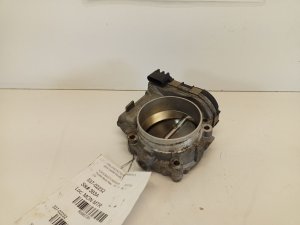
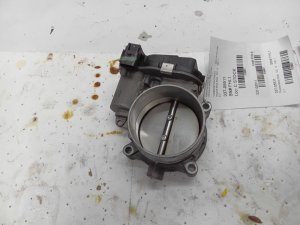
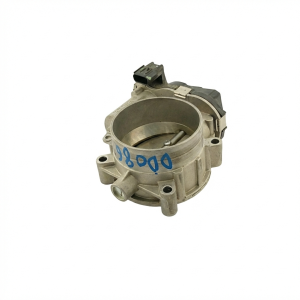
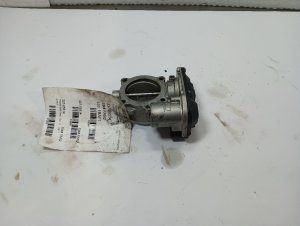
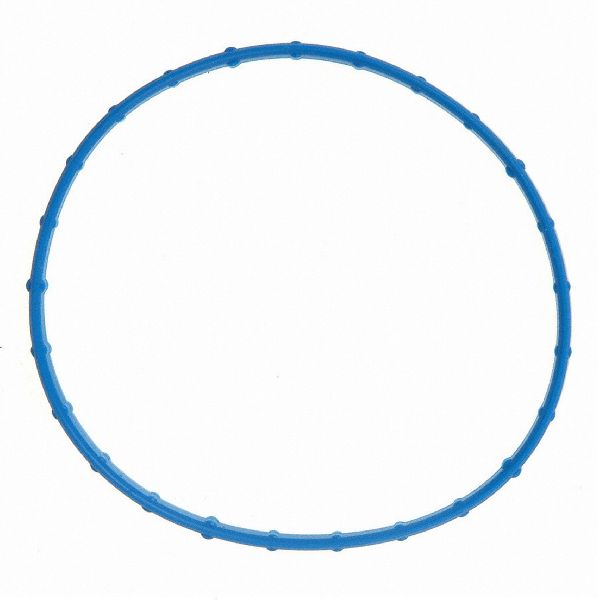
- Electronic Throttle Body Assembly
(OEM #5184349AE (for 3.6L V6, supersedes 5184349AC, 5184349AD))— This is the most common fix because the faulty Throttle Position Sensor (TPS) is integrated into this assembly and cannot be replaced separately.
Trusted brands: Mopar, Continental/VDO, Cardone (Remanufactured), Hitachi
OEM price range: $500-$615
Aftermarket price range: $210-$480
Related Codes That Often Appear With This One
- P0122 — This is for 'Throttle Position Sensor 1 Circuit Low.' Seeing both P0122 and P0222 together strongly indicates a failure of the throttle body assembly, as both internal sensors are failing.
- P0123 / P0223 — These are the 'Circuit High' counterparts to P0122/P0222. A combination of high and low codes often points to an erratic electrical failure in the throttle body or its wiring.
- P2122 / P2127 — These codes relate to the Accelerator Pedal Position (APP) sensor. While less common to see with P0222, their presence could suggest a more complex electrical issue or a problem with the PCM.
Technical Service Bulletins (TSBs) & Recalls
- 18-090-16 REV. A: Mentions P0222 as part of a group of intermittent sensor codes that may be addressed by a PCM update.
- 18-098-16: Also lists P0222 with other sensor circuit codes that could be related to a software issue.
- 18-113-15: Specifically calls out P0222 for the 6.4L engine as a code that may be fixed with a PCM flash.
Platform-Specific Known Issues
- Several Technical Service Bulletins (TSBs) including #18-090-16 REV. A, #18-098-16, and #18-113-15 list P0222 as one of several intermittent sensor codes that can be resolved with a PCM software update. This is particularly relevant if the code appears alongside others like P0122, P0123, P0335, or P2299.
- Owner forums frequently discuss this code appearing suddenly, causing immediate limp mode. The consensus fix after checking wiring is a full throttle body replacement.
Mechanic-Grade Diagnostic Values
- TPS Sensor 2 (B) Signal Voltage — expected: Should smoothly increase from ~0.5V (closed throttle) to ~4.5V (wide open throttle).. Failure: Voltage is stuck below 0.16V for more than 0.7 seconds.
- 5-Volt Reference at Throttle Body Connector — expected: Between 4.5 and 5.2 volts with key on, engine off.. Failure: Voltage is significantly lower than 4.5V, indicating a short on the shared reference circuit or a PCM fault.
- Resistance between TP Signal 2 Circuit and Ground — expected: High resistance (open circuit).. Failure: Resistance is below 100 ohms, indicating a short to ground in the wiring harness.
Scan Tool Commands That Help
- wiTECH (Dealer Tool) or equivalent: Throttle Follower Test — To actively monitor the TPS Sensor 1 and 2 voltage signals in real-time as the accelerator pedal is depressed, which helps verify if the sensor is responding correctly or has dead spots.
- wiTECH (Dealer Tool) or capable aftermarket scanner: ETC Relearn / Throttle Body Calibration — This is required after cleaning or replacing the throttle body to allow the PCM to learn the new closed, open, and partial throttle positions.
Wiring & Ground Locations

- Throttle Body Connector (3.6L Engine) — 6-pin connector plugging directly into the electronic throttle body.. This is the primary connection point for all power, ground, and signal wires for the internal throttle position sensors. A loose pin, corrosion, or chafed wire at this connector is a common cause of P0222. The wires at the back of the connector are known to chafe on the foil-wrapped loom, causing a short.
- Throttle Body Connector Pinout (3.6L) — Pin 3: Brown/Dark Green (TPS2 Signal), Pin 4: Pink/Yellow (5V Reference), Pin 5: Brown/Orange (Sensor Ground), Pin 6: Brown/Dark Blue (TPS1 Signal). Pins 1 and 2 are for the throttle motor.. Knowing the specific pin functions allows for precise testing of the signal, ground, and 5V reference circuits directly at the component, helping to isolate the fault between the wiring and the throttle body itself.
- Shared 5V Reference Circuit — This circuit provides power to multiple sensors, including the throttle body, A/C pressure transducer, oil pressure sensor, and crank position sensor.. A short to ground in another sensor's wiring on this shared circuit (e.g., the oil pressure switch connector) can pull the voltage down for all components, triggering a P0222 code even if the throttle body and its wiring are perfectly fine.
Real Owner Repair Stories
- YouTube - Valley Mobile Automotive (2014 Jeep Grand Cherokee 3.6L) — Throttle fault warning light, limp mode, oil pressure light blinking. Codes P0642 (Sensor Reference Voltage Low), P2122, P2111.
❌ Tried (didn't work) Initial diagnosis pointed towards the throttle body or PCM.
✅ What actually fixed it The 5V reference circuit shared by the throttle body was shorting to ground. The cause was found under the intake manifold at the oil pressure switch connector, where the insulation on the wires had cracked and was shorting against the foil heat shielding. Replacing the oil pressure switch connector resolved all codes. - YouTube - 'How to Fix Jeep Grand Cherokee P0123#P0222 Fault Code' (2019 Jeep Grand Cherokee (procedure shown is applicable to 2014+)) — Check engine light with codes P0123 and P0222, intermittent gear shifting issues.
❌ Tried (didn't work) Replacing the throttle body was considered but not performed first.
✅ What actually fixed it Diagnosis revealed a loose pin within the throttle body's electrical connector. Tightening the female pin terminal to ensure a solid connection with the male pin on the throttle body resolved the fault without replacing any parts.
"I Checked Everything" — The Actual Cause
- In a documented case for a 2014 Grand Cherokee, the root cause was not a vacuum leak (which a smoke test would find) but an electrical short. The shared 5-volt reference circuit was being grounded by a faulty oil pressure switch connector located under the intake manifold. This triggered the P0222 code at the throttle body, but the actual problem was in a different component's wiring.
OEM Part Supersession History
5184349AC, 5184349AD→5184349AE, which was then superseded by 5184349AF— Updates were made for improved NVH (Noise, Vibration, and Harshness) performance and to incorporate a new purge valve design.
Heads up: All parts in the supersession chain (AB, AC, AD, AE, AF) are generally considered interchangeable for this vehicle range, with the latest part number (5184349AF) being the current recommended replacement.
Model Year Variations Within This Range
- 2014: The 2014 model year marked a significant mid-cycle refresh, introducing the new ZF 8-speed automatic transmission. This model year was subject to numerous recalls and TSBs related to powertrain software and wiring harnesses to fix issues like poor throttle response and erratic shifting. This makes wiring-related faults a higher probability for 2014 models compared to others in this range.
Helpful Videos
Used OEM Parts in Stock
New Aftermarket Parts Available


The information in this article is provided for general reference and educational purposes only. Vehicle specifications, procedures, and part compatibility can vary by production date, trim level, and region. Always consult your vehicle's factory service manual and verify part numbers before purchasing or performing repairs. Safety-critical components such as airbags, seat belts, and braking systems should be installed by a qualified professional.
- Jeep GRAND CHEROKEE:
- 🎬 Helpful Videos
- 🛍️ Shop This Part
- What's Unique About the 2013-2016 Jeep GRAND CHEROKEE
- Diagnostic Flowchart
- Symptoms You May Notice
- Most Likely Causes
- Rare But Worth Checking
- Diagnosis Steps
- Parts You'll Likely Need
- Related Codes That Often Appear With This One
- Technical Service Bulletins (TSBs) & Recalls
- Platform-Specific Known Issues
- Mechanic-Grade Diagnostic Values
- Scan Tool Commands That Help
- Wiring & Ground Locations
- Real Owner Repair Stories
- "I Checked Everything" — The Actual Cause
- OEM Part Supersession History
- Model Year Variations Within This Range
- 🎟️ Get 5% Off