

P0222 on 2013-2016 Dodge Challenger: Throttle Position Sensor 'B' Circuit Low Fixes
P0222 on a Dodge Challenger indicates a low voltage signal from the secondary throttle position sensor, usually below 0.16 volts. This often means the entire throttle body assembly needs replacement. Before replacing it, inspect the wiring harness for damage, especially near the connector, and have a dealership verify if a PCM software update, as specified in multiple TSBs, applies to your VIN.
- P0222 means the secondary throttle position sensor is sending a low voltage signal, which usually puts the car in a low-power 'limp mode' for safety.
- The most common fix is to replace the entire electronic throttle body assembly, as the sensors are built into it.
- Before buying parts, inspect the wiring and connector at the throttle body for any visible damage.
- Crucially, ask a Dodge dealer to check if your car's VIN has an outstanding PCM software update, as multiple TSBs indicate this can be the true cause of the code.
- Do not replace the accelerator pedal; P0222 points specifically to the throttle body circuit.
What's Unique About the 2013-2016 Dodge CHALLENGER
On this generation of Dodge Challenger, the dual throttle position sensors are integrated directly into the electronic throttle body and are not sold as separate, serviceable parts. While a failing throttle body is a very common cause for P0222, Chrysler has issued multiple Technical Service Bulletins (TSBs) for this exact year range. These TSBs, such as #18-062-17, explicitly state that a PCM software update is required to fix overly sensitive diagnostic parameters that can falsely trigger P0222 and related codes. Checking for this software update is a critical first step before replacing hardware.
Diagnostic Flowchart
Tap your situation to follow the diagnostic path that matches what you're seeing on this vehicle.
Symptoms You May Notice
- Check Engine Light is on
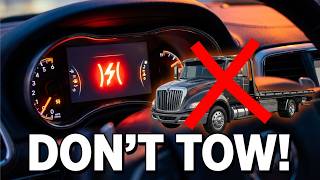
- Flashing Electronic Throttle Control (ETC) 'lightning bolt' warning light
- Vehicle enters 'limp mode' with drastically reduced engine power and a cap on RPM
- Poor, hesitant, or jerky acceleration
- Unresponsive or delayed accelerator pedal
- Engine may stall, be difficult to start, or crank but not start
- Rough or unstable idle
- Replacing the accelerator pedal assembly. While the pedal also has position sensors (APPS), P0222 specifically points to the sensor circuit 'B' at the throttle body, not the pedal.
- Replacing the throttle body when the actual issue is a simple wiring problem or outdated PCM software that a TSB would fix.
- Replacing the battery. While a low battery can cause a variety of electronic issues, it is not typically the root cause of a persistent P0222 code once the vehicle is running.
Most Likely Causes
- Failing Throttle Body Assembly 🔴 High Probability The internal electronic sensors wear out over time from heat and use. Since they are integrated into the throttle body, the entire unit must be replaced. This is the most frequently reported fix by owners in forums after ruling out software issues.
How to confirm: Using a scan tool with live data, monitor the voltage for TPS1 and TPS2. As you slowly press the pedal (engine off, key on), both voltages should sweep smoothly. With P0222, TPS2 voltage will likely be stuck at a very low value (under 0.2V) or not respond at all.
Typical fix: Replace the entire throttle body assembly. A throttle relearn procedure is required after installation.
Est. part cost: $150-$350 - Outdated Powertrain Control Module (PCM) Software 🟡 Medium Probability Dodge has released multiple TSBs (e.g., #18-062-17, #18-045-16 REV. A) for these models, indicating that the original PCM software can misinterpret sensor data and set false throttle-related codes, including P0222. This is a known issue acknowledged by the manufacturer.
How to confirm: A Dodge dealership or a properly equipped independent shop can check your vehicle's VIN against their database for applicable software updates. This is the only way to definitively confirm if a reflash is needed.
Typical fix: The dealership performs a PCM reflash to install the updated software. This should be done before replacing parts.
Est. part cost: $0-$200 - Wiring Harness or Connector Issue 🟡 Medium Probability The wiring harness leading to the throttle body is subject to engine heat and vibration, which can cause wires to chafe, break, or short to ground. The connector pins can also become corroded, loose, or damaged from improper disconnection.
How to confirm: Visually inspect the wiring harness for any signs of damage, melting, or chafing against other components. Disconnect the throttle body connector and check for corrosion, moisture, or bent/backed-out pins. Use a multimeter to check for continuity and for a short to ground on the signal wire between the PCM and the throttle body connector.
Typical fix: Repair the damaged section of the wire or clean/replace the connector pigtail.
Est. part cost: $10-$50 - Dirty Throttle Body ⚪ Low Probability Carbon and oil vapor from the PCV system can build up inside the throttle body, causing the throttle plate to stick or move slowly. This can sometimes cause the sensors to report implausible values as the plate's actual position doesn't match the commanded position.
How to confirm: Remove the air intake tube and visually inspect the throttle plate and bore for heavy carbon deposits. A sticky or slow-moving plate can be a sign.
Typical fix: Clean the throttle body bore and plate with a dedicated throttle body cleaner and a soft cloth. Do not manually force the plate open on an electronic throttle body; have an assistant press the pedal with the key on, or follow a specific cleaning mode if available. A throttle relearn is recommended after cleaning.
Est. part cost: $10-$20
Rare But Worth Checking
- Faulty Powertrain Control Module (PCM): This is very rare. The PCM should only be considered after all other possibilities—throttle body, wiring, and software—have been definitively ruled out. A faulty PCM can fail to correctly process the signal from a perfectly good sensor.
Diagnosis Steps
- Read all stored DTCs with an OBD-II scanner. Note any other codes present, especially other TPS, APPS, or U-codes.
- Visually inspect the throttle body electrical connector for damage, corrosion, or a loose fit. Check the wiring harness leading to it for any signs of chafing, melting, or breaks.
- Using a scan tool with live data, observe the voltage readings for 'TPS Sensor 1' and 'TPS Sensor 2'.
- With the key on and engine off, slowly press and release the accelerator pedal. Both sensor voltages should change smoothly. P0222 will likely show Sensor 2 voltage as stuck low (e.g., <0.2V) and not sweeping with the pedal.
- If the sensor data is bad and the wiring looks good, the throttle body is the most likely culprit.
- Crucial Step: Before replacing the throttle body, contact a Dodge dealer with your VIN to check for any open TSBs related to PCM software updates for throttle codes, such as TSB #18-062-17.
- If a new throttle body is installed, perform a Throttle Relearn Procedure.
- If a new throttle body and updated software do not resolve the issue, perform a detailed wiring check for shorts or opens between the PCM and the throttle body connector using a multimeter.
- If all else fails, the PCM may be at fault, though this is the least likely cause.
Parts You'll Likely Need
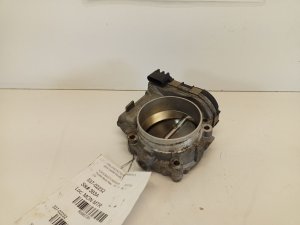
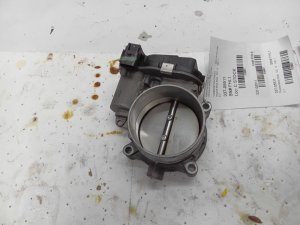
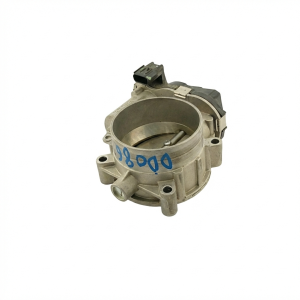
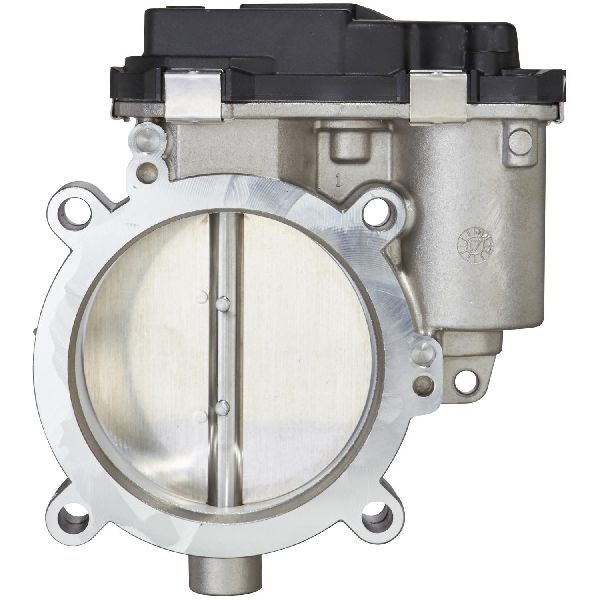
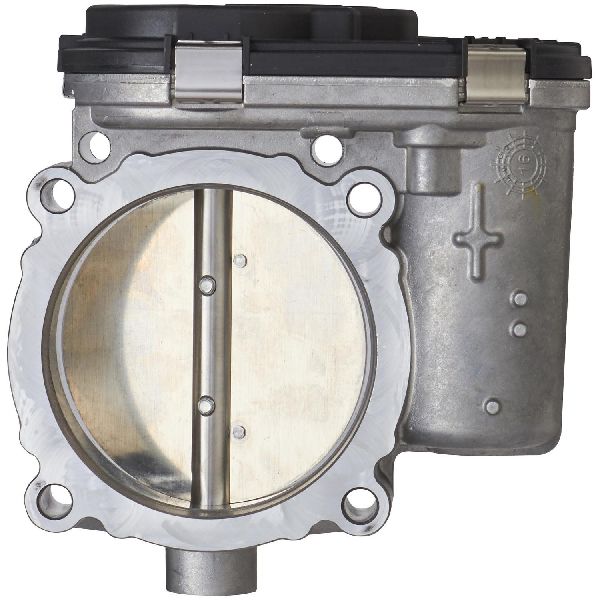
- Electronic Throttle Body Assembly (5.7L/6.4L V8)
(OEM #53034251AD (supersedes 53034251AB, 53034251AC))— This is the most common fix for Hemi V8 models because the faulty throttle position sensors are integrated into this single unit. Failure of the internal electronics is a common wear item.
Trusted brands: Mopar, Bosch, Dorman, Cardone
OEM price range: $250-$400
Aftermarket price range: $150-$250 - Electronic Throttle Body Assembly (3.6L V6)
(OEM #05184349AE (or similar, check VIN))— Similar to the V8s, the V6 models have integrated sensors. This is the common fix for Challengers with the Pentastar V6 engine experiencing P0222.
Trusted brands: Mopar, Dorman, Hitachi
OEM price range: $200-$350
Aftermarket price range: $120-$220
Related Codes That Often Appear With This One
- P0122 — This code is for 'Throttle Position Sensor 1 Circuit Low'. Seeing it with P0222 strongly indicates a problem with the entire throttle body assembly, its connector, or a PCM software issue, as both sensor circuits are failing low.
- P0123 — This is for 'Throttle Position Sensor 1 Circuit High'. Seeing opposite codes (low and high) like P0123 and P0222 simultaneously is a strong indicator of a failing sensor providing erratic readings or a wiring short.
- P0223 — This is for 'Throttle Position Sensor 2 Circuit High'. Seeing opposite codes (low and high) for the same sensor circuit can point towards erratic behavior from a failing sensor or an intermittent wiring short.
- U1424 — This code for 'Implausible Engine Torque Signal Received' is frequently mentioned in the same TSBs as P0222. The PCM sets this when the throttle sensor data doesn't align with other engine sensors, a condition often resolved by the same PCM software update.
Technical Service Bulletins (TSBs) & Recalls
- 18-062-17: Addresses P0222 and other codes, related to the powertrain.
- 18-045-16 REV. A: Lists P0222 as part of a software update fix.
- 1809416: Includes P0222 in a list of codes fixed by a PCM reflash.
- 18-074-15 REV A: Mentions P0222 for electrical system software updates.
- 18-032-16: Links P0222 with other codes for a software update.
Platform-Specific Known Issues
- Multiple Technical Service Bulletins exist for the 2013-2016 Challenger that list P0222 alongside other throttle and engine codes. These TSBs often point to a required PCM software update to fix overly sensitive diagnostic parameters. For example, TSB #18-062-17 and #18-032-16 address this code among others. This makes it crucial to check for software updates before replacing hardware.
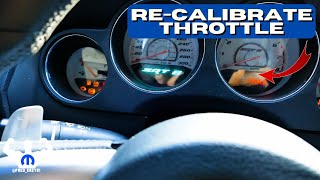
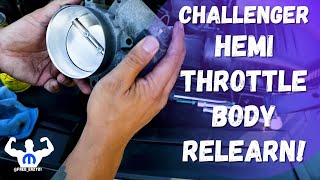
- Throttle Relearn Procedure: After replacing or cleaning the throttle body, a relearn procedure is necessary to calibrate the new sensor's idle and wide-open positions with the PCM. A common manual method is: 1. Turn ignition to ON (don't start). 2. Wait for dash lights to cycle. 3. Slowly press the accelerator pedal to the floor. 4. Slowly release the pedal fully. 5. Turn ignition OFF. 6. Start the engine and let it idle for a few minutes.
Mechanic-Grade Diagnostic Values
- TPS 'B' (TPS2) Signal Voltage — expected: Should sweep smoothly from ~0.5V (closed throttle) to ~4.5V (wide-open throttle).. Failure: Voltage is stuck below the normal threshold, typically under 0.5V, and does not change when the accelerator pedal is pressed.
- TPS Reference Voltage at Connector — expected: A steady 5V should be present on the reference voltage wire from the PCM.. Failure: Voltage is significantly lower than 5V or is absent, indicating a wiring or PCM issue.
- Throttle Body Connector Pinout (Typical 6-pin) — expected: Pin 1: TPS 2 Signal, Pin 2: TPS 1 Signal, Pin 3: Sensor Ground, Pin 4: 5V Reference, Pin 5: Throttle Motor (+), Pin 6: Throttle Motor (-). (Note: Always verify with a vehicle-specific diagram).. Failure: Testing continuity or voltage at the wrong pin.
Scan Tool Commands That Help
- wiTECH (Chrysler/Dodge/Jeep Dealer Tool): Throttle Follower Test — This is a bidirectional test where the technician can command the throttle plate to open to specific percentages. It is used to verify if the throttle motor is responding correctly and if the TPS sensors are tracking the movement accurately, helping to distinguish between a mechanical throttle body failure and a sensor/wiring issue.
- wiTECH (Chrysler/Dodge/Jeep Dealer Tool): ETC Learn (Electronic Throttle Control Learn) — This function must be performed after replacing the throttle body or reprogramming the PCM. It forces the PCM to relearn the fully closed and fully open positions of the new throttle plate, which is essential for correct idle speed and throttle response.
Wiring & Ground Locations
- Throttle Body Connector — Directly on the electronic throttle body, located between the air filter housing and the engine intake manifold.. This is the primary connection point for both TPS circuits. Corrosion, backed-out pins, or a poorly seated connector with a missing red safety clip can directly cause the P0222 code.
- G905A (or similar engine ground) — Typically located on the engine block or cylinder head, serving as a primary ground point for various engine sensors.. The TPS sensors rely on a clean ground reference. A loose or corroded main engine ground can introduce voltage offsets and noise, causing the PCM to see an incorrect low voltage from the TPS and trigger a P0222 code.
Real Owner Repair Stories
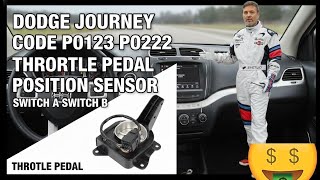
- YouTube Channel 'Electrical Car Repair Life' (Dodge Journey (platform mate with similar electronics)) — Car sounds terrible, no power, misfiring, ETC light on.
❌ Tried (didn't work) Initial inspection showed the red safety clip on the throttle body connector was not fully seated.
✅ What actually fixed it Replacing the entire throttle body assembly resolved the P0123 and P0222 codes. After replacement, the codes were cleared with a scanner and did not return upon starting the engine.
OEM Part Supersession History
53034251AB→53034251AC, then 53034251AD— Internal revisions by the manufacturer to improve reliability or address known failure modes in the electronic throttle position sensors.
Heads up: All revisions (AB, AC, AD) are generally cross-compatible for the specified 5.7L and 6.4L engines within the 2013-2016 range, but it is always recommended to install the latest available part number (53034251AD) to benefit from the most recent engineering improvements.
Model Year Variations Within This Range
- 2015-2016: For the 2015 model year refresh, Chrysler issued specific TSBs like #18-045-16 REV. A, which called for a PCM software update to address falsely set P0222 codes among others. While the hardware is the same, the sensitivity of the diagnostic software was adjusted in later flashes, making the software check particularly critical for 2015+ models.
Helpful Videos
Used OEM Parts in Stock
New Aftermarket Parts Available



The information in this article is provided for general reference and educational purposes only. Vehicle specifications, procedures, and part compatibility can vary by production date, trim level, and region. Always consult your vehicle's factory service manual and verify part numbers before purchasing or performing repairs. Safety-critical components such as airbags, seat belts, and braking systems should be installed by a qualified professional.
- Dodge CHALLENGER:
- 🎬 Helpful Videos
- 🛍️ Shop This Part
- What's Unique About the 2013-2016 Dodge CHALLENGER
- Diagnostic Flowchart
- Symptoms You May Notice
- Most Likely Causes
- Rare But Worth Checking
- Diagnosis Steps
- Parts You'll Likely Need
- Related Codes That Often Appear With This One
- Technical Service Bulletins (TSBs) & Recalls
- Platform-Specific Known Issues
- Mechanic-Grade Diagnostic Values
- Scan Tool Commands That Help
- Wiring & Ground Locations
- Real Owner Repair Stories
- OEM Part Supersession History
- Model Year Variations Within This Range
- 🎟️ Get 5% Off