

P0218 on 2016-2020 Ram 3500: Transmission Overheating Causes and Fixes
P0218 means your Ram 3500's 68RFE transmission has overheated, exceeding 240°F. This is frequently caused by heavy towing, low/old fluid, or a notoriously faulty transmission cooler thermal bypass valve. Check your fluid immediately and let the transmission cool. Driving while it's overheated can cause catastrophic transmission damage.
- P0218 is a critical code indicating your Ram's 68RFE transmission is actually overheating. Stop driving as soon as safely possible to prevent severe damage.
- The most common causes are operational (heavy towing) or maintenance-related (low/old fluid). Always check the fluid level and condition first.
- A known weak point on these trucks is the transmission cooler thermal bypass valve, which can stick and cause overheating even under normal driving.
- This code is often paired with P0868 (Line Pressure Low), which reinforces the likelihood of a fluid-related problem.
- For trucks that frequently tow heavy loads, upgrading the transmission cooler is a highly recommended preventative measure.
What's Unique About the 2016-2020 Ram 3500

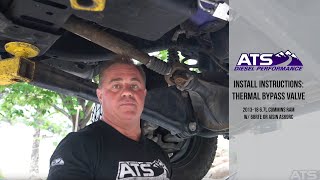
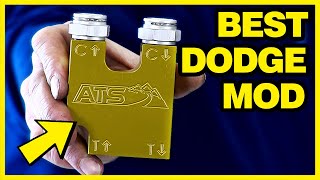
The 2016-2020 Ram 3500, particularly when equipped with the high-torque Cummins engine and 68RFE transmission, is built for heavy work. However, the stock transmission cooling system can be a weak point, especially under heavy loads or in hot climates. A widely documented issue on these trucks is the transmission cooler thermal bypass valve, which can stick and prevent fluid from reaching the cooler, leading directly to overheating. This part is so notoriously failure-prone that a large aftermarket has developed for 'delete kits' and upgraded valves from brands like BD Diesel, PPE, and Mishimoto to ensure constant cooler flow. 🎬 Watch: How to install a thermal bypass upgrade Owners on forums like cumminsforum.com and hdrams.com frequently discuss this as a necessary reliability upgrade.
Diagnostic Flowchart

Tap your situation to follow the diagnostic path that matches what you're seeing on this vehicle.
Generation note: This range covers the end of the fourth generation Ram HD (2010-2018) and the start of the fifth generation (2019-present). Both generations used the 68RFE transmission with the 6.7L Cummins engine. A widely documented failure point on 2013-2018 models is the transmission cooler thermal bypass valve. While the issue may persist on newer models, it is most commonly associated with the fourth-generation trucks within this range. Aftermarket bypass valves and delete kits are also available for 2019+ models.
Symptoms You May Notice
- Illuminated Malfunction Indicator Lamp (Check Engine Light).
- Transmission temperature warning light on the dashboard.
- Vehicle enters 'limp mode' with reduced engine power and altered shift patterns.
- Harsh, delayed, or slipping shifts.
- A burning smell from the transmission fluid.
- Sensation of the truck 'pushing' at a stop, as if the torque converter is not disengaging properly.
- Replacing the transmission fluid temperature sensor. The P0218 code indicates a real overheat event, not a faulty sensor reading. Replacing the sensor without addressing the cause of the heat will not fix the problem.
Most Likely Causes

- Low or Degraded Transmission Fluid 🔴 High Probability The 68RFE is sensitive to fluid level and condition. Low fluid reduces hydraulic pressure and cooling capacity, while old, oxidized fluid loses its ability to dissipate heat effectively. A user on
hdrams.comreported getting a P0218 code that was ultimately traced back to a massive fluid leak, causing the transmission to run dry.
How to confirm: Check the transmission fluid level and condition on a level surface with the engine running, transmission in neutral, and fluid at operating temperature (160-180°F). The fluid should be bright red and not smell burnt. Dark, brown, or burnt-smelling fluid indicates a problem requiring a fluid and filter change.
Typical fix: Perform a transmission fluid and filter change. Ensure the correct fluid (Mopar ATF+4 or a licensed equivalent) is used. If a leak is present, it must be repaired.
Est. part cost: $75-$150 - Heavy Towing or Hauling 🔴 High Probability Exceeding the truck's rated towing capacity or pulling a heavy load up steep grades, especially in hot weather, can overwhelm the stock cooling system. A user on the Turbo Diesel Register forum noted transmission temperatures reaching 226°F while pulling a 16,000 lb trailer up a 6% grade, highlighting how quickly the system can be stressed.
How to confirm: The code appears consistently only during demanding situations like towing or climbing mountains. Transmission temperatures return to normal (around 160-185°F) during light-duty driving.
Typical fix: Ensure you are using the 'Tow/Haul' mode, which adjusts shift points and torque converter lockup to help with cooling. For frequent heavy towing, an upgraded, larger aftermarket transmission cooler is a common and effective solution.
Est. part cost: $300-$800 - Failed Transmission Cooler Thermal Bypass Valve 🔴 High Probability This is a widely documented failure point on 2013-2018 Ram HD trucks. The valve's internal thermostat is prone to sticking, preventing fluid from ever reaching the cooler. Debris in the fluid can cause the valve to jam.
How to confirm: After the transmission is hot (over 180°F), carefully feel the inlet and outlet lines at the transmission cooler. If the inlet line is hot but the outlet line is significantly cooler, fluid is not circulating, and the bypass valve has likely failed.
Typical fix: Replace the thermal bypass valve assembly (OEM Part # 68186711AA, 68186711AB). A more permanent and popular fix is to install a 'delete kit' from brands like BD Diesel, PPE, or Mishimoto that removes the thermostat entirely, ensuring constant flow to the cooler.
Est. part cost: $50-$250 - Blocked or Restricted Transmission Cooler 🟡 Medium Probability The transmission cooler is located at the front of the vehicle and can become clogged with road debris, mud, or bugs, restricting airflow and reducing its effectiveness.
How to confirm: Visually inspect the transmission cooler (looks like a small radiator) for any obstructions on its fins.
Typical fix: Carefully clean the cooler fins with a soft brush and low-pressure water or air.
Est. part cost: $0 - Failing Torque Converter ⚪ Low Probability If the torque converter clutch begins to slip, it generates an immense amount of heat, which quickly overheats the fluid. This has been a noted issue on 4th generation Ram trucks.
How to confirm: This is often accompanied by other symptoms like a shuddering or vibration that feels like driving over a rumble strip, or RPM flares under load. A mechanic can use a scan tool to monitor torque converter clutch slip data to confirm.
Typical fix: Replacement of the torque converter, which is a major repair. Simply replacing the converter without a full system flush can lead to repeat failure due to contaminated fluid.
Est. part cost: $600-$1500
Rare But Worth Checking
- Failing Engine Fan Clutch: The engine's cooling fan also pulls air across the transmission cooler. If the fan clutch isn't engaging properly at low speeds, it can contribute to overheating in stop-and-go traffic or while climbing a grade.
- Internal Transmission Failure: Slipping internal clutches or a failing valve body can generate extreme heat. This is usually a worst-case scenario and is accompanied by severe shifting problems, debris in the pan, and other trouble codes like P0868.
- PCM Software Glitch: Multiple TSBs (e.g., 18-015-17 REV. B, 18-027-16 REV. A) include a PCM software update to improve diagnostic logic for P0218, among many other codes. This suggests that in some cases, the code may be set erroneously, and a software flash can correct the issue. This should be considered after mechanical causes are ruled out.
Diagnosis Steps
- Check for other stored trouble codes with a quality OBD-II scanner. Pay special attention to P0868 (Line Pressure Low).
- With the engine running and transmission at operating temperature (160-180°F), check the transmission fluid level (in Neutral) and condition. Note any burnt smell or dark discoloration.
- Visually inspect the transmission cooler at the front of the truck for any dirt, mud, or debris blocking airflow.
- Inspect the transmission cooler lines for any kinks, damage, or leaks.
- Using a capable scan tool, monitor the live transmission fluid temperature data while driving. Confirm the temperature actually exceeds 240°F to set the code. Note the conditions (towing, city traffic, etc.).
- If the temperature rises excessively but the cooler and its lines remain relatively cool to the touch, the transmission cooler thermal bypass valve is almost certainly stuck closed and is the primary suspect.
- If fluid level and cooling system components check out, use the scan tool to monitor torque converter clutch slip RPM. Any significant slip under lockup conditions points to a failing torque converter.
- If no mechanical cause is found, check with a dealer for any applicable PCM software updates, as several TSBs address the logic for this code.
Parts You'll Likely Need

- Transmission Fluid and Filter Kit — The first step in addressing an overheat code is to ensure the fluid is fresh and at the correct level. Old fluid loses its cooling properties.
Trusted brands: Mopar (ATF+4)
OEM price range: $100-$150
Aftermarket price range: $75-$120 - Transmission Cooler Thermal Bypass Valve
(OEM #68186711AA, 68186711AB)— This is a common failure point on 2013-2018 models that can stick closed, preventing fluid from being cooled.
Related Codes That Often Appear With This One
- P0868 — P0868 indicates 'Line Pressure Low'. This code is frequently seen with P0218 because as transmission fluid overheats, it thins out, causing a drop in hydraulic line pressure. The two codes together strongly suggest a fluid-related issue (low level, degraded quality) or a significant internal problem. Multiple TSBs from Ram list these two codes together.
Technical Service Bulletins (TSBs) & Recalls
- 1813022REVA
- 1813022
- 1802321
- 18-015-17 REV. B
- 18-027-16 REV. C
Platform-Specific Known Issues
- Owner Experience with Sudden Overheat and Low Fluid: A user on hdrams.com with a 2020 Ram 2500 experienced a sudden 'Trans to Hot' warning with temperatures maxing out at 275°F. After pulling over, the temperature dropped rapidly. The root cause was discovered to be extremely low transmission fluid. After topping it off, shifting issues and a P0731 code appeared, indicating a significant fluid loss problem that needed to be addressed before permanent damage occurred.
- The Value of Upgrading the Thermal Bypass Valve: A YouTuber upgrading his 2021 Ram with Revmax parts noted that after installing a thermal bypass delete, his normal operating temperature dropped from a steady 168°F to around 118°F, illustrating the significant cooling improvement gained by ensuring constant fluid flow to the cooler.
- Towing Temperature Realities: On the Turbo Diesel Register forum, a 2014 Ram 3500 owner towing a 16,000 lb trailer saw temperatures hit 226°F on a 6% grade. Other users confirmed that slow speeds (15 mph) without torque converter lockup can cause significant heat spikes, and manually selecting a gear to keep RPMs up and the converter locked is a key strategy to manage temperatures.
Mechanic-Grade Diagnostic Values
- Transmission Temperature Sensor (Thermistor) Resistance — expected: Approximately 535 ohms at room temperature (around 70°F / 21°C). Resistance decreases as temperature increases.. Failure: An open or shorted sensor will give an out-of-range voltage reading and typically set codes like P0711, P0712, or P0713, not P0218. P0218 confirms the sensor is reading a valid, but high, temperature.
- 68RFE Shift Solenoid Resistance — expected: Approximately 1.3 Ohms for most shift solenoids (Low/Reverse, Underdrive, Overdrive, 2C, 4C).. Failure: A reading significantly higher or lower than the specification indicates a faulty solenoid coil.
- 68RFE Pressure Control Solenoid Resistance — expected: Approximately 4.9 Ohms.. Failure: A reading significantly higher or lower than the specification indicates a faulty solenoid coil.
- Stock Transmission Line Pressure — expected: Varies from ~60 PSI at idle to 160 PSI at wide-open throttle.. Failure: Pressure that is consistently low or does not rise with engine load can indicate internal leaks or a weak pump, leading to clutch slippage and heat. This often triggers P0868.
Scan Tool Commands That Help

- wiTECH (OEM FCA/Stellantis Tool): View EATX DTC EVENT DATA — For an informational code like P0218, this function allows a technician to see the freeze-frame data (vehicle speed, load, temps) at the exact moment the overheat condition was flagged. This is crucial for determining if the overheat was caused by specific driving conditions like towing.
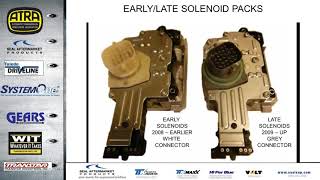
- wiTECH (OEM FCA/Stellantis Tool): Quicklearn Procedure — This must be performed after replacing the transmission, valve body, or solenoid pack. It resets adaptive values and allows the TCM to learn the hydraulic characteristics (Clutch Volume Indexes) of the new components to ensure proper shift quality and prevent premature wear.
- wiTECH (OEM FCA/Stellantis Tool): PCM Configuration Routine — After reprogramming the PCM/TCM per a TSB, this routine must be run to ensure all vehicle options and parameters are correctly set in the new software.
Wiring & Ground Locations
- Transmission Solenoid/TRS Assembly Connector — The main 23-pin electrical connector on the passenger side of the 68RFE transmission case.. This connector contains the pins for the transmission temperature sensor. Checking for corrosion or damage here is a key diagnostic step.
- Pin 23 (Transmission Temperature Sensor Signal) — On the 23-pin main transmission connector.. This is the specific pin that carries the temperature signal from the sensor (thermistor) inside the transmission to the TCM. A technician can test the signal here.
- Pin 22 (Sensor Ground) — On the 23-pin main transmission connector.. This is the ground reference for the temperature sensor and other sensors in the solenoid pack. A poor ground on this pin can cause inaccurate sensor readings.
- Main Body Ground — A primary ground connection is typically located on the body above the driver's side headlight, connected to the negative battery terminal via a 10-gauge wire.. While not directly for the transmission, poor body or engine grounds can cause a host of phantom electrical issues and are always worth checking when diagnosing electronic control problems.
Real Owner Repair Stories
- RamForum.com user (2022 Ram) — Transmission temperatures would reach 170-180°F in stop-and-go traffic and 190°F towing a light 8,000 lb load up a small hill, even in cool ambient weather (34-45°F).
❌ Tried (didn't work) The owner noted the temperatures were high and slow to cool down under stock conditions.
✅ What actually fixed it The owner installed an ATS Diesel thermal bypass valve delete. After installation, normal driving temperatures dropped to 125-135°F, traffic temperatures were 145-150°F, and towing the same load up the same hill resulted in a max temperature of 165°F.
OEM Part Supersession History
68186711AA→68186711AB— Revision of the transmission cooler thermal bypass valve. The failure mode (sticking) is common to both parts.
Heads up: Both part numbers are associated with the failure-prone design on 2013-2018 models. Aftermarket 'delete' kits are available for both 2013-2018 and 2019+ model ranges, indicating the design philosophy or part itself continued.
Model Year Variations Within This Range
- 2019-2020: While the thermal bypass valve is most notoriously problematic on 2013-2018 models, the issue can still occur on the 2019+ 5th generation trucks. Several aftermarket companies offer specific bypass delete kits for the 2019-2024 model years, confirming the presence of a similar, potentially failure-prone component.
Helpful Videos

Used OEM Parts in Stock

New Aftermarket Parts Available



The information in this article is provided for general reference and educational purposes only. Vehicle specifications, procedures, and part compatibility can vary by production date, trim level, and region. Always consult your vehicle's factory service manual and verify part numbers before purchasing or performing repairs. Safety-critical components such as airbags, seat belts, and braking systems should be installed by a qualified professional.
- Ram 3500:
- 🎬 Helpful Videos
- 🛍️ Shop This Part
- What's Unique About the 2016-2020 Ram 3500
- Diagnostic Flowchart
- Symptoms You May Notice
- Most Likely Causes
- Rare But Worth Checking
- Diagnosis Steps
- Parts You'll Likely Need
- Related Codes That Often Appear With This One
- Technical Service Bulletins (TSBs) & Recalls
- Platform-Specific Known Issues
- Mechanic-Grade Diagnostic Values
- Scan Tool Commands That Help
- Wiring & Ground Locations
- Real Owner Repair Stories
- OEM Part Supersession History
- Model Year Variations Within This Range
- 🎟️ Get 5% Off