

P0218 on 2016-2020 Ram 2500: Transmission High Temperature Causes and Fixes
P0218 means the 68RFE transmission in your Ram 2500 is overheating, having exceeded 240°F. The most common cause is a stuck transmission cooler thermal bypass valve, a notorious weak point. Other causes include low fluid or heavy towing. Stop driving immediately to prevent severe damage. A popular and effective fix is installing a bypass valve delete kit for about $50-$150, which ensures constant fluid flow to the cooler.
- P0218 is a critical warning that your 68RFE transmission is overheating. Stop driving immediately to prevent catastrophic failure.
- The first and easiest diagnostic step is to check the transmission fluid level and condition.
- A sticking thermal bypass valve is a very common cause on these trucks; installing an aftermarket delete kit is a popular and effective preventative fix.
- This code is often paired with P0868 (Line Pressure Low), indicating a potential hydraulic issue or fluid problem that is causing heat-generating slippage.
- If you tow frequently, upgrading your transmission cooler is a highly recommended measure to prevent this code from appearing.
What's Unique About the 2016-2020 Ram 2500

On the Ram 2500 with the 6.7L Cummins and 68RFE transmission, P0218 is a well-documented issue. A primary culprit specific to this platform is the factory transmission fluid thermal bypass valve (OEM Part #68186711AB). This valve is designed to help the transmission warm up faster but is notorious for failing in a closed or partially-closed state. This failure, often caused by internal debris or a faulty spring, prevents fluid from reaching the auxiliary cooler, causing temperatures to rise rapidly under load. Aftermarket manufacturers claim the factory design can reduce cooler flow by up to 87% even when working correctly. This known weakness has led to a robust aftermarket of bypass delete kits that ensure 100% cooler flow at all times.
Diagnostic Flowchart
Tap your situation to follow the diagnostic path that matches what you're seeing on this vehicle.
Generation note: This range covers the end of the Fourth Generation (2016-2018) and the start of the Fifth Generation (2019-2020) Ram 2500. Both generations used the 6.7L Cummins engine. In the 4th gen, the 68RFE was the primary automatic transmission. For 2019-2020 models, the standard-output Cummins continued to use the 68RFE, while the high-output version was paired with an Aisin AS69RC transmission. This code and its common causes apply specifically to trucks equipped with the 68RFE, although the Aisin transmission can also use a similar thermal bypass valve.
Symptoms You May Notice
- Transmission temperature warning light on the dashboard.
- Vehicle enters 'limp mode' with reduced engine power and altered shift patterns.
- Harsh, erratic, or delayed shifting as the PCM engages the 'overheat' shift schedule.
- A burning smell from the transmission area, indicating cooked fluid.
- Transmission slipping out of gear.
- Shuddering from the transmission, especially during torque converter lockup.
- Visible fluid leaking from the bell housing or vent tube as extreme heat causes fluid to expand and blow past seals.
- Replacing the transmission temperature sensor without verifying an actual overheat condition. The code usually indicates a real problem with high temperatures, not a faulty sensor.
- Performing a fluid change without addressing the root cause. If the thermal bypass valve is stuck, the new fluid will quickly overheat as well.
Most Likely Causes

- Stuck/Failed Transmission Cooler Thermal Bypass Valve 🔴 High Probability This valve (OEM part #68186711AB) is a widely acknowledged weak point on the 68RFE. Debris from normal wear or a faulty internal spring can cause it to stick in the closed position, completely blocking fluid flow to the cooler. This is the most common cause of sudden and severe overheating.
How to confirm: After the transmission is hot (over 180°F), carefully feel the inlet and outlet lines at the transmission cooler. If the inlet line is hot and the outlet line is cool or only warm to the touch, the valve is stuck and not allowing fluid to circulate.
Typical fix: Replace the factory bypass valve with an aftermarket thermal bypass delete kit. This is a permanent solution that ensures coolant is always flowing to the cooler. Owners report temperature drops of 20-50°F under load after this modification.
Est. part cost: $50-$150 - Low or Degraded Transmission Fluid 🟡 Medium Probability Improper fluid level, whether too low or too high, can cause overheating. Low fluid reduces cooling and pressure, while old, burnt fluid loses its ability to dissipate heat effectively and can contribute to sludge that clogs components like the bypass valve.
How to confirm: Check the transmission fluid level and condition with the engine idling in neutral on a level surface, once the transmission is at operating temperature (150-180°F). The fluid should be bright red and not smell burnt. Dark, burnt-smelling fluid confirms an overheating problem.
Typical fix: Adjust the fluid to the correct level. If the fluid is dark or smells burnt, perform a complete transmission fluid and filter change using Mopar ATF+4 fluid (P/N 68218057AC).
Est. part cost: $100-$250 - Heavy Towing or Hauling 🟡 Medium Probability The stock transmission cooler may be insufficient for sustained heavy loads (e.g., towing a 15,000 lb trailer), especially in hot weather or on steep grades, causing temperatures to exceed the normal operating range. This is often the event that reveals a pre-existing issue like a sticky bypass valve.
How to confirm: The code typically appears only when the truck is under heavy load. Monitoring the transmission temperature gauge will show a steady climb during towing or hauling, often exceeding 220°F and approaching 240°F.
Typical fix: Allow the transmission to cool by idling in Park or Neutral. For long-term prevention, especially if you tow often, upgrade to a larger, more efficient aftermarket transmission cooler in addition to a bypass delete kit.
Est. part cost: $400-$800 - Slipping Torque Converter ⚪ Low Probability The torque converter clutch can wear and begin to slip, which generates a massive amount of friction and heat, directly causing the fluid to overheat. Debris from a failing converter is also a primary cause of the thermal bypass valve sticking.
How to confirm: This is often accompanied by shuddering and a P0740 code (Torque Converter Clutch Circuit/Open). A professional may need to perform a stall test or analyze scan tool data to confirm slippage.
Typical fix: Replace the torque converter. Many owners opt for a heavy-duty or billet aftermarket converter for improved durability, especially on tuned or heavy-use trucks.
Est. part cost: $600-$1500
Rare But Worth Checking
- Faulty Transmission Temperature Sensor: While possible for the sensor to send an incorrect high reading, it is far less common than an actual overheat condition. This should be verified by comparing the sensor reading on a scan tool to the actual temperature of the transmission pan using an infrared thermometer. A failed sensor might also report an impossibly low temperature, such as -38°C, which can also trigger a fault and limp mode.
- Restricted Transmission Cooler or Lines: Debris from inside the transmission (clutch material, metal shavings) or external obstructions like mud or plastic bags can block the cooler or its lines, preventing proper heat exchange. Lines must be flushed thoroughly after any internal transmission failure.
- Failing Engine Cooling Fan Clutch: A weak or inoperative engine fan clutch will not pull enough air through the radiator and transmission cooler stack, especially at low speeds or while stopped under load. This can cause both engine and transmission temperatures to rise simultaneously.
Diagnosis Steps
- Check for other stored DTCs, paying close attention to P0868 or P0740.
- Verify the transmission fluid level and condition. Ensure the fluid is at the correct level on the dipstick (engine idling in Neutral, on a level surface, at operating temp), is bright red, and does not smell burnt.
- Inspect the transmission cooler (in front of the radiator) for any obstructions like dirt, mud, or debris that could block airflow.
- Use a scan tool to monitor the live transmission fluid temperature data. Normal operating temperature is 160-190°F. The P0218 code sets around 240°F.
- With the transmission hot (180°F+), carefully check the inlet and outlet lines of the transmission cooler. If the outlet line is significantly cooler than the inlet, the thermal bypass valve is likely stuck closed.
- If towing, reduce the load or stop and allow the transmission to cool by idling in Neutral or Park for 15-20 minutes.
- If the fluid was low, top it off, clear the codes, and re-test. If the fluid was burnt, a full fluid and filter exchange is necessary, but the root cause of the overheating must still be found.
- If the above steps don't identify the issue, professional diagnosis is needed to check for a slipping torque converter or internal hydraulic problems.
Parts You'll Likely Need

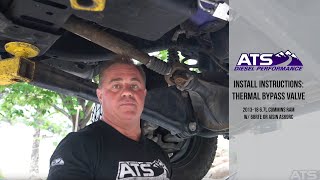
- Transmission Cooler Thermal Bypass Delete Kit
(OEM #68186711AB (Original Valve Assembly))— This is the most common fix for the platform-specific issue of the factory thermostat sticking, which causes overheating. This part ensures full-time fluid flow to the cooler.
Trusted brands: BD Diesel (P/N: 1061528), ATS Diesel Performance (P/N: 3100052392), RevMax (P/N: 68RFE-929AA), PPE (P/N: 225065000)
OEM price range: $100-$180 (for OEM replacement valve)
Aftermarket price range: $50-$150 (for delete kit) - Transmission Fluid and Filter Kit
(OEM #68218057AC (ATF+4 Fluid, 1 Quart))— Overheated fluid loses its protective properties and must be replaced. A fluid and filter service is a critical step after any overheating event to remove burnt fluid and suspended debris.
Trusted brands: Mopar (ATF+4 Fluid), Mopar (Filter Kit)
OEM price range: $150-$250 (for fluid and filters)
Aftermarket price range: $100-$200 - Torque Converter — If the torque converter is slipping internally, it is the source of the heat and must be replaced to solve the problem. Debris from the failing converter will also contaminate the new fluid and components if not replaced.
Trusted brands: Mopar, RevMax, BD Diesel, Goerend Transmission
OEM price range: $800-$1200
Aftermarket price range: $600-$1500
Related Codes That Often Appear With This One
- P0868 - Transmission Fluid Pressure Low — This code is frequently seen with P0218 and is listed in the same TSBs. As fluid overheats (P0218), it thins out, causing a drop in hydraulic line pressure which triggers P0868. Conversely, low line pressure from a faulty filter seal, overfilled fluid, or a failing solenoid can cause clutch slippage, which generates extreme heat and triggers P0218.
- P0740 - Torque Converter Clutch Circuit/Open — If the torque converter clutch fails to engage or slips, it creates immense heat. This code points to the torque converter as the likely source of the overheating that triggered P0218.
Technical Service Bulletins (TSBs) & Recalls
- TSB #18-130-22, 18-015-17, and others: These are primarily PCM software updates for 2016 models. They consistently list P0218 and P0868 together. This indicates a known link between the two codes and that the software update refines the diagnostic thresholds or transmission response to these events. For example, the update may change the DTC from a one-trip to a two-trip fault. These TSBs confirm the manufacturer's awareness of the paired issue but do not replace the need for mechanical diagnosis.
Platform-Specific Known Issues
- Thermal Bypass Valve Failure Mode: The thermal bypass valve is intended to help the transmission warm up to its optimal operating temperature of ~160-180°F faster. However, owners and mechanics on forums like RamForum.com report that the internal spring mechanism can get stuck, preventing fluid from ever reaching the cooler. This means that once the transmission gets hot, especially while towing, it has no way to cool itself down, leading to a rapid temperature spike and the P0218 code. Aftermarket bypass delete kits are essentially a block of aluminum that replaces the valve assembly, forcing 100% of the fluid to the cooler at all times.
- The P0868 Connection After a Fluid Service: Many owners report getting a P0868 code (Low Line Pressure) immediately after a DIY or shop transmission service. This is often caused by the large, round sump filter's O-ring getting pinched, cracked, or falling out during installation. This creates a suction leak at the fluid pump, causing low pressure. This low pressure can then lead to clutch slippage and overheating, triggering P0218. It's a critical installation point to be aware of.
Mechanic-Grade Diagnostic Values

- Line Pressure Sensor Voltage (related to P0868) — expected: Varies with pressure. A low voltage indicates low pressure.. Failure: A voltage less than 0.35 volts will set a P0934 (Circuit Low) code, while over 4.75 volts will set a P0935 (Circuit High) code.
- Transmission Temperature Sensor Voltage (related to P0712/P0713) — expected: Varies with temperature.. Failure: A P0712 (Voltage Too Low) code is often caused by a shorted sensor, while a P0713 (Voltage Too High) can be caused by a bad sensor ground or an open sensor.
- Input/Output Speed Sensor Resistance — expected: Approximately 535 ohms at room temperature.. Failure: Significant deviation from 535 ohms indicates a failed sensor.
Scan Tool Commands That Help
- wiTECH, Launch, high-level Snap-On: Quick Learn — This procedure is required after replacing the valve body, solenoid pack, or rebuilding the transmission. It allows the TCM to learn the clutch volume indexes (CVIs) for proper shift quality. Failure to perform a quick learn can lead to harsh shifts and premature wear.
- wiTECH: View Event Data — For P0218, the event data can show the technician the exact operating conditions (vehicle speed, engine load, gear, etc.) under which the transmission overheated, helping to distinguish between a mechanical fault and a use-case issue like heavy towing.
Wiring & Ground Locations
- Transmission Temperature Sensor — Located on the right side of the transmission, integrated into the Solenoid/TRS Assembly (valve body).. This is the sensor that detects the over-temperature condition. While the sensor itself fails less often than other components, a poor connection or wiring issue at the main transmission harness connector can cause erroneous readings.
- Transmission Harness Ground — A key ground strap is typically located on the left front side of the transmission case. Other body and engine grounds are also critical for proper TCM and sensor operation.. A poor ground connection can cause erratic sensor readings and incorrect solenoid operation, potentially leading to shifting issues that generate excess heat or false temperature readings.
Real Owner Repair Stories
- RamForum.com user 'CRB357' (2016 Ram 2500 5.7L (with 66RFE, but P0868 diagnosis is relevant to 68RFE)) — Check engine light with code P0868 (Transmission Fluid Pressure Low) appeared immediately after purchasing the truck.
❌ Tried (didn't work) Initially considered replacing parts based on online research.
✅ What actually fixed it The user first checked the transmission fluid level correctly (at operating temperature, in neutral, on a level surface). They found the fluid was overfilled by 3.25 quarts and had bubbles. After extracting the excess fluid to the correct level, the shifting quality improved and the P0868 code cleared on its own.
OEM Part Supersession History
68186711AA→68186711AB— Revision of the transmission cooler thermal bypass valve.
Heads up: The parts are interchangeable, but 68186711AB is the latest revision.
Model Year Variations Within This Range
- 2010 and newer: Starting in 2010, the thermostats in the transmission cooling system were set about 10 degrees higher than in earlier 68RFE models to help the fluid reach operating temperature faster for improved efficiency.
Helpful Videos
Used OEM Parts in Stock

New Aftermarket Parts Available



The information in this article is provided for general reference and educational purposes only. Vehicle specifications, procedures, and part compatibility can vary by production date, trim level, and region. Always consult your vehicle's factory service manual and verify part numbers before purchasing or performing repairs. Safety-critical components such as airbags, seat belts, and braking systems should be installed by a qualified professional.
- Ram 2500:
- 🎬 Helpful Videos
- 🛍️ Shop This Part
- What's Unique About the 2016-2020 Ram 2500
- Diagnostic Flowchart
- Symptoms You May Notice
- Most Likely Causes
- Rare But Worth Checking
- Diagnosis Steps
- Parts You'll Likely Need
- Related Codes That Often Appear With This One
- Technical Service Bulletins (TSBs) & Recalls
- Platform-Specific Known Issues
- Mechanic-Grade Diagnostic Values
- Scan Tool Commands That Help
- Wiring & Ground Locations
- Real Owner Repair Stories
- OEM Part Supersession History
- Model Year Variations Within This Range
- 🎟️ Get 5% Off