

P0217 on 2005-2015 Nissan Xterra: Engine Overheat Causes and Fixes
P0217 means your Xterra's engine is overheating. Stop driving immediately. The most common causes are a failing fan clutch, a stuck thermostat, or low coolant from a leak. On 2005-2010 automatic models, this can also be a symptom of the infamous 'SMOD' radiator failure, which mixes coolant and transmission fluid.
- P0217 is a critical code that means your engine is overheating. Stop driving immediately to prevent severe damage.
- For 2005-2015 Xterras, the most likely culprits are a bad fan clutch, a stuck thermostat, or a simple coolant leak.
- If you have a 2005-2010 model with an automatic transmission, you must check for 'SMOD' (pink, milky coolant/transmission fluid) which indicates a failed radiator and requires immediate attention.
- After any cooling system repair, ensure the system is properly bled of all air, as this engine is prone to trapping air pockets which cause overheating.
What's Unique About the 2005-2015 Nissan Xterra
The second-generation Xterra (2005-2015) has a robust VQ40DE engine, but its cooling system has specific weak points. For automatic transmission models from 2005-2010, the most notorious issue is the 'Strawberry Milkshake of Death' (SMOD), where the radiator's internal transmission cooler fails, mixing coolant with transmission fluid. This contamination can cause overheating and will destroy the transmission. Additionally, the VQ40DE engine can be difficult to properly bleed of air after a coolant service, which can itself lead to overheating issues if not performed correctly. Many owners and technicians recommend using a spill-free funnel and elevating the front of the vehicle to properly burp the system.
Symptoms You May Notice
- Temperature gauge reading in the red or 'H' zone
- Steam or smoke coming from under the hood
- A sweet smell of burning coolant
- Noticeable loss of engine power as the ECU enters a protective 'limp mode'
- Loud boiling or gurgling sounds from the engine bay, especially after shutdown
- For automatic models, erratic shifting or inability to shift if SMOD is the cause
- Heater blows cold air at idle but gets warm when accelerating (a classic sign of air in the system or low coolant)
- Replacing the coolant temperature sensor when the engine is genuinely overheating. The sensor is usually reporting the problem correctly.
- Assuming a bad head gasket first. While possible, this is less common on the VQ40DE engine than more simple failures like the fan clutch or thermostat.
- Replacing ignition coils or cam/crank sensors for performance issues when the root cause is the ECU entering 'limp mode' due to overheating.
Most Likely Causes
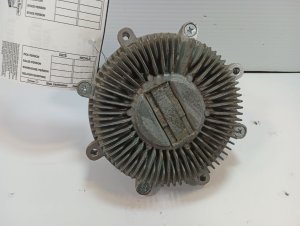
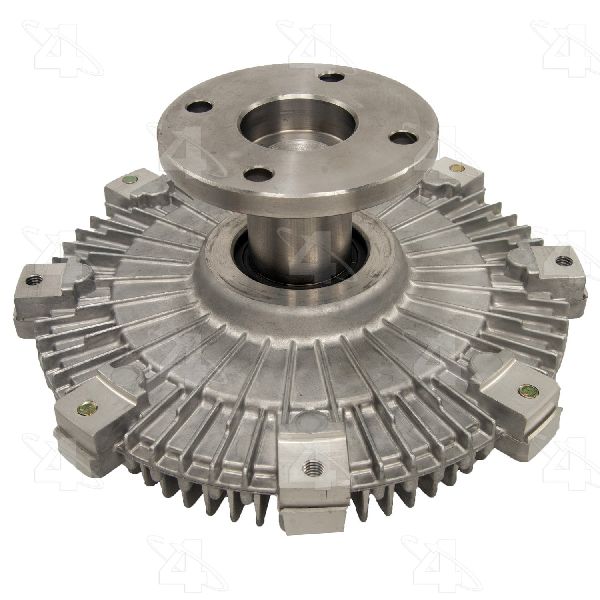
- Failing Fan Clutch 🔴 High Probability The mechanical fan clutch is a very common wear item on the VQ40DE. It wears out over time, failing to engage the cooling fan properly at low engine RPMs, which is most noticeable in stop-and-go traffic or while idling.
How to confirm: With the engine off and cool, try to spin the fan blade by hand. There should be significant resistance. If it spins freely for more than one full rotation, the clutch is bad. When the engine is hot and running, you should hear the fan roaring loudly; if it's quiet, it's not engaging.
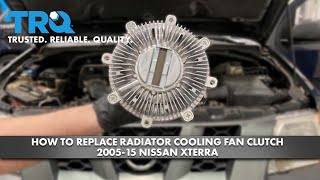
Typical fix: Replace the fan clutch assembly. This is a straightforward DIY job for many owners. 🎬 See this step-by-step fan clutch replacement walkthrough
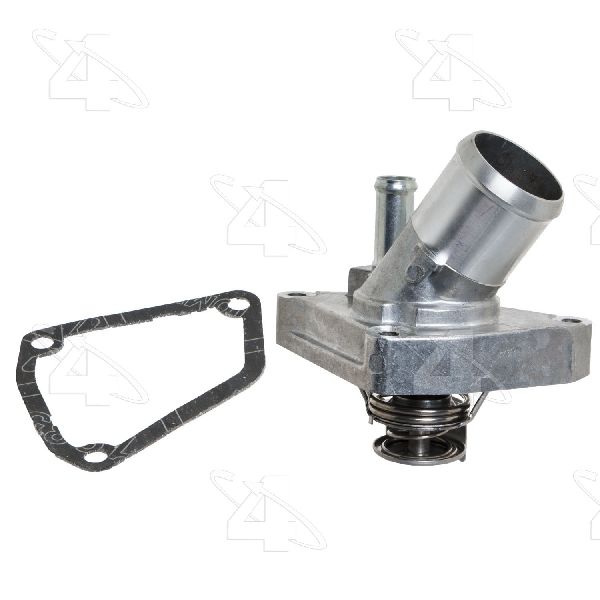
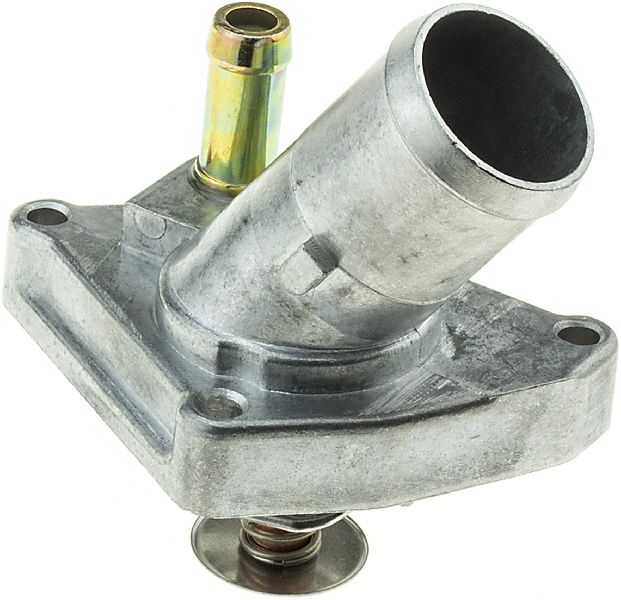
Est. part cost: $60-$150 - Stuck Thermostat 🔴 High Probability Thermostats are a common wear item that can fail stuck-closed, blocking coolant flow to the radiator. It is strongly recommended by enthusiasts to use an OEM thermostat, as aftermarket units have a higher failure rate and may have a more restrictive design on the VQ40DE.
How to confirm: After starting a cold engine, feel the upper radiator hose. It should remain cool for several minutes and then become hot suddenly as the thermostat opens (around 180°F). If it stays cool or only warms up gradually while the engine overheats, the thermostat is likely stuck closed.
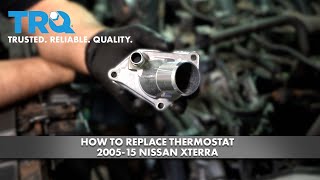
Typical fix: Replace the thermostat and gasket. Ensure the system is properly bled of air afterward.
Est. part cost: $25-$60 - Low Coolant Level / Coolant Leak 🟡 Medium Probability As the vehicle ages, rubber hoses, plastic radiator tanks, and the water pump gasket are all common leak points. A less obvious but known leak point on the VQ40DE is from the heater hose connections at the rear of the engine near the firewall.
How to confirm: Visually inspect the coolant reservoir and radiator (when cool). Look for obvious leaks, puddles under the vehicle, or white/pink crusty residue on engine components. A cooling system pressure test is the most effective way to find a hidden leak.
Typical fix: Identify the source of the leak and replace the failed component (e.g., hose, radiator, gasket). Refill and bleed the cooling system thoroughly.
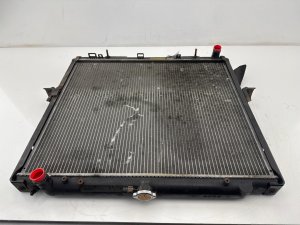
Est. part cost: $15-$400 depending on the source of the leak - Radiator Failure (SMOD) 🟡 Medium Probability On 2005-2010 models with automatic transmissions, the Calsonic-made radiator has an internal transmission cooler that is known to rupture, mixing coolant and ATF. This was the subject of a class-action lawsuit and a Nissan Technical Service Bulletin (NTB08-066).
How to confirm: Check the coolant in the radiator/overflow tank and check the transmission fluid via the dipstick. If either fluid looks pink, frothy, and milky (like a strawberry milkshake), SMOD has occurred. Transmission performance will also be severely degraded.
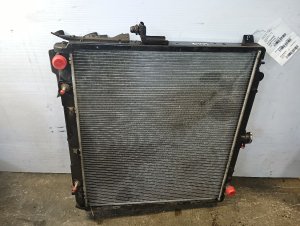
Typical fix: The vehicle must not be driven. The radiator must be replaced immediately. The transmission will require multiple fluid flushes, and may already be permanently damaged. Many owners perform a preventative radiator replacement or bypass the radiator's transmission cooler on at-risk models.
Est. part cost: $100-$250 for a new radiator - Failing Water Pump ⚪ Low Probability The water pump is a wear item, but on the VQ40DE it is driven by the timing chain, making it a more robust (but much harder to service) component. Failure is less common than other causes but does happen, typically at higher mileage.
How to confirm: Look for a coolant leak from the 'weep hole' on the engine block. A whining or grinding noise from the front of the engine that changes with RPM can also indicate failing bearings in the pump.
Typical fix: This is a labor-intensive job as the timing cover must be removed. It is highly recommended to replace the timing chain, tensioners, and guides at the same time. Hitachi is a known OEM supplier for this part.
Est. part cost: $100-$300
Rare But Worth Checking
- Air Trapped in Cooling System: The VQ40DE is known for being difficult to bleed. If coolant was recently added or flushed, an air pocket can get trapped and cause overheating. Symptoms include a gurgling sound from the dash and no heat at idle. Using a spill-free funnel and parking on an incline is the recommended bleeding procedure. 🎬 Watch: How to properly bleed air from the VQ40DE
- Faulty Engine Coolant Temperature (ECT) Sensor: The sensor itself can fail and send an incorrect high-temperature reading to the computer, triggering a P0217 code even if the engine is not actually overheating. This is uncommon, but possible.
- Clogged Radiator: Over time, the radiator can become clogged internally with sludge or externally with dirt, mud, and debris, preventing proper heat dissipation. This is especially common on vehicles used for off-roading.
- Faulty Radiator Cap: A weak or faulty radiator cap will fail to hold the specified pressure (typically 13-16 psi), lowering the boiling point of the coolant and causing it to boil over at normal operating temperatures. This is an inexpensive and easy part to replace as a diagnostic step.
Diagnosis Steps
- IMMEDIATE ACTION: If the temperature gauge is high or you see steam, pull over and turn off the engine to prevent damage.
- Check Coolant Level & Condition: Once the engine is completely cool, open the radiator cap. Check if the coolant is low. Inspect the color. If it's pink and milky, suspect SMOD (on 2005-2010 automatics).
- Inspect Radiator Cap: Check the cap's seals for cracks or damage. Consider replacing it as a cheap preventative measure.
- Inspect for Leaks: Visually inspect all hoses, the radiator, and the area around the water pump for signs of coolant leakage (puddles, crusty residue).
- Perform a Cooling System Pressure Test: This tool will pressurize the system and make any small, hidden leaks much easier to find.
- Check Fan Clutch Operation: With the engine off and cool, spin the fan. It should have moderate resistance and not freewheel. Observe the fan with the engine hot; it should be engaged and pulling a large volume of air.
- Test the Thermostat: Feel the upper radiator hose as the engine warms up from cold. It should get hot suddenly. If it never gets hot or only warms slowly while the gauge climbs, the thermostat is likely stuck closed.
- Check for Blockages: Inspect the front of the radiator and A/C condenser for debris (leaves, bugs, mud) that could be blocking airflow.
- Bleed the System: If work has recently been done on the cooling system, ensure it is properly bled of all air. Park the vehicle on an incline, use a spill-free funnel on the radiator, and run the engine with the heater on high to purge air pockets.
Parts You'll Likely Need
- Fan Clutch
(OEM #21082-EA200)— This is a very common failure point on the Xterra that directly causes overheating at low speeds or idle.
Trusted brands: Nissan (OEM), Aisin, Hayden, Dorman
OEM price range: $195-$290
Aftermarket price range: $60-$150 - Engine Coolant Thermostat
(OEM #21200-EA000)— A thermostat stuck closed is a frequent cause of rapid overheating. Using an OEM part is highly recommended by the owner community.
Trusted brands: Nissan (OEM)
OEM price range: $35-$50
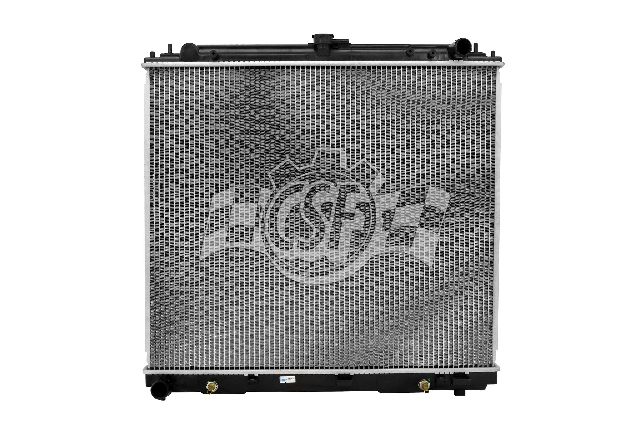
Aftermarket price range: $15-$30 - Radiator
(OEM #21460-9CA2E (Updated design for AT models))— Required for SMOD repair on 2005-2010 automatic models. Often replaced preventatively.
Trusted brands: Koyo, CSF, Spectra Premium
OEM price range: $300-$450
Aftermarket price range: $100-$250 - Radiator Cap
(OEM #21430-7999C)— A cheap and simple part that can cause overheating if it fails to hold pressure. Easy to replace during diagnosis.
Trusted brands: Nissan (OEM), Stant
OEM price range: $15-$25
Aftermarket price range: $5-$15
Technical Service Bulletins (TSBs) & Recalls
- NTB08-066: Addressed the automatic transmission fluid cooler issue (SMOD) for 2005-2010 Xterra, Frontier, and Pathfinder models.
- NTB09-122b: Pertains to the secondary timing chain tensioner and guide wear, a known issue on the VQ40DE.
- NTB07-069c: Addresses the inaccurate fuel gauge readings due to a faulty fuel level sending unit.
Platform-Specific Known Issues
- SMOD (Strawberry Milkshake of Death): On 2005-2010 models with automatic transmissions, the radiator's built-in transmission cooler can fail, mixing coolant and transmission fluid, leading to overheating and certain transmission failure. Nissan issued a warranty extension for this part (Ref: TSB #MAILM, NHTSA ID: #10192051).
- Difficult Coolant Bleeding: The VQ40DE engine is known to trap air in the cooling system, particularly in the heater core. This can cause overheating and a lack of heat at idle. Special procedures, like elevating the front of the vehicle, are often needed to properly bleed the system.
Mechanic-Grade Diagnostic Values
- Engine Coolant Temperature (ECT) Sensor Resistance — expected: At 20°C (68°F): 2,200 - 3,000 Ω. At 80°C (176°F): 250 - 350 Ω.. Failure: Resistance is infinite (open circuit), near zero (short circuit), or does not decrease smoothly as the sensor is heated.
Wiring & Ground Locations
- Engine Control Harness Grounds — A primary ground point runs from the intake manifold to the battery. Another runs from the exhaust side of the cylinder head to the firewall. Some owners also report grounds on the exhaust manifold heat shields.. A poor ground connection for the engine sensors, including the ECT sensor, can cause incorrect voltage readings, potentially leading the ECM to believe the engine is overheating when it is not. Some owners have found factory grounds to be insufficient and have added supplemental ground wires from the engine block to the chassis.
- ECM Ground (E24) — Located in the engine control harness, contributing to the ECM's main ground circuit.. Proper grounding for the Engine Control Module (ECM) is critical for accurate sensor data interpretation. A fault in this ground could corrupt sensor readings.
"I Checked Everything" — The Actual Cause
- A cooling system that passes a pressure test can still cause overheating. A partially clogged radiator may not leak, but it will fail to dissipate enough heat. This lack of heat transfer to the front of the radiator can also prevent the thermal spring on the fan clutch from getting hot enough to engage the fan, making it seem like the fan clutch has failed when the root cause is the radiator. This is especially common when overheating occurs in stop-and-go traffic but improves at highway speeds.
OEM Part Supersession History
21460-ZL11A, 21460-9CA3A→21460-9CA0E— Updated radiator design to resolve the internal transmission cooler failure that caused the 'SMOD' issue in 2005-2010 automatic transmission models.
Heads up: The newer part number is the correct replacement for the older, failure-prone units and is backward compatible.
Model Year Variations Within This Range
- 2005-Early 2010: These years used a radiator design prone to internal failure (SMOD) on automatic models. Additionally, models before ~2009 had issues with timing chain guide wear, a costly repair.
- Late 2010-2015: Received an updated radiator (PN 21460-9CA0E) that fixed the SMOD issue. The timing chain guide materials were also improved. For buyers of used vehicles, 2011 and newer models are considered the most trouble-free for these specific issues.
Diagnostic Flowchart
Other Known Issues on This Vehicle
Issues unrelated to this code that are worth knowing about as an owner of this generation:
- Secondary Timing Chain Tensioner Wear 🔴 High — Very common, especially on 2005-2010 models. Often presents as a high-pitched whine between 1000-2000 RPM. If left unaddressed, can lead to catastrophic engine failure. (Ref: NTB09-122b)
- Fuel Level Sending Unit Failure 🟠 Medium — Extremely common across most model years. Causes the fuel gauge to read inaccurately (often showing empty when full). The fix requires dropping the fuel tank to replace the sending unit inside the pump assembly. (Ref: NTB07-069c)
- Rear Axle Seal Leak 🟠 Medium — A frequent problem where the rear axle seals fail, causing differential fluid to leak onto the rear brake components. Often caused by a clogged differential breather vent.
- Radiator Transmission Cooler Failure (SMOD) 🔴 High — Specific to 2005-2010 models with automatic transmissions. The internal cooler ruptures, mixing coolant and transmission fluid, leading to transmission failure. (Ref: NTB08-066)
Used vs. New Parts: Buying Guide for This Vehicle
When a used part is the smart pick: For this specific repair, using used parts is generally not recommended. Key components like the radiator, thermostat, and fan clutch are high-wear items. The risk of a used radiator having the SMOD defect or being clogged is too high. Structural components like fan shrouds or overflow tanks could be sourced from a junkyard if in good condition.
Donor-vehicle mileage cap: roughly under 75000 miles for the part to have meaningful remaining life.
What to inspect on the donor part:
- For non-wear items like hoses or tanks, inspect for brittleness, cracks, or chalky appearance.
- Avoid any parts from a vehicle that shows signs of SMOD (milky coolant or transmission fluid).
- Check the date codes on plastic or rubber parts if visible; older parts are more likely to be brittle.
OEM-only on this vehicle (don't cheap out):
- Thermostat: Forum consensus is overwhelming that OEM thermostats provide the correct flow and opening temperature. Aftermarket units are a common cause of repeat overheating issues due to poor design or premature failure.
Aftermarket brands forum-validated for this vehicle:
- Radiator: Koyorad (often cited as Koyo), CSF, and Denso are widely recommended aftermarket brands for replacing the SMOD-prone radiator. Fully-welded aluminum radiators (e.g., AlloyWorks) are considered a performance upgrade.
- Fan clutch: Aisin is a well-regarded OEM supplier and a safe aftermarket choice.
Brands owners have reported issues with on this vehicle:
- Fan Clutch: Hayden has very mixed reviews; some users report they are too aggressive (loud) or fail prematurely, while others have had success. It is a gamble compared to OEM or Aisin.
- Thermostat: Unbranded or generic parts-store thermostats should be avoided for this vehicle.
Real Owner Stories
Aggregated from forums and TSBs cited above. Mileages and costs reflect what owners reported in those sources.
2005-2010 Nissan Xterra VQ40DE (Automatic)
Symptoms: Coolant in the radiator or overflow tank looks pink, frothy, and milky (like a strawberry milkshake); erratic shifting and degraded transmission performance.
What fixed it: Immediate replacement of the radiator and multiple transmission fluid flushes to remove contaminated fluid.
Source hint: TheNewX.org - The SMOD Megathread
Nissan Frontier VQ40DE (VQ40DE-powered)
Symptoms: Overheating and a P0217 code; owner initially suspected other causes before testing the cooling system flow.
What fixed it: Replacement of the failed thermostat.
Source hint: ClubFrontier.org - P0217 and Thermostat Replacement
Nissan Xterra VQ40DE
Symptoms: Overheating specifically while sitting in traffic or at idle; fan was quiet when the engine was hot.
What fixed it: Replacement of the mechanical fan clutch assembly.
Source hint: Thenewx.org Forum Discussion on Fan Clutch Failure
Documented NHTSA Reports
Nissan Vehicle P0217 Diagnosis
Symptoms: An owner reported the car was overheating and taking longer to start. A dealer diagnosis confirmed multiple issues including Engine Over Temp (Code P0217), TW Catalyst Sys-B1 (Code P0420), and a Cylinder 1 Misfire (Code P0301).
Source hint: NHTSA ODI #10326699
Related OBD-II Codes
Frequently Asked Questions
Which TSB addresses the 'Strawberry Milkshake of Death' (SMOD) on my 2005-2010 Xterra?
Why does my Xterra heater blow cold air at idle but get warm when I accelerate?
Should I use an aftermarket thermostat to fix my P0217 code?
How can I tell if my Xterra fan clutch (Part #21082-EA200) is failing?
Is there a specific leak point I should check at the back of the VQ40DE engine?
What is the 'weep hole' check for the water pump?
Helpful Videos

Used OEM Parts in Stock
New Aftermarket Parts Available


The information in this article is provided for general reference and educational purposes only. Vehicle specifications, procedures, and part compatibility can vary by production date, trim level, and region. Always consult your vehicle's factory service manual and verify part numbers before purchasing or performing repairs. Safety-critical components such as airbags, seat belts, and braking systems should be installed by a qualified professional.
- Nissan Xterra:
- 🎬 Helpful Videos
- 🛍️ Shop This Part
- What's Unique About the 2005-2015 Nissan Xterra
- Symptoms You May Notice
- Most Likely Causes
- Rare But Worth Checking
- Diagnosis Steps
- Parts You'll Likely Need
- Technical Service Bulletins (TSBs) & Recalls
- Platform-Specific Known Issues
- Mechanic-Grade Diagnostic Values
- Wiring & Ground Locations
- "I Checked Everything" — The Actual Cause
- OEM Part Supersession History
- Model Year Variations Within This Range
- Diagnostic Flowchart
- Other Known Issues on This Vehicle
- Used vs. New Parts: Buying Guide for This Vehicle
- Real Owner Stories
- 2005-2010 Nissan Xterra VQ40DE (Automatic)
- Nissan Frontier VQ40DE (VQ40DE-powered)
- Nissan Xterra VQ40DE
- Documented NHTSA Reports
- Nissan Vehicle P0217 Diagnosis
- Related OBD-II Codes
- Frequently Asked Questions
- 🎟️ Get 5% Off