

P0217 on 2014-2018 Ford Fusion Hybrid: Engine Overheating Causes and Fixes
P0217 means your engine is overheating. On the Fusion Hybrid, this is typically due to a standard cooling system failure like a bad thermostat, electric water pump, or cooling fan. While some Fords with this code have serious engine damage from coolant intrusion, this is rare on the Hybrid's reliable 2.0L Atkinson-cycle engine, which is a different design from the problematic EcoBoost engines.
- P0217 means your engine is overheating and you must stop driving immediately to prevent severe damage.
- On your Fusion Hybrid, the cause is most likely a standard cooling system part like the thermostat, electric water pump, or cooling fan.
- Unlike other Ford Fusions, your Hybrid's 2.0L Atkinson-cycle engine is not known for the common coolant intrusion defect.
- Always diagnose the simple, common causes before assuming a catastrophic engine failure.
- Check for other codes. If P0217 appears with misfire codes (P030x), the chance of an internal leak is higher.
What's Unique About the 2014-2018 Ford FUSION HYBRID

While the Ford Fusion name is associated with Technical Service Bulletins (TSBs) for coolant intrusion causing overheating, those issues primarily plague the 1.5L and 2.0L *EcoBoost* engines. The Fusion Hybrid uses a different, more reliable 2.0L Atkinson-cycle engine that is not prone to the same design flaw and rotates in the opposite direction. Forum discussions and owner experiences confirm the Atkinson-cycle engine's reliability and separation from the EcoBoost's coolant intrusion problems. Therefore, while an internal engine failure is a remote possibility, a P0217 code on a Fusion Hybrid is much more likely to be caused by a conventional cooling system part failure rather than the widely publicized engine block issue affecting EcoBoost models. It's also important to distinguish between the engine's cooling system and the separate cooling loop for the high-voltage electronics, which has its own electric pump (Motor Electronics Coolant Pump or MECP). Failure of the MECP will trigger a 'Stop Safely Now' warning and shut down the hybrid system, but it will not cause the P0217 engine code.
Diagnostic Flowchart

Tap your situation to follow the diagnostic path that matches what you're seeing on this vehicle.
Symptoms You May Notice
- Temperature gauge reading in the 'Hot' or red zone.
- Illuminated engine temperature warning light.
- Check Engine Light is on.
- Reduced engine power as the vehicle enters 'limp mode'.
- Steam or white smoke coming from the engine bay.
- A sweet, syrupy smell of burning coolant.
- Unexplained loss of coolant from the reservoir.
- Rough running engine or misfires (if related to coolant intrusion).
- Gurgling or boiling sounds from the engine area.
- Immediately assuming the engine needs replacement. Due to widespread news about coolant intrusion on other Ford engines, owners may panic. For the Fusion Hybrid, it's crucial to diagnose standard cooling system components first, as they are the most likely cause.
- Confusing the engine water pump with the hybrid electronics (MECP) water pump. The MECP pump cools the inverter and its failure causes a 'Stop Safely Now' message, not a P0217 code.
Most Likely Causes

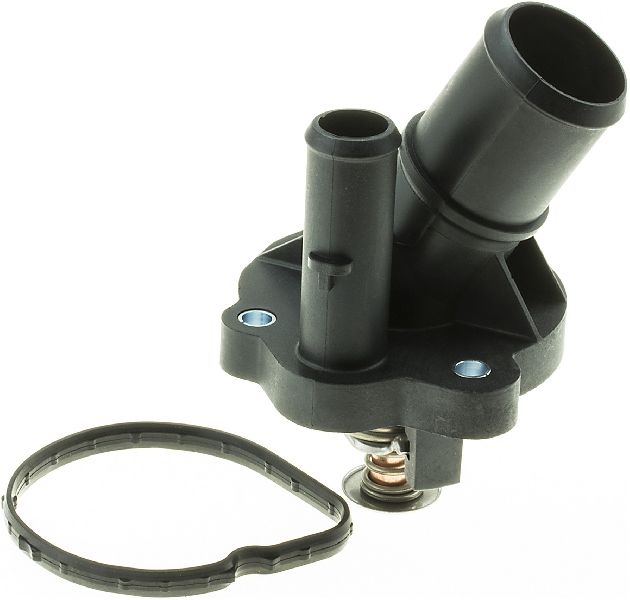
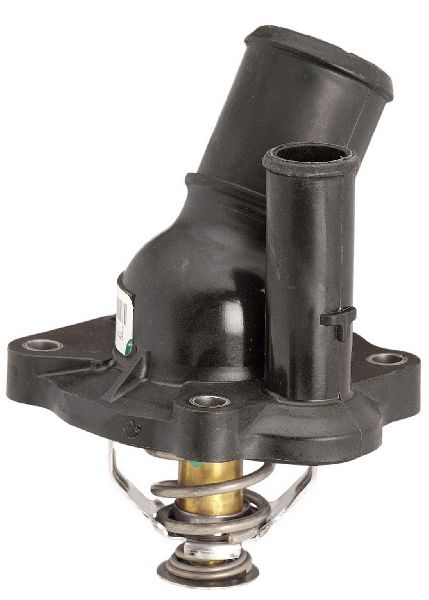
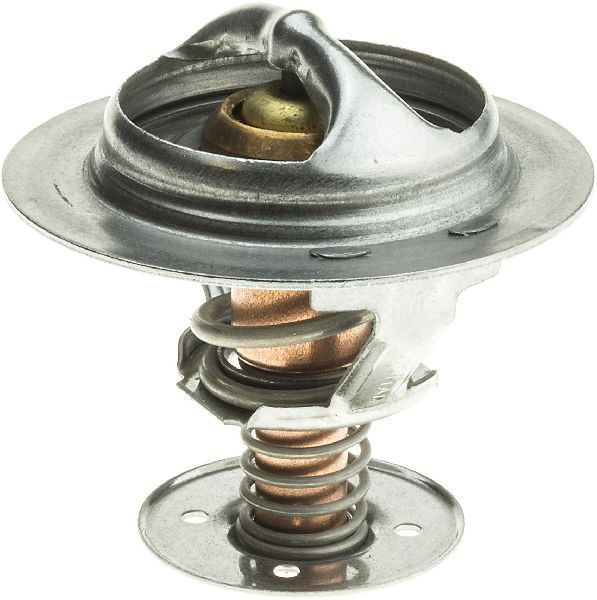
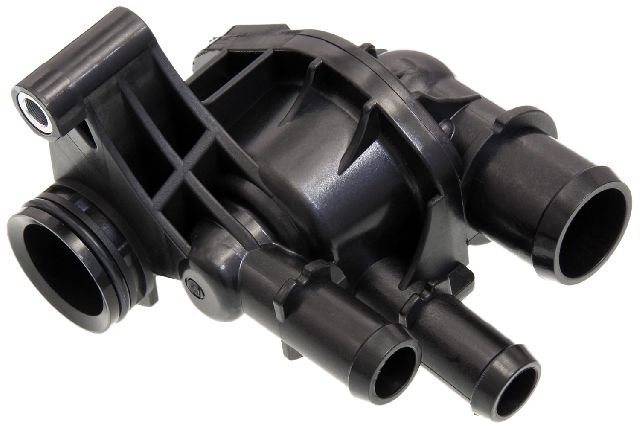
- Failed Thermostat 🔴 High Probability Thermostats are a common wear item that can fail by getting stuck closed, which prevents coolant from circulating to the radiator. Even OEM Motorcraft thermostats can fail prematurely.
How to confirm: After the engine has warmed up, both the upper and lower radiator hoses should be hot. If the lower hose is significantly cooler than the upper hose, the thermostat is likely stuck closed. Erratic temperature gauge readings can also indicate a failing thermostat.
Typical fix: Replace the thermostat and gasket, and refill and bleed the cooling system. It is recommended to use an OEM Motorcraft part.
Est. part cost: $30-$80 - Failing Electric Water Pump 🟡 Medium Probability The Fusion Hybrid uses an electric water pump for the engine cooling system. Like any electric motor, it can fail over time, stopping coolant circulation. The hybrid system also has a separate auxiliary electric pump for the inverter electronics.
How to confirm: Diagnosis involves checking for power and ground at the pump connector and listening for its operation. A scan tool may also show fault codes specific to the pump or its circuit.
Typical fix: Replace the electric water pump assembly. The OEM part number for the main engine water pump has been superseded; a common replacement is Motorcraft part number DS7Z-8501-C.
Est. part cost: $150-$400 - Cooling Fan Malfunction 🟡 Medium Probability Electric cooling fans or their control modules can fail, preventing air from being pulled through the radiator at low speeds or while stopped, leading to a rapid temperature increase in traffic.
How to confirm: With the engine at operating temperature and the A/C turned on, verify that the cooling fan(s) are spinning. If not, check fuses, relays, and the fan motor itself. A scan tool can also be used to command the fan on to test its function.
Typical fix: Replace the faulty fan motor, relay, or the entire fan assembly.
Est. part cost: $100-$350 - Low Engine Coolant 🟡 Medium Probability
How to confirm: Visually inspect the coolant reservoir. If it is low or empty, there is a leak in the system that must be found. Perform a cooling system pressure test to locate the source of the leak (e.g., hoses, radiator, water pump).
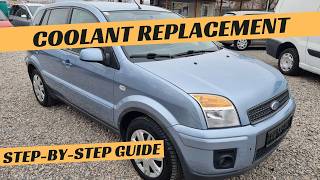
Typical fix: Find and repair the leak, then refill and bleed the cooling system with the correct Ford specification coolant. 🎬 See this walkthrough for replacing coolant and bleeding the system
Est. part cost: $20-$500+ (depending on the source of the leak) - Faulty Engine Coolant Temperature (ECT) Sensor ⚪ Low Probability
How to confirm: A faulty sensor can send an incorrect high-temperature reading to the PCM, triggering P0217 even if the engine is not actually overheating. This can be confirmed by comparing the sensor's reading on a scan tool with the actual temperature of the coolant measured with an infrared thermometer.
Typical fix: Replace the ECT sensor.
Est. part cost: $25-$75
Rare But Worth Checking
- Internal Coolant Leak (Head Gasket / Cracked Block): While this is a well-known issue on Ford's EcoBoost engines as documented in TSBs 22-2229 and 22-2322, it is very uncommon on the Fusion Hybrid's 2.0L Atkinson-cycle engine. However, any engine can suffer a head gasket failure. Symptoms include white exhaust smoke, a constantly bubbling coolant reservoir, and misfire codes (P0301-P0304) along with P0217. A chemical block test can detect combustion gases in the coolant, confirming the diagnosis.
Diagnosis Steps
- Safety First: Do not open the coolant reservoir cap when the engine is hot. Allow the vehicle to cool completely.
- Check Coolant Level and Condition: Inspect the coolant reservoir. If low, you have a leak. If the coolant is discolored or has oil in it, suspect an internal leak.
- Scan for Codes: Use an OBD-II scanner to confirm P0217 and look for any other related codes (like P1299 or misfire codes).
- Inspect for External Leaks: Visually check all hoses, the radiator, water pump, and thermostat housing for signs of coolant leakage (stains, drips).
- Perform a Cooling System Pressure Test: If a leak is suspected but not visible, use a pressure tester to pressurize the system and reveal the source of the leak.
- Verify Cooling Fan Operation: Start the engine and turn on the A/C. The cooling fans should activate. If they don't, inspect the fan fuses, relays, and motor.
- Test Thermostat and Water Pump: Check for proper circulation. Feel the radiator hoses to ensure they are both getting hot. Listen for the operation of the electric water pump.
- Test the ECT Sensor: Compare the live data from the ECT sensor on a scan tool to the actual engine temperature to ensure it's reading accurately.
- Check for Internal Leak (if all else fails): If no external cause is found, perform a chemical block test or use a borescope to check cylinders for coolant to rule out a head gasket or block issue.
Parts You'll Likely Need

- Engine Coolant Thermostat
(OEM #Motorcraft RT1234)— A thermostat stuck in the closed position is a frequent cause of engine overheating.
Trusted brands: Motorcraft, Stant
OEM price range: $40-$70
Aftermarket price range: $25-$50 - Electric Water Pump
(OEM #DS7Z-8501-C (Supersedes previous versions))— The hybrid's electric water pump is essential for coolant circulation; if it fails, the engine will quickly overheat.
Trusted brands: Motorcraft, Bosch, Gates
OEM price range: $250-$400
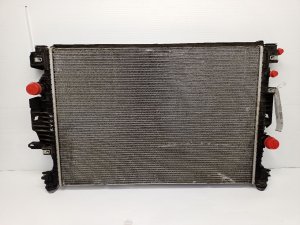
Aftermarket price range: $150-$250 - Radiator Cooling Fan Assembly — A failed fan motor prevents proper cooling when the vehicle is stationary or moving at low speeds.
Trusted brands: Motorcraft, Dorman, TYC
OEM price range: $300-$450
Aftermarket price range: $150-$300
Related Codes That Often Appear With This One
- P1299 — This is a Ford-specific code for 'Cylinder Head Over Temperature Protection Active', which is often triggered alongside P0217 as the PCM tries to protect the engine by shutting down fuel injectors.
- P0300, P0301, P0302, P0303, P0304 — If P0217 is caused by a severe internal coolant leak (a rare event on this engine), the coolant entering the cylinders will cause misfires, triggering these codes.
- P0128 — This code means 'Coolant Thermostat (Coolant Temperature Below Thermostat Regulating Temperature)'. It can be caused by a thermostat stuck open, which is the opposite failure mode but points to a faulty thermostat as a likely system culprit.
Technical Service Bulletins (TSBs) & Recalls
- TSB 22-2229: Mentions P0217 in the context of coolant intrusion into the cylinder, but explicitly applies to the 2.0L *EcoBoost* engine, not the hybrid's Atkinson-cycle engine.
- TSB 22-2322: Mentions P0217 in the context of coolant intrusion, but applies to the 1.5L *EcoBoost* engine.
Platform-Specific Known Issues
- The primary vehicle-specific issue is the *misconception* that the Fusion Hybrid suffers from the same coolant intrusion engine failure as the EcoBoost models. TSBs 22-2229 and 22-2322 apply specifically to 1.5L and 2.0L EcoBoost engines, not the 2.0L Atkinson-Cycle engine in the hybrid.
Mechanic-Grade Diagnostic Values
- Cylinder Head Temperature (CHT) Sensor Resistance — expected: Approximately 37.3 kΩ at 68°F (20°C), 5.37 kΩ at 140°F (60°C), and 1.36 kΩ at 212°F (100°C).. Failure: Readings significantly outside these ranges, or an open/short circuit, indicate a faulty sensor.
Scan Tool Commands That Help
- FORScan / Ford IDS: PCM Service Procedure - Cooling System Bleed — This function is critical after replacing any cooling system component (water pump, thermostat, radiator) to properly purge air from the system. It commands the electric water pump to run at 100% and raises engine RPM to ensure all air pockets are removed, which is difficult to do manually on this hybrid system.
- FORScan / Ford IDS: Active Command - Cooling Fan Control — To test the functionality of the cooling fan assembly. A technician can command the fan to run at various speeds to verify the fan motor, control module, and wiring are all working correctly, independent of sensor inputs.
Wiring & Ground Locations
- Cylinder Head Temperature (CHT) Sensor — On top of the engine, in the cylinder head, located between the ignition coils for cylinders #2 and #3.. This engine uses a CHT sensor instead of a traditional ECT sensor. It directly measures metal temperature. A faulty sensor or corroded connector can send false overheating signals to the PCM, triggering P0217 and P1299.
- G100 / G101 — Left front of the engine compartment.. These are primary ground points for components in the engine bay. The cooling fan motor is listed as grounding in this area. A poor ground connection here can cause intermittent or total failure of the cooling fan, leading to overheating in traffic.
- Cooling System Bleed Procedure (Manual) — Not applicable (procedure).. This platform has a specific 'system fill mode' that must be entered to properly bleed air. After filling, with the climate control off, press and hold the brake for 10 seconds, then press and hold the accelerator to 100% for 10 seconds. This activates a sequence to run the pump and engine to purge air. Failure to do this is a common cause of overheating after repairs.
Real Owner Repair Stories
- Reddit user in r/mechanicadvice (Ford Fusion (specific year/engine not mentioned, but behavior is identical to hybrid cooling system bleeding issues)) — Car immediately overheated (temp gauge to red) within 3 minutes of driving after having the water pump replaced by a mechanic.
❌ Tried (didn't work) The mechanic replaced the water pump to fix an initial leak.
✅ What actually fixed it The consensus from other technicians was that the mechanic failed to properly bleed the air from the cooling system after the water pump replacement. An air pocket in the system was preventing coolant circulation, causing the immediate overheat. The fix is to perform the correct, often lengthy, bleeding procedure. - Car Talk Community user (2014 Ford Fusion Hybrid with 106k miles) — Performing a coolant flush as preventative maintenance.
❌ Tried (didn't work) Initially had trouble locating the radiator petcock to drain the system.
✅ What actually fixed it The user successfully flushed the engine cooling system by disconnecting a hose to the reservoir and running the car to pump out the old fluid. They noted the old coolant appeared to have been mixed with the incorrect (green) type by a previous owner. The key takeaway was the difficulty in bleeding and the importance of using the correct Ford-spec Motorcraft Orange coolant.
OEM Part Supersession History
DS7Z-8501-A, DS7Z-8501-B→DS7Z-8501-C— Revisions by the manufacturer to improve reliability or sourcing of the electric engine water pump.
Heads up: DS7Z-8501-C is the current recommended OEM replacement for the 2013-2020 2.0L Hybrid engine and is backward compatible.
Model Year Variations Within This Range
- 2017-2018: The 2017 model year received a mid-cycle refresh with cosmetic updates. However, the core 2.0L Atkinson-cycle hybrid powertrain and its cooling system remained fundamentally the same as the 2014-2016 models. Diagnostic and repair procedures for P0217 are consistent across the 2014-2018 range.
Helpful Videos

Used OEM Parts in Stock


New Aftermarket Parts Available


The information in this article is provided for general reference and educational purposes only. Vehicle specifications, procedures, and part compatibility can vary by production date, trim level, and region. Always consult your vehicle's factory service manual and verify part numbers before purchasing or performing repairs. Safety-critical components such as airbags, seat belts, and braking systems should be installed by a qualified professional.
- Ford FUSION HYBRID:
- 🎬 Helpful Videos
- 🛍️ Shop This Part
- What's Unique About the 2014-2018 Ford FUSION HYBRID
- Diagnostic Flowchart
- Symptoms You May Notice
- Most Likely Causes
- Rare But Worth Checking
- Diagnosis Steps
- Parts You'll Likely Need
- Related Codes That Often Appear With This One
- Technical Service Bulletins (TSBs) & Recalls
- Platform-Specific Known Issues
- Mechanic-Grade Diagnostic Values
- Scan Tool Commands That Help
- Wiring & Ground Locations
- Real Owner Repair Stories
- OEM Part Supersession History
- Model Year Variations Within This Range
- 🎟️ Get 5% Off