

OBD-II Code P0215: Engine Shutoff Solenoid Malfunction
What P0215 means, why it triggers, and how to fix it
- Code P0215 indicates a failure in the engine shutoff solenoid circuit, which causes unexpected stalling or prevents the engine from starting entirely.
- Before replacing the $150+ shutoff solenoid, always test the fuel pump relay and inspect the wiring harness for shorts or corrosion.
- On 1998-2002 Dodge Cummins trucks, P0215 paired with code P1689 strongly points to a failed injection pump computer caused by low lift pump pressure.
- Diagnosing this code requires a multimeter to verify the solenoid receives at least 12 volts of power when the ignition key is turned to the 'ON' position.
What Does P0215 Mean?

Your car's Powertrain Control Module (PCM) detected a problem in the electrical circuit for the engine shutoff solenoid. This electronically controlled valve manages fuel flow to the engine. When it fails, the engine either starves for fuel and won't start, or continues receiving fuel and won't shut off.
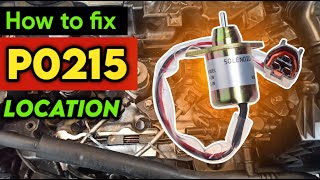
Technical definition: The official SAE/OBD-II definition for code P0215 is "Engine Shutoff Solenoid Malfunction". 🎬 Watch: A quick overview of the P0215 code and its meaning. This indicates the powertrain control module (PCM) detected a fault in the control circuit for the solenoid responsible for stopping fuel flow to the engine.
Can I Drive With P0215?
No — Do Not Drive. Do not drive your vehicle. This problem prevents the engine from starting, causes unexpected stalling, or stops it from shutting off—a serious safety risk. Continuing to drive leads to further engine damage.
Common Causes

- Faulty Engine Shutoff Solenoid (Very Common) — The solenoid itself is the most frequent point of failure. It wears out internally, becomes mechanically stuck, or fails electronically, preventing it from controlling fuel flow.
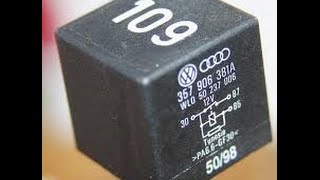
- Failed Fuel Pump Relay or Injection Pump Relay (Common) — This relay acts as a switch, sending power to the shutoff solenoid circuit. 🎬 See how to diagnose a faulty shutoff valve and relay. If the relay fails, it cuts power to the solenoid, causing the code.
- Wiring Harness or Connector Issues (Common) — The wires leading to the solenoid become damaged, corroded, shorted, or disconnected. This interrupts the signal from the PCM.
- Blown Fuse (Common) — A blown fuse in the fuel system circuit cuts power to the solenoid and triggers the P0215 code. This results from a short circuit in the wiring.
- Faulty Ignition Switch (Less Common) — A worn ignition switch fails to send a consistent power signal to the fuel system and PCM when the key is in the 'ON' or 'START' position.
- Low System Voltage / Weak Battery (Less Common) — A weak battery or failing alternator causes system voltage to drop during cranking. The PCM requires stable voltage and incorrectly flags a circuit fault if voltage drops too low.
- Faulty Crankshaft Position Sensor (CKP) (Uncommon) — The PCM uses the CKP signal to confirm the engine is running before operating the fuel shutoff solenoid. A faulty CKP sensor causes the PCM to incorrectly trigger the shutoff solenoid, leading to a stall.
- Faulty Powertrain Control Module (PCM) (Rare) — A bad driver circuit inside the PCM prevents it from sending the correct signal to the shutoff solenoid. Consider this only after eliminating all other possibilities.
Symptoms

- Engine will not start — The starter cranks, but the engine won't fire because the shutoff solenoid is stuck closed, blocking fuel from reaching the engine.
- Engine stalls unexpectedly — The engine suddenly dies while driving or idling when the solenoid circuit fails and cuts off the fuel supply.
- Engine will not shut off — You turn the key to the 'off' position, but the engine keeps running. This happens when the solenoid is stuck open and fuel continues to flow.
- Reduced engine performance — Intermittent solenoid failure causes poor acceleration, rough idling, and inconsistent fuel delivery.
- Increased Fuel Consumption — Improper fuel delivery from a malfunctioning solenoid results in a noticeable increase in fuel consumption.
- Check Engine Light is on (also visible on scanner) — The PCM illuminates the Check Engine Light on your dashboard immediately after detecting the fault in the solenoid's circuit.
Diagnostic Flowchart

Tap your situation to follow the diagnostic path that matches what you're seeing on this code.
Common Fixes & Costs
- Replace Engine Shutoff Solenoid — Parts: $50-$250, Labor: $100-$300, ~1.5 hr book time (Intermediate)
- Replace Fuel Pump / Injection Pump Relay — Parts: $20-$60, Labor: $40-$100, ~0.5 hr book time (DIY)
- Replace Blown Fuse — Parts: $1-$10, Labor: $0-$50, ~0.1 hr book time (DIY)
- Repair Wiring or Connectors — Parts: $10-$50, Labor: $150-$400, ~2 hr book time (Intermediate)
- Replace IPR Valve (Ford Powerstroke) — Parts: $150-$350, Labor: $200-$400, ~2.5 hr book time (Intermediate)
- Replace Fuel Pressure Regulator (GM Duramax) — Parts: $180-$300, Labor: $150-$350, ~3.5 hr book time (Intermediate)
- Replace Powertrain Control Module (PCM) — Parts: $400-$1000, Labor: $150-$300, ~1.5 hr book time (Professional)
Used vs. New Parts: Buying Guide
When a used part is worth it: For a simple electro-mechanical part like a shutoff solenoid, a used OEM part from a low-mileage, accident-totaled vehicle saves 50% or more. Avoid used parts for complex electronics like a PCM or injection pump computer.
Donor-vehicle mileage cap: roughly under 100000 miles for the part to have meaningful remaining life.
Donor quality checklist:
- Verify the donor vehicle was not scrapped for fuel system failure.
- Inspect the part for corrosion, physical damage, or brittle wiring.
- Ensure the part number is an exact match to avoid compatibility issues.
Decision logic:
- If The vehicle is a high-value or newer model and the part is under $150 new → Buy new for the warranty and reliability.
- If The vehicle is older (>150k miles), the budget is tight, and the labor to replace is low → A used part is a reasonable gamble.
- If The part has a known high failure rate (e.g., VP44 PSG) or requires extensive labor to access → Always buy new or professionally remanufactured to avoid repeating the labor cost.
Warranty tradeoff: Salvage yard parts have a 30-90 day warranty for function only. New aftermarket parts carry a 1-year to limited lifetime warranty. New OEM parts offer the best warranty at the highest cost.
Worst-case if a used part fails: $200-$600 if a used solenoid fails shortly after installation, requiring repeat labor costs plus the price of another part.
What Happens If You Wait — Timeline
- 0-1 month (Intermittent Fault): The code appears after a hard start or a single, unexpected stall. The Check Engine Light turns on and off intermittently. (MPG impact: 0-2%% · Added cost: $0)
- 1-3 months (Consistent Symptoms): Stalling becomes frequent, especially at idle or when letting off the throttle. Hard starting when the engine is warm becomes a daily issue. The solenoid or its wiring fails consistently. (MPG impact: 3-5%% · Added cost: $75-$300 for a tow after being stranded.)
- 3-6 months (Secondary Damage Begins): If a weak lift pump starves the injection pump, the lack of cooling fuel damages the injection pump's internal electronics and mechanical parts. The engine enters a 'dead pedal' or low power state. (MPG impact: 5-15%% · Added cost: $200-$500 in wasted fuel and potential damage to the fuel pump relay from circuit stress.)
- 6+ months (Catastrophic Failure): The vehicle enters a permanent no-start condition or stalls every time it drives. The initial, cheaper problem (e.g., a relay or wiring) destroys the PCM driver, or a weak lift pump destroys the injection pump. (MPG impact: N/A (Vehicle is undrivable)% · Added cost: $1500-$3000+ for a complete injection pump replacement.)
Cost of Not Fixing It
- Immediate: Stranding due to a no-start condition, or a dangerous inability to shut the engine off. Unexpected stalling in traffic is a major safety hazard. (Added cost: $75-$300 for towing.)
- 1-3 months: Continued stress on related components like the fuel pump relay or PCM driver causes them to fail. Poor fuel control leads to rough running and reduced fuel economy. (Added cost: $100-$500 for secondary component failure.)
- 3+ months: On diesel engines (like the VP44 Cummins), this code is a symptom of fuel starvation from a weak lift pump. Ignoring it leads to catastrophic failure of the injection pump. (Added cost: $1500-$3000+ for injection pump replacement.)
Diagnosis Steps
- Check for Other Codes
Use an OBD-II scanner to check for other codes. Codes related to the fuel pump, injection pump, crankshaft sensor (CKP), or ignition switch provide valuable clues to the root cause.
Tools: OBD-II Scanner (Beginner) - Inspect Fuses and Relays
Locate the fuse box using your owner's manual. Find the fuse and relay for the fuel pump or injection pump circuit and check for blown fuses or burnt relays. Swap the fuel relay with an identical one (like the horn relay) to quickly test if the relay is the problem.
Tools: Owner's Manual, Fuse Puller (Beginner) - Visual Inspection
Locate the engine shutoff solenoid (often on or near the injection pump on diesel engines). Visually inspect the solenoid and its wiring connector for obvious damage, corrosion, loose connections, or fluid leaks.
Tools: Flashlight (Beginner) - Test for Power and Ground at the Connector
With the key in the 'ON' position, use a multimeter to backprobe the solenoid's electrical connector. Check for battery voltage (typically 12.6V) and verify a good ground connection. Low voltage during cranking (below 9-10V) indicates a weak battery or bad connection triggering the code.
Tools: Multimeter (Intermediate) - Test the Solenoid's Resistance
Disconnect the solenoid and use a multimeter to measure the electrical resistance across its terminals. Compare your reading to the manufacturer's specifications. A typical range is 1-30 Ω. A reading of infinity (OL) indicates an open circuit, while a reading near zero indicates a short circuit.
Tools: Multimeter, Vehicle Service Manual (Intermediate) - Test the Solenoid's Operation (Bench Test)
If the solenoid is easily removable, apply 12V directly to its terminals using jumper wires. You must hear a distinct 'click' as it activates and see the plunger move. No click or movement means the solenoid is mechanically stuck or burned out.
Tools: Jumper Wires, 12V Power Source (Intermediate) - Advanced Test: Check for Voltage Drop
Connect the positive lead of your multimeter to the battery's positive terminal and the negative lead to the power pin on the solenoid connector (with the solenoid connected and energized). A reading over 0.5 volts indicates excessive resistance in the power feed. Repeat for the ground side; a reading above 0.2 volts is problematic.
Tools: Multimeter (Advanced) - Advanced Test: Monitor Live Data PIDs
Using an advanced scan tool, monitor 'Fuel System Status'. For Powerstroke engines, monitor 'Injection Control Pressure (ICP)' and 'IPR Duty Cycle'. At idle, ICP should be 500-800 PSI. For Cummins engines, check for communication with the 'Injection Pump Module'.
Tools: Advanced OBD-II Scan Tool (Advanced) - Advanced Test: Use a Scope to Check the Driver Signal
Connect an oscilloscope to the solenoid's control wire. A clean, square waveform when the solenoid is commanded on and off confirms the PCM driver works correctly. A noisy or absent signal points towards a PCM or wiring issue.
Tools: Oscilloscope (Advanced)
When This Code Triggers (Freeze-Frame Conditions)
- Engine State: During Crank / Key-On (The fault is detected immediately when the PCM attempts to energize the circuit to start the engine. If the circuit is open or shorted, the code sets before the engine runs.)
- RPM: 0 or > 700 RPM (The code sets at 0 RPM during a failed start attempt, or triggers while driving (e.g., 700-2500 RPM) if an intermittent wiring fault occurs, leading to a stall.)
- System Voltage: < 10.5V or > 15V (Low voltage during cranking (< 10.5V) or a high voltage spike (> 15V) from a faulty alternator causes the PCM to misinterpret the circuit's status and set a false code.)
- Fuel System Status: Open Loop (The fault occurs before the engine warms up enough to enter closed-loop fuel control, especially in no-start situations.)
Related Codes
- P1689 — Indicates no communication between the ECM and the injection pump module. P0215 indicates a fault in the power circuit TO the pump. Having both codes strongly suggests a failure of the injection pump's internal computer or its power wiring.
- P0230 — Points to a fault in the primary circuit of the fuel pump relay. Since the shutoff solenoid is powered by a relay tied into the fuel system, P0230 leads to P0215. Diagnose P0230 first.
- P0200 — Points to a general fault in the circuit powering the fuel injectors, while P0215 is specific to the shutoff solenoid circuit.
- P0213 / P0214 — Refer to a separate, auxiliary cold start injector. P0215 refers to the main solenoid that stops all fuel to the engine.
Climate & Environmental Factors
- Cold Weather: Extremely cold temperatures cause diesel fuel to 'gel' and mechanical parts of an older solenoid to stick. Low temperatures also reduce battery efficiency, leading to low cranking voltage and false P0215 codes.
- High Humidity / Moisture: Persistent moisture causes corrosion on electrical connectors, fuse box terminals, and wiring grounds. This corrosion creates unwanted resistance in the shutoff solenoid circuit, impeding the signal.
- Vibration: Constant engine vibration on heavy-duty diesel trucks wears through wire insulation over time. This causes intermittent shorts to ground, blowing fuses or triggering circuit fault codes like P0215.
How to Talk to a Mechanic About This Code
Say this: "I have a P0215 code and my vehicle is stalling or won't start. Please start by testing the basics—fuses, the fuel pump relay, and verifying voltage and ground at the shutoff solenoid connector—before quoting a major component like the injection pump or PCM."
This signals you expect a logical, step-by-step diagnosis. It prevents shops from jumping to the most expensive conclusion and encourages them to rule out simple electrical faults first.
Avoid saying:
- 'My check engine light is on, just fix it.'
- 'I think I need a new injection pump.'
- 'Just do whatever you think is best.'
Questions to ask before authorizing the repair:
- What were the results of the fuse and relay tests?
- Did you confirm there is battery voltage at the solenoid connector when the key is on?
- What was the resistance measurement of the solenoid coil, and is it within the manufacturer's specification?
- If other codes like P1689 were present, did you confirm power and ground to the injection pump module before condemning the pump?
- What is the warranty on the proposed parts and labor?
Where to Take It: Dealer vs Independent vs Chain
- Dealer:
Recommended only if the vehicle is under warranty or has a specific, known manufacturer quirk that independent shops cannot handle.
Best for: Vehicles still under a powertrain or extended warranty., Complex, vehicle-specific issues (e.g., TIPM modules on Jeeps, advanced BMW fuel systems)., Repairs where you want an OEM-part-only guarantee.
Downsides: Highest labor rates, often 1.5-2x more than independent shops., May recommend replacing a large assembly (like an entire injection pump) when only a smaller component (like the solenoid or pump computer) has failed. (Typical cost: +50% vs. baseline) - Independent Shop:
Best fit. An experienced independent shop, particularly a diesel specialist, is perfectly suited to diagnose and repair P0215 efficiently and cost-effectively.
Best for: Out-of-warranty vehicles, especially common diesel trucks (Cummins, Powerstroke, Duramax)., Cost-conscious owners who want a thorough diagnosis without the highest labor rates., Finding a technician who will perform detailed circuit tracing and repair.
Downsides: Quality and expertise vary widely. It's crucial to find a shop with a good reputation, especially one specializing in diesel or electrical diagnostics. (Typical cost: +0% vs. baseline) - Chain Shop:
Acceptable if the diagnosis is confirmed to be a simple relay or fuse. AVOID for comprehensive diagnosis of intermittent stalling, no-start conditions, or wiring issues related to P0215.
Best for: Simple, clear-cut repairs like a battery or fuse replacement.
Downsides: Technician skill varies dramatically; they may lack the advanced electrical diagnostic experience needed for this code., High pressure to meet sales targets can lead to upselling or replacing parts without a complete diagnosis. (Typical cost: -10% vs. baseline)
When to Walk Away From the Repair
If the estimated repair cost exceeds 40-50% of the car's private-party market value, seriously consider selling or trading in the vehicle instead of repairing it.
- Car worth $5000, fix is $2500: Walk away. The repair cost is 50% of the vehicle's value. This is a classic 'mechanic's special' situation. Sell it as-is to someone who can do the work themselves.
- Car worth $15000, fix is $750: Fix it. The repair cost is only 5% of the vehicle's value, which is well below the threshold.
- Car worth $3000, fix is $2000: Walk away. The repair cost is nearly 70% of the car's value. It is not economically sensible to proceed with this repair.
What Scan Tool You Need for This Code
Minimum: A scanner that reads and clears codes, shows freeze-frame data, and displays live data PIDs (Parameter IDs).
A basic $20 code reader only gives the P0215 code. To properly diagnose, you must see live data like system voltage during cranking or Injection Control Pressure (ICP) to see if the system commands the right functions.
Budget: BlueDriver Pro Scan Tool (~$100) — Connects to your smartphone to read codes, view freeze-frame data, and graph live data. Sufficient for monitoring system voltage and checking related sensor data.
Mid-range: Foxwell NT510 Elite / Innova 5610 (~$180) — Offers manufacturer-specific diagnostics and bidirectional controls. You can command the fuel pump relay or solenoid on and off directly from the tool to test its function.
Professional: Autel MaxiCOM MK808S (~$450) — Provides full bidirectional control to activate nearly any solenoid or relay in the fuel system. Offers OEM-level diagnostics to deeply probe the PCM and injection pump modules.
Rent vs buy: AutoZone reads codes for free with their Fix Finder service. For their Loan-A-Tool program, you pay a deposit equal to the tool's cost, fully refunded upon return within 90 days.
How to Clear the Code After You Fix It
- Reconnect any disconnected components (e.g., battery).
- Use an OBD-II scan tool to formally clear the P0215 trouble code.
- Perform a complete drive cycle to allow the vehicle's readiness monitors to run.
Drive cycle (~20 minutes): Start with a cold engine. Idle for 2-3 minutes. Drive in mixed city/highway traffic, including steady speeds around 55 mph for at least 3-5 minutes and periods of deceleration without using the brake. Allow the vehicle to cool down completely.
Readiness monitors affected: Comprehensive Component Monitor, Fuel System Monitor
Before emissions retest: drive at least 50 miles to fully set monitors.
Watch out for:
- Disconnecting the battery clears the code but resets all readiness monitors to 'Not Ready', guaranteeing an emissions test failure.
- The code returns immediately if the underlying electrical fault is not repaired.
Will This Fail Emissions / State Inspection?
Yes — this code typically fails an OBD-II emissions inspection.
- California: An active P0215 code is an automatic failure. After repair, a full drive cycle must be completed to set all readiness monitors before a re-test.
- New York: The NYVIP3 inspection includes an OBD-II scan. The presence of a Check Engine Light and a code like P0215 results in test failure.
- Texas: In counties requiring an emissions test, an illuminated Check Engine Light from code P0215 is an automatic failure.
Most Commonly Affected Vehicles
- Dodge Ram 2500/3500 (1998-2012) — Very common on models with the 5.9L and 6.7L Cummins engine. For 1998.5-2002 models with the VP44 injection pump, P0215 often indicates a failing pump-mounted computer (PSG). For 2003-2012 models, the issue is more likely the fuel shutoff solenoid or the injection pump relay.
- Ford F-250/F-350 Super Duty (2003-2010) — On Powerstroke engines (6.0L and 6.4L), this code often points to a problem with the Injection Pressure Regulator (IPR) valve or the Injection Control Pressure (ICP) sensor. The 2003-2007 6.0L models are particularly susceptible to IPR valve failures and wiring harness chafing.
- Chevrolet / GMC Silverado 2500/3500 / Sierra 2500/3500 (2001-2010) — For Duramax engines (LB7, LLY, LBZ, LMM), the code is triggered by a faulty fuel pressure regulator or its circuit, affecting the engine's ability to start and stop properly.
- Volkswagen Jetta / Golf / Beetle (1999-2006) — On TDI diesel models, this code frequently points to a faulty N109 fuel shutoff solenoid located on the diesel injection pump.
- Honda Accord, Civic (2005-2016) — P0215 appears on Honda models related to a faulty main fuel pump relay (PGM-FI Main Relay) or wiring issues causing low voltage to the fuel system components.
- BMW Various Models (2008-2015) — On BMWs with diesel or advanced gasoline engines, a P0215 code is triggered by faults in the complex fuel control system, including the electronic fuel pump control module (EKPS).
- Hyundai / Kia Various Models (2005-2015) — This code points to a failure in the main fuel pump relay or corrosion in the fuse box/wiring harness leading to the fuel pump assembly.
- Jeep Grand Cherokee / Wrangler (2000-2014) — Occurs on various engines, often related to the wiring to the fuel pump assembly or a faulty fuel pump relay within the Totally Integrated Power Module (TIPM).
Manufacturer-Specific Notes
- Dodge (Cummins): On engines with the VP44 injection pump (1998-2002), P0215 is a classic sign of the pump's integrated computer (PSG) failing due to low fuel supply pressure from a weak lift pump. Swap the injection pump relay with the horn relay to quickly rule out a bad relay.
- Ford (Powerstroke): P0215 points to the Injection Pressure Regulator (IPR) or its wiring, not a traditional shutoff solenoid. The IPR controls high-pressure oil needed to fire the injectors; failure prevents the engine from starting or stopping.
- GM (Duramax): The code relates to the Fuel Pressure Regulator on the high-pressure pump. A failure here causes symptoms identical to a shutoff solenoid malfunction.
- General (Gasoline Engines): Modern gasoline vehicles lack a dedicated 'shutoff solenoid'. The PCM cuts power to the fuel pump relay and stops firing injectors to shut the engine down. P0215 is triggered by a faulty fuel pump relay, a bad ignition switch, or a PCM logic error.
Real Owner Stories
2001 Dodge Ram 2500 Cummins - No Start
The truck sat for two years, then had a no-crank issue fixed by replacing the ignition switch. Afterward, it cranked but did not start, showing codes P0215 and P1689 (no communication with injection pump).
What they tried:
- Verified fuel reached the VP44 injection pump.
- Checked all related fuses and the fuel pump relay; the relay was good.
- Followed a diagnostic guide and found no voltage at the injection pump connector (pin 7).
- Further testing revealed a short to ground in the wire between the fuse/relay center (PDC) and the ECM.
Outcome: The owner identified a short in the wiring harness caused by corrosion while the truck sat. Repairing the shorted wire restored power to the injection pump circuit, clearing both codes.
Lesson: When P0215 pairs with a communication code like P1689, it strongly points to a power supply problem. The injection pump cannot communicate without power. Always test the full circuit (fuses, relays, and wiring) before condemning an expensive part like the injection pump or ECM.
1999 Ford F-250 7.3L Powerstroke - Intermittent Stall
The truck intermittently stalled while driving, especially when letting off the throttle. It usually restarted after sitting. Code P0215 was present.
What they tried:
- The owner initially suspected the shutoff solenoid itself.
- A forum member suggested checking the wiring to the Injection Pressure Regulator (IPR) valve, a common issue on 7.3L and 6.0L Powerstroke engines.
- The owner inspected the IPR pigtail and found the wiring insulation cracked and oil-soaked, causing an intermittent short.
Outcome: Replacing the IPR valve pigtail and cleaning the connector resolved the stalling issue and the P0215 code. The part was inexpensive, but accurate diagnosis prevented a costly parts cannon approach.
Lesson: On Powerstroke engines, P0215 often relates to the IPR circuit, not a traditional shutoff solenoid. Visually inspect the IPR wiring harness for oil saturation and chafing before replacing major components.
2002 VW Jetta TDI ALH - Engine Won't Shut Off
After turning the key off and removing it, the engine continued to run. The Check Engine Light was on with code P0215. This is a classic symptom of a stuck-open shutoff solenoid.
What they tried:
- The owner checked 'Relay 109', a common failure point on these cars that causes power issues, but it worked correctly.
- He located the N109 fuel shutoff solenoid on the side of the Bosch injection pump.
- He performed a simple test by having someone turn the key on and off while listening to the solenoid. There was no audible 'click' sound.
Outcome: The N109 fuel shutoff solenoid failed mechanically. Replacing the solenoid—a simple unbolt/re-bolt job on this pump—fixed the problem. The engine shut off normally after the repair.
Lesson: The simplest tests are often the most effective. Listening for the 'click' of a solenoid engaging is a quick, no-tools test confirming if the solenoid attempts to actuate. No click points to a bad solenoid or lack of power.
How to Prevent This Code From Triggering
- Regularly Replace Fuel Filters (Per manufacturer's schedule (typically 10,000-25,000 miles)) — Clean fuel is critical. Contaminants cause the fine plunger inside the shutoff solenoid to stick or wear out prematurely.
- Use High-Quality Diesel Fuel and Additives (Every fill-up) — Quality fuel with good lubricity protects the entire injection system, including the solenoid and injection pump.
- Maintain Battery and Electrical Connections (Annually) — Low voltage from a weak battery or high resistance from corroded grounds prevents the solenoid from actuating correctly, leading to false P0215 codes.
- Periodically Inspect Wiring Harnesses (During every oil change) — Visually check the wiring leading to the injection pump and shutoff solenoid for chafing, cracking, or oil saturation. Engine vibration wears through insulation, causing shorts.
- Keep Fuel Tank Above 1/4 Full (Daily habit) — The fuel acts as a coolant for the in-tank lift pump. Consistently running the tank low overheats the lift pump, reducing pressure. Low lift pump pressure destroys the VP44 injection pump, triggering codes like P0215.
Frequently Asked Questions
What does an engine shutoff solenoid actually do?
It is an electronically controlled valve that manages fuel flow. When you turn the key on, it opens to allow fuel into the injection system. When you turn the key off, it closes to stop the engine.
What are the most common misdiagnosis mistakes for P0215?
The most common mistake is replacing the shutoff solenoid without testing the circuit. Technicians often find the true cause is a blown fuse, a bad relay, or a corroded wire. Always test for power, ground, and signal before replacing expensive components.
Can a bad battery or low voltage cause P0215?
Yes. The solenoid and PCM require stable voltage to operate correctly. If voltage drops below 9V during cranking, the PCM incorrectly detects a circuit fault and sets a P0215 code.
Will code P0215 clear itself?
No. The Check Engine Light remains on until the underlying electrical or mechanical issue is repaired and the code is cleared with a scanner.
Can I fix P0215 myself?
You can easily fix this if the cause is a blown fuse or a bad relay. Replacing the solenoid itself is an intermediate-level job, while diagnosing complex wiring issues requires a professional.
How much does it cost to fix a P0215 code?
Repair costs range from $5 for a fuse to over $1,200 for a PCM replacement. The most common repair, replacing the solenoid, typically costs between $150 and $550 for parts and labor.
Will P0215 cause me to fail an emissions test?
Yes. Any active Check Engine Light for a powertrain code like P0215 results in an automatic failure of an emissions or smog inspection.
Is an Engine Shutoff Solenoid the same as a Fuel Shutoff Valve?
Yes. Both terms refer to the component responsible for cutting off the fuel supply to stop the engine.
Key Takeaways
- Code P0215 indicates a failure in the engine shutoff solenoid circuit, which causes unexpected stalling or prevents the engine from starting entirely.
- Before replacing the $150+ shutoff solenoid, always test the fuel pump relay and inspect the wiring harness for shorts or corrosion.
- On 1998-2002 Dodge Cummins trucks, P0215 paired with code P1689 strongly points to a failed injection pump computer caused by low lift pump pressure.
- Diagnosing this code requires a multimeter to verify the solenoid receives at least 12 volts of power when the ignition key is turned to the 'ON' position.
Helpful Videos

The information in this article is provided for general reference and educational purposes only. Vehicle specifications, procedures, and part compatibility can vary by production date, trim level, and region. Always consult your vehicle's factory service manual and verify part numbers before purchasing or performing repairs. Safety-critical components such as airbags, seat belts, and braking systems should be installed by a qualified professional.
- 🎬 Helpful Videos
- What Does P0215 Mean?
- Can I Drive With P0215?
- Common Causes
- Symptoms
- Diagnostic Flowchart
- Common Fixes & Costs
- Used vs. New Parts: Buying Guide
- What Happens If You Wait — Timeline
- Cost of Not Fixing It
- Diagnosis Steps
- When This Code Triggers (Freeze-Frame Conditions)
- Related Codes
- Climate & Environmental Factors
- How to Talk to a Mechanic About This Code
- Where to Take It: Dealer vs Independent vs Chain
- When to Walk Away From the Repair
- What Scan Tool You Need for This Code
- How to Clear the Code After You Fix It
- Will This Fail Emissions / State Inspection?
- Most Commonly Affected Vehicles
- Manufacturer-Specific Notes
- Real Owner Stories
- 2001 Dodge Ram 2500 Cummins - No Start
- 1999 Ford F-250 7.3L Powerstroke - Intermittent Stall
- 2002 VW Jetta TDI ALH - Engine Won't Shut Off
- How to Prevent This Code From Triggering
- Frequently Asked Questions
- What does an engine shutoff solenoid actually do?
- What are the most common misdiagnosis mistakes for P0215?
- Can a bad battery or low voltage cause P0215?
- Will code P0215 clear itself?
- Can I fix P0215 myself?
- How much does it cost to fix a P0215 code?
- Will P0215 cause me to fail an emissions test?
- Is an Engine Shutoff Solenoid the same as a Fuel Shutoff Valve?
- Key Takeaways
- 🎟️ Get 5% Off