

P0206 on 2009-2010 Saturn VUE: Cylinder 6 Injector Circuit Causes and Fixes
P0206 on a 2009-2010 Saturn VUE indicates an electrical fault with the cylinder 6 fuel injector. The most common causes are a failed fuel injector or a chafed wiring harness, a known issue documented in a GM TSB. Expect to pay $60-$160 for a single OEM injector and around $150-$350 for labor, depending on which V6 engine you have.
- P0206 specifically points to an electrical problem with the cylinder 6 fuel injector, not an ignition or mechanical problem.
- Due to TSB #PIP4924D, you should thoroughly inspect the wiring harness for chafing *before* replacing the fuel injector, as a wiring fault is a very common cause on this platform.
- The most likely fix is either repairing a chafed wire or replacing the cylinder 6 fuel injector. Be sure to buy the correct part for your specific engine (3.5L or 3.6L V6).
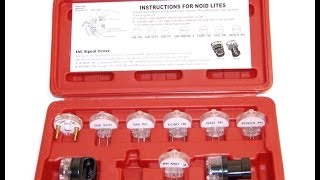
- A simple 'noid light' test can quickly tell you if the injector is receiving a signal from the computer, helping to distinguish between a part failure and a wiring/PCM problem.
- If you have multiple injector codes (e.g., P0204, P0206) or a bank-specific code like P2149, the problem is more likely to be a systemic issue like the wiring harness, a shared ground connection, or the PCM itself.
What's Unique About the 2009-2010 Saturn VUE
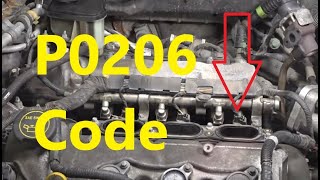
The 2009-2010 Saturn VUE was offered with two V6 engines, a 3.5L (LZ4) and a 3.6L (LLT), and this code only applies to them. These engines were shared across many GM vehicles. A key document is Technical Service Bulletin (TSB) #PIP4924D, issued for the 2009 model, which includes P0206 and a wide range of other injector codes. This TSB specifically points to the engine wiring harness chafing against engine components (like the intake plenum or valve cover bolts) as a potential cause. This elevates the likelihood of a wiring issue beyond a simple isolated injector failure 🎬 Watch: Overview of common causes and fixes for code P0206 and makes a thorough harness inspection a critical first step.
Diagnostic Flowchart
Tap your situation to follow the diagnostic path that matches what you're seeing on this vehicle.
Symptoms You May Notice
- Check Engine Light is on
- Rough or shaking idle.
- Engine misfires or stumbles, especially under load.
- Noticeable loss of power and poor acceleration.
- Reduced fuel economy.
- Engine may stall or be difficult to start.
- Replacing the spark plug or ignition coil for cylinder 6. While these parts can cause a misfire (P0306), they will not cause an injector circuit code like P0206, which is specifically an electrical fault.
Most Likely Causes
- Faulty Cylinder 6 Fuel Injector 🔴 High Probability Injectors can fail electrically (internal coil shorts/opens) or become clogged over time, a common issue for any vehicle of this age. The direct injection injectors on the 3.6L engine operate under very high pressure and can be sensitive to fuel quality.
How to confirm: Swap the cylinder 6 fuel injector with an injector from another cylinder (e.g., cylinder 4). Clear the codes and run the engine. If the trouble code changes to P0204, the injector is confirmed to be faulty. Before swapping, you can also test the injector's resistance with a multimeter; it should typically be between 11-18 ohms.
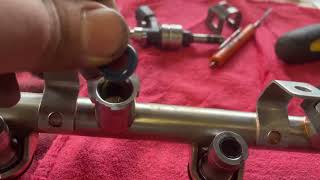
Typical fix: Replace the failed fuel injector. It is often recommended to replace all injectors on the same bank (or all six) at the same time, especially on higher mileage vehicles, to ensure balanced fuel flow.
Est. part cost: $60-$160 - Wiring or Connector Issue 🔴 High Probability TSB #PIP4924D specifically highlights that the engine wiring harness is known to rub against sharp edges on the engine, such as the corner of the cylinder head, intake plenum, or various brackets, causing wires to chafe and short or break. This is a very common cause for P0206 on this platform.
How to confirm: Visually inspect the wiring harness leading to the #6 injector, paying close attention to any points where it contacts the engine or brackets. Wiggle the harness while the engine is running to see if it affects the misfire. Use a 'noid light' to verify the PCM is sending a pulse signal 🎬 See this tutorial on how to test injectors with a noid light to the connector. If there is no signal, test the wiring for continuity between the injector connector and the PCM.
Typical fix: Repair the damaged section of wiring by soldering and heat-shrinking, or replace the faulty connector pigtail. If the harness is severely damaged, it may need to be replaced.
Est. part cost: $10-$30 for a pigtail, more for harness repair - Faulty Powertrain Control Module (PCM) ⚪ Low Probability While less common, the internal transistor (driver) in the PCM that controls the injector can fail. The existence of a TSB covering many injector codes makes this a slightly higher possibility than on other vehicles, but it should only be considered after ruling out the injector and wiring.
How to confirm: This is typically diagnosed by exclusion. If the injector and wiring are both confirmed to be good (e.g., noid light doesn't flash, but wiring has continuity), the PCM is the likely culprit. A professional may need to perform advanced diagnostics to confirm.
Typical fix: Replace and reprogram the PCM.
Est. part cost: $200-$500
Rare But Worth Checking
- Corroded Engine or PCM Ground Connection:
Diagnosis Steps
- Read the codes with an OBD-II scanner and confirm P0206 is present. Note any other codes, especially P0306 or other P020x codes.
- Locate cylinder 6. For the transverse-mounted 3.6L V6, the cylinders are 1-3-5 (rear bank, near firewall) and 2-4-6 (front bank, near radiator). So cylinder 6 is on the front bank, driver's side. For the 3.5L V6, the front bank is 2-4-6 and the rear bank is 1-3-5, so cylinder 6 is also on the front bank, driver's side.
- Visually inspect the wiring and connector going to the cylinder 6 fuel injector. Look for any signs of melting, corrosion, or loose connections. Carefully trace the harness back and check for chafing against the intake, valve covers, or brackets, as noted in TSB #PIP4924D.
- Disconnect the injector and test its resistance with a multimeter. Compare the reading to the manufacturer's specification (typically 11-16 ohms). An open circuit (infinite resistance) or a short (zero resistance) indicates a bad injector.
- Use a 'noid light' to test for a signal at the injector's electrical connector. With the engine running, the light should flash, indicating the PCM is sending a signal. If it doesn't flash, or stays on continuously, the problem is in the wiring or PCM.
- If the noid light flashes and the injector resistance is good, the injector may be mechanically stuck. If the noid light does not flash, proceed to test the wiring.
- To definitively test the injector, perform an injector swap. Move the cylinder 6 injector to another cylinder (e.g., cylinder 4) and the other cylinder's injector to the #6 position. Clear the codes and run the engine.
- If the code follows the injector (e.g., you now have a P0204), the injector is faulty and needs replacement.
- If the P0206 code returns, the problem lies in the wiring harness or the PCM. Re-inspect the harness for continuity from the injector connector to the PCM connector. If the wiring is good, the PCM is the most likely remaining cause.
Parts You'll Likely Need
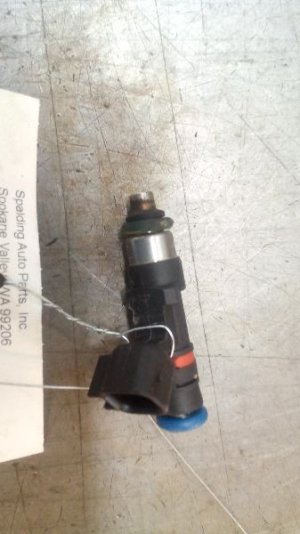
- Fuel Injector (3.6L V6)
(OEM #12638530)— This is a common failure point for a P0206 code. The internal electronics of the injector fail, causing an open or short in the circuit. The 2009 VUE uses the LLT engine, which corresponds to this part number.
Trusted brands: ACDelco, Bosch, Delphi
OEM price range: $60-$115
Aftermarket price range: $45-$80 - Fuel Injector (3.5L V6)
(OEM #12592648)— This is the most common failure point for a P0206 code on the 3.5L engine. The internal electronics of the injector fail, causing an open or short in the circuit.
Trusted brands: ACDelco, Delphi
OEM price range: $55-$165
Aftermarket price range: $40-$75 - Injector Connector Pigtail — If the wiring is damaged right at the connector, or the connector itself is broken, replacing the pigtail is the standard repair.
Trusted brands: ACDelco, Dorman
OEM price range: $20-$40
Aftermarket price range: $10-$25
Related Codes That Often Appear With This One
- P0306 — This code means 'Cylinder 6 Misfire Detected'. Since P0206 indicates a fuel delivery circuit problem for cylinder 6, a misfire is the direct result, and this code is almost always present as well.
- P0201, P0202, P0203, P0204, P0205 — The TSB #PIP4924D lists all injector codes together. If multiple codes are present, it strongly points to a systemic issue like a damaged wiring harness, a bad ground connection, or a failing PCM rather than multiple individual injector failures.
- P2149 — This code means "Fuel Injector Group 'B' Supply Voltage Circuit/Open". On the GM 3.6L V6, Bank 2 (the 'B' bank) includes cylinders 2, 4, and 6. If this code appears with P0206, it almost certainly confirms a wiring or PCM driver issue affecting the entire bank, not just a single injector.
Technical Service Bulletins (TSBs) & Recalls
- PIP4924D
Platform-Specific Known Issues
- A known issue documented in TSB #PIP4924D affects 2009 models, where a Service Engine Soon light and misfire can be caused by various injector circuit codes, including P0206. The bulletin specifically points to the engine wiring harness chafing on engine components, leading to an open or shorted circuit.
- On the 3.6L V6, accessing the rear bank of injectors (1, 3, 5) requires removing the intake manifold, which is a labor-intensive job. Fortunately, cylinder 6 is on the more accessible front bank.
Mechanic-Grade Diagnostic Values
- Fuel Injector Coil Resistance (3.6L V6 LLT Direct Injection) — expected: 1.5 to 1.6 ohms. Failure: A reading near zero ohms indicates a shorted injector; a significantly higher or infinite reading indicates an open circuit.
- Fuel Injector Coil Resistance (3.5L V6 LZ4 Port Injection) — expected: 11 to 18 ohms. Failure: A reading outside this range, or one that differs significantly from the other injectors, points to a faulty injector.
- Low-Side Fuel Pressure (Key On, Engine Off) — expected: 345-414 kPa (50-60 psi). Failure: Pressure below 345 kPa (50 psi) may indicate a weak fuel pump or a leak in the low-pressure system.
- Injector Circuit Voltage (KOEO) — expected: Approximately 12V (Battery Voltage). Failure: Voltage below 11.5V at the injector connector's power feed wire suggests excessive resistance or a wiring issue upstream.
Scan Tool Commands That Help
- GM Tech 2 / GDS2: Injector Balance Test — To identify a mechanically clogged or leaking injector, rather than an electrical fault. The tool individually fires each injector and measures the corresponding drop in fuel rail pressure. If the pressure drop for cylinder 6 is significantly different from the others (typically outside a 1.5-3 psi variance), the injector is mechanically faulty.
- GM Tech 2 / GDS2: Cylinder Power Balance Test — To confirm the impact of the cylinder 6 fault. The scan tool deactivates the cylinder 6 injector while the engine is running. If there is no change in engine idle speed or smoothness, it confirms cylinder 6 was not contributing power, reinforcing the diagnosis of a fault in that cylinder's fuel or ignition system.
Wiring & Ground Locations
- G103 / G104 — Primary engine-to-chassis grounds, typically located on the engine block or bolted to the back of a cylinder head.. A loose or corroded main engine ground can introduce electrical noise and voltage drops, causing erratic behavior in sensor readings and actuator circuits, including the injector drivers in the ECM. One source notes G103 can sometimes be fastened directly to the ECM case.
- ECM Connector X1 — The main connector on the Engine Control Module (ECM), which is typically mounted on the valve cover or elsewhere in the engine bay.. This connector contains the pins for the injector control circuits. For the 3.6L LLT, the high and low side driver wires for each injector terminate here. Damage or corrosion at this connector can cause a P0206 code.
OEM Part Supersession History
12611545, 12632255→12638530, which was later superseded by 12669384— Standard part evolution for improved reliability, material changes, or manufacturing efficiency.
Heads up: None noted. The newer part numbers are considered direct, backward-compatible replacements for the 3.6L V6 (LLT) engine. Always use the latest available part number for replacement.
Model Year Variations Within This Range
- 2009-2010: The primary difference is the V6 engine offering: the 3.5L V6 (LZ4) is a port-injected pushrod engine, while the 3.6L V6 (LLT) is a direct-injected DOHC engine. Injector resistance values, part numbers, and service procedures (like intake removal for access) are completely different between the two.
- 2010: While a Tech 2 scan tool works on both model years, a 2010 model is more likely to be diagnosed at a dealership using the newer GDS2 (Global Diagnostic System 2) software, which became standard for GM around that time.
Helpful Videos
Used OEM Parts in Stock

New Aftermarket Parts Available


The information in this article is provided for general reference and educational purposes only. Vehicle specifications, procedures, and part compatibility can vary by production date, trim level, and region. Always consult your vehicle's factory service manual and verify part numbers before purchasing or performing repairs. Safety-critical components such as airbags, seat belts, and braking systems should be installed by a qualified professional.
- Saturn VUE:
- 🎬 Helpful Videos
- 🛍️ Shop This Part
- What's Unique About the 2009-2010 Saturn VUE
- Diagnostic Flowchart
- Symptoms You May Notice
- Most Likely Causes
- Rare But Worth Checking
- Diagnosis Steps
- Parts You'll Likely Need
- Related Codes That Often Appear With This One
- Technical Service Bulletins (TSBs) & Recalls
- Platform-Specific Known Issues
- Mechanic-Grade Diagnostic Values
- Scan Tool Commands That Help
- Wiring & Ground Locations
- OEM Part Supersession History
- Model Year Variations Within This Range
- 🎟️ Get 5% Off