

P0206 on 1998-2005 Dodge RAM 3500: Injector Circuit Causes and Fixes
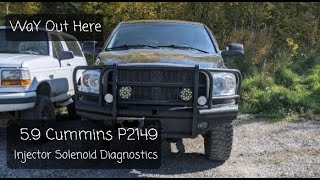
On 1998-2005 Dodge RAM 3500s with the 5.9L Cummins diesel, P0206 is most often caused by a faulty under-valve-cover injector wiring harness, not the injector itself. Before replacing the expensive injector, inspect the wiring harness that passes through the valve cover gasket, as it's a known failure point mentioned in manufacturer bulletins. For 3rd Gen (2003-2005) models, this is often accompanied by code P2149, which shuts down cylinders 4-6.
- P0206 is an electrical circuit code for the #6 fuel injector.
- On 5.9L Cummins engines, the most probable cause is a bad under-valve-cover wiring harness, not the injector itself.
- Always test the wiring for continuity and resistance before spending money on a new injector.
- The #6 cylinder is the one closest to the cab/firewall.
- Replacing the harness requires removing the valve cover, so plan on replacing the gasket as well.
What's Unique About the 1998-2005 Dodge RAM 3500
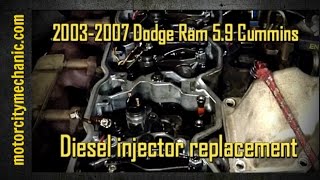
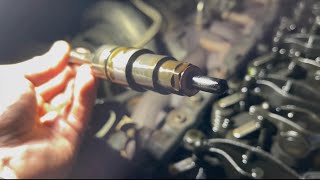
This year range covers two distinct generations of the 5.9L Cummins diesel. On the 2nd Gen (1998.5-2002) 24-valve engine, the wiring for the injectors passes through the valve cover gasket, a design prone to failure from heat and oil saturation. A Technical Service Bulletin (TSB 9002688) 🎬 See this walkthrough for replacing 1998-2002 24-valve injectors. specifically advises checking this harness before replacing an injector. For the 3rd Gen (2003-2005) common rail engine, while the injector itself can fail, there are three separate under-cover harnesses that are also a common culprit. For both generations, assuming the injector is bad without checking the wiring first is a frequent and costly misdiagnosis.
Diagnostic Flowchart
Tap your situation to follow the diagnostic path that matches what you're seeing on this vehicle.
Generation note: The 1998-2005 range covers the end of the 2nd Generation (1998.5-2002) and the start of the 3rd Generation (2003-2005) Ram. The 2nd Gen uses the 24-valve 'ISB' Cummins with a VP44 injection pump, where the injector harness is integrated into the valve cover gasket. The 3rd Gen uses a common-rail fuel system with a CP3 pump and three separate under-cover injector harnesses (one for every two cylinders). While the cause is often similar (wiring), the specific parts are different. A significant change occurred mid-2004, creating an '04.5' model with different injectors and engine programming.
Symptoms You May Notice
- Check Engine Light is on
- Rough, unstable idle
- Engine misfire, felt as a shake or stumble
- Loss of engine power and poor acceleration
- Difficulty starting the engine
- Increased fuel consumption
- Black or white smoke from the exhaust
- Engine may go into 'limp mode'
- Replacing the fuel injector before thoroughly testing the under-valve-cover wiring harness. The TSB for this platform explicitly warns against this.
- Replacing the injector without also replacing the high-pressure connector tube, which can lead to high-pressure fuel leaks.
- Assuming an aftermarket tuner or programmer is not the cause. Some piggyback tuners can cause electrical issues and trigger false injector codes.
Most Likely Causes
- Faulty Under-Valve-Cover Injector Wiring Harness 🔴 High Probability On 2nd Gen (1998.5-2002) models, the harness is part of the valve cover gasket and degrades from constant exposure to hot engine oil and vibration. On 3rd Gen (2003-2005) models, there are three separate harnesses under the valve cover that can fail similarly. This is supported by TSB #9002688, which warns against replacing injectors before checking the harness. The harness for cylinders 5-6 is a common point of failure.
How to confirm: Perform a resistance check on the injector circuit from the main engine connector. If the reading is out of spec (usually looking for an open circuit/infinite resistance), remove the valve cover and test the harness directly. Check for continuity on the high and low side driver wires; resistance should be less than 10 ohms. Also, check for oil saturation and brittle wires at the injector connectors.
Typical fix: Replace the faulty section of the under-cover injector harness. On 2nd Gen models, this may involve replacing the entire valve cover gasket assembly. On 3rd Gen models, you can replace the specific harness for cylinders 5-6 (Part No. 3966805).
Est. part cost: $25-$75 - Failed Fuel Injector Solenoid 🟡 Medium Probability The electronic solenoid on top of the fuel injector can fail internally, creating an open or shorted circuit. This is a common failure on high-mileage diesel engines and can happen without warning. On some models, it is possible to replace just the solenoid without removing the entire injector body.
How to confirm: Disconnect the injector connector and measure the resistance across the two terminals on the injector itself. A healthy Cummins injector should have a resistance of less than 1.0 ohm and greater than 0 ohms. A reading of infinite ohms (OL) indicates an open circuit and a bad injector solenoid. A definitive test is to swap the #6 injector with an adjacent one (e.g., #5) and see if the code follows (changes to P0205).
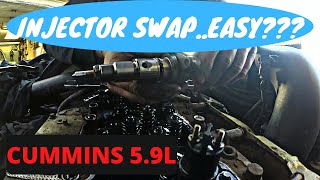
Typical fix: Replace the cylinder #6 fuel injector. On some models, it is possible to replace just the solenoid, but it is often sold with the injector. It is highly recommended to also replace the high-pressure connector tube to prevent leaks. Many shops recommend replacing all injectors on the affected bank (4, 5, 6) at the same time.
Est. part cost: $250-$600 - Damaged or Corroded Connectors ⚪ Low Probability The main pass-through connector on the valve cover or the individual injector connector can become loose, corroded, or filled with oil, causing an intermittent connection. The terminal nuts on the injector solenoid itself can also loosen over time.
How to confirm: Visually inspect the connectors for bent pins, corrosion, or oil contamination. Wiggle the connector while the engine is running to see if it affects the misfire. Ensure the injector terminal nuts are torqued to spec (typically around 8.8 in-lbs).
Typical fix: Clean the connectors with electrical contact cleaner. If the connector or pins are damaged, replace the connector pigtail. Tighten any loose connections.
Est. part cost: $15-$40
Rare But Worth Checking
- Damaged Engine Wiring Harness: The main harness between the ECM and the valve cover pass-through connector can get chafed or damaged, causing a short or open circuit. This is less common than the under-cover harness failing but should be checked if other tests pass. A continuity test from the ECM connector to the valve cover connector should show less than 10 ohms resistance.
- Faulty Powertrain Control Module (PCM/ECM): This is the least likely cause. The internal driver circuit for the #6 injector can fail. This should only be considered after all wiring and the injector itself have been proven to be good. This is often suspected when multiple injector codes appear for one bank (e.g., P0204, P0205, P0206) but the harness and injectors test good. One owner confirmed a PCM replacement fixed a P0206 after replacing the injector and verifying wiring continuity did not solve the issue.
Diagnosis Steps
- Confirm the code with an OBD-II scanner. Note any other codes present, especially P0306 or P2149.
- Locate cylinder #6. On the inline-6 Cummins, it is the rearmost cylinder, closest to the firewall.
- Inspect the main engine harness connector that leads to the injectors (rear connector on 3rd Gen). Check for damage or loose connections.
- Perform an injector resistance test from the ECM connector or valve cover pass-through connector. Using a multimeter and a wiring diagram, measure the resistance of the cylinder 6 injector circuit. An open circuit (infinite resistance) or a short points to a problem.
- If the external wiring test fails or is inconclusive, remove the valve cover to access the under-cover harness and the injector itself.
- As per TSB #9002688, carefully inspect the under-cover wiring harness for signs of brittleness, chafing, or oil saturation.
- Disconnect the wiring from the #6 injector and measure the resistance directly at the injector's two terminals. For a Cummins injector, the reading should be very low, typically under 1 ohm but greater than 0. If it's open (infinite), the injector solenoid is bad.
- If the injector tests good, the fault is almost certainly in the under-cover wiring harness. Test for continuity from the injector pigtail back to the pass-through connector. Resistance should be less than 10 ohms.
- A definitive but more labor-intensive test is to swap the #6 injector with the #5 injector. Clear the codes and run the engine. If the code changes to P0205, the injector is faulty. If P0206 returns, the problem is in the wiring to cylinder #6.
- If both the injector and all wiring test good, the issue may be in the main engine harness or, rarely, the ECM itself.
Parts You'll Likely Need
- Under-Cover Fuel Injector Wiring Harness (Cyl 5-6)
(OEM #3966805)— This is the most common failure point for a P0206 code on 2003-2005 5.9L Cummins engines, as the harness degrades from heat and oil. Three are used per engine.
Trusted brands: Cummins (OE), Dorman
OEM price range: $40-$60
Aftermarket price range: $25-$40 - Fuel Injector
(OEM #Bosch: 0445120238 (2004.5-2005), Bosch: 0986435503 (2003-2004))— If the injector solenoid has failed (tested as an open circuit), the entire injector must be replaced. This is the second most likely cause after wiring. There are different part numbers for early vs. late 3rd Gen models, with a split in mid-2004.
Trusted brands: Bosch (OEM), Alliant Power
OEM price range: $250-$600
Aftermarket price range: $150-$400
Related Codes That Often Appear With This One
- P0306 — P0306 means 'Cylinder 6 Misfire Detected.' An electrical fault in the injector circuit (P0206) will prevent proper fueling, which directly causes a misfire in that cylinder.
- P2149 — On 3rd Gen Cummins engines (2003-2005), this code means 'Fuel Injector Group 'B' Supply Voltage Circuit/Open.' Cylinders 4, 5, and 6 are in Group B. A severe fault in the #6 injector circuit can cause the ECM to shut down the entire bank to protect the driver circuit, triggering P2149 along with P0204, P0205, and P0206. This is a very common combination of codes for this issue.
Technical Service Bulletins (TSBs) & Recalls
- TSB #9002688: Published Feb 13, 2013, this bulletin explicitly warns technicians: 'Before replacing injectors for Diagnostic Trouble Codes P0201, P0202, P0203, P0204, P0205, and/or P0206, please make sure that the wiring loom and/or connector in the valve cover gasket is not the root cause to your concern.' It also mentions ensuring terminal nuts are torqued properly.
Platform-Specific Known Issues
- A manufacturer Technical Service Bulletin (TSB #9002688) exists specifically warning technicians to check the wiring loom and connector in the valve cover gasket before replacing fuel injectors for code P0206. [⭐]
Mechanic-Grade Diagnostic Values
- 5.9L Cummins Fuel Injector Solenoid Resistance — expected: Greater than 0 Ohm and less than 1.0 Ohm. Failure: A reading of infinite resistance (OL) indicates an open circuit. A reading of 0 ohms indicates a short.
- Injector Wiring Harness Continuity (ECM to Injector Connector) — expected: Less than 10 Ohms. Failure: Resistance greater than 10 Ohms points to an open or high-resistance in the wiring harness.
- Injector Terminal Nut Torque — expected: 8.8 in-lbs (0.99 Nm). Failure: Loose nuts can cause an open circuit (P0206). Over-tightening can break the injector solenoid stud.
- Injector Circuit Short to Ground (at ECM connector) — expected: Greater than 10k Ohms. Failure: Resistance below 10k Ohms indicates a short to ground in the injector harness.
Scan Tool Commands That Help
- DRB III / StarSCAN / Professional Scan Tool: Injector Kill / Cutout Test — This function allows a technician to individually disable each fuel injector while the engine is running. When cylinder #6 is disabled, if there is no change in engine idle quality, it confirms that cylinder #6 was not contributing, which supports the P0206 diagnosis. This helps isolate the fault to a specific cylinder.
- Professional Scan Tool: Noid Light Test — While not a scan tool command, a Noid light is used in conjunction with it. After confirming the code, a Noid light is plugged into the injector harness connector. When the engine is cranked, the light should flash, confirming the ECM is sending the pulse signal. If it does not flash, the issue is in the wiring or ECM; if it does flash, the issue is likely the injector itself.
Wiring & Ground Locations
- G102 — Battery Ground - Left Front Chassis, near the battery.. A poor main chassis ground can cause a host of floating voltages and unpredictable electrical issues in the engine management system, potentially triggering false sensor or circuit codes.
- G100 / G101 — Battery Ground - Left Front of Engine Block.. This is the primary ground for the engine block itself. A compromised connection here can affect the ground path for all engine-mounted sensors and components, including the injectors.
- ECM Connector C1 (3rd Gen) — This is one of the main connectors on the Engine Control Module.. The driver circuits for the injectors originate here. Pinouts are required to test continuity back to the injectors without having to remove the valve cover initially. For example, on a 6.7L (similar architecture), the high and low side driver circuits for injector #6 are K658 and K58 respectively.
Real Owner Repair Stories
- RamForumz user (2003 Dodge Ram 1500 5.9L) — P0206 and P0306 codes, rough running.
❌ Tried (didn't work) Replaced fuel injector #6, Replaced spark plugs and wires, Swapped coil packs, Checked wiring continuity from injector to PCM (tested good)
✅ What actually fixed it The final solution was replacing the Powertrain Control Module (PCM). The user noted that even though the wiring tested good, the driver circuit inside the original PCM for that injector had failed.
OEM Part Supersession History
Bosch: 0445120032, 0445120114, 0445120208→Bosch: 0445120238, Mopar: R5135790AF— Standard part evolution, likely for improved durability or performance.
Heads up: The early 2003-2004 injectors (e.g., 0986435503) have a wider spray pattern (8 holes) and are not directly interchangeable with the 2004.5-2005 injectors (e.g., 0445120238) which have a narrower spray pattern (5 holes) designed for a different piston bowl shape. Using the wrong injector can lead to poor performance, high EGTs, and potential piston damage.Mopar: 5086877AA (ID only)→Cummins: 3966805— Part number consolidation and direct sourcing from the component manufacturer (Cummins).
Heads up: This is the under-cover harness for 2003-2005 models. Three are required per engine. Aftermarket versions are available but may have lower quality crimps or heat resistance.
Model Year Variations Within This Range
- 1998.5-2002: These 2nd Gen trucks use the 'ISB' 24-valve engine with a VP44 injection pump. The injector wiring is integrated into a single large valve cover gasket assembly, which is a common failure point.
- 2003-2004 (Early 3rd Gen): These trucks use a common-rail system with a CP3 pump and 305hp 'HO' engines. They use injectors with an 8-hole nozzle and a wider spray pattern (Bosch P/N 0986435503). The ECM uses two injection events per cycle.
- 2004.5-2005 (Late 3rd Gen): Known as the 'Cummins 600' engine, these have 325hp. The key difference is a change to injectors with a 5-hole nozzle and a narrower spray pattern (Bosch P/N 0445120238) to match a redesigned piston bowl. The ECM programming includes a third injection event for emissions purposes, and they have a catalytic converter. These changes make the injectors incompatible with earlier models.
Helpful Videos

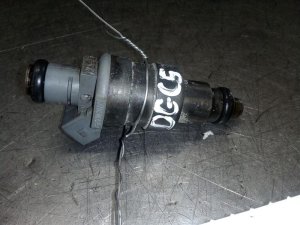
Used OEM Parts in Stock

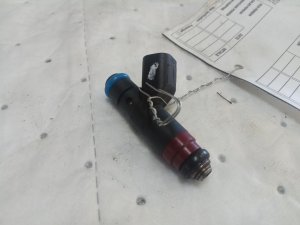


New Aftermarket Parts Available


The information in this article is provided for general reference and educational purposes only. Vehicle specifications, procedures, and part compatibility can vary by production date, trim level, and region. Always consult your vehicle's factory service manual and verify part numbers before purchasing or performing repairs. Safety-critical components such as airbags, seat belts, and braking systems should be installed by a qualified professional.
- Dodge RAM 3500:
- 🎬 Helpful Videos
- 🛍️ Shop This Part
- What's Unique About the 1998-2005 Dodge RAM 3500
- Diagnostic Flowchart
- Symptoms You May Notice
- Most Likely Causes
- Rare But Worth Checking
- Diagnosis Steps
- Parts You'll Likely Need
- Related Codes That Often Appear With This One
- Technical Service Bulletins (TSBs) & Recalls
- Platform-Specific Known Issues
- Mechanic-Grade Diagnostic Values
- Scan Tool Commands That Help
- Wiring & Ground Locations
- Real Owner Repair Stories
- OEM Part Supersession History
- Model Year Variations Within This Range
- 🎟️ Get 5% Off