

P0206 on 2010-2014 Chevrolet Equinox V6: Injector Circuit Malfunction Causes and Fixes
P0206 on a V6 Equinox indicates a problem with the cylinder 6 fuel injector circuit. The most common causes are a failed fuel injector or a wiring issue. Expect to pay $50-$120 for a new injector, with DIY replacement being moderately difficult.
- P0206 on a 2010-2014 Equinox means there is an electrical problem with the fuel injector in cylinder 6, which is only present on the V6 engine models.
- Symptoms include a rough running engine, a flashing check engine light, and reduced power.
- The most likely causes are a bad fuel injector or a damaged wire/connector leading to it. A GM TSB specifically points to harness chafing as a known issue.
- A simple diagnostic step is to swap the cylinder 6 injector with another one to see if the trouble code follows the injector.
- Ignoring this code can lead to damage to your catalytic converter, a significantly more expensive repair.
What's Unique About the 2010-2014 Chevrolet EQUINOX
For the 2010-2014 Equinox, this code is exclusive to the optional 3.0L and 3.6L V6 engines. General Motors issued a Technical Service Bulletin (TSB #PIP4924D) that includes P0206 among a long list of injector circuit codes for these and many other GM vehicles. This TSB specifically directs technicians to inspect the fuel injector wiring harness for chafing or internal wire breaks, with common rub spots being against the intake plenum, valve cover bolts, fuel lines, and the side of the cylinder head. This known vulnerability makes a thorough wiring inspection a critical first step, not just an afterthought.
Diagnostic Flowchart
Tap your situation to follow the diagnostic path that matches what you're seeing on this vehicle.
Symptoms You May Notice
- Check Engine Light is on (may be flashing)
- Rough idle or engine stalling
- Engine misfiring, which may feel like sputtering or shaking
- Reduced engine power and poor acceleration
- Decreased fuel economy
- A noticeable smell of gasoline
- Replacing the spark plug or ignition coil for cylinder 6. While a P0306 (Cylinder 6 Misfire) code can be caused by these parts, a P0206 code points specifically to an electrical issue in the injector circuit. However, a loose or faulty ignition coil connection can sometimes cause erratic signals that might be misinterpreted, so checking connections is always wise.
Most Likely Causes
- Failed Fuel Injector 🔴 High Probability Gasoline Direct Injection (GDI) injectors, like those in the 3.0L and 3.6L V6 engines, operate under high pressure and heat, making them susceptible to internal failure or clogging over time. The internal coil winding can fail, creating an open circuit.
How to confirm: Swap the cylinder 6 injector with an injector from another cylinder (e.g., cylinder 4). If the trouble code changes to P0204, the injector is faulty. You can also test the injector's internal resistance with a multimeter. For the 3.6L LFX engine, the expected resistance is approximately 1.5 - 1.6 Ohms. A reading significantly outside this range or showing an open circuit (OL) confirms a bad injector.
Typical fix: Replace the faulty fuel injector. It is often recommended to replace all injectors on the same bank (or all six) if they are high mileage, as they have been subjected to the same conditions.
Est. part cost: $50 - $150 - Wiring Harness or Connector Issue 🟡 Medium Probability As noted in GM TSB #PIP4924D, the injector wiring harness is known to be susceptible to rubbing through, chafing, or developing internal breaks. Common chafe points are against the intake plenum, valve cover bolts, and fuel lines, leading to an open or shorted circuit.
How to confirm: Visually inspect the wiring harness leading to the cylinder 6 injector for any signs of damage, melting, or corrosion, paying close attention to the areas mentioned in the TSB. Check the connector for a secure fit and clean contacts. Use a multimeter to perform a continuity test on the wires between the injector connector and the PCM.
Typical fix: Repair the damaged section of wire or replace the injector connector pigtail.
Est. part cost: $10 - $30
Rare But Worth Checking
- Faulty Powertrain Control Module (PCM): This is the least likely cause. The internal driver circuit in the PCM that controls the injector can fail, but all other possibilities should be exhausted before condemning the PCM. This is a last-resort diagnosis after the injector and wiring have been proven to be good.
Diagnosis Steps
- Confirm the code using an OBD-II scanner. Note any other codes present, especially P0306 or P0300.
- Locate cylinder 6. On the transverse-mounted 3.0L and 3.6L V6 engines in the Equinox, the front bank (closest to the radiator) contains cylinders 2, 4, and 6. Cylinder 6 is on the driver's side of the front bank. The rear bank (closest to the firewall) is 1, 3, 5.
- Inspect the wiring. Following TSB #PIP4924D, carefully inspect the injector wiring harness for chafing against the intake, valve covers, or fuel lines. Check the connector at the injector for damage or a loose fit.
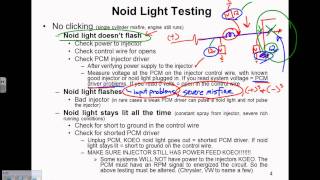
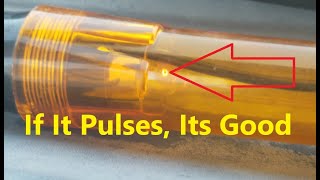
- Use a noid light. Disconnect the injector harness and plug in a noid light. 🎬 Watch: How to test a fuel injector circuit with a noid light. Start the engine. A consistently flashing light indicates the PCM and wiring are sending the signal to fire the injector, pointing to a bad injector. A light that is off, or stays on continuously, points to a wiring or PCM problem.
- Test the injector resistance. Disconnect the injector and use a multimeter set to Ohms. For the 3.6L LFX, a good injector should read around 1.5-1.6 Ohms. An open circuit (OL) or a reading far from spec indicates a failed injector.
- Swap injectors. If the injector resistance test is inconclusive, swap the cylinder 6 injector with one from another cylinder (e.g., cylinder 4). Clear the codes and run the engine. If the code moves to P0204, the injector is confirmed bad.
- Test the circuit. If the noid light test fails, use a multimeter to check for 12-volt power on one wire of the injector connector (with key on, engine off). Then, check the continuity of the other wire (the control wire) from the injector connector back to the PCM connector 🎬 See this guide on testing injector circuits with a meter. to ensure it's not broken.
- If wiring and the injector are confirmed good, the issue may be the PCM, which should be diagnosed by a professional.
Parts You'll Likely Need
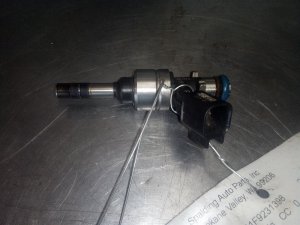
- Fuel Injector
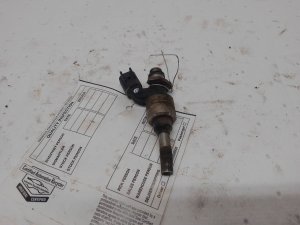
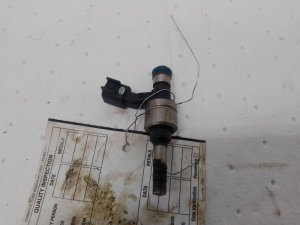
(OEM #12634126 (Note: This part may supersede 12642128))— This is the most common failure point for a P0206 code, where the injector's internal coil has failed.
Trusted brands: ACDelco (GM OE), Bosch, Standard Motor Products
OEM price range: $90-$150
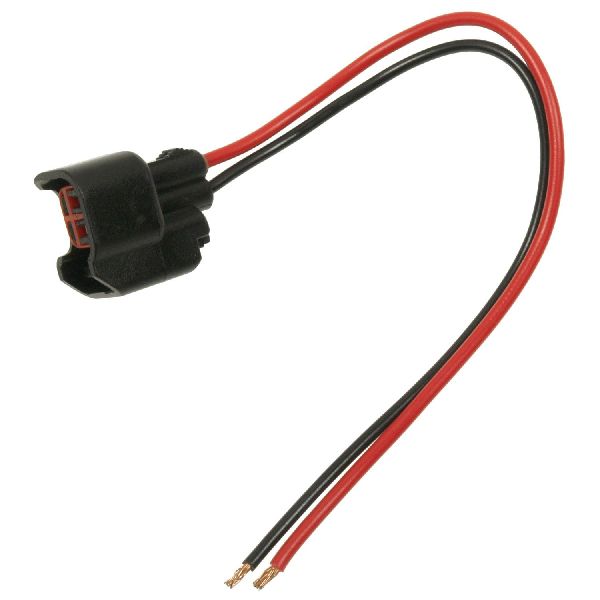
Aftermarket price range: $50-$100 - Fuel Injector Connector Pigtail — If the wiring connector at the injector is brittle, cracked, or has a poor connection due to harness chafing, replacing the pigtail is the proper repair.
Trusted brands: Dorman, ACDelco, Carquest Premium
OEM price range: $20-$40
Aftermarket price range: $10-$25
Related Codes That Often Appear With This One
- P0306 — P0306 means "Cylinder 6 Misfire Detected." Since P0206 causes the cylinder 6 injector to malfunction, that cylinder can't fire properly, which will almost always trigger a P0306 code as well.
- P0300 — P0300 is a "Random/Multiple Cylinder Misfire Detected" code. It can appear with P0206 if the misfire is severe enough to affect overall engine balance and crankshaft speed, confusing the PCM's single-cylinder misfire detection.
- P0200 — P0200 is a general "Injector Circuit Malfunction" code. It may appear alongside P0206 if the electrical fault is intermittent or if the PCM detects a problem with the injector bank's power supply.
Technical Service Bulletins (TSBs) & Recalls
- PIP4924D: Service Engine Soon Malfunction Indicator Lamp on and a misfire, with possible injector DTCs P0201-P0206 and others. The bulletin advises inspecting the fuel injector wiring harness for rubbing or internal opens at specific locations.
- 10-06-01-003B: While not directly for P0206, this TSB warns against using aftermarket oil filters on these engines, as filter failure can lead to engine damage that might present with various codes and noises. Using a quality OEM filter is crucial for engine health.
Platform-Specific Known Issues
- GM Technical Service Bulletin #PIP4924D is highly relevant, covering a wide range of GM vehicles with the HFV6 engine family, including the 2010-2014 Equinox. It specifically calls out injector codes like P0206 and directs technicians to look for harness chafing against engine components like the intake plenum and valve cover bolts. This indicates a known pattern of failure due to harness routing and vibration.
Mechanic-Grade Diagnostic Values
- Fuel Injector Resistance (2013-2014 3.6L LFX V6) — expected: 1.2 - 1.8 Ohms. Failure: A reading of OL (open), near 0 (short), or significantly outside this range indicates a failed injector. Note this is a low-impedance GDI injector.
- Fuel Injector Resistance (2010-2012 3.0L LFW V6) — expected: Approximately 12 Ohms. Failure: A reading of OL (open), near 0 (short), or a significant deviation from 12 Ohms indicates a failed injector. Note this is a high-impedance port injector.
- Injector Power Wire Voltage (Key On, Engine Off) — expected: ~12 Volts (Battery Voltage). Failure: Low or no voltage points to a problem in the power supply circuit (e.g., fuse, relay, or wire from fuse block), not the PCM driver or injector itself.
- Injector Pulse Width (at idle, via scan tool) — expected: 2 - 4 milliseconds (ms). Failure: A value of 0 ms on cylinder 6 while other cylinders show normal pulse width indicates the PCM is not commanding the injector to fire.
- Injector Circuit Voltage Spike (via oscilloscope) — expected: 60 - 80 Volts. Failure: A missing or significantly lower voltage spike upon injector closing can indicate a faulty injector coil or a problem in the control circuit.
Scan Tool Commands That Help
- GDS2 or equivalent professional scan tool: Fuel Injector Balance Test — This bidirectional command allows the technician to pulse a single injector and monitor the fuel pressure drop. It's used to confirm if an injector is clogged or flowing differently than the others, which helps differentiate a mechanical injector issue from a purely electrical one.
- GDS2 or equivalent professional scan tool: Injector Activation / Buzz Test — This is a simple active test that commands the injector to open and close, creating an audible 'click' or 'buzz'. If no sound is heard, it points towards a dead injector or a complete lack of power/ground, helping to quickly confirm a non-functional component.
Wiring & Ground Locations
- G112 — On the engine block, lower left front, potentially under the alternator and above the A/C compressor.. This is a primary ground location for the Powertrain Control Module (PCM) on some Equinox engines. A poor connection here can cause erratic behavior and incorrect readings for multiple engine sensors and actuators, including the fuel injector circuits.
- Injector Connector Terminals — At the electrical connector for each fuel injector.. GM bulletin PIP5094A warns that engine vibrations can cause 'fretting' (a form of corrosion appearing as black dust) between the injector terminal and the connector pin. This creates high resistance that may be intermittent and missed by a simple continuity test. Checking for proper pin tension is a critical step before replacing any parts.
OEM Part Supersession History
12642128→12634126— Standard part update/revision by the manufacturer.
Heads up: Applies to the 3.6L LFX V6 engine (2013-2014).
Model Year Variations Within This Range
- 2010-2012: These models use the 3.0L LFW V6 engine with high-impedance (~12 Ohm) port fuel injectors. The correct OEM injector is typically ACDelco part #217-3449.
- 2013-2014: These models use the 3.6L LFX V6 engine with low-impedance (~1.2-1.8 Ohm) Gasoline Direct Injection (GDI) injectors. The correct OEM part is #12634126. A common misdiagnosis is mistaking the low resistance of a healthy GDI injector for a short circuit. Additionally, GM Preliminary Information bulletin #PI1067 notes a specific harness chafe point near the ECM bracket for these years.
Helpful Videos
Used OEM Parts in Stock
New Aftermarket Parts Available


The information in this article is provided for general reference and educational purposes only. Vehicle specifications, procedures, and part compatibility can vary by production date, trim level, and region. Always consult your vehicle's factory service manual and verify part numbers before purchasing or performing repairs. Safety-critical components such as airbags, seat belts, and braking systems should be installed by a qualified professional.
- Chevrolet EQUINOX:
- 🎬 Helpful Videos
- 🛍️ Shop This Part
- What's Unique About the 2010-2014 Chevrolet EQUINOX
- Diagnostic Flowchart
- Symptoms You May Notice
- Most Likely Causes
- Rare But Worth Checking
- Diagnosis Steps
- Parts You'll Likely Need
- Related Codes That Often Appear With This One
- Technical Service Bulletins (TSBs) & Recalls
- Platform-Specific Known Issues
- Mechanic-Grade Diagnostic Values
- Scan Tool Commands That Help
- Wiring & Ground Locations
- OEM Part Supersession History
- Model Year Variations Within This Range
- 🎟️ Get 5% Off