

P0206 on 2010-2014 Cadillac SRX: Injector Circuit Malfunction Cylinder 6 Causes and Fixes
This code means there's an electrical problem with the fuel injector circuit for cylinder 6. The most likely causes are a failed fuel injector or a bad wiring connector. Replacement is costly at a shop due to high labor, as the intake manifold must be removed to access the rear bank of cylinders.
- P0206 on a 2010-2014 SRX points to an electrical fault with the cylinder 6 fuel injector, not an ignition or mechanical problem.
- The most common fix is replacing the cylinder 6 fuel injector, but the wiring and connector should be tested first.
- This repair is considered very difficult for a DIYer due to the extremely limited access to cylinder 6 on the rear of the engine.
- Ensure you purchase the correct fuel injector, as the part number is different for the 2010-2011 3.0L V6 and the 2012-2014 3.6L V6.
- Due to the high labor cost, consider replacing all three rear injectors at once to avoid future repairs.
What's Unique About the 2010-2014 Cadillac SRX
On the second-generation Cadillac SRX, this code is particularly notable due to the difficult labor involved. Both the 3.0L and 3.6L V6 engines are mounted transversely, making access to the rear bank of cylinders (which includes cylinder 6) extremely tight. Mechanics and DIYers report that replacing the rear bank of injectors requires removing the upper intake manifold. Furthermore, GM issued a Technical Service Bulletin (TSB #PIP4924D) that includes P0206, pointing to potential chafed or open fuel injector wiring harnesses as a known problem area for these vehicles and their platform-mates.
Diagnostic Flowchart
Tap your situation to follow the diagnostic path that matches what you're seeing on this vehicle.
Symptoms You May Notice
- Check Engine Light is on (may be flashing if the misfire is severe)
- Engine runs rough or shakes, especially at idle
- Noticeable loss of engine power and poor acceleration
- Reduced fuel economy
- Engine may hesitate or stumble
- Black smoke from the exhaust
- Hard starting condition
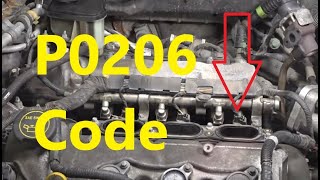
- Replacing spark plugs or ignition coils. While these can cause a misfire (P0306), they will not directly cause a P0206 injector circuit code. The P0206 code is specifically for the electrical integrity of the injector circuit. However, a user on YouTube with a P0206 found their issue was a loose ignition coil connector, 🎬 Watch why you should check connectors before replacing injectors. which suggests checking all related connections is a wise step.
Most Likely Causes
- Failed Cylinder 6 Fuel Injector 🔴 High Probability Fuel injectors are wear-and-tear components that can fail electrically (internal coil shorting or opening) over time. These direct injection (GDI) engines run at very high fuel pressures, which can contribute to injector wear.
How to confirm: After gaining access, test the injector's resistance with a multimeter. A common resistance range for fuel injectors is between 11 and 18 Ohms, but check the specific specification for your vehicle. A reading that is infinite (open) or very low (shorted) indicates a bad injector. Another method is to swap the cylinder 6 injector with another cylinder's injector (e.g., cylinder 5 on the front bank) and see if the trouble code follows the injector (e.g., changes to P0205).
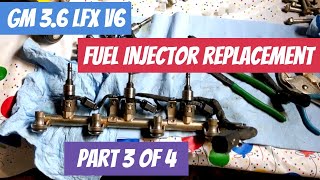
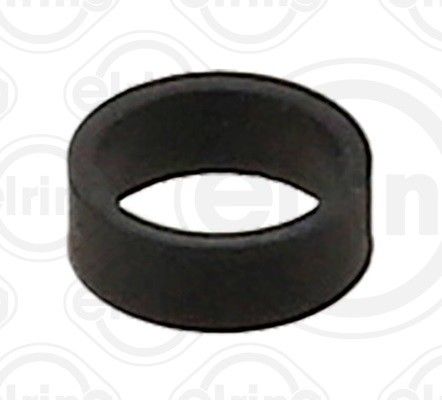
Typical fix: Replace the faulty fuel injector. Due to the high labor cost of removing the intake manifold to access the rear bank, it is strongly recommended to replace all three rear injectors (cylinders 2, 4, 6) and their seals at the same time. Many owners also replace the spark plugs while access is available.
Est. part cost: $50-$120 per injector - Wiring Harness or Connector Issue 🟡 Medium Probability TSB #PIP4924D specifically instructs technicians to inspect the fuel injector wiring harness for rubbing through or internal wire opens. Engine vibrations and heat can cause wires to break or the plastic connector locking tabs to become brittle and fail, leading to a poor connection.
How to confirm: Visually inspect the wiring harness leading to the cylinder 6 injector for any signs of damage, melting, or corrosion. Check the connector for a secure fit and clean contacts. Use a noid light to confirm that the ECM is sending a pulse signal to the injector connector. If the light flashes, the wiring and ECM are likely good; if it does not flash or stays on continuously, the problem is in the wiring or the ECM.
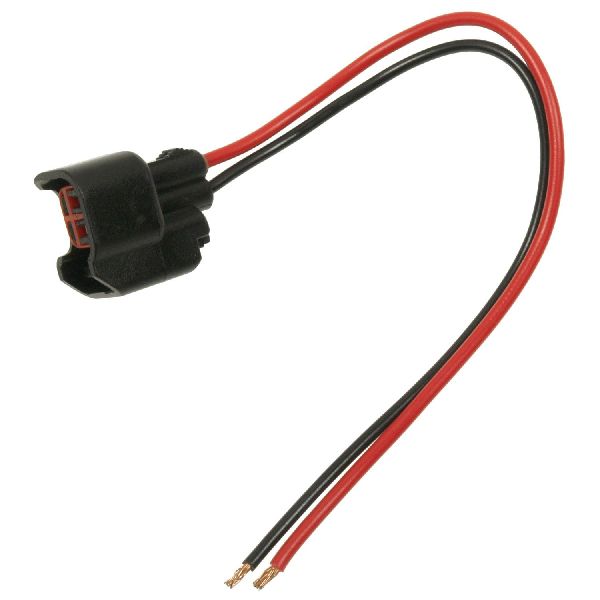
Typical fix: Repair the damaged section of the wiring harness or replace the injector's pigtail connector.
Est. part cost: $15-$40 for a connector pigtail
Rare But Worth Checking
- Faulty Engine Control Module (ECM): This is the least likely cause. The internal driver circuit for the injector can fail. Before condemning the ECM, all other possibilities (injector, wiring) must be exhaustively ruled out. One owner on a forum reported that after replacing injectors and coils, the issue was ultimately a bad ECM, which was the most expensive repair.
Diagnosis Steps
- Verify the code with an OBD-II scanner. Note any other codes present, especially P0306.
- Locate cylinder 6. On the transverse V6 in the SRX, the cylinders are numbered 1-3-5 on the front bank (near the radiator) and 2-4-6 on the rear bank (closest to the firewall). Cylinder 6 is on the driver's side, against the firewall.
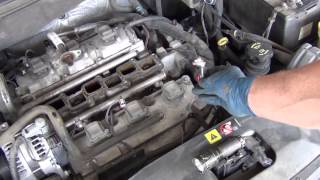
- Perform a preliminary check. Some owners have reported loose ignition coil connectors causing similar issues. Check all accessible connectors on the rear bank for a secure fit before proceeding.
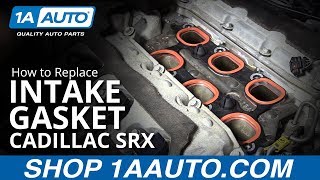
- To access the injector, the upper intake manifold must be removed. 🎬 Watch this step-by-step guide on removing the intake manifold. This is a complex job involving disconnecting various hoses, sensors, and the throttle body.
- Once the manifold is off, inspect the wiring and connector for the cylinder 6 fuel injector. Look for any obvious damage, corrosion, or loose connections. TSB #PIP4924D points to harness rub-through as a possibility.
- If the wiring looks good, disconnect the injector and plug in a 'noid light'. Have a helper crank the engine. The light should flash, indicating the ECM is sending a signal. If it doesn't flash or stays on continuously, the problem is in the wiring or the ECM.
- If the noid light flashes correctly, the problem is likely the injector itself. Turn off the vehicle.
- Use a multimeter set to Ohms (Ω) to measure the resistance across the two pins of the fuel injector. Compare this reading to an adjacent injector (e.g., cylinder 4). A typical reading is 11-18 ohms. If the reading for cylinder 6 is significantly different (e.g., infinite for an open circuit or near zero for a short circuit), the injector has failed.
- If the diagnosis points to a bad injector, it is highly recommended to replace all three rear injectors (2, 4, 6) and their seals at the same time due to the labor involved.
Parts You'll Likely Need
- Fuel Injector (3.6L LFX Engine, 2012-2016)
(OEM #12634126)— This is the most common failure point for a P0206 code. The internal coil fails, creating an open or short in the circuit. This is a direct injection injector.
Trusted brands: ACDelco (GM OE), Hitachi, Standard Motor Products
OEM price range: $90-$120
Aftermarket price range: $55-$95 - Fuel Injector (3.0L LF1 Engine, 2010-2011)
(OEM #12638530 / 217-3449)— This is the most common failure point for a P0206 code on the earlier 3.0L engine. The internal coil fails, creating an open or short in the circuit.
Trusted brands: ACDelco (GM OE), Hitachi, GB Remanufacturing
OEM price range: $75-$100
Aftermarket price range: $45-$75 - Upper Intake Manifold Gasket Set — This must be replaced whenever the intake manifold is removed to access the rear bank of injectors. Reusing the old gasket can cause vacuum leaks.
Trusted brands: Fel-Pro, Mahle, ACDelco
OEM price range: $30-$50
Aftermarket price range: $15-$30 - Fuel Injector Connector — If the wiring is found to be faulty at the connector, replacing the pigtail is the standard repair. The locking tab can become brittle and break.
Trusted brands: Dorman, Standard Motor Products, ACDelco
OEM price range: $25-$40
Aftermarket price range: $15-$30
Related Codes That Often Appear With This One
- P0306 — P0306 means 'Cylinder 6 Misfire Detected'. Since the P0206 code indicates a problem with fuel delivery to cylinder 6, it will almost always be accompanied by a misfire in that same cylinder.
- P0201, P0202, P0203, P0204, P0205 — If there is a systemic issue, such as a problem with the wiring harness that affects multiple injectors or a failing ECM, you may see circuit codes for other cylinders as well. The TSB #PIP4924D lists all these codes together as a potential group fault.
- P0300 — P0300 indicates a 'Random/Multiple Cylinder Misfire'. If the wiring issue is intermittent or affects more than just cylinder 6, or if the fuel pressure is erratic, the ECM may log a general misfire code in addition to the specific cylinder circuit code.
Technical Service Bulletins (TSBs) & Recalls
- PIP4924D: Addresses a Service Engine Soon lamp and misfire with various injector circuit codes, including P0206, for 2010 models. The primary recommendation is to inspect the injector wiring harness for damage.
Platform-Specific Known Issues
- TSB #PIP4924D: General Motors issued this bulletin for 2010 models regarding a Service Engine Soon light with potential misfires and a list of injector circuit DTCs, including P0206. It advises technicians to inspect the fuel injector wiring harness for chafing or internal wire opens, indicating a known pattern of electrical faults.
- Difficult Access: Replacing the rear bank of fuel injectors (cylinders 2, 4, 6) is known to be extremely difficult due to the tight clearance between the engine and the firewall. The entire upper intake manifold must be removed to gain access. This significantly increases labor time and makes it a very challenging DIY job, often rated 5/5 in difficulty.
- Forum Experience (CadillacForums.com): In a thread titled '2010 SRX P0206 and P0306', a user documented their experience. After a shop quoted $1,200, they opted for a DIY repair. They confirmed
Mechanic-Grade Diagnostic Values
- Fuel Injector Resistance (3.6L LFX, 2012-2014) — expected: 1.2 - 1.8 Ohms. Failure: A reading of OL (open), near 0 (shorted), or outside the specified range indicates a failed injector.
- Fuel Injector Resistance (3.0L LF1, 2010-2011) — expected: Approximately 12 Ohms. Failure: A significant deviation from 12 Ohms, OL, or near 0 indicates a failed injector.
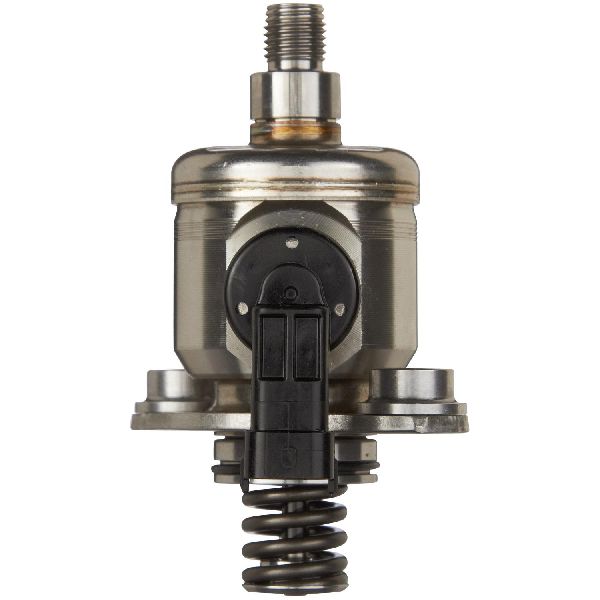
- High-Pressure Fuel Rail (Scan Tool, at idle) — expected: 290 - 370 psi. Failure: Pressure that does not match the desired/commanded pressure on the scan tool can indicate a problem with the high-pressure fuel pump or sensor.
- Low-Pressure Fuel System (Scan Tool, at idle) — expected: Approximately 60 psi. Failure: Low pressure could indicate a failing in-tank fuel pump or clogged filter, affecting the high-pressure pump's supply.
- Injector Power Supply Voltage (at connector) — expected: ~12 Volts (Battery Voltage) with Key On, Engine Off. Failure: Low or no voltage indicates an open or short in the power supply wire from the relay/fuse block.
Scan Tool Commands That Help
- GDS2 / Tech2: Injector Balance Test (Automated) — This is a key diagnostic for GDI engines when an injector is suspected. The tool individually disables each injector and measures the corresponding drop/rise in fuel rail pressure. An inconsistent pressure change on cylinder 6 compared to others points to a faulty injector.
- GDS2 / Tech2: Fuel Injector Control (On/Off) — This basic bidirectional command is used with a noid light or test lamp connected to the injector harness. Manually commanding the injector 'On' and 'Off' allows a technician to verify the integrity of the control circuit from the ECM to the connector without the engine running.
Wiring & Ground Locations
- G113 — On the left side of the engine block (for 3.0L LF1 engine).. This is a primary engine block ground. A poor connection here can cause a variety of electrical issues and sensor faults, including erratic behavior of the fuel injection system.
- G102 — Located in the right (passenger side) engine compartment.. This ground point serves multiple components in the engine bay. Corrosion or a loose connection can create a floating ground, potentially affecting the ECM's reference and its ability to accurately monitor the injector circuits.
- Injector Harness Connector — Connects directly to the top of the fuel injector, under the intake manifold for cylinder 6.. This is the most common point of failure in the wiring. The connector pins can corrode, and the locking tab can become brittle and break, causing a poor connection that triggers P0206.
Real Owner Repair Stories
- YouTube user 'P0206 Misfire? Don't Replace Injectors Just Yet!' (Vehicle with a P0206 code (specific model not mentioned, but GM V6 likely)) — Rough running engine, P0206 code stored.
❌ Tried (didn't work) The owner was advised by many online sources to immediately replace the fuel injector.
✅ What actually fixed it The owner found that the ignition coil connectors were loose and wobbly. After cleaning the coil ground points on the engine and ensuring all coil connectors were tight, the code was cleared and did not return. - YouTube user 'Cadillac SRX 2005 P0202/P0302 injector ECM issue.' (2005 Cadillac SRX (Note: P0202, but identical diagnostic process for P0206)) — Misfire on cylinder 2 with codes P0202 and P0302.
❌ Tried (didn't work) Swapping fuel injectors between cylinders (the fault remained on cylinder 2)., Inspecting the wiring harness loom under the intake manifold., Performing a full resistance and continuity check of the wiring from the fuse block, through the injector, to the ECM connector pin (all wiring tested good).
✅ What actually fixed it After exhaustively proving the injector and all related wiring were good, the problem was isolated to a failed injector driver (transistor) inside the Engine Control Module (ECM). The ECM required replacement or repair.
"I Checked Everything" — The Actual Cause
- A smoke test is not a relevant diagnostic procedure for the electrical circuit code P0206. This test is used to find vacuum leaks, which would typically set lean condition codes (like P0171/P0174) or random misfire codes (P0300), not a specific injector circuit fault.
When the Usual Fixes Don't Work
- While the most common causes for P0206 are a failed injector or a fault in its dedicated wiring, at least one owner has resolved the code by addressing an entirely different component. In a documented case, the final fix was tightening loose ignition coil connectors and cleaning their grounds. This suggests that in rare instances, significant electrical noise from the ignition system may be misinterpreted by the ECM as a fault on the injector monitoring circuit. This serves as a strong reminder to check all related connections on the engine, not just the specific circuit mentioned in the code definition, before beginning expensive and labor-intensive repairs.
OEM Part Supersession History
12638530→12669384— Standard part update by the manufacturer for the 3.0L LF1 engine injector.12642128→12634126— Standard part update by the manufacturer for the 3.6L LFX engine injector.
Model Year Variations Within This Range
- 2010-2011 vs 2012-2014: The primary difference is the engine. 2010-2011 models use the 3.0L LF1 V6 with high-impedance port fuel injectors (approx. 12 Ohms resistance). 2012-2014 models use the 3.6L LFX V6 with low-impedance Gasoline Direct Injection (GDI) injectors (approx. 1.2-1.8 Ohms resistance). The parts are not interchangeable, and the diagnostic values are completely different. They also use different ECMs (Bosch vs. Delphi families).
Helpful Videos
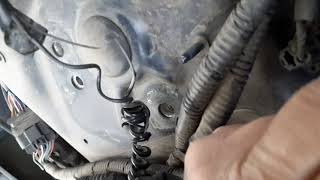
Used OEM Parts in Stock


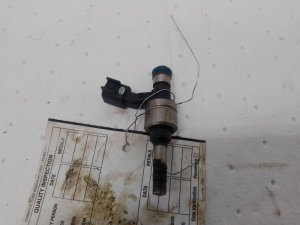
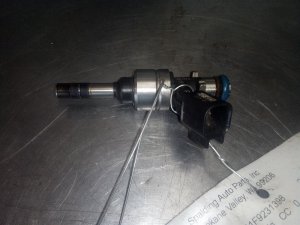
New Aftermarket Parts Available


The information in this article is provided for general reference and educational purposes only. Vehicle specifications, procedures, and part compatibility can vary by production date, trim level, and region. Always consult your vehicle's factory service manual and verify part numbers before purchasing or performing repairs. Safety-critical components such as airbags, seat belts, and braking systems should be installed by a qualified professional.
- Cadillac SRX:
- 🎬 Helpful Videos
- 🛍️ Shop This Part
- What's Unique About the 2010-2014 Cadillac SRX
- Diagnostic Flowchart
- Symptoms You May Notice
- Most Likely Causes
- Rare But Worth Checking
- Diagnosis Steps
- Parts You'll Likely Need
- Related Codes That Often Appear With This One
- Technical Service Bulletins (TSBs) & Recalls
- Platform-Specific Known Issues
- Mechanic-Grade Diagnostic Values
- Scan Tool Commands That Help
- Wiring & Ground Locations
- Real Owner Repair Stories
- "I Checked Everything" — The Actual Cause
- When the Usual Fixes Don't Work
- OEM Part Supersession History
- Model Year Variations Within This Range
- 🎟️ Get 5% Off