

P0206 on 2009-2014 Buick Enclave: Cylinder 6 Injector Circuit Causes and Fixes
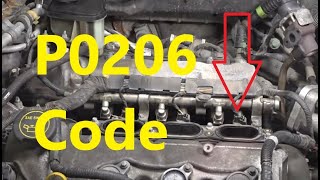
On a 2009-2014 Buick Enclave, code P0206 almost always points to a faulty cylinder 6 fuel injector or a problem in its wiring circuit. Cylinder 6 is on the rear bank against the firewall, making access difficult. A bad injector is the most common culprit, costing around $90 for a superseded OEM part (12669384), and is a difficult DIY job due to the required removal of the intake manifold.
- P0206 on a Buick Enclave means there's an electrical problem with the cylinder 6 fuel injector circuit.
- The most common cause is a failed fuel injector, followed by a wiring issue.
- Symptoms include a rough idle, engine misfires, and reduced power.
- A 'noid light' test can quickly determine if the wiring is sending a signal, and swapping injectors can confirm if the injector itself is the problem.
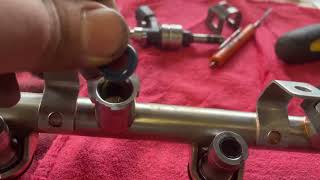
- Always replace the Teflon seal and O-rings when servicing a direct fuel injector.
What's Unique About the 2009-2014 Buick ENCLAVE
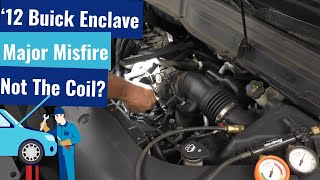
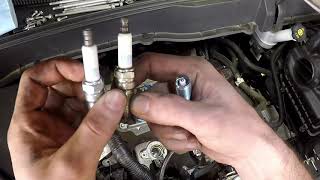
The 2009-2014 Buick Enclave, along with its GM Lambda platform siblings (Chevy Traverse, GMC Acadia, Saturn Outlook), uses the 3.6L V6 direct-injection engine. While the injectors themselves can fail, this platform is also noted for potential wiring harness issues. A Technical Service Bulletin (TSB PIP4924D) from GM mentions that a range of injector codes, including P0206, can be triggered by the engine wiring harness rubbing through against components like the intake plenum, valve cover bolts, or fuel lines. This makes a thorough inspection of the wiring just as important as testing the injector itself 🎬 Watch: A professional misfire diagnosis beyond just coils and plugs., especially since accessing the injector is labor-intensive.
Diagnostic Flowchart
Tap your situation to follow the diagnostic path that matches what you're seeing on this vehicle.
Symptoms You May Notice
- Check Engine Light is on
- Rough or shaking idle
- Engine misfires, which may feel like sputtering or jerking
- Reduced engine power and poor acceleration
- Increased fuel consumption
- In severe cases, the engine may be hard to start or stall
- Noticeable smell of unburnt fuel from the exhaust
- Replacing the spark plug or ignition coil on cylinder 6. While these can cause a misfire (P0306), they will not cause an injector circuit code like P0206. The P0206 code specifically points to an electrical fault in the injector circuit, not a combustion issue.
Most Likely Causes
- Faulty Cylinder 6 Fuel Injector 🔴 High Probability The 3.6L LLT engine uses direct injection, where injectors operate under high pressure and can fail internally (electrically) or become clogged over time. Given the high temperatures near the firewall, the rear bank injectors may be more prone to failure. Some owners report needing to replace injectors multiple times due to carbon buildup.
How to confirm: Swap the cylinder 6 injector with an injector from an accessible front cylinder (e.g., cylinder 5). If the code changes to P0205, the injector is bad. Alternatively, test the injector's internal resistance with a multimeter. The specification depends on the engine: for the 2009-2011 LLT engine, it is 11.8-12.6 ohms; for the 2012-2014 LFX engine, it is 1.2-1.8 ohms. An open (infinite) or shorted (near zero) reading confirms failure.
Typical fix: Replace the faulty fuel injector. This is a labor-intensive job for cylinder 6 as the upper intake manifold must be removed for access. It is often recommended to replace all injectors on the same bank, or all six, to ensure balanced fuel flow and avoid repeat labor costs, especially since mixing new and old or different brands of injectors is not advised.
Est. part cost: $80-$130 for a single OEM injector. - Wiring Harness or Connector Issue 🟡 Medium Probability As noted in TSB #PIP4924D, the engine wiring harness is known to chafe and develop an open or short circuit. Common chafe points are against the intake plenum, on valve cover bolts, against the fuel line, and on the side of the cylinder head under the plenum.
How to confirm: Visually inspect the wiring harness leading to the cylinder 6 injector for any signs of chafing, melting, or corrosion. Check the connector for a secure fit and clean contacts. Use a noid light to verify that the PCM is sending a pulse signal to the injector connector; no flash or a steady light indicates a wiring or PCM problem.
Typical fix: Repair the damaged section of wire or replace the electrical connector pigtail. If chafing is found, re-route and secure the harness to prevent recurrence.
Est. part cost: $15-$50 for wiring repair supplies or a new pigtail connector. - Faulty Powertrain Control Module (PCM) ⚪ Low Probability
How to confirm: This is a last resort after definitively ruling out the injector and wiring. A professional shop with advanced diagnostic tools is needed to test the injector driver circuit within the PCM. This is confirmed only when the wiring is perfect and a known-good injector still throws the code. A blown ECM fuse that re-blows when the ECM is connected can also indicate an internal short in the module.
Typical fix: The PCM must be replaced and programmed for the vehicle.
Est. part cost: $300-$800 for a programmed PCM.
Diagnosis Steps
- Read the codes with an OBD-II scanner to confirm P0206 and check for any other related codes like P0306.
- Visually inspect the engine wiring harness. On the 3.6L V6, cylinder 6 is the rearmost cylinder on the driver's side (Bank 2), near the firewall. Carefully check for chafing against the intake, valve covers, and fuel lines as per TSB PIP4924D.
- Disconnect the injector and plug in a 'noid light'. Start the engine. The light should flash steadily. If it doesn't flash, there is a problem with the wiring or the PCM. If it stays on constantly, there is a short in the circuit.
- If the noid light flashes correctly, the issue is likely the injector itself. Turn off the engine and disconnect the battery.
- Accessing cylinder 6 requires removing the upper intake manifold. This is a significant step.
- Once the injector is accessible, test its resistance with a multimeter. Compare the reading to the manufacturer's specification, which differs by engine: 11.8-12.6 ohms for the 2009-2011 LLT engine, and 1.2-1.8 ohms for the 2012-2014 LFX engine. A reading that is infinite (open) or near zero (short) indicates a failed injector.
- For a definitive test, swap the cylinder 6 injector with another one (e.g., cylinder 5). Reassemble the intake manifold, clear the codes, and run the engine. If the code returns as P0205, you have confirmed the injector is faulty. This is very labor-intensive but is the most conclusive test.
- If the code remains P0206 after the swap, the problem is definitively in the wiring specific to the cylinder 6 circuit or the PCM.
Parts You'll Likely Need
- Fuel Injector
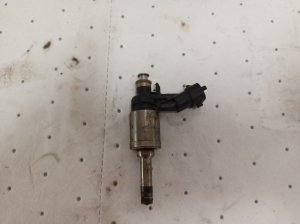
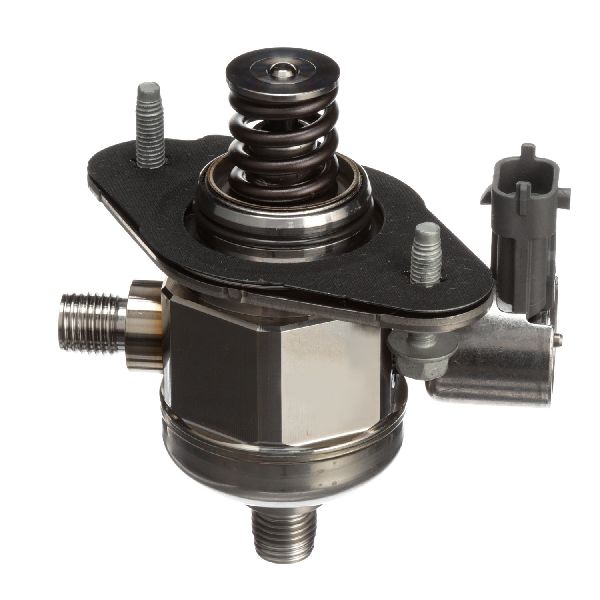
(OEM #12669384 (supersedes 12638530))— This is the most common component to fail, causing a P0206 code. The original part number has been updated by GM.
Trusted brands: ACDelco, Bosch, Standard Motor Products
OEM price range: $90-$130
Aftermarket price range: $60-$100 - Fuel Injector Seal Kit
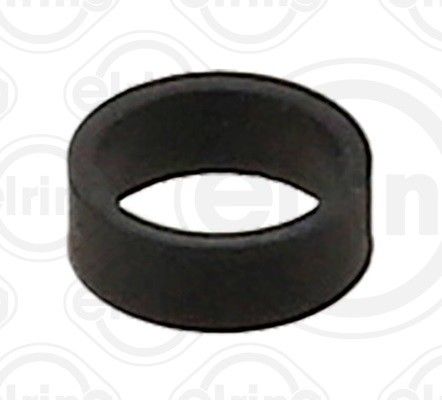
(OEM #217-3399)— Whenever a direct fuel injector is removed and reinstalled, the Teflon seal and O-rings must be replaced to prevent high-pressure fuel and compression leaks. Most new injectors include this.
Trusted brands: ACDelco, Fel-Pro
OEM price range: $15-$25
Aftermarket price range: $10-$20 - Upper Intake Manifold Gasket Set
(OEM #12670354)— Required for reinstallation of the intake manifold, which must be removed to access the cylinder 6 fuel injector.
Trusted brands: ACDelco, Fel-Pro
OEM price range: $30-$50
Aftermarket price range: $20-$40 - Fuel Injector Connector Pigtail
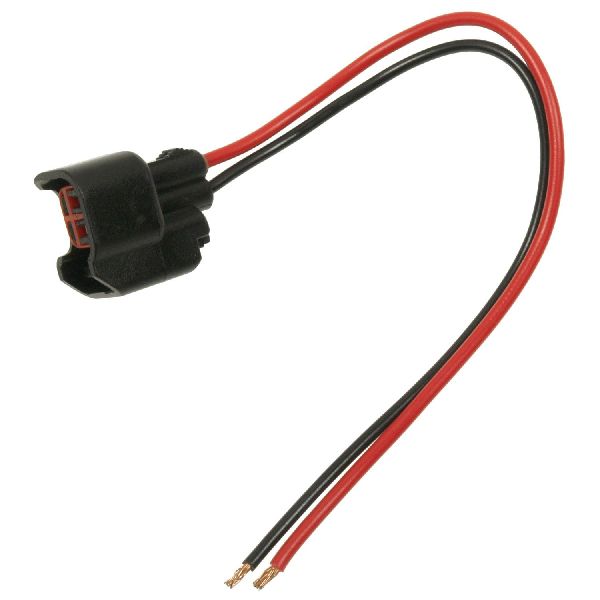
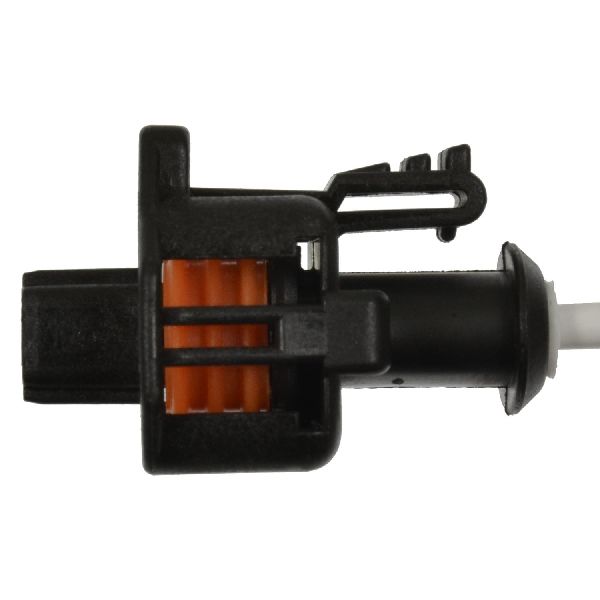
(OEM #ACDelco PT2160)— If the electrical connector at the injector is broken, corroded, or the source of the short, this pigtail is needed to repair the harness.
Trusted brands: ACDelco, Dorman
OEM price range: $25-$40
Aftermarket price range: $15-$25
Related Codes That Often Appear With This One
- P0306 — P0306 means "Cylinder 6 Misfire Detected." Since a P0206 fault prevents proper fueling of cylinder 6, a misfire is an expected and direct consequence.
- P0201, P0202, P0203, P0204, P0205 — If multiple injector circuit codes appear simultaneously, especially on the same bank (P0202, P0204, P0206), it strongly suggests a widespread wiring harness problem, a bad ground connection for that bank, or a power supply issue common to all injectors, as mentioned in TSB PIP4924D.
Technical Service Bulletins (TSBs) & Recalls
- PIP4924D: Notes that a Service Engine Soon light with a misfire may be accompanied by DTCs P0201 through P0206 (and others), pointing towards a potential wiring harness issue with specific chafe points to inspect.
Platform-Specific Known Issues
- TSB #PIP4924D is highly relevant, indicating that injector codes P0201-P0206 are frequently caused by the engine wiring harness chafing against the intake plenum, valve cover bolts, fuel lines, or cylinder head. A visual inspection of the harness is a critical first step before condemning the injector.
- Access to the cylinder 6 injector is significantly more difficult than the front three (Bank 1). It requires the complete removal of the upper intake manifold, increasing labor time and complexity substantially compared to a P0201, P0203, or P0205 code.
Mechanic-Grade Diagnostic Values
- Fuel Injector Coil Resistance (2009-2011 3.6L LLT Engine) — expected: 11.8 - 12.6 Ohms. Failure: A reading significantly outside this range, or showing an open circuit (infinite resistance) or short (near zero ohms), indicates a failed injector.
- Fuel Injector Coil Resistance (2012-2014 3.6L LFX Engine) — expected: 1.2 - 1.8 Ohms. Failure: A reading significantly outside this range indicates a failed injector. Note the much lower resistance compared to the earlier LLT engine.
- Injector Supply Voltage (at connector) — expected: 11.5 - 12.5 Volts (with ignition on). Failure: Voltage below this range, especially below 10V, points to an upstream wiring or power supply problem.
Scan Tool Commands That Help
- GM GDS2 / High-End Aftermarket Scanners: Automated Injector Balance / Cylinder Power Balance Test — This is a functional test used to confirm if an injector is contributing properly. The tool commands the injector to open and measures the resulting drop in fuel rail pressure or engine RPM. A cylinder that shows a significantly different drop compared to others indicates a fueling problem, helping to confirm a faulty injector without having to physically remove it first.
Wiring & Ground Locations
- G130 / G131 — G130 is located at the rear of the right cylinder head, and G131 is at the left rear of the engine.. These are critical grounds for the engine control system. Since the ECM is mounted on the engine, a poor connection at these grounds can cause erratic behavior in sensor and actuator circuits, including the fuel injector drivers.
- Main Engine Ground — A 15mm ground bolt is located near the fuel pump plug, and other main grounds are found on the passenger side of the engine block and at the back of the cylinder heads.. A corroded or loose main engine ground can cause a wide range of electrical issues, including intermittent injector circuit faults. Verifying all engine grounds are clean and tight is a crucial step when diagnosing electrical codes like P0206.
- Injector Connector Pinout — The two-wire connector at the fuel injector.. One wire is the supply voltage (typically pink on many GM vehicles) which should have battery voltage with the key on. The other wire is the control wire (color varies by cylinder) which is pulsed to ground by the PCM to fire the injector. A noid light or oscilloscope is used on these pins to verify the PCM is commanding the injector to fire.
Real Owner Repair Stories
- Reddit user comment (Buick Enclave (year not specified, but within generation)) — Repeated fuel injector failure.
❌ Tried (didn't work) N/A
✅ What actually fixed it The user noted their vehicle was on its third set of fuel injectors and attributed the repeated failures to significant carbon buildup on the injectors and valves, a known issue with some early direct-injection engines. This implies that injector failure can be a recurring problem. - ScannerDanner Forum (2011 Camaro 3.6L V6 LLT (same engine family)) — No crank, no start, U0100 code, flashing check engine light, blown ECM fuse.
❌ Tried (didn't work) Cleaning all engine compartment grounds.
✅ What actually fixed it The owner found the 15A ECM fuse was blown. It would blow again upon attempting to start. The fuse did not blow when the X2 connector of the ECM was disconnected, indicating the fault was within the ECM itself or a circuit powered by it. This is an example of an internal PCM failure causing power-related issues that could manifest as an injector code.
OEM Part Supersession History
12638530→12669384— Standard part update/revision by the manufacturer.
Heads up: This supersession applies to the 2009-2011 LLT engine. It is highly recommended to replace injectors as a complete set rather than mixing original and superseded parts, or OEM and aftermarket parts, to avoid potential differences in fuel flow and atomization.
Model Year Variations Within This Range
- 2009-2011: These models use the 3.6L LLT V6 engine. The fuel injectors are high impedance, with a specified coil resistance of 11.8 - 12.6 Ohms.
- 2012-2014: These models use the updated 3.6L LFX V6 engine. The fuel injectors are low impedance, with a specified coil resistance of 1.2 - 1.8 Ohms. Using the LLT resistance specification to test an LFX injector would incorrectly lead to a diagnosis of a shorted injector.
Helpful Videos
Used OEM Parts in Stock


New Aftermarket Parts Available


The information in this article is provided for general reference and educational purposes only. Vehicle specifications, procedures, and part compatibility can vary by production date, trim level, and region. Always consult your vehicle's factory service manual and verify part numbers before purchasing or performing repairs. Safety-critical components such as airbags, seat belts, and braking systems should be installed by a qualified professional.
- Buick ENCLAVE:
- 🎬 Helpful Videos
- 🛍️ Shop This Part
- What's Unique About the 2009-2014 Buick ENCLAVE
- Diagnostic Flowchart
- Symptoms You May Notice
- Most Likely Causes
- Diagnosis Steps
- Parts You'll Likely Need
- Related Codes That Often Appear With This One
- Technical Service Bulletins (TSBs) & Recalls
- Platform-Specific Known Issues
- Mechanic-Grade Diagnostic Values
- Scan Tool Commands That Help
- Wiring & Ground Locations
- Real Owner Repair Stories
- OEM Part Supersession History
- Model Year Variations Within This Range
- 🎟️ Get 5% Off