

P0204 on 1998-2005 Dodge RAM 3500: Injector Circuit Malfunction Causes and Fixes
On a 1998-2005 Dodge RAM 3500, especially with the 5.9L Cummins engine, P0204 is most often caused by a faulty wiring harness under the valve cover or a failing injector solenoid. The fix is usually replacing the injector, the wiring, or both. For 2003-2005 models, this often occurs with code P2149, shutting down cylinders 4-5-6.
- P0204 on a 1998-2005 Ram 3500 points to an electrical problem with the cylinder 4 injector circuit.
- Before buying a new injector, always inspect the wiring harness under the valve cover, as this is a known failure point according to a manufacturer TSB.
- A simple way to confirm a bad injector is to swap it with an adjacent cylinder and see if the trouble code follows the injector.
- This code will cause a noticeable misfire, rough running, and loss of power, and should be addressed to prevent potential engine damage and poor performance.
What's Unique About the 1998-2005 Dodge RAM 3500
For the 1998-2005 Dodge RAM 3500, particularly those with the 5.9L Cummins diesel engine, this code is notoriously linked to the injector wiring harness that passes through the valve cover gasket. This harness is prone to failure from heat and vibration, causing intermittent connections. The vehicle range also spans two generations with different fuel systems (VP44 pump vs. Common Rail), but the electrical circuit vulnerability remains a common thread. On the 2003-2005 Common Rail models, a fault in the #4 injector circuit will often trigger a P2149 code simultaneously, which shuts down the entire bank of cylinders 4, 5, and 6, causing the truck to run on only three cylinders and have very little power. The provided TSB #9002688 specifically calls out checking this wiring loom before replacing the injector itself, highlighting how common this issue is on these trucks.
Diagnostic Flowchart
Tap your situation to follow the diagnostic path that matches what you're seeing on this vehicle.
Generation note: This range covers two generations of the Dodge RAM. The 1998-2002 models are 2nd Generation (BR/BE) with the 24-valve 5.9L Cummins ISB engine using a VP44 injection pump. The 2003-2005 models are 3rd Generation (DR) with the 5.9L Cummins Common Rail engine. While the fuel delivery systems differ, the P0204 code's cause is often similar: an electrical fault in the injector circuit. For 3rd Gen trucks, the wiring harness under the valve cover is split into three separate harnesses, each covering two injectors. The 5.9L Magnum V8 gas engine can also experience this code, typically due to a failed injector or wiring damage from rodents.
Symptoms You May Notice
- Check Engine Light is on.
- Rough or uneven idle, feels like it's 'tapping' on one cylinder.
- Engine misfire or stumble.
- Noticeable loss of power and poor acceleration.
- Increased fuel consumption.
- Engine may stall in some cases.
- On 2003-2005 models, truck may suddenly lose power and barely be able to accelerate, running on only 3 cylinders.
- Replacing the fuel injector without first testing the wiring harness. The TSB specifically warns against this, as the wiring is a very common point of failure.
- Replacing the wrong injector. On an inline-6 Cummins, cylinder #4 is the fourth cylinder back from the front of the engine. It's crucial to confirm cylinder numbering before starting work. 🎬 See this step-by-step fuel injector replacement procedure.
Most Likely Causes
- Faulty Injector Wiring Harness / Valve Cover Pass-Through Connector 🔴 High Probability As cited in TSB #9002688, the wiring loom and connector inside the valve cover gasket are a known weak point on these engines due to constant exposure to heat, oil, and vibration, leading to open or shorted circuits. On 2003-2005 models, there are three separate harnesses under the valve cover.
How to confirm: Perform a visual inspection of the wiring under the valve cover for chafing, brittleness, or loose connections at the injector posts. Use a multimeter to check for continuity and shorts between the injector connector and the main engine harness plug. A 'wiggle test' on the external harness connectors while the engine is idling may induce the misfire.
Typical fix: Replace the faulty section of the injector wiring harness. On 2003-2005 models, this is typically part number Cummins 3966805 (3 required per engine).
Est. part cost: $50-$150 - Failed Fuel Injector Solenoid 🔴 High Probability The electronic solenoid on top of the fuel injector can fail, creating an open or shorted circuit internally. This is a common failure for high-mileage injectors and can happen suddenly.
How to confirm: Measure the resistance of the fuel injector's two terminals with a multimeter. The reading should be very low, between 0 and 1 ohm. An infinite reading (OL) means an open circuit, while a reading significantly higher than 1 ohm or a dead short (0.0 ohms) also indicates a failure. A simple test is to swap the #4 injector with an adjacent one (e.g., #2 or #6). If the code changes to P0202 or P0206, the injector is bad.
Typical fix: Replace the faulty fuel injector. On Common Rail Cummins models (2003-2007), it is possible to replace only the solenoid on top of the injector as a temporary or 'get you home' fix, but this is not recommended for a permanent repair as special tools are needed for proper adjustment.
Est. part cost: $250-$500 for a single new or remanufactured injector - Poor Electrical Connection at the Injector 🟡 Medium Probability Vibration can cause the small nuts on the injector posts to become loose, or the electrical connector on the main harness to become loose or corroded, leading to an intermittent connection.
How to confirm: Visually inspect the connector for corrosion or damage. For Cummins engines, remove the valve cover and check that the nuts securing the wiring to the injector posts are tight. A "wiggle test" on the harness while the engine is running may cause the misfire to appear or disappear, confirming a loose connection.
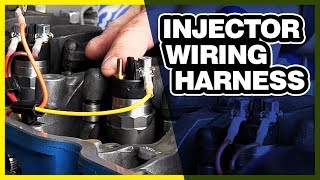
Typical fix: Clean the connector terminals and apply dielectric grease. Tighten the injector post nuts to the correct torque (typically 11 in-lbs / 1.2 Nm). 🎬 Watch: How to properly tighten the injector wiring harness. If the main connector is damaged, replace the pigtail.
Est. part cost: $10-$30
Rare But Worth Checking
- Faulty Powertrain Control Module (PCM): This is rare and should only be considered after all other possibilities (wiring, injector) have been exhaustively ruled out. A faulty injector driver circuit within the PCM can mimic a wiring or injector fault. This is often suspected when multiple injector codes for the same bank (e.g., P0204, P0205, P0206) appear simultaneously without a clear wiring or injector failure on one cylinder.
- Rodent Damage to Wiring: Rodents can chew through the engine wiring harness where it is exposed, causing an open or short in the injector circuit. This has been reported by owners, particularly for the 5.9L V8 gas engine where wiring is more accessible.
Diagnosis Steps
- Retrieve all stored DTCs with an OBD-II scanner. If P2149 is also present, the fault is almost certainly 🎬 Watch: How to diagnose P2149 and test injector solenoids. with the injector or wiring for cylinders 4, 5, or 6.
- Visually inspect the external wiring harness leading to the valve cover pass-through connectors, looking for any obvious signs of damage, chafing, or loose connections.
- Use a 'noid light' to test the injector connector. With the engine running, the light should flash steadily. If it's dim, erratic, or off, there is a problem with the wiring or the PCM. This test is difficult on Cummins engines as it requires removing the valve cover.
- Turn the ignition off and disconnect the injector harness under the valve cover. Measure the resistance of the #4 fuel injector solenoid across its two posts. It should be less than 1.0 ohm and greater than 0 ohms. Compare it to an adjacent injector; if it reads open (OL) or is significantly different, the injector solenoid is bad.
- If the injector resistance is good, inspect the wiring harness under the valve cover. Check for continuity from the injector posts to the pass-through connector. Wiggle the wires to check for intermittent breaks.
- If the under-cover wiring and injector are good, check the main engine harness from the pass-through connector back to the PCM for opens or shorts to ground.
- As per TSB #9002688, pay close attention to the pass-through harness at the valve cover gasket, as this is a primary failure point.
- If both the injector and all wiring test good, the final possibility is a faulty injector driver in the PCM.
Parts You'll Likely Need
- Fuel Injector
(OEM #Bosch 0445120238 (Example for 04.5-07 Common Rail))— The internal solenoid coil of the injector can fail, causing an open or short in the circuit. This is a primary cause of P0204 after wiring issues are ruled out.
Trusted brands: Bosch, Mopar
OEM price range: $400-$550
Aftermarket price range: $250-$400 - Injector Wiring Harness (Under Valve Cover)
(OEM #Cummins 3966805 (For 2003-2005 models, covers 2 injectors))— As noted in TSB #9002688, the wiring harness under the valve cover is a frequent failure point due to heat and vibration. On 03-05 models, three of these are used.
Trusted brands: Cummins (OEM), Dorman
OEM price range: $60-$80
Aftermarket price range: $40-$60 - Injector Connector Pigtail
(OEM #Mopar 68086182AA)— If the external connector that plugs into the valve cover pass-through is damaged or corroded, replacing the pigtail is necessary to ensure a solid connection.
Trusted brands: Mopar, Dorman
OEM price range: $25-$40
Aftermarket price range: $15-$30
Related Codes That Often Appear With This One
- P2149 — This code indicates a fault in the 'Fuel Injector Group B Supply Voltage Circuit', which on 5.9L Cummins engines covers cylinders 4, 5, and 6. A short or open in the wiring for cylinder 4 can trigger this group fault code, causing the ECM to shut down all three injectors in that bank. This is very common on 2003-2005 models.
- P0304 — This code means 'Cylinder 4 Misfire Detected'. Since P0204 indicates a problem with the electrical control of the fuel supply to cylinder 4, a misfire is a direct and expected consequence.
Technical Service Bulletins (TSBs) & Recalls
- 9002688: Advises checking the valve cover gasket wiring loom and connector before replacing injectors for P0201-P0206 codes.
Platform-Specific Known Issues
- TSB #9002688 explicitly identifies the wiring loom and/or connector in the valve cover gasket as a potential root cause for P0204 and related injector codes, advising technicians to check it before replacing injectors.
- On 2003-2005 Common Rail models, a P0204 is almost always accompanied by P2149, which shuts down cylinders 4, 5, and 6. The root cause is typically a single failure (injector #4 or its wiring), but the ECM's protective action affects the entire bank.
Mechanic-Grade Diagnostic Values
- Fuel Injector Solenoid Resistance — expected: Less than 1.0 ohm, but greater than 0.0 ohms (after zeroing meter leads).. Failure: A reading of OL (infinity) indicates an open circuit. A reading of 0.0 ohms indicates a dead short. A reading significantly higher than other injectors (e.g., over 1.0 ohm) indicates a failing solenoid.
- Injector Electrical Post Nut Torque — expected: 11 in-lbs (1.2 Nm). Failure: Loose nuts can cause intermittent open circuits (P0204). Over-tightening can break the post off the injector solenoid, requiring injector replacement.
- Injector Hold-Down Bolt Torque (Common Rail) — expected: Two-step process: Initial seating torque of 44 in-lbs, followed by a final torque of 89 in-lbs.. Failure: Improper torque can lead to compression leaks or damage to the injector body.
- Fuel Connector Tube Nut Torque (Common Rail) — expected: 37 ft-lbs. Failure: Incorrect torque can cause high-pressure fuel leaks at the injector body, leading to no-start conditions or engine damage.
- Minimum Rail Pressure for Starting — expected: Approximately 4,000 PSI. Failure: If rail pressure does not reach this threshold during cranking, the ECM will not fire the injectors. This is not a direct indicator of P0204 but is a key diagnostic value for related no-start conditions.
- Injector Circuit Voltage at Idle (to ground) — expected: On a known good bank of injectors, one user reported seeing 21-22 volts DC.. Failure: On the bank with the fault (P2149), the same user reported seeing only ~8 volts DC, indicating a problem with the high-side driver for that bank.
Scan Tool Commands That Help
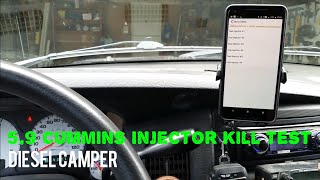
- DRB III or equivalent professional scan tool (e.g., Snap-on, Autel): Injector Kill Test / Cylinder Contribution Test — This active test is used when the engine is running to diagnose a misfire. The technician can command the ECM to shut off one injector at a time. If shutting off an injector causes no change in engine roughness or RPM, that cylinder is not contributing, confirming the fault lies with that injector or its circuit. This is a definitive way to isolate the problem cylinder.
Wiring & Ground Locations
- ECM Connector C1/C2 — On the side of the engine block, below the fuel filter housing on Common Rail models.. This is the termination point for the injector harness. A poor connection at the specific pin for the injector #4 driver or the bank 2 high-side driver can cause P0204/P2149. One owner traced their issue to a bad contact at pin 56 of the ECM connector, which supplied power to injectors 4, 5, and 6.
- Valve Cover Pass-Through Connectors — The main engine harness plugs into connectors integrated into the valve cover gasket itself.. This is a primary failure point mentioned in TSB #9002688. The connection from the external harness to the internal harness is subject to intense vibration and heat, and the pins can become loose or corroded, causing an open or short in the injector circuit.
Real Owner Repair Stories
- Turbo Diesel Register Forum user 'boatpuller' (2003 Dodge Ram 5.9L Cummins, 144k miles) — Truck in limp mode, codes P0204, P0205, P0206, and P2149 present.
❌ Tried (didn't work) Replaced solenoid on injector #5., Replaced the contact for the injector bank 2 feed wire in the ECM connector., Replaced the entire set of six fuel injectors with a new set.
✅ What actually fixed it After replacing all injectors, codes P0204/P0205/P0206 were gone but P2149 remained. The user measured voltage on the injector banks and found the front bank (1-2-3) had 21-22V while the rear bank (4-5-6) only had 8V. The final diagnosis was a failed 'Injector High Side Driver - Bank 2' within the ECM itself, requiring ECM replacement. - Common forum knowledge and TSB #9002688 (2003-2005 Dodge Ram 5.9L Cummins) — Intermittent rough running, sudden loss of power, and codes P0204 and P2149, especially when hitting a bump or after the engine warms up.
❌ Tried (didn't work) Replacing the #4 fuel injector., Replacing the under-valve-cover wiring harness.
✅ What actually fixed it The small 8mm nuts that secure the wiring harness leads to the top of the injector solenoids had vibrated loose. Removing the valve cover, cleaning the contact posts, and tightening the nuts for all injectors on the affected bank (especially #4) to the correct torque of 11 in-lbs permanently resolved the intermittent connection and cleared the codes.
"I Checked Everything" — The Actual Cause
- A standard electrical test (like a resistance check) on an injector solenoid might pass when the engine is cold, but the part can still be faulty. The internal coil wire can have a microscopic fracture that separates and creates an open circuit only when it heats up and expands. If P0204 appears only after the truck has been running for a while and disappears when cold, suspect a heat-related failure in the injector solenoid or wiring that won't be found on a cold engine.
When the Usual Fixes Don't Work
- In one documented case, a 2003 Ram with P0204, P0205, P0206, and P2149 had all six injectors replaced, which is a common and often successful fix. However, the P2149 code immediately returned. This ruled out the common cause (bad injector) and pointed away from the under-cover harness (as it was manipulated during the injector swap). The actual cause was a failed high-side injector driver for bank 2 inside the ECM, which was only found by comparing voltage readings between the front and rear injector banks. This highlights that even when symptoms perfectly match a common cause, the root problem can be the much rarer ECM failure.
OEM Part Supersession History
Bosch: 0445120018, 0445120113, 0445120210, 0986435503→Bosch: 0445120255— Internal updates and design improvements by Bosch for reliability.
Heads up: These part numbers are for the 2003-2004.5 model years ONLY. They are not compatible with 2004.5-2007 trucks.
Model Year Variations Within This Range
- 1998-2002 vs 2003-2005: The entire fuel system is different. 1998-2002 models use a VP44 injection pump system, while 2003-2005 models use a high-pressure common rail system. While the P0204 code's meaning (injector circuit fault) is the same, the specific diagnostic procedures for the pump, injectors, and electronics are completely different.
- 2003-2004 vs 2004.5-2005: The injector nozzles and piston bowls are different. Early models (2003-2004) use an injector with an 8-hole nozzle designed for a wider spray angle. Later models (2004.5+) use a 5-hole nozzle with a narrower spray angle to match a redesigned piston bowl. The injectors are physically interchangeable but should NEVER be mixed. Using an early injector in a late engine (or vice-versa) will cause fuel to spray outside the piston bowl, leading to excessive smoke, high EGTs, low power, and potential piston damage.
Helpful Videos
Used OEM Parts in Stock



New Aftermarket Parts Available


The information in this article is provided for general reference and educational purposes only. Vehicle specifications, procedures, and part compatibility can vary by production date, trim level, and region. Always consult your vehicle's factory service manual and verify part numbers before purchasing or performing repairs. Safety-critical components such as airbags, seat belts, and braking systems should be installed by a qualified professional.
- Dodge RAM 3500:
- 🎬 Helpful Videos
- 🛍️ Shop This Part
- What's Unique About the 1998-2005 Dodge RAM 3500
- Diagnostic Flowchart
- Symptoms You May Notice
- Most Likely Causes
- Rare But Worth Checking
- Diagnosis Steps
- Parts You'll Likely Need
- Related Codes That Often Appear With This One
- Technical Service Bulletins (TSBs) & Recalls
- Platform-Specific Known Issues
- Mechanic-Grade Diagnostic Values
- Scan Tool Commands That Help
- Wiring & Ground Locations
- Real Owner Repair Stories
- "I Checked Everything" — The Actual Cause
- When the Usual Fixes Don't Work
- OEM Part Supersession History
- Model Year Variations Within This Range
- 🎟️ Get 5% Off