

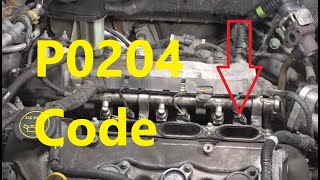
P0204 on 2002-2008 Dodge Ram 1500 3.7L: Injector Circuit Open Causes and Fixes
This code indicates an electrical fault in the cylinder 4 fuel injector circuit. The most common causes are a failed fuel injector or a damaged wiring harness. Expect to spend $40-$120 for a new injector and about 1-2 hours for DIY replacement.
- P0204 means there is an electrical problem with the cylinder 4 fuel injector circuit.
- The most likely cause is a bad fuel injector, followed by damaged wiring or a bad connector.
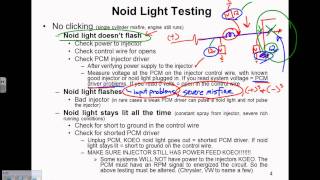
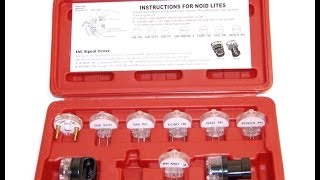
- A simple 'noid light' test can quickly tell you if the wiring is sending a signal to the injector.
- Swapping the #4 injector with another one is the best way to confirm if the injector itself is the problem before buying parts.
- Driving with this code can lead to a rough running engine, poor fuel economy, and eventual damage to the catalytic converter.
What's Unique About the 2002-2008 Dodge Ram 1500
The 3.7L PowerTech V6 is a derivative of the larger 4.7L V8, sharing its basic 90-degree block design and some known issues. On the 4.7L V8 of a similar era, a Technical Service Bulletin (TSB 18-004-08) points to the wiring harness that passes through the valve cover gasket as a common failure point for injector circuit codes. While this TSB doesn't specifically name the 3.7L V6, the engines share a similar design heritage and wiring layout. Therefore, it's wise to pay close attention to the wiring harness and connector for any signs of oil contamination or heat damage before assuming the injector itself has failed.
Symptoms You May Notice
- Check Engine Light is on
- Rough or shaking idle
- Engine misfire (may feel like a stutter or hesitation)
- Reduced engine power and poor acceleration
- Decreased fuel economy
- Strong fuel smell if the injector is stuck open
- Engine may refuse to rev past 2,000-2,200 RPM (limp mode).
- Replacing the spark plug or ignition coil for cylinder 4. While these can cause a misfire (P0304), they will not cause an injector circuit code (P0204).
Most Likely Causes
- Failed Fuel Injector 🔴 High Probability Fuel injectors are wear-and-tear components that can fail electrically (internal coil shorts or opens) or become clogged after many miles and heat cycles.
How to confirm: The most definitive test is to swap the cylinder 4 injector with an injector from another cylinder (e.g., cylinder 2). Clear the codes and run the engine. If the code changes to P0202, the injector is faulty. Alternatively, you can test the injector's internal resistance with a multimeter; it should be within a specific range, often cited as 12-12.5 ohms for this engine. An infinite (OL) or zero ohm reading indicates failure.
Typical fix: Replace the faulty fuel injector. It is often recommended to replace all injectors as a set on a high-mileage engine (over 100k miles) to ensure balanced performance.
Est. part cost: $40 - $120 - Damaged Wiring or Connector 🟡 Medium Probability The wiring harness and its plastic connectors in the engine bay are exposed to constant heat and vibration, which can cause wires to become brittle, break, or corrode over time. The plastic locking tab on the connector is particularly fragile and can break, leading to a poor connection.
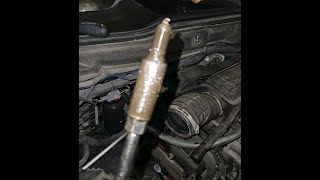
How to confirm: Visually inspect the wiring harness and connector going to the cylinder 4 fuel injector for any signs of breaks, melting, or corrosion. Use a 'noid light' plugged into the injector connector; it should flash when the engine is cranked. If it doesn't flash or stays on constantly, the problem is in the wiring or the PCM. 🎬 See how to use a noid light for testing. Perform a 'wiggle test' on the harness with the engine running to see if it induces a misfire.
Typical fix: Repair the damaged section of wire or replace the injector pigtail connector.
Est. part cost: $10 - $30
Rare But Worth Checking
- Faulty Powertrain Control Module (PCM): This is the least likely cause. The internal driver circuit (transistor) for the #4 injector within the PCM can fail. This should only be considered after the injector and wiring have been thoroughly tested and proven to be good. A user on a Jeep forum with the same engine reported solving a persistent P0204 code by replacing the PCM after all other diagnostics failed.
- Faulty Throttle Position Sensor (TPS): On rare occasions, particularly on platform-mate Jeep Liberty 3.7L engines, voltage spikes from a failing Throttle Position Sensor have been known to cause the PCM to falsely set injector circuit codes. If the P0204 code is intermittent and diagnostics on the injector circuit are inconclusive, this could be a possibility.
Diagnosis Steps
- Scan for Codes: Use an OBD-II scanner to confirm P0204 is the primary code. Note any other codes, especially P0304.
- Visual Inspection: Carefully inspect the wiring harness and connector for the #4 fuel injector. Look for any obvious signs of damage, melting, broken connector tabs, or loose connections. The #4 cylinder on the 3.7L V6 is the front cylinder on the driver's side.
- Noid Light Test: Disconnect the electrical connector from the #4 injector and plug in a 'noid light'. Crank the engine. The light should flash steadily. If it does not flash, the problem is in the wiring or the PCM. If it does flash, the wiring and PCM are likely okay, and the injector itself is the prime suspect.
- Injector Swap Test: If the noid light flashes correctly, swap the #4 fuel injector with one from an adjacent cylinder (like #2 or #6). Clear the codes and run the engine. If the code returns as P0202 or P0206, you have confirmed the injector is bad. If P0204 returns, the problem is intermittent and likely in the wiring.
- Resistance Test: If you don't want to swap injectors, you can test the coil resistance of the #4 injector using a multimeter. Disconnect it and measure the resistance across its two pins. Compare the reading to a known good injector or the factory spec (typically 12-12.5 ohms). A reading that is significantly different, or shows an open circuit (infinite resistance), indicates a bad injector.
- Wiring Continuity Test: If the noid light test fails or the injector swap points to wiring, turn the ignition off. Disconnect the PCM and the injector connector. Use a multimeter to check for continuity on the two wires between the PCM connector and the injector connector. Also check each wire for a short to ground. Repair any open or shorted wires.
- PCM Diagnosis: If the injector and wiring have both been proven to be good, the final possibility is a failed injector driver inside the PCM. This is rare and requires professional diagnosis or elimination of all other possibilities.
Parts You'll Likely Need
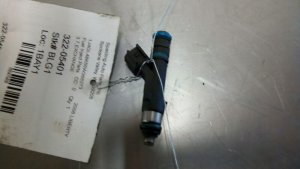
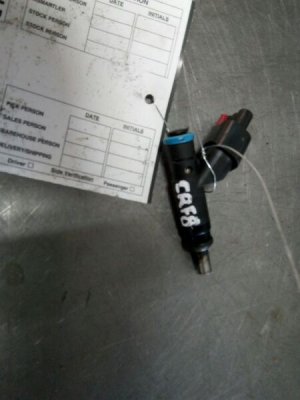
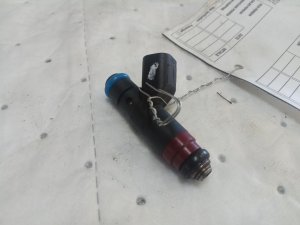
- Fuel Injector
(OEM #53032701AA)— This is the most common part to fail for a P0204 code, as the internal electrical coil can break down over time.
Trusted brands: Mopar (also seen as RL032701AA), Bosch (equivalent to 0280158020), Standard Motor Products (SMP), Delphi
OEM price range: $90-$150
Aftermarket price range: $40-$90 - Fuel Injector Connector Pigtail
(OEM #5183448AA)— If the wiring is damaged right at the connector, or the plastic locking clip is broken, replacing the pigtail is the easiest and most reliable repair.
Trusted brands: Mopar, Dorman, Standard Motor Products (SMP #SKS824), AC Delco (#PT2160)
OEM price range: $20-$40
Aftermarket price range: $10-$25
Related Codes That Often Appear With This One
- P0304 — P0304 means 'Cylinder 4 Misfire Detected'. Since P0204 indicates a problem with the fuel injector circuit for cylinder 4, the cylinder isn't getting the right amount of fuel, which directly causes a misfire.
Technical Service Bulletins (TSBs) & Recalls
- While not directly for the 3.7L V6, TSB 18-004-08 for the 4.7L V8 engine of the same era notes that injector circuit codes can be caused by a faulty wiring harness that passes through the valve cover. Given the shared engine architecture, this is a highly relevant diagnostic consideration for the 3.7L as well. The NHTSA also references this issue under ID 9002688.
- Manufacturer TSB Bulletin #9002688 specifically warns technicians that before replacing injectors for DTC P0204, they must ensure that the wiring loom and/or connector in the valve cover gasket is not the root cause of the concern.
Platform-Specific Known Issues
- Intermittent Fault When Hot: A user on DodgeForum.com with a 3.7L Dodge Nitro reported that the P0204 code and misfire would only appear after the engine was fully warmed up. The truck would run fine for 10-15 minutes from a cold start. This behavior strongly suggests a component (like the injector coil or wiring) that is failing as it heat-soaks, causing an open circuit.
- Code Appears with No Symptoms: A member of RamForum.com reported getting an intermittent P0204 code that would appear and could be cleared, but was not accompanied by any noticeable rough idle, misfire, or loss of power. This could indicate a borderline connection or a very brief, intermittent open circuit that the PCM detects but which doesn't last long enough to affect drivability.
Mechanic-Grade Diagnostic Values
- Fuel Injector Coil Resistance — expected: 12.0 - 14.5 Ohms. Failure: A reading of infinity (OL), near-zero, or significantly outside the specified range indicates a failed injector coil.
- Injector Power Supply Voltage (Key On, Engine Off) — expected: ~12 Volts (Battery Voltage). Failure: Low or no voltage at the power supply wire on the injector connector points to an issue with the ASD relay or the power feed wiring.
- Wiring Continuity (PCM to Injector) — expected: Less than 5.0 Ohms. Failure: Resistance higher than 5.0 Ohms indicates excessive resistance or an open circuit in the wiring harness.
Scan Tool Commands That Help
- DRB III: Actuator Tests — The DRB III is the dealer-level tool for this vehicle era. The actuator test menu allows a technician to command the PCM to fire the #4 injector on demand, verifying the driver circuit and wiring functionality independent of the engine running.
- wiTECH or modern equivalent: Fuel Injector Kill / Disable — This bidirectional command allows the user to turn off cylinder #4's injector while the engine is running. If there is no change in the engine's idle quality, it confirms that cylinder was not contributing, pointing to a fault in that circuit.
- wiTECH or modern equivalent: ASD Relay Actuation — This command manually toggles the Auto Shutdown (ASD) relay, which supplies power to the fuel injectors. It's used to confirm the relay is working and that battery voltage is being supplied to the injector power circuit without needing to crank or start the engine.
Wiring & Ground Locations
- Cylinder 4 Location — The middle cylinder on the passenger side of the engine (Bank 2).. This is the physical injector and circuit that must be tested. Misidentifying the cylinder is a common diagnostic mistake.
- Injector Control Circuit (PCM to Injector) — This is the (K14) wire running from the C2 PCM connector to the #4 injector connector.. This is the specific control wire (ground side driver) that the PCM pulses. It must be tested for continuity and shorts to ground.
- Injector Power Supply Circuit — This is the (K342) wire that provides power from the Auto Shutdown (ASD) relay to all the fuel injectors.. A fault in this wire before it reaches the #4 injector could cause the code, though it would likely affect other injectors as well.
- Primary Engine Ground — A key ground cable runs from the battery negative terminal to a bolt on the driver's side of the engine block.. While a bad main ground usually causes multiple, widespread electrical issues, a loose or corroded connection here can create intermittent and unpredictable problems across various sensors and actuators, including injectors.
OEM Part Supersession History
RL032701AA→53032701AA— Standard part number update and consolidation by Mopar.
Model Year Variations Within This Range
- 2006-2008: The Ram 1500 received a mid-cycle refresh for the 2006 model year, which included a new front fascia (headlights, grille) and a redesigned interior. However, the 3.7L V6 engine and its fuel management system were not significantly changed, so the causes and diagnosis for P0204 remain consistent across the entire 2002-2008 range.
Diagnostic Flowchart
Used vs. New Parts: Buying Guide for This Vehicle
When a used part is the smart pick: A used fuel injector from a junkyard can be a cost-effective diagnostic tool. If swapping a used injector to the cylinder #4 position and the code clears or moves, it confirms the original injector was faulty for a very low cost. However, due to the electronic nature of the failure and unknown history, installing a full set of used injectors for a permanent repair is a gamble.
Donor-vehicle mileage cap: roughly under 80000 miles for the part to have meaningful remaining life.
What to inspect on the donor part:
- Check the donor vehicle's mileage; lower is always better.
- Inspect the plastic connector housing for cracks or brittleness.
- Look at the metal body for signs of excessive rust or corrosion.
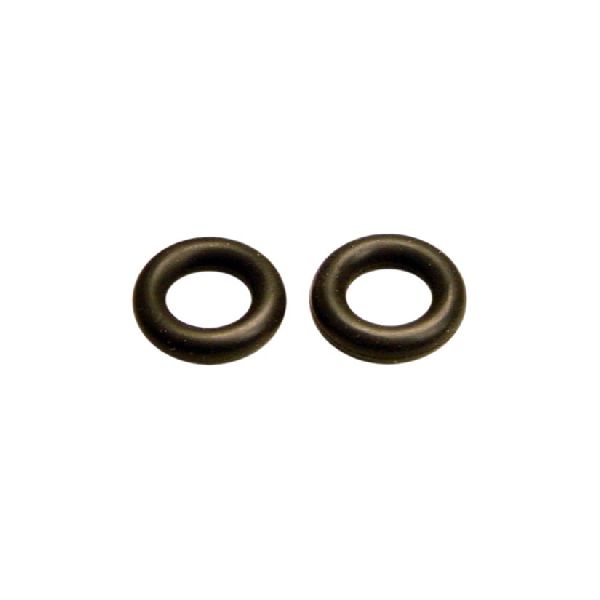
- Ensure the O-rings are present and not visibly flattened or cracked, though they should be replaced regardless before installation.
Aftermarket brands forum-validated for this vehicle:
- Bosch: Often the original equipment manufacturer, their injectors are a reliable choice. Upgraded 4-hole Bosch designs are also available and popular for this engine.
- Standard Motor Products (SMP)
- Delphi
Brands owners have reported issues with on this vehicle:
- Unbranded, generic injectors from online marketplaces like eBay or Amazon are frequently cited in forums as being unreliable, failing quickly, or having inconsistent flow rates.
Real Owner Stories
Aggregated from forums and TSBs cited above. Mileages and costs reflect what owners reported in those sources.
2007 Dodge Nitro 3.7L V6
Symptoms: The P0204 code and a misfire would only appear after the engine was fully warmed up, typically after running for 10-15 minutes from a cold start.
What fixed it: The issue was identified as a heat-related failure, where a component in the injector circuit (either the injector coil or wiring) would develop an open circuit as it heat-soaked.
Source hint: DodgeForum.com: A 2007 Dodge Nitro owner with the 3.7L engine described a scenario where the P0204 code and misfire would only manifest after the engine was hot
Dodge Ram 1500 3.7L V6
Symptoms: An intermittent P0204 code would appear and could be cleared, but it was not accompanied by any noticeable rough idle, misfire, or loss of power.
What fixed it: The cause was determined to be a borderline connection or a very brief, intermittent open circuit that the PCM was able to detect before it was long enough to impact drivability.
Source hint: vehicle_specific_issues: Code Appears with No Symptoms
Related OBD-II Codes
Frequently Asked Questions
Where is the #4 cylinder located on my 2002-2008 Ram's 3.7L V6 engine?
What should the resistance of a good fuel injector be for this engine?
How can I test if the problem is the injector or the wiring without special tools?
My truck only shows the P0204 code and misfires after it has been running for 15 minutes. What could cause this?
I'm getting a P0204 code, but the truck seems to be running perfectly fine. Is this possible?
Should I replace just the one bad injector or all six of them?
I heard about a TSB for wiring issues on the 4.7L V8. Does this apply to my 3.7L V6?
What does Manufacturer TSB Bulletin #9002688 say about P0204?
Helpful Videos
Used OEM Parts in Stock

New Aftermarket Parts Available



The information in this article is provided for general reference and educational purposes only. Vehicle specifications, procedures, and part compatibility can vary by production date, trim level, and region. Always consult your vehicle's factory service manual and verify part numbers before purchasing or performing repairs. Safety-critical components such as airbags, seat belts, and braking systems should be installed by a qualified professional.
- Dodge Ram 1500:
- 🎬 Helpful Videos
- 🛍️ Shop This Part
- What's Unique About the 2002-2008 Dodge Ram 1500
- Symptoms You May Notice
- Most Likely Causes
- Rare But Worth Checking
- Diagnosis Steps
- Parts You'll Likely Need
- Related Codes That Often Appear With This One
- Technical Service Bulletins (TSBs) & Recalls
- Platform-Specific Known Issues
- Mechanic-Grade Diagnostic Values
- Scan Tool Commands That Help
- Wiring & Ground Locations
- OEM Part Supersession History
- Model Year Variations Within This Range
- Diagnostic Flowchart
- Used vs. New Parts: Buying Guide for This Vehicle
- Real Owner Stories
- 2007 Dodge Nitro 3.7L V6
- Dodge Ram 1500 3.7L V6
- Related OBD-II Codes
- Frequently Asked Questions
- 🎟️ Get 5% Off