

P0204 on 2011-2023 Dodge Challenger 3.6L: Injector Circuit Malfunction Causes and Fixes
P0204 on a 3.6L Challenger almost always means the cylinder 4 fuel injector has failed. Swapping it with another cylinder's injector is the best way to confirm. Expect to pay $40-$90 for a new injector and replace the intake gaskets while you're there.
- P0204 on your Challenger points to an electrical fault in the cylinder 4 fuel injector circuit.
- The most likely culprit is a failed fuel injector, a common issue on the 3.6L Pentastar.
- The easiest way to confirm a bad injector is to swap it with another cylinder and see if the code follows the injector.
- Accessing the injector requires removing the upper intake manifold, so be sure to purchase new intake gaskets for the job.
- Ignoring this code will cause a persistent misfire, poor performance, and can lead to costly damage to your catalytic converter.
What's Unique About the 2011-2023 Dodge Challenger
For the Challenger's 3.6L Pentastar V6, this code is a common and straightforward issue. While some older Chrysler engines were known for wiring harness problems that would trigger this code, on the Pentastar, the fuel injector itself is the most frequent point of failure. The internal coil of the injector simply wears out over time, causing an open circuit, a short, or out-of-spec resistance. The diagnosis is relatively simple, but the repair is more involved because accessing the driver's side injectors requires removing the upper intake manifold. It's important not to confuse this electrical code with the well-known cylinder head/rocker arm issue on Pentastar engines, which also causes misfires but is a mechanical problem that sets codes like P0304 *without* P0204.
Generation note: The 2011-2023 model years cover the third generation (LC) of the Dodge Challenger. The 3.6L Pentastar engine was updated in 2016 (adding VVL and a higher compression ratio), but the causes and fixes for a P0204 code are consistent across this entire year range.
Symptoms You May Notice
- Check Engine Light is on
- Flashing Check Engine Light (if misfire is severe)
- Rough idle or engine vibration
- Engine misfire (may feel like shaking or stumbling)
- Reduced engine power and hesitation during acceleration
- Poor fuel economy
- Raw fuel smell from the exhaust
- Potential transmission shift issues, such as a 1-2 upshift clunk or bump, which have been noted in manufacturer records alongside this code.
- Replacing the spark plug or ignition coil for cylinder 4. While these parts can cause a misfire (P0304), they will not cause an injector circuit code (P0204). The P0204 code is specifically an electrical fault related to the injector or its circuit.
- Assuming a ticking noise is from the injector. The 3.6L Pentastar is famous for the "Pentastar Tick," which is caused by failing rocker arms and lifters. This is a serious mechanical issue that also causes misfires but is unrelated to the P0204 electrical code.
Most Likely Causes
- Faulty Cylinder 4 Fuel Injector 🔴 High Probability Fuel injectors are a known common failure item on the 3.6L Pentastar engine after high mileage. The internal solenoid coil winding can develop an open or short circuit, or its resistance can drift out of spec.
How to confirm: The most definitive test is to swap the cylinder 4 injector with an adjacent one (e.g., cylinder 2 or 6). Clear the codes and run the engine. If the code changes to P0202 or P0206, the injector is faulty. Alternatively, disconnect the injector and measure its resistance with a multimeter; a healthy injector should read around 12-14 ohms. A reading of infinite resistance (open) or near-zero (short) confirms failure. Some failures show a resistance value that is just out of spec, for example, double the normal reading. 🎬 See how to test Pentastar fuel injectors with a multimeter.
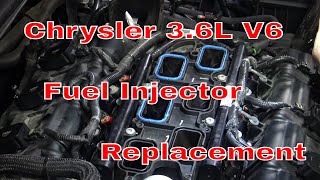
Typical fix: Replace the faulty fuel injector. It is highly recommended to replace the upper and lower intake manifold gaskets at the same time, as the manifold must be removed for access. Many owners and mechanics recommend replacing all six injectors at once since the labor to access them is significant.
Est. part cost: $40-$90 - Wiring Harness or Connector Issue 🟡 Medium Probability The engine bay's high heat and vibrations can cause wires to become brittle, chafe, or break over time. Rodents are also known to chew on the soy-based wiring insulation used in modern cars, causing shorts. The injector connector can also become loose or its terminals can get corroded or bent.
How to confirm: Visually inspect the wiring harness leading to the cylinder 4 injector for any signs of damage, chafing, or melting. Check that the connector is securely plugged in and inspect its terminals for corrosion or damage. Use a noid light to confirm if the injector is receiving a pulse signal from the PCM; a flashing light means the circuit from the PCM is good. If the noid light doesn't flash, check for 12V power on one pin and test the ground wire for continuity back to the PCM. Manufacturer TSB Bulletin #9002688 advises that before replacing injectors for P0204, technicians should ensure the wiring loom and/or connector in the valve cover gasket is not the root cause.
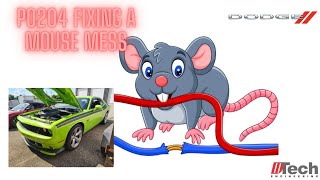
Typical fix: Repair the damaged section of wiring. If the connector is damaged, replace it with a new pigtail connector. In a documented case on a 2019 Challenger, rodent damage caused the two injector wires to touch, shorting out the circuit and damaging the PCM's injector driver.
Est. part cost: $15-$30 - Faulty Powertrain Control Module (PCM) ⚪ Low Probability PCM failure is rare but can happen, especially if an external wiring short damages the internal injector driver circuit. TSB Bulletin #1810216 notes that P0204 can sometimes appear alongside P0606 (Internal Control Processor), which may indicate a PCM-level fault.
How to confirm: This should be the last resort after definitively ruling out the injector (via swap test) and wiring (via noid light, continuity, and load tests). If a known-good injector and verified wiring still result in a P0204 code, the PCM's internal injector driver may be at fault. This was seen in a 2019 Challenger where chewed wires shorted and fried the driver. This typically requires professional diagnosis.
Typical fix: Replace and reprogram the Powertrain Control Module.
Est. part cost: $400-$800
Diagnosis Steps
- Read the codes with an OBD-II scanner and note any other codes present, especially P0304.
- Visually inspect the wiring harness and connector for the cylinder 4 fuel injector (middle cylinder, driver's side). Look for obvious signs of damage, corrosion, or loose connections.
- To quickly test the circuit, use a 'noid light'. Unplug the injector, plug in the noid light, and start the engine. A flashing light indicates the PCM and wiring are sending a signal. No light or a steady light points to a wiring or PCM issue.
- If the noid light flashes correctly, the injector is the likely culprit. Turn off the engine and disconnect the battery.
- To confirm a bad injector, swap the cylinder 4 fuel injector with the one from cylinder 2 (frontmost on the driver's side). This requires removing the upper intake manifold.
- Reconnect everything, clear the codes, and drive the vehicle. If the code returns as P0202, you have confirmed the fuel injector is bad and needs replacement.
- If the P0204 code returns after the swap, the problem lies in the wiring to cylinder 4 or the PCM itself.
- At this point, perform a continuity and voltage drop test on the injector circuit wiring between the PCM and the injector connector to find any breaks or shorts. A load test using a small bulb can confirm the wire's integrity under load.
Parts You'll Likely Need
- Fuel Injector
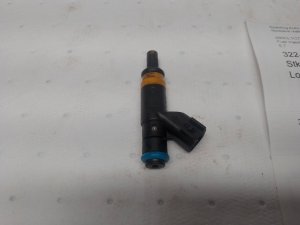
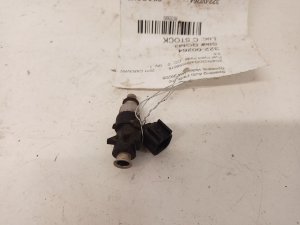
(OEM #05184085AD)— This is the most common cause of a P0204 code on the 3.6L Pentastar engine due to internal electrical failure. The part number 05184085AD supersedes the earlier 05184085AC and remanufactured RL184085AC.
Trusted brands: Mopar, Bosch (OEM manufacturer, P/N 0280158233), Standard Motor Products (SMP)
OEM price range: $70-$110
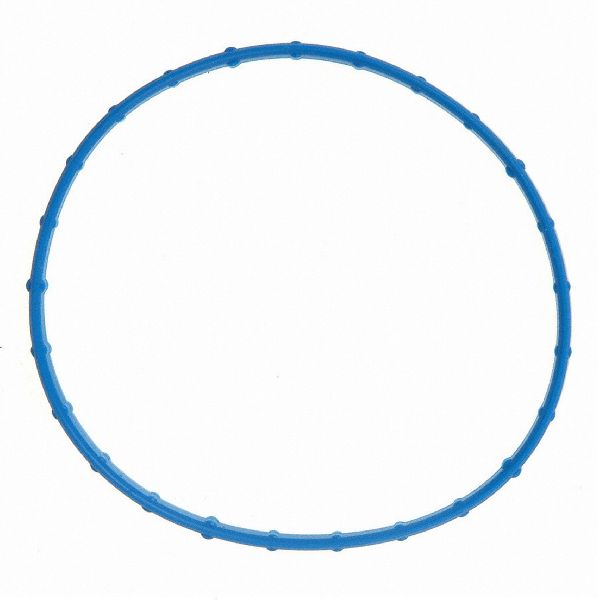
Aftermarket price range: $40-$90 - Upper and Lower Intake Manifold Gaskets
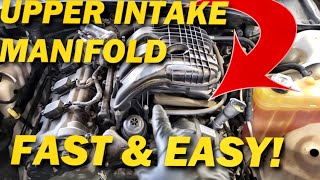
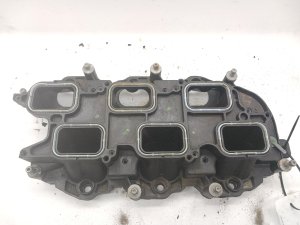
(OEM #Mopar 5184562AC (Upper), Mopar 5184331AC (Lower))— Required for the job because the intake manifold must be removed to access the fuel injectors. These are considered a one-time-use item and should always be replaced to prevent vacuum leaks. 🎬 Watch: Step-by-step guide to removing the upper intake manifold.
Trusted brands: Mopar, Fel-Pro, Mahle
OEM price range: $30-$50
Aftermarket price range: $20-$40
Related Codes That Often Appear With This One
- P0304 — This code means 'Cylinder 4 Misfire Detected'. It is a direct result of the P0204 fault, as the injector circuit problem prevents fuel from being delivered, causing the cylinder to misfire.
- P0300 — This code for 'Random/Multiple Cylinder Misfire' can appear if the misfire from cylinder 4 is severe enough to affect the engine's overall stability and rotational speed, confusing the computer's misfire detection.
- P0202 / P0206 — These codes for the cylinder 2 or 6 injector circuits will appear during diagnosis if you swap a faulty cylinder 4 injector to one of those locations. This is a positive confirmation that the injector itself is the failed component.
- P0108 / P113E — As noted in TSB Bulletin #1810216, P0204 can sometimes be found in conjunction with Manifold Absolute Pressure (MAP) sensor circuit high or O2 sensor slow response codes.
Platform-Specific Known Issues
- Owner Experience: P0204 and P0304 on a 2015 Chrysler 200 (Same Engine): A YouTube video by 'Fix it Rich' titled '2015 Chrysler 200 S AWD - 3.6 Pentastar - How to diagnose faulty fuel injector' documents the process of diagnosing P0204 and P0304. The owner confirms the cylinder 4 injector is the target and demonstrates testing the resistance of the injectors after removing the intake manifold, ultimately finding a faulty injector.
- Forum Discussion: Ruling out other causes: On DodgeChallengerForum.com, a user with P0204 described a thorough diagnostic process. They swapped injectors (code stayed on cyl 4), swapped coils (code stayed), and tested wiring with a noid light and for continuity, which all passed. This left them suspecting a rare PCM issue, illustrating the diagnostic funnel even when the common cause isn't the culprit. URL: https://www.challengerforum.com/threads/p0204-powertrain-injector-circuit-cylinder-4.123537/
Mechanic-Grade Diagnostic Values
- Fuel Injector Coil Resistance — expected: 12.0 - 14.0 Ohms. A common reading is ~12.5-12.9 Ohms.. Failure: Infinite resistance (OL), near-zero ohms (short), or a reading significantly out of spec, such as double the normal value (~24 Ohms).
- Injector Connector Power (Key On, Engine Off) — expected: Battery Voltage (~12V) on the power supply pin.. Failure: No voltage or low voltage, indicating a problem with the power feed from the ASD (Auto Shutdown) relay.
- Injector Control Circuit Voltage (Engine Cranking/Running) — expected: A pulsing 0-12V signal when measured with an oscilloscope or a flashing noid light.. Failure: No pulse, or a steady light, indicates a problem with the PCM driver or the wiring between the PCM and the injector.
- Injector Circuit Continuity (PCM to Injector Connector) — expected: Less than 5.0 Ohms, ideally less than 1.0 Ohm.. Failure: High resistance or an open circuit (OL) indicates a break in the wire.
Scan Tool Commands That Help
- wiTECH (Chrysler/Dodge/Jeep Dealer Tool) or equivalent high-end bidirectional scanner: Fuel Injector Actuator Test / ASD Relay Control State — This command allows the technician to manually fire each injector individually while monitoring fuel pressure drop or listening for a click. It can isolate a non-responsive injector without swapping parts. Activating the ASD relay can also help in testing for power at the injector connector without starting the engine.
Wiring & Ground Locations
- Cylinder 4 Injector Control Circuit — This is the ground-side control wire running from the PCM to the cylinder 4 injector connector. On some schematics, this circuit is designated K14.. This is the specific wire that the PCM uses to pulse the injector. A short to ground, short to voltage, or an open in this wire will directly cause a P0204 code. Continuity should be tested between the injector connector and the corresponding pin at the PCM connector.
- Fused ASD Relay Output Circuit — This circuit provides battery voltage to all fuel injectors on that bank. It originates from the Auto Shutdown (ASD) relay, typically in the underhood fuse box (TIPM).. While a failure here would likely affect multiple injectors (1,3,5 or 2,4,6), an intermittent fault or high resistance specifically affecting the branch to cylinder 4 could trigger the code. A noid light test will fail if this circuit has no power.
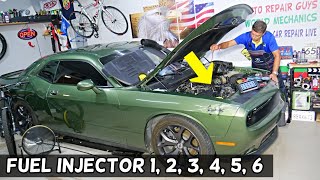
- Cylinder 4 Location — The middle cylinder on the driver's side (left bank) of the engine. The cylinders are numbered 2-4-6 from front to back on the driver's side.. Correctly identifying cylinder 4 is the first step in any diagnosis to ensure you are testing the correct component and wiring.
Real Owner Repair Stories
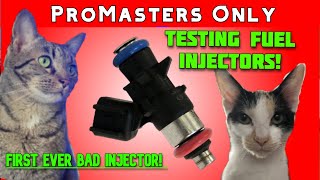
- YouTube video from 'ProMasters Only' (Ram ProMaster with 3.6L Pentastar (same engine and electronics)) — P0204, cylinder 4 misfire, and a random/multiple misfire code (P0300).
❌ Tried (didn't work) The video focuses on the direct diagnosis rather than failed attempts.
✅ What actually fixed it The mechanic tested the resistance of the injectors with a multimeter after removing the upper intake. A good injector read ~12 Ohms, but the cylinder 4 injector read double that value. Replacing the single faulty injector fixed the problem. - DodgeChallengerForum.com user (Dodge Challenger (engine not specified but P0204 is the focus)) — P0204 - Injector circuit cylinder 4, and a misfire on the same cylinder.
❌ Tried (didn't work) Swapped fuel injectors (code stayed P0204), Swapped ignition coils (code stayed P0204), Tested wiring with a noid light (passed), Checked wiring continuity from ECU to plug (passed)
✅ What actually fixed it The user did not post a final resolution, but their exhaustive testing that ruled out the injector and wiring led them to suspect a rare PCM failure. This story is valuable for illustrating the diagnostic process when the common fix isn't the solution.
OEM Part Supersession History
05184085AC→05184085AD— Standard part revision and improvement by the manufacturer.
Heads up: These parts are interchangeable. The 'AD' version is the latest revision. The remanufactured part number is RL184085AC.Mopar 05184085AD→Bosch 0280158233— Bosch is the Original Equipment Manufacturer (OEM) for this Mopar part.
Heads up: This is the equivalent OEM part without the Mopar branding and is a direct replacement. It has a specified resistance of 12.5 Ohms.
Diagnostic Flowchart
Other Known Issues on This Vehicle
Issues unrelated to this code that are worth knowing about as an owner of this generation:
- Cracked Oil Filter/Cooler Housing 🔴 High — Extremely common across all 3.6L Pentastar applications, often after 60,000 miles. The plastic housing becomes brittle and cracks, causing significant oil and/or coolant leaks into the engine valley. (Ref: TSB 09-003-25 addresses unnecessary replacement but confirms the leak issue.)
- Rocker Arm / Lifter Failure ('Pentastar Tick') 🔴 High — Common on earlier (2011-2016) models but can occur on later ones. Needle bearings in the rocker arm fail, causing a distinct ticking sound, misfires, and eventually camshaft lobe damage if ignored. (Ref: Multiple TSBs exist, such as 09-002-17 REV. A, related to valvetrain issues and misfires.)
- Left Cylinder Head Failure (Early Models) 🔴 High — Primarily affected 2011-2013 models. Excessive valve guide wear on the left-bank cylinder head (cylinders 2, 4, 6) would cause ticking, misfires, and power loss. (Ref: Chrysler issued a warranty extension (X56) to 10 years/150,000 miles for the left cylinder head on affected vehicles.)
- Water Pump Failure 🟠 Medium — A common failure point leading to coolant leaks and potential overheating.
Used vs. New Parts: Buying Guide for This Vehicle
When a used part is the smart pick: A used fuel injector from a reputable salvage yard can be a cost-effective option, especially if you are on a tight budget. Since the failure is electrical, a used injector from a lower-mileage, accident-damaged vehicle is likely to have significant life left. However, the labor to access the injectors is significant, so the savings may not be worth the risk of premature failure.
Donor-vehicle mileage cap: roughly under 80000 miles for the part to have meaningful remaining life.
What to inspect on the donor part:
- Test the resistance of the used injector with a multimeter before purchase; it should be between 12-14 Ohms.
- Inspect the plastic connector for cracks or brittleness.
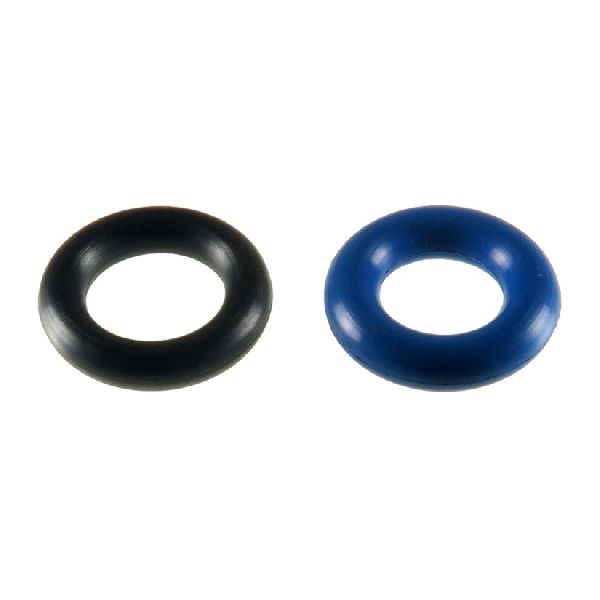
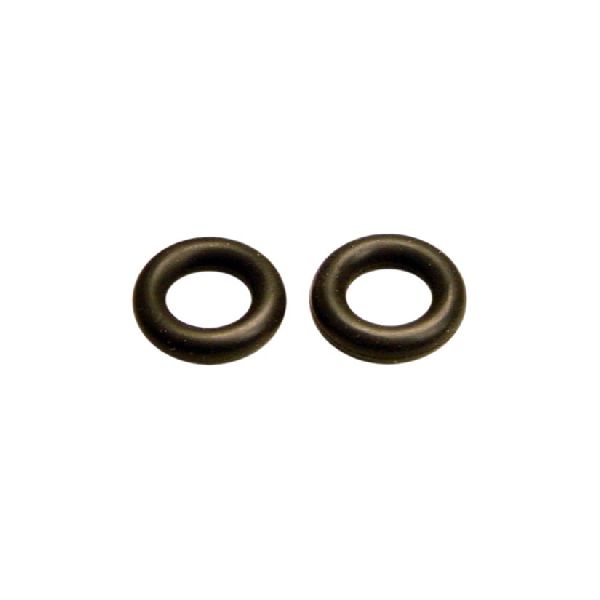
- Ensure the O-rings are present and not flattened or cracked, though it is always recommended to install new O-rings regardless.
- Avoid injectors from engines that show signs of heavy sludge or neglect.
OEM-only on this vehicle (don't cheap out):
- Powertrain Control Module (PCM) - Due to the need for vehicle-specific programming (VIN flashing), a used PCM is often not a viable or reliable solution.
Aftermarket brands forum-validated for this vehicle:
- Bosch (OEM)
- Standard Motor Products (SMP)
- Fel-Pro (for intake gaskets)
- Mahle (for intake gaskets)
Brands owners have reported issues with on this vehicle:
- Unnamed, no-brand injector sets sold on marketplaces like eBay or Amazon are a significant risk. They often have inconsistent flow rates and high failure rates, which can cause persistent performance issues even if they resolve the P0204 code.
Real Owner Stories
Aggregated from forums and TSBs cited above. Mileages and costs reflect what owners reported in those sources.
2015 Chrysler 200 3.6L Pentastar V6
Symptoms: The owner experienced a P0204 and P0304 code. Diagnosis involved removing the intake manifold to test the resistance of the injectors.
What fixed it: Replacement of the faulty cylinder 4 fuel injector after finding it had failed a resistance test.
Source hint: YouTube video by 'Fix it Rich' titled '2015 Chrysler 200 S AWD - 3.6 Pentastar - How to diagnose faulty fuel injector'
2019 Dodge Challenger 3.6L Pentastar V6
Symptoms: Rodent damage caused two injector wires to touch, which shorted out the circuit.
What fixed it: Repairing the damaged wiring and replacing/reprogramming the Powertrain Control Module (PCM) because the short had damaged the internal injector driver.
Source hint: Common Causes - Wiring Harness or Connector Issue
2011-2023 Dodge Challenger 3.6L Pentastar V6
Symptoms: The owner had a P0204 code and performed a thorough diagnostic: swapped injectors (code stayed on cyl 4), swapped coils (code stayed), and tested wiring with a noid light and continuity (all passed).
What fixed it: The diagnostic process pointed toward a rare internal PCM injector driver failure after all other components were ruled out.
Source hint: DodgeChallengerForum.com thread 'P0204 powertrain injector circuit cylinder 4'
Documented NHTSA Reports
- A manufacturer service bulletin (TSB Bulletin #1810216) notes that P0204 may occur alongside symptoms like a 1-2 upshift clunk or bump, and other codes such as P0108 (MAP Sensor Circuit High) and P0606 (Internal Control Processor).
- Manufacturer TSB Bulletin #9002688 advises technicians that before replacing injectors for codes P0201 through P0206, they should verify that the wiring loom or the connector in the valve cover gasket is not the actual root cause of the circuit fault.
Related OBD-II Codes
Frequently Asked Questions
Where is the cylinder 4 fuel injector located on my 3.6L Pentastar Challenger?
I have a P0204 code; should I replace just the one injector or all six?
What parts do I need to buy besides the injector for my 2011-2023 Challenger?
Does TSB 09-003-25 relate to my P0204 injector code?
Could a ticking sound in my engine be related to the P0204 code?
How can I be sure the injector is bad before I spend $40-$90 on a new one?
Helpful Videos
Used OEM Parts in Stock



New Aftermarket Parts Available


The information in this article is provided for general reference and educational purposes only. Vehicle specifications, procedures, and part compatibility can vary by production date, trim level, and region. Always consult your vehicle's factory service manual and verify part numbers before purchasing or performing repairs. Safety-critical components such as airbags, seat belts, and braking systems should be installed by a qualified professional.
- Dodge Challenger:
- 🎬 Helpful Videos
- 🛍️ Shop This Part
- What's Unique About the 2011-2023 Dodge Challenger
- Symptoms You May Notice
- Most Likely Causes
- Diagnosis Steps
- Parts You'll Likely Need
- Related Codes That Often Appear With This One
- Platform-Specific Known Issues
- Mechanic-Grade Diagnostic Values
- Scan Tool Commands That Help
- Wiring & Ground Locations
- Real Owner Repair Stories
- OEM Part Supersession History
- Diagnostic Flowchart
- Other Known Issues on This Vehicle
- Used vs. New Parts: Buying Guide for This Vehicle
- Real Owner Stories
- 2015 Chrysler 200 3.6L Pentastar V6
- 2019 Dodge Challenger 3.6L Pentastar V6
- 2011-2023 Dodge Challenger 3.6L Pentastar V6
- Documented NHTSA Reports
- Related OBD-II Codes
- Frequently Asked Questions
- 🎟️ Get 5% Off