

P0204 on 2012-2014 Chrysler 200: Fuel Injector Circuit Causes and Fixes
On a 2012-2014 Chrysler 200, a P0204 code is frequently caused by a software issue in the Powertrain Control Module (PCM), particularly on the 2.4L engine. Before replacing parts, check for Technical Service Bulletin #18-014-14, which recommends a PCM software update as the first step. If that doesn't solve it, the issue is likely a faulty fuel injector, a broken wire at the connector, or a bad injector on cylinder #4.
- Your first step for a P0204 on this car should be to check if TSB #18-014-14 (a software update) has been performed.
- Do not replace the fuel injector or PCM without first ruling out the software issue and testing the wiring.
- A P0204 code will almost always be paired with a P0304 (Cylinder 4 Misfire) code.
- Driving with this issue can damage your catalytic converter, so it's best to address it promptly.
- Basic diagnostic tools like a multimeter and a noid light are very helpful for pinpointing the cause.
What's Unique About the 2012-2014 Chrysler 200
What's unique about the 2012-2014 Chrysler 200 is that a P0204 code is officially linked to a software problem, not just a hardware failure. Chrysler issued Technical Service Bulletin (TSB) #18-014-14 specifically to address this code on the 2.4L engine by reprogramming the Powertrain Control Module (PCM) with updated software. This makes checking for and performing this software update a critical first step, potentially saving the cost of an unnecessary fuel injector replacement. Owners on forums like chryslerforum.com have confirmed that after replacing an injector to no avail, the dealership reflash ultimately solved the problem, highlighting the importance of this step.
Diagnostic Flowchart
Tap your situation to follow the diagnostic path that matches what you're seeing on this vehicle.
Symptoms You May Notice
- Check Engine Light is on
- Rough or vibrating idle.
- Engine misfire (may feel like a shake or stumble), often setting a P0304 code as well.
- Poor acceleration and loss of power.
- Reduced fuel economy.
- Engine may hesitate or stall.
- Harsh or clunky automatic transmission shifts (as noted in TSB #1810216 for the 3.6L engine).
- Replacing the fuel injector before checking for the applicable PCM software update (TSB #18-014-14).
- Replacing the PCM before thoroughly testing the wiring harness for opens or shorts right at the injector connector.
- Assuming the injector is bad when the actual fault is a broken wire inside the insulation near the plug.
Most Likely Causes
- Powertrain Control Module (PCM) Software Glitch 🔴 High Probability Chrysler issued TSB #18-014-14 specifically to fix this code with a software update for the 2.4L engine, indicating it's a known issue where the PCM incorrectly flags the circuit. TSB #1810216 also lists P0204 as being fixable by a reflash on 3.6L models.
How to confirm: Contact a Chrysler dealership or a qualified shop with access to factory tools (like wiTECH) to check if TSB #18-014-14 (for 2.4L) or #1810216 (for 3.6L) applies to your vehicle's VIN and if the update has been performed.
Typical fix: Reprogramming (flashing) the PCM with the new software. This is a dealer or specialty shop-only repair.
Est. part cost: $0 (if under warranty) - $150 - Faulty Fuel Injector #4 🟡 Medium Probability Fuel injectors can fail electrically over time due to heat cycles and mileage. The internal coil can develop an open or short, preventing it from firing. Owners often report this as the cause after ruling out software.
How to confirm: Check the injector's resistance with a multimeter; it should be around 12-15 ohms. A more definitive test is to swap the #4 injector with another one (e.g., #2). Clear the codes. If the code changes to P0202, the injector is faulty.
Typical fix: Replace the failed fuel injector.
Est. part cost: $40-$150 - Wiring or Connector Issue 🟡 Medium Probability The wiring harness in the engine bay is exposed to heat and vibration, which can cause wires to break or insulation to chafe, especially right at the injector connector. The connector's locking tab can become brittle and fail, leading to a poor connection.
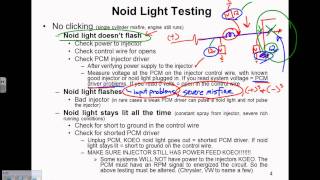
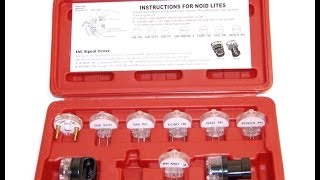
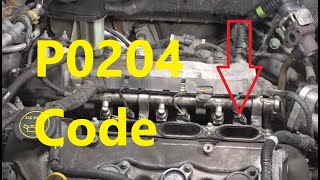
How to confirm: Visually inspect the wiring going to fuel injector #4 for any signs of damage, especially within a few inches of the plug. Check for a secure connection. Use a noid light to verify the PCM is sending a pulse signal to the injector connector; a steady flashing light is normal. 🎬 See how to use a noid light to test injector signals.
Typical fix: Repair the damaged section of wire or replace the connector pigtail (Mopar P/N 5183448AA or equivalent).
Est. part cost: $15-$50
Rare But Worth Checking
- Failed Powertrain Control Module (PCM): This is rare and should only be considered after the PCM software has been updated and both the injector and its wiring have been proven to be good. The internal driver circuit for injector #4 can fail.
- Defective Left Cylinder Head (2012-2013 3.6L V6 Only): A known defect in the left cylinder head (cylinders 2, 4, 6) can cause loss of compression and misfires. While P0204 is an electrical code, it can sometimes be set alongside a P0304 misfire code caused by this mechanical issue. Chrysler issued a warranty extension (X56) for this problem.
Diagnosis Steps
- Scan for all DTCs. Note if P0304 or other codes from TSB #1810216 are present.
- Check for TSBs. Contact a dealer to see if TSB #18-014-14 (2.4L) or #1810216 (3.6L) applies to your VIN. If so, performing the PCM reflash is the recommended first step.
- Locate and Inspect Cylinder #4. On the 2.4L I4 engine, the cylinders are numbered 1-2-3-4 from left (timing belt side) to right (transmission side); #4 is on the far right. On the 3.6L V6, the front bank (near radiator) contains cylinders 2-4-6 from left to right; #4 is the middle cylinder in the front. Visually inspect the wiring harness and connector for fuel injector #4. Look for obvious damage, corrosion, or loose connections.
- Test the Injector Signal. Unplug the connector and plug in a noid light. Start the engine; a consistent, flashing light indicates the PCM and wiring are sending a proper signal. If the light is off or stays on constantly, the problem is in the wiring or PCM.
- Test the Injector Resistance. Disconnect the injector and measure the resistance across its two terminals with a multimeter. It should be around 12-15 ohms. An 'OL' (Open Loop) reading or zero resistance means the injector has failed internally.
- Swap the Injector. If the injector resistance seems okay, swap it with an injector from another cylinder (e.g., cylinder #2). Clear the codes and drive the vehicle. If the code returns as P0202 ('Injector Circuit/Open - Cylinder 2'), the injector is confirmed to be faulty. This is a common DIY diagnostic step.
- Test the Wiring. If the code remains P0204 after the swap, the problem is in the wiring or the PCM. Check for continuity on the control wire from the PCM connector (requires a wiring diagram for pinout) to the injector connector. Wiggle the harness during the test to find intermittent breaks.
- Suspect the PCM. If the injector, signal, and wiring are all good, and the software has been updated, the PCM's internal injector driver may have failed, requiring PCM repair or replacement.
Parts You'll Likely Need
- Fuel Injector (3.6L V6)
(OEM #05184085AC)— This is the most common hardware failure for a P0204 code on the V6 after a software issue is ruled out. The internal coil fails, creating an open circuit. Superseded by 5184085AD and RL184085AC.
Trusted brands: Mopar, Bosch, Standard Motor Products
OEM price range: $100-$150
Aftermarket price range: $40-$90 - Fuel Injector (2.4L I4)
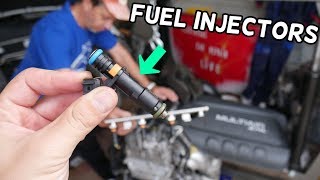
(OEM #04891577AC)— This is the corresponding part for the 4-cylinder engine, 🎬 Watch: Step-by-step fuel injector replacement for the 2.4L engine. which can also suffer from electrical failure. Superseded by 04891577AD.
Trusted brands: Mopar, VDO, GB Remanufacturing
OEM price range: $90-$130
Aftermarket price range: $35-$70 - Fuel Injector Connector Pigtail
(OEM #5183448AA)— The wires often break right at the connector due to heat and vibration. Replacing the pigtail is often necessary if the connector itself is damaged or a wire has broken flush with the connector body.
Trusted brands: Mopar, Dorman, Standard Motor Products (S-2087)
OEM price range: $25-$40
Aftermarket price range: $15-$30
Related Codes That Often Appear With This One
- P0304 — P0304 means 'Cylinder 4 Misfire Detected'. Since P0204 indicates a problem with the fuel supply for that same cylinder, the cylinder isn't getting the right amount of fuel, causing it to misfire. This is a very common pairing.
- P0606 — This code means 'Internal Control Processor' failure. TSB #1810216 lists this code alongside P0204, suggesting a broader PCM-related issue that can be resolved with a software flash on 3.6L models.
- P0108 — This code for 'Manifold Absolute Pressure Sensor Circuit High' is also mentioned in TSB #1810216, indicating it can appear as part of a cluster of PCM-related software faults on the 3.6L.
Technical Service Bulletins (TSBs) & Recalls
- Bulletin #18-014-14: Recommends reprogramming the Powertrain Control Module (PCM) to resolve a false P0204 code on models with the 2.4L engine.
- Bulletin #1810216: A superseding bulletin for the 3.6L engine that groups P0204 with other diagnostic codes that can be fixed with a PCM software update and notes related symptoms like harsh transmission shifting.
Platform-Specific Known Issues
- PCM Software Update (TSB #18-014-14): Chrysler issued TSB #18-014-14 specifically because the PCM on 2.4L models could falsely set a P0204 code. A software reflash is the designated fix and should be the first step before replacing hardware.
- Associated Transmission Complaints (TSB #1810216): For the 3.6L V6, TSB #1810216 links the P0204 code to other PCM issues that can cause symptoms like a 1-2 or 4-5 upshift clunk, indicating the root cause may be a software fault affecting multiple systems, not just the injector circuit.
Mechanic-Grade Diagnostic Values
- Fuel Injector Coil Resistance (3.6L Pentastar) — expected: ~12.0 - 12.5 Ohms. Failure: A reading of OL (Open Loop/infinite resistance), near-zero (short circuit), or a significantly different value from other injectors (e.g., double the resistance) indicates a faulty injector.
- Fuel Injector Coil Resistance (2.4L World Engine) — expected: ~11 - 18 Ohms. Failure: A reading outside this range, or one that is not consistent with the other three injectors, points to a failure.
- Injector Power Supply Wire Voltage (Key On, Engine Off) — expected: Battery Voltage (~12.6V). Failure: Low or no voltage suggests an issue with the power feed from the Auto Shutdown (ASD) relay or a related fuse, not the injector or PCM driver.
- Injector Pulse Width at Idle — expected: Typically 2.0 - 4.0 milliseconds (ms). Failure: While not a direct test for an open circuit, a scan tool showing a zero or erratic pulse width for cylinder 4 while others are normal can point to a circuit or driver issue.
- PCM Inductive Kick Sense Time — expected: PCM expects to see the injector's inductive kick within 0.18ms after the injector is turned off.. Failure: If no inductive kick is sensed by the PCM, it will set the P0204 code. This is the specific logic the PCM uses to detect an open circuit.
Scan Tool Commands That Help
- wiTECH (Chrysler Dealer Tool): Fuel Injector Kill / Cylinder Cutout Test — This bidirectional test allows the technician to command the PCM to stop firing the #4 fuel injector. If the engine's idle quality does not change when the injector is 'killed', it confirms that cylinder was not contributing in the first place, strongly indicating a fault in that injector's circuit.
- wiTECH (Chrysler Dealer Tool): ASD Relay Actuation Test — This function manually turns the Auto Shutdown (ASD) relay on and off. It is used to verify that the relay, which supplies power to all fuel injectors, is functioning correctly and that battery voltage is present on the power side of the injector circuit without needing to run the engine.
Wiring & Ground Locations
- Injector #4 Control Wire (3.6L) — Runs from the Powertrain Control Module (PCM) to the #4 fuel injector connector. On the Pentastar, this is the middle cylinder on the front bank (near the radiator).. This is the specific ground-side driver wire that the PCM pulses to fire the injector. An open or short-to-ground on this wire is a primary cause of P0204. It is often a Brown wire with a Gray tracer.
- Injector Power Supply Wire (Common) — Runs from the Auto Shutdown (ASD) relay to one of the two pins on each fuel injector connector.. This wire provides 12V power to all injectors. While a fault here would typically affect multiple cylinders, a break in the wire near the #4 injector could isolate the fault. On Chrysler vehicles, this is often a Dark Green/Orange wire.
- PCM Connector — The PCM is located in the engine bay, often near the firewall or fender. The injector driver wires terminate at one of the main PCM connectors.. This is the source of the control signal. Testing for continuity between the specific pin for the #4 injector at this connector and the injector harness plug is the definitive way to rule out a wiring break.
Real Owner Repair Stories
- YouTube user 'World Mechanics' (Chrysler vehicle with P0204 (specific model not stated, but demonstrates common issue)) — Check Engine Light with code P0204, rough running.
❌ Tried (didn't work) Initial diagnosis pointed towards a bad injector.
✅ What actually fixed it The wiring connector for the #4 fuel injector was not fully seated. The locking clip had come loose, causing an intermittent open circuit. Pushing the connector on until it clicked and securing the lock resolved the code.
Helpful Videos
Used OEM Parts in Stock

New Aftermarket Parts Available


The information in this article is provided for general reference and educational purposes only. Vehicle specifications, procedures, and part compatibility can vary by production date, trim level, and region. Always consult your vehicle's factory service manual and verify part numbers before purchasing or performing repairs. Safety-critical components such as airbags, seat belts, and braking systems should be installed by a qualified professional.
- Chrysler 200:
- 🎬 Helpful Videos
- 🛍️ Shop This Part
- What's Unique About the 2012-2014 Chrysler 200
- Diagnostic Flowchart
- Symptoms You May Notice
- Most Likely Causes
- Rare But Worth Checking
- Diagnosis Steps
- Parts You'll Likely Need
- Related Codes That Often Appear With This One
- Technical Service Bulletins (TSBs) & Recalls
- Platform-Specific Known Issues
- Mechanic-Grade Diagnostic Values
- Scan Tool Commands That Help
- Wiring & Ground Locations
- Real Owner Repair Stories
- 🎟️ Get 5% Off