

P0204 on 2006-2013 BMW 3 Series N54: Causes for Injector Circuit Malfunction on Cylinder 4
On the N54 engine, code P0204 almost always points to a failed fuel injector on cylinder 4. This is a very common issue. Expect to pay $200-$300 for a single OEM replacement injector and tackle it as a DIY job (3/5 difficulty) or pay a shop for 1-2 hours of labor. It's crucial to replace it with the latest 'Index 12' version (P/N 13538616079) and code it to the DME. Less common causes include a bad wiring connector or a failed MOSFET driver in the engine computer (DME).
- P0204 on a BMW N54 almost always means you need a new fuel injector for cylinder 4.
- When replacing, you MUST use the latest 'Index 12' injector for reliability and also replace the small decoupling seal.
- The new injector must be coded to the car's computer (DME) with appropriate software.
- A simple diagnostic step is to swap the injector with a neighboring cylinder to see if the fault code follows.
- Before buying parts, double-check the electrical connector on the injector to ensure it's secure, as a loose connection can also cause this code.
What's Unique About the 2006-2013 BMW 3 Series
The BMW N54 engine is notorious for fuel injector issues. Early versions of the piezo-style injectors were prone to failure, leading BMW to release multiple updated versions, culminating in the most reliable 'Index 12' injectors. BMW even extended the warranty on these parts to 10 years or 120,000 miles under bulletin SI B01 02 15 due to the high failure rates. Another known, though less common, issue is the failure of the MOSFET driver chip within the MSD80/MSD81 DME that controls the injector, which can mimic a failed injector. A shorted injector can sometimes cause the MOSFET to fail.
Generation note: The 2006-2013 BMW 3 Series range covers the E90 (sedan), E91 (wagon), E92 (coupe), and E93 (convertible) generation. The N54 engine was used across these models, primarily in the 335i, from 2006 until it was phased out around 2010-2011 in favor of the N55 engine. The issues related to P0204 are specific to the N54 engine, not the chassis generation. The special 335is model used the N54 until 2013.
Symptoms You May Notice
- Illuminated Check Engine Light or 'Service Engine Soon' message.
- Rough idle and engine vibrations.
- Noticeable engine misfire, especially under load.
- Hesitation or stumbling during acceleration.
- Reduced engine power and responsiveness.
- Engine may enter 'limp mode,' limiting speed.
- Increased fuel consumption and poor MPG (as low as 12 MPG reported by owners).
- Smell of unburnt fuel from the exhaust.
- Long crank times on startup.
- In some cases, the engine may run on only three cylinders (bank 2) if the DME fault is severe (codes 30BA/30BB).
- Replacing the spark plug or ignition coil for cylinder 4. While these can cause a misfire (P0304), they will not cause an injector circuit code (P0204). The P0204 code is specifically an electrical fault related to the injector circuit. However, a faulty injector can foul the spark plug, so it's wise to inspect it during the repair.
Most Likely Causes
- Faulty Fuel Injector (Cylinder 4) 🔴 High Probability The original piezo injectors on the N54 engine have a very high failure rate due to internal component failure. BMW has released many revised versions ('Indexes') over the years. It is highly recommended to replace injectors in complete banks (cylinders 1-3 or 4-6) if the existing injectors are Index 10 or older.
How to confirm: The most reliable method is to swap the cylinder 4 injector with an adjacent one (e.g., cylinder 5). Clear the codes and run the engine. If the fault code changes to P0205 (for cylinder 5), the injector is confirmed to be faulty. A multimeter check is less definitive for piezo injectors, but a good one should read around 200k Ohms. Leaking injectors can sometimes be identified by pulling the spark plugs after the car has sat overnight; the plug in the leaking cylinder will be wet with fuel.
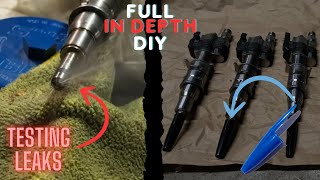
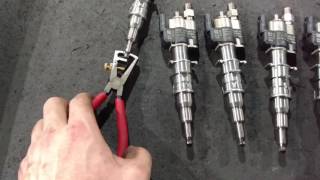
Typical fix: Replace the faulty fuel injector. 🎬 Watch this full tutorial on replacing your N54 injectors. It is critical to replace it with the latest available version (Index 12, P/N 13538616079). The new injector must be 'coded' to the DME using diagnostic software so the engine knows its precise flow rate values, which are printed on the injector body. 🎬 Watch: How to code your new injectors using INPA. The decoupling element (a small seal, P/N 13537584315) and its retaining clip must also be replaced.
Est. part cost: $200-$350 for one OEM injector - Damaged Wiring or Loose Connector 🟡 Medium Probability The injector wiring harness sits atop the engine and is exposed to significant heat and vibration, causing wires to become brittle and crack over time. The small metal retaining clip on the connector can come loose or be misplaced during other services (like a valve cover gasket change), leading to a poor connection that triggers P0204.
How to confirm: Visually inspect the wiring harness and the connector for cylinder 4. Ensure the connector is fully seated and the metal retaining clip is secure. Check for any signs of chafed, brittle, or broken wires. Wiggle the connector with the engine running to see if it affects the idle. A user on Bimmerpost found their P0204 code was caused by the retaining clip getting stuck under the connector, preventing it from seating properly.
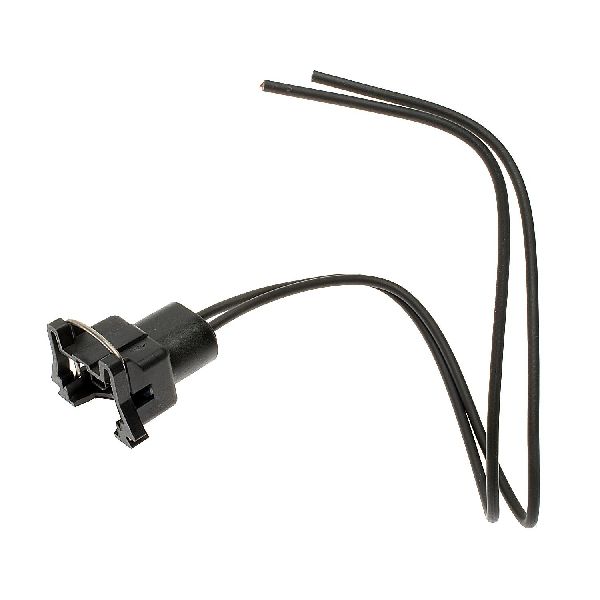
Typical fix: Reseat the connector securely. If the retaining clip is missing, replace it. If wires are damaged, repair the affected section of the harness using a pigtail repair kit. In severe cases, the entire engine wiring harness may need replacement.
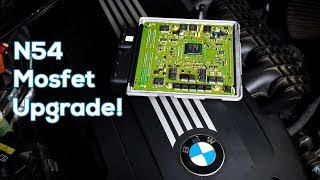
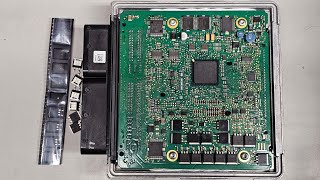
Est. part cost: $5-$50 for connector/pigtail repair - Failed DME Injector Driver (MOSFET) ⚪ Low Probability The transistors (MOSFETs) in the DME that fire the injectors can fail, especially on the earlier MSD80 DME version. This creates an open circuit that triggers codes like P0204 and often BMW-specific codes 30BA or 30BB. The failure can be caused by age, heat cycles, or a short circuit in the injector or wiring.
How to confirm: This is diagnosed after confirming the injector and wiring are good. A 'noid' light plugged into the injector harness will fail to flash if the DME driver is dead. An oscilloscope can also be used to check for a pulse signal from the DME. A multimeter can be used to check for a short in the MOSFET itself on the DME circuit board.
Typical fix: The DME must be removed from the vehicle. A specialist can replace the failed MOSFET (part number FDB14N30TM) on the circuit board using a hot air rework station. 🎬 See how to diagnose and repair failed DME MOSFETs. This is significantly cheaper than replacing the entire DME. Many services offer this repair for around $100-$200.
Est. part cost: $10 for new MOSFETs, $100-$400 for board repair service, $1000+ for a new DME
Diagnosis Steps
- Read the fault codes with a BMW-capable scanner to confirm P0204 is present, and check for any other codes like P0304, 29D0, or 30BB.
- Locate cylinder 4 (the fourth cylinder from the front of the engine).
- Inspect the electrical connector on the cylinder 4 fuel injector. Ensure it is plugged in tightly and the metal retaining clip is secure. Check for any visible damage to the wires.
- If the connection looks good, the next step is to swap parts to isolate the fault. Swap the cylinder 4 injector with the cylinder 5 injector. This requires removing the engine's acoustic cover, fuel rail lines, and injector retaining clips. Special tools are required for removing the injector and replacing its Teflon seal.
- After swapping the injectors, clear the fault codes and start the engine. Let it run for a few minutes.
- Re-scan for codes. If the code has moved to P0205 (Cylinder 5 Injector Circuit), the fuel injector itself is the faulty component.
- If the P0204 code returns, the problem lies in the wiring or the DME, not the injector.
- To test the wiring and DME, use a 'noid' light. Disconnect the cylinder 4 injector harness and plug in the noid light. Crank the engine. If the light flashes, the DME and wiring are likely good, pointing to an intermittent injector or connection issue. If the light does not flash, there is a problem with the wiring or the DME's injector driver.
- If the noid light does not flash, check for continuity on the wiring between the DME and the injector plug. If the wiring is good, the final possible cause is a failed MOSFET driver in the DME itself.
Parts You'll Likely Need
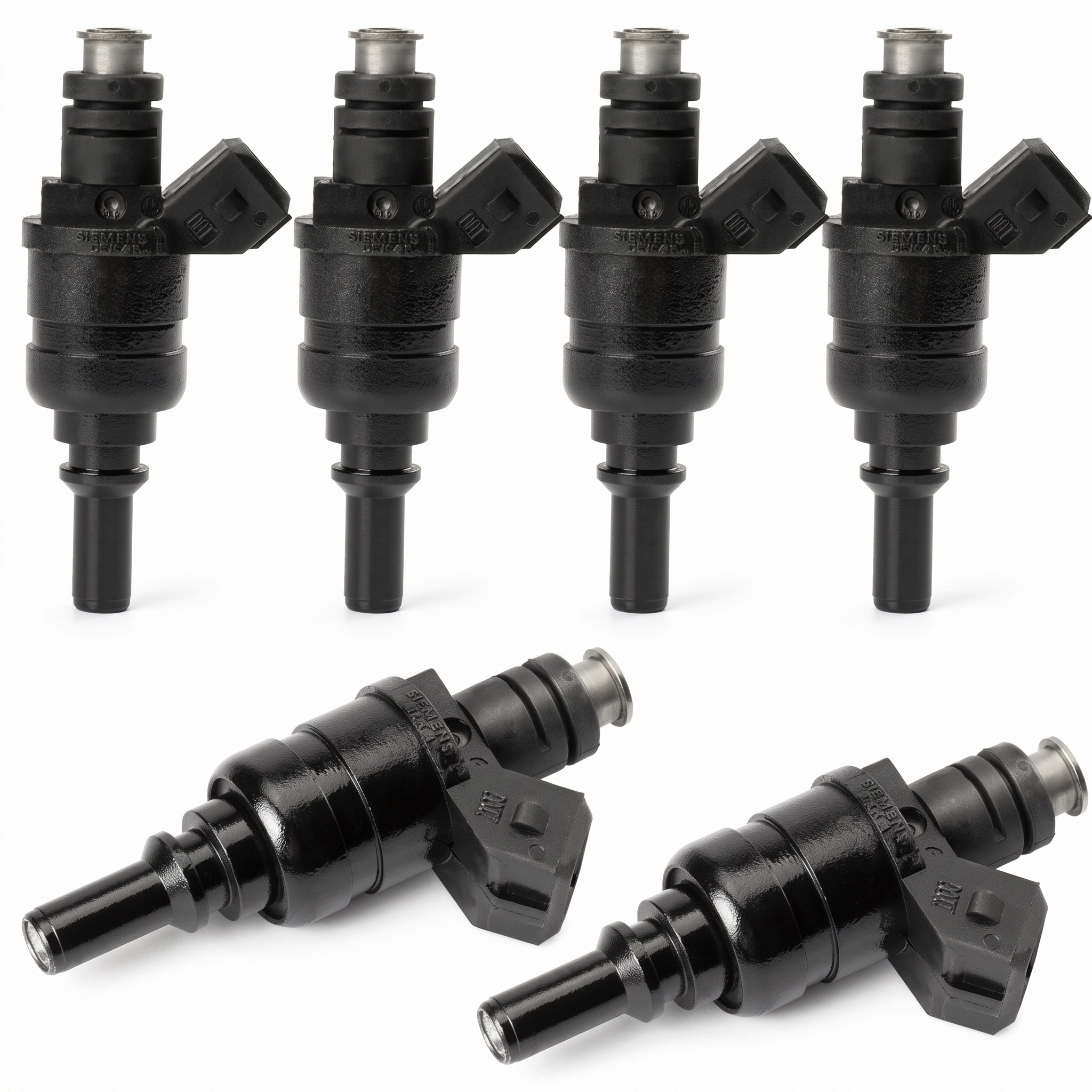
- Fuel Injector (Piezo, Index 12)
(OEM #13538616079)— This is the most common failure point for a P0204 code on the N54 engine. The latest revision, 'Index 12', is the most reliable. Earlier part numbers like 13537585261 and 13537565138 are superseded by this one.
Trusted brands: Genuine BMW, Vitesco (formerly VDO/Continental, the OE supplier)
OEM price range: $250-$400
Aftermarket price range: $200-$300 - Fuel Injector Decoupling Element
(OEM #13537584315)— This is a one-time use Teflon seal that fits on the injector tip. It must be replaced any time an injector is removed and reinstalled to prevent combustion leaks. Special tools are required to install and compress it.
Trusted brands: Genuine BMW, OE Supplier
OEM price range: $5-$15
Aftermarket price range: $3-$10 - Injector Removal and Installation Tool Kit — Required for safely pulling the injector without damage and for correctly installing the new Teflon seal onto the injector tip before installation.
Related Codes That Often Appear With This One
- P0304 — P0304 means 'Cylinder 4 Misfire'. Since the P0204 code indicates a problem with fuel delivery to cylinder 4, a misfire is an almost guaranteed symptom and corresponding code.
- 29D0 — This is a BMW-specific code for 'Misfire, Cylinder 4'. It is the manufacturer equivalent of the generic P0304 and will almost always accompany a P0204.
- 30BA / 30BB — These BMW-specific codes indicate a DME internal fault, often pointing directly to a failed injector MOSFET. 30BA typically refers to injectors 1, 2, 3 and 30BB to injectors 4, 5, 6. If you see one of these, the DME is the likely culprit.
Technical Service Bulletins (TSBs) & Recalls
- SI B01 02 15: Extension of the limited warranty for the N54 engine fuel injectors to 10 years or 120,000 miles. This bulletin confirms the high failure rate and applies to eligible US-specification vehicles. It is not a recall.
Platform-Specific Known Issues
- BMW extended the limited warranty for N54 fuel injectors to 10 years or 120,000 miles under Service Information Bulletin SI B01 02 15. While most of these vehicles are now outside that window, it highlights the prevalence of the issue. The bulletin confirms this is not a recall but an extension for defects in materials or workmanship.
- Injectors must be coded to the DME after installation. This requires diagnostic software (like INPA, ISTA, Autel, or ProTool) to input the two 3-digit flow rate values printed on the new injector. Failure to do so will result in rough running, poor performance, and potential engine damage.
- Injector Index numbers are critical. The number after the part number (e.g., -11, -12) indicates the revision. It is not recommended to mix injectors with indexes below 11 with those that are index 11 or higher in the same cylinder bank (1-3 or 4-6). If replacing an injector with an index of 10 or lower, all three in that bank should be replaced with new Index 12 injectors.
Mechanic-Grade Diagnostic Values
- Piezo Fuel Injector Resistance — expected: 200k Ohms (± 40k Ohms). Failure: A reading of open circuit (OL) or a significantly lower resistance. However, some forum users report working injectors testing outside this range, so this test is not 100% definitive.
- Injector Pulse Width (at idle) — expected: ~0.2-0.3 ms. Failure: Values significantly outside this range, or erratic readings, can indicate a problem with the injector or DME control.
- Injector Pulse Width (under high load) — expected: Up to 2.0 ms. Failure: The DME may command longer pulse widths to compensate for a weak injector, but the maximum is around 2ms.
- Injector Control Voltage — expected: High voltage pulse (over 100V), not a standard 12V signal.. Failure: Absence of a high voltage pulse when checked with an oscilloscope. A standard multimeter is not suitable for this measurement.
Hidden / Shadow Codes Worth Checking
- 30BB: DME digital motor electronics, internal failure. This code specifically points to a fault on the circuit controlling injectors for bank 2 (cylinders 4, 5, 6). It almost always indicates a failed MOSFET driver on the DME board, but can also be triggered by a short in the wiring or a bad injector. (see via BMW-specific scan tools like ISTA, INPA, or advanced aftermarket tools like ProTool.)
- 29D0: Combustion misfire, cylinder 4. This is the BMW-specific equivalent of the generic P0304 misfire code and will almost always be present alongside P0204. (see via BMW-specific scan tools like ISTA, INPA, or advanced aftermarket tools.)
Scan Tool Commands That Help
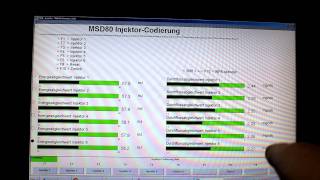
- INPA: Injector Rate Comparison (Shift+F4 from MSD80 System Diagnosis menu) — This screen is used to read the current injector calibration values and to write the new values after replacing an injector.
- INPA: Coding New Injector Values (F1, F2, etc. on Injector Rate screen) — After installing a new injector, select the corresponding cylinder (e.g., F4 for cylinder 4) and enter the two 3-digit calibration numbers printed on the new injector. The software requires decimal points (e.g., '582' becomes '58.2' and '227' becomes '2.27').
- ISTA/D: Service Functions -> Engine Electronics -> Adjust injectors — This is the dealer-level software procedure for entering the calibration values for new injectors. It guides the user through the process for each cylinder.
Wiring & Ground Locations
- Injector 4 DME Pin — On the MSD80/MSD81 DME, the signal for injector 4 is on connector X60006, Pin 3.. This is the specific pin at the DME to test for continuity back to the injector connector. A break in the wire between this pin and the injector will cause P0204.
- Engine Ground Strap — Connects the driver's side engine mount arm to the chassis frame rail. It is accessible from underneath the car after removing the splash shield.. A corroded or loose main engine ground can cause a host of bizarre electrical issues, including intermittent injector and DME faults. While not a direct cause of a single-cylinder code, it can create voltage irregularities that lead to misdiagnosis.
- DME Connector X60007 — This is one of the large multi-pin connectors on the DME itself, located in the electronics box (E-box) in the engine bay.. Corrosion or backed-out pins on any of the main DME connectors can cause injector circuit faults. This connector specifically carries signals for various sensors and actuators.
Real Owner Repair Stories
- Bimmerpost user (2008 135i (N54)) — Car parked for 2 weeks, started with severe misfire and 30BB code.
❌ Tried (didn't work) Swapped coils, plugs, and injectors between banks., Tested wiring from injectors to DME - all good., Measured MOSFETs in the DME - all tested identical and not shorted., Sent DME to a specialist who replaced MOSFETs as a precaution, but the fault remained on their test bench.
✅ What actually fixed it The ECU specialist found a bad solder joint on the second, lower circuit board inside the DME. Repairing this solder joint resolved the 30BB code. - Bimmerpost user (2006 330xi (N52, but same connector issue)) — P0204, rough idle, and exhaust smoke immediately after a valve cover gasket replacement.
❌ Tried (didn't work) Initial assumption was a major engine issue or faulty injector.
✅ What actually fixed it The metal retaining clip for the injector #4 electrical connector had gotten stuck underneath the plastic connector body, preventing it from seating fully. Removing the clip and properly reseating the connector fixed the issue instantly. - Bimmerpost user (2007 335i) — 30BB code, misfires on bank 2 (cylinders 4, 5, 6).
❌ Tried (didn't work) Replaced MOSFETs, but the removed ones tested good and the problem persisted., Checked all fuses.
✅ What actually fixed it The user gave up and took it to a shop. The ultimate cause was found to be a bad injector ground wire.
OEM Part Supersession History
13537537317, 13537565138, 13537585261→13538616079 (Index 12)— Early index injectors had extremely high failure rates due to internal component degradation.
Heads up: Injectors with Index 10 and lower cannot be mixed in the same engine with injectors of Index 11 and higher due to different internal construction and calibration. If upgrading, all 6 injectors must be replaced if the old ones are Index 10 or below.
Model Year Variations Within This Range
- 2006 - early 2008: These models were typically equipped with the MSD80 DME. This version is widely known to be more susceptible to injector driver (MOSFET) failure, which causes the 30BA/30BB codes.
- late 2008 - 2013: These models received the updated MSD81 DME. The MSD81 has more robust MOSFETs and power supply units, making it significantly less prone to the internal failures that plague the MSD80. Many owners of older cars opt to upgrade to a coded MSD81 as a permanent solution.
Diagnostic Flowchart
Used vs. New Parts: Buying Guide for This Vehicle
When a used part is the smart pick: For this specific repair, buying used injectors is highly discouraged and considered a major gamble. The only used part that might make sense is a complete, tested MSD81 DME to upgrade from a failed MSD80, but it must be properly cloned/coded to the car's immobilizer system (CAS).
Donor-vehicle mileage cap: roughly under 60000 miles for the part to have meaningful remaining life.
What to inspect on the donor part:
- For a used DME, ensure the seller guarantees it is in working condition and from a car that did not have flood damage.
- For used injectors (if you must), only consider Index 12. Ask for photos of the injector tips to check for heavy carbon or damage.
- Verify the seller has a good reputation on forums or eBay for selling quality used BMW parts.
OEM-only on this vehicle (don't cheap out):
- Fuel Injectors
Aftermarket brands forum-validated for this vehicle:
- Vitesco (This is the Original Equipment Manufacturer, formerly Continental/VDO). Buying Vitesco is equivalent to buying Genuine BMW but without the dealer markup.
Brands owners have reported issues with on this vehicle:
- Unbranded 'new' injectors from eBay or Amazon. These are almost always cheap Chinese counterfeits that can fail catastrophically, sometimes sticking open and hydro-locking the engine.
Real Owner Stories
Aggregated from forums and TSBs cited above. Mileages and costs reflect what owners reported in those sources.
2006-2013 BMW 3 Series N54 3.0L Turbo I6
Symptoms: The P0204 code appeared immediately after a valve cover gasket replacement.
What fixed it: Reseating the injector connector for cylinder 4. The metal retaining clip had gotten stuck underneath the plug, preventing it from making a secure connection.
Source hint: e90post.com/forums/showthread.php?t=1253397
2006-2013 BMW 3 Series N54 3.0L Turbo I6
Symptoms: Rough cold starts, a strong smell of unburnt fuel, and extremely poor gas mileage, as low as 12 MPG.
What fixed it: The issue was identified as a leaking fuel injector. The fix is to replace the faulty injector, which can be confirmed by pulling the spark plugs after the car has sat overnight to see if one is wet with fuel.
Source hint: e90post.com/forums/showthread.php?t=1756598
BMW Z4 (N54 engine)
Symptoms: An injector circuit fault code that was not resolved by replacing the injector or plugs.
What fixed it: A DIY replacement of the failed MOSFET transistor on the DME circuit board. A continuity check on the DME confirmed the bad chip for the affected cylinder.
Cost: $10-$200
Source hint: zpost.com/forums/showthread.php?t=1328282
Related OBD-II Codes
Frequently Asked Questions
Is the fuel injector failure on my N54 engine covered by a recall or warranty?
Do I have to 'code' a new fuel injector on my N54 engine?
Can I mix different 'Index' number fuel injectors on my BMW N54?
What is the most likely cause of P0204 on this specific engine?
What part number should I use for a replacement injector?
I swapped the injector and P0204 came back. What's the next step?
Helpful Videos
Used OEM Parts in Stock



New Aftermarket Parts Available


The information in this article is provided for general reference and educational purposes only. Vehicle specifications, procedures, and part compatibility can vary by production date, trim level, and region. Always consult your vehicle's factory service manual and verify part numbers before purchasing or performing repairs. Safety-critical components such as airbags, seat belts, and braking systems should be installed by a qualified professional.
- BMW 3 Series:
- 🎬 Helpful Videos
- 🛍️ Shop This Part
- What's Unique About the 2006-2013 BMW 3 Series
- Symptoms You May Notice
- Most Likely Causes
- Diagnosis Steps
- Parts You'll Likely Need
- Related Codes That Often Appear With This One
- Technical Service Bulletins (TSBs) & Recalls
- Platform-Specific Known Issues
- Mechanic-Grade Diagnostic Values
- Hidden / Shadow Codes Worth Checking
- Scan Tool Commands That Help
- Wiring & Ground Locations
- Real Owner Repair Stories
- OEM Part Supersession History
- Model Year Variations Within This Range
- Diagnostic Flowchart
- Used vs. New Parts: Buying Guide for This Vehicle
- Real Owner Stories
- 2006-2013 BMW 3 Series N54 3.0L Turbo I6
- 2006-2013 BMW 3 Series N54 3.0L Turbo I6
- BMW Z4 (N54 engine)
- Related OBD-II Codes
- Frequently Asked Questions
- 🎟️ Get 5% Off