

P0203 on 2014-2020 Ram 3500 6.7L Cummins: Injector Circuit Open Causes & Fixes
P0203 on a Ram 3500 with the 6.7L Cummins engine indicates an electrical fault in the cylinder #3 injector circuit. The most common causes are a failed injector wiring harness under the valve cover or the injector itself. Always test the wiring with a multimeter for continuity and resistance before replacing the expensive injector. Oil contamination of the main pass-through connector is also a frequent culprit.
- P0203 on a 6.7L Cummins is an electrical circuit fault for the #3 injector, not a fuel pressure problem.
- Always inspect and test the injector wiring harness first. It is a known failure point and much cheaper to fix than an injector.
- Check the main pass-through connector on the valve cover for oil contamination, as cleaning it can be a simple fix.
- If you replace the injector, also replace the high-pressure connector tube to prevent leaks.
- The presence of codes P0201, P0202, or P2146 strongly suggests a wiring problem affecting the entire bank, not just a single injector.
What's Unique About the 2014-2020 Ram 3500

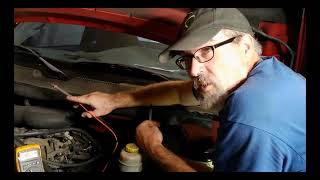
On the 6.7L Cummins engine, the injector wiring harness is a known weak point. For 2013+ models, this harness is integrated into the valve cover gasket assembly, located under the valve cover where it is constantly exposed to intense heat and oil. Over time, this environment can make the wiring brittle, leading to cracks and open circuits that trigger codes like P0203. Additionally, the main pass-through connectors on the driver's side of the valve cover are prone to oil contamination from the crankcase ventilation (CCV) system, which can disrupt the connection and cause identical symptoms. A short on one 🎬 Watch: Diagnosing a P0203 circuit fault when the PCM isn't the problem. injector circuit can cause the PCM to shut down the entire bank of injectors (1-3) to protect the internal driver, setting codes for all three cylinders simultaneously.
Diagnostic Flowchart
Tap your situation to follow the diagnostic path that matches what you're seeing on this vehicle.
Generation note: This range covers the end of the fourth generation (2014-2018) and the start of the fifth generation (2019-2020) Ram trucks. While the core 6.7L Cummins architecture is similar, the 2019+ models feature significant engine and electronics updates, including different injector part numbers. However, the fundamental causes of a P0203 code (wiring, connectors, injector) remain consistent across these years.
Symptoms You May Notice
- Check Engine Light is on
- Rough or shaking idle
- Noticeable engine misfire or stumble, especially under load
- Reduced engine power and performance
- Increased fuel consumption
- Engine knocking or ticking sounds
- Engine may not start if the fault causes the PCM to shut down the injector bank
- Replacing the fuel injector without first testing the wiring harness. The harness is a more frequent failure point and a much cheaper part to replace.
- Assuming the injector is bad when the external pass-through connector is simply contaminated with oil. A thorough cleaning often resolves the issue.
Most Likely Causes

- Faulty Injector Wiring Harness / Valve Cover Gasket Assembly 🔴 High Probability The harness is integrated into the valve cover gasket, where constant exposure to heat and oil causes the wiring to become brittle and fail. This is a widely documented issue on 6.7L Cummins engines, and Cummins has released updated versions of the part to improve durability.
How to confirm: Remove the valve cover and visually inspect the wiring for cylinder #3 for cracks, brittleness, or damage. Perform a continuity test with a multimeter on the two wires for injector #3 from the main pass-through connector to the injector itself. Resistance should be very low (under 1 ohm). An infinite resistance (O.L.) reading indicates a break in the harness.
Typical fix: Replace the under-valve-cover injector wiring harness, which on 2013+ models means replacing the entire valve cover gasket assembly.
Est. part cost: $150-$280 - Failed #3 Fuel Injector 🟡 Medium Probability High-pressure common rail injectors operate under extreme stress and can fail electrically (internal solenoid coil opens) or mechanically over time. Poor fuel quality or increased rail pressure from performance tuners can accelerate wear.
How to confirm: Disconnect the harness from the injector and measure the resistance across the two terminals on the injector itself. The resistance should be very low, typically 0.2-0.5 ohms. An infinite resistance reading (O.L.) means the internal coil is open and the injector is bad. A definitive test is to swap the #3 injector with another cylinder (e.g., #1), clear the codes, and see if the fault follows the injector (i.e., a P0201 code appears).
Typical fix: Replace the #3 fuel injector. It is highly recommended to also replace the high-pressure connector tube and seal to prevent future leaks. The new injector's IQA (Injector Quantity Adjustment) code must be programmed into the ECM.
Est. part cost: $350-$600 - Contaminated or Damaged Pass-Through Connector 🟡 Medium Probability The main injector harness connectors are located on the driver's side of the valve cover and are susceptible to oil contamination from the CCV system, leading to poor electrical contact.
How to confirm: Visually inspect the main injector harness connector (the front connector serves injectors 1-3). Check for oil saturation, dirt, or damaged pins.
Typical fix: Disconnect the battery, then thoroughly clean both sides of the connector with an electronic parts cleaner. Allow it to dry completely, apply dielectric grease to the seal, and reconnect securely. If pins are damaged, the connector pigtail may need to be replaced.
Est. part cost: $10-$50
Rare But Worth Checking
- Faulty Powertrain Control Module (PCM/ECM): This is rare and should only be considered after all wiring and injector tests have been completed and passed. A PCM failure for a single injector driver is uncommon, but can happen. A lab scope may be needed to diagnose a faulty driver that isn't releasing the ground cleanly, which a simple test light would miss.
Diagnosis Steps

- Read stored trouble codes with an OBD-II scanner and confirm P0203 is active. Note any other codes, especially P2146, P0201, or P0202.
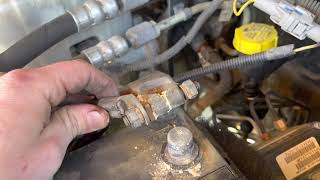
- Inspect the main injector harness connector on the driver's side of the valve cover (front connector for bank 1). Look for oil saturation, corrosion, or damaged pins. If dirty, disconnect the battery, 🎬 Learn how to properly clean battery cables and check engine grounds. clean thoroughly with electronic contact cleaner, apply dielectric grease, and re-test.
- If the connector is clean, perform a resistance test on the injector. Disconnect the harness and measure resistance across the two injector terminals. It should be less than 1.0 ohm (typically ~0.5 ohm). Infinite resistance (O.L.) confirms a failed injector.
- If injector resistance is good, consider an injector swap test. Swap the #3 injector with another cylinder (like #1). Clear codes and run the engine. If the code changes to P0201, the injector is faulty. If P0203 returns, the issue is in the wiring or ECM.
- If the fault remains with cylinder #3, remove the valve cover to access the internal wiring harness (part of the valve cover gasket assembly).
- Visually inspect the harness for brittle, cracked, or chafed wires, especially around the #3 injector.
- Using a multimeter, check for continuity in the two wires for injector #3 from the pass-through connector to the injector connector. Resistance should be less than 1.0 ohm. High resistance indicates a break in the harness.
- If both the injector and harness test good, the final possibility is a fault in the ECM's injector driver circuit. This is rare and may require a lab scope for definitive diagnosis.
Parts You'll Likely Need

- Valve Cover Gasket with Integrated Injector Harness
(OEM #Cummins 5367847 (supersedes 5264950))— This is the most common failure point for this code on 2013+ 6.7L Cummins engines due to heat and vibration causing the integrated wires to break.
Trusted brands: Cummins, Mopar
OEM price range: $250-$280
Aftermarket price range: $150-$200 - Fuel Injector
(OEM #Bosch 0986435621 (2013-18 Pickups), Bosch 0445124047 (2019-20 SO Pickups), Bosch 0445124039 (2019-20 HO Pickups))— The internal solenoid of the injector can fail, creating an open circuit that triggers P0203. This is the second most likely cause after the wiring. Note the different part numbers for Pickup vs. Cab & Chassis and Standard vs. High Output models.
Trusted brands: Bosch
OEM price range: $450-$600
Aftermarket price range: $350-$500 - High-Pressure Connector Tube
(OEM #Bosch F00RJ01572)— It is best practice to replace the connector tube when replacing an injector to ensure a perfect seal and prevent high-pressure fuel leaks, which can cause hard starting or performance issues.
Trusted brands: Bosch, Mopar, Cummins
OEM price range: $50-$70
Aftermarket price range: $30-$50
Related Codes That Often Appear With This One
- P0303 — P0303 indicates a misfire in cylinder 3. An open circuit in the injector (P0203) prevents it from delivering fuel, which directly causes a misfire.
- P2146 — This code means 'Fuel Injector Group 'A' Supply Voltage Circuit/Open'. On Cummins engines, injectors 1, 2, and 3 are in Group A. The presence of P2146 alongside P0203 strongly suggests a wiring or connector issue common to the entire bank, rather than a single failed injector.
- P0201, P0202 — When multiple injector circuit codes for the same bank (1-3) appear together, it points to a problem with a shared component, like the main harness connector, the under-cover harness, or a PCM driver for that bank.
Technical Service Bulletins (TSBs) & Recalls
- 18-099-22 REV. A: This TSB, which supersedes 18-099-22, applies to 2019+ models and lists P0203 among a host of other codes that can be set due to a failing high-pressure fuel pump and subsequent system contamination. It was eventually superseded by recall Y78.
- 9002688: A known TSB (mentioned in forum discussions) that advises technicians to check the under-valve-cover wiring harness for faults before condemning and replacing an expensive fuel injector, confirming the harness is a known weak point.
Platform-Specific Known Issues
- YouTube - Jess Cleary Auto Repair LLC - Dodge Ram injector circuit fault p0203 pcm already replaced: A fascinating case where a P0203 code persisted after the PCM was replaced. All wiring and the injector tested good with a multimeter. Using a lab scope, the mechanic discovered the remanufactured PCM had a faulty driver for cylinder #3 that was not releasing the ground cleanly, preventing the proper voltage spike the PCM needs to see. This highlights a rare but possible PCM failure mode that basic tools can't detect.
Mechanic-Grade Diagnostic Values
- Fuel Injector Solenoid Resistance — expected: Less than 1.0 Ohm, typically 0.2-0.6 Ohms.. Failure: Infinite resistance (O.L.) indicates an open coil. A reading of 0 Ohms indicates a dead short. Readings significantly higher than 1.0 Ohm can indicate an intermittent failure.
- Injector Wiring Harness Continuity — expected: Less than 1.0 Ohm from the ECM connector pin to the injector connector pin.. Failure: Resistance greater than 1.0 Ohm, or an infinite (O.L.) reading, indicates a break or high resistance in the wire.
- Injector Flyback Voltage Spike (Lab Scope) — expected: A sharp voltage spike of 60-80V when the injector driver in the PCM releases the ground.. Failure: Absence of a clean, sharp spike, or a slow voltage ramp-up instead of a spike, points to a faulty PCM injector driver, even if a noid light flashes.
Scan Tool Commands That Help
- wiTECH, AlfaOBD, Snap-on Solus, Launch iCarScan: Injector Kill Test / Cylinder Cutout Test — This bidirectional test allows the technician to command the ECM to shut off individual injectors one at a time while the engine is running. If shutting off cylinder #3 causes no change in engine idle or sound, it confirms that injector was not firing. If shutting it off causes a noticeable stumble, the injector was working, and the fault may be intermittent. This helps isolate a non-contributing cylinder.
- wiTECH, AlfaOBD: Cylinder Performance Test / Injector Balance Test — This test measures the contribution of each cylinder to engine speed. A cylinder with a faulty injector will show a significantly lower contribution rate compared to the others, helping to confirm a performance issue with cylinder #3.
Wiring & Ground Locations
- ECM Connector C1 (or D3838A) — The ECM is located on the driver's side of the engine block. C1 is one of the large multi-pin connectors that plug into it.. The control circuit for injector #3 originates here. Pin A7 is the Injector 3 Control (Low Side Driver) wire, typically Gray/Brown. Pin A8 is for Injector #2 (Yellow/Brown) and Pin A9 is for Injector #1. Testing for continuity and shorts should be done from this connector to the valve cover pass-through connector.
- Valve Cover Pass-Through Connector (Bank 1) — On the driver's side of the valve cover, this is the front-most of the two large, round electrical connectors.. This connector is the junction between the main engine harness and the under-valve-cover injector harness for cylinders 1, 2, and 3. It is a common point of failure due to oil contamination from the CCV system.
- Engine Block Ground — The main negative battery cable connects directly to the left front of the engine block.. While unlikely to cause a single injector code, a poor engine ground can cause a host of erratic electrical issues and incorrect sensor readings. It should always be checked for tightness and corrosion during electrical diagnosis.
Real Owner Repair Stories
- Diesel Truck Resource Forums user 'FastTaco' (2006 Ram 3500 (similar 6.7L design principles), 122k miles) — Sudden shaking and rough running, smoke from exhaust, high EGTs, codes P2146 and P0203 appeared, especially under hard acceleration.
❌ Tried (didn't work) Clearing codes would temporarily resolve the issue, but it would return.
✅ What actually fixed it The user was advised by others that the issue was likely the under-valve-cover gasket/harness or the #3 injector itself. Another user suggested checking the resistance of the injectors at the pass-through connector, expecting to find high resistance on the #3 injector circuit. The consensus pointed to replacing the updated valve cover gasket (Cummins P/N 5264950) as the most probable fix.
OEM Part Supersession History
5264950→5367847— Updated design to improve durability and prevent wire failure from heat and vibration.
Heads up: The new part number 5367847 is the correct, updated replacement for the 2014-2020 model years and is backward compatible with earlier 6.7L and late 5.9L engines.
Model Year Variations Within This Range
- 2019-2020: For the 5th generation trucks, Ram offered two versions of the 6.7L Cummins: Standard Output (SO) and High Output (HO). The HO engine was available in the Ram 3500 when paired with the Aisin transmission. These two engine variants use different fuel injectors with unique part numbers. It is critical to order the correct injector for the specific engine type.
Helpful Videos
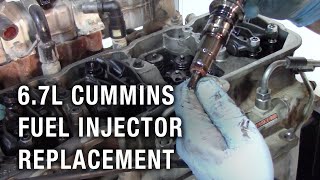
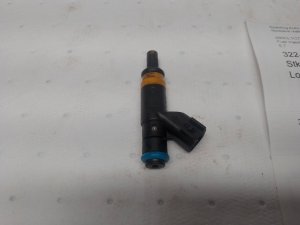
Used OEM Parts in Stock


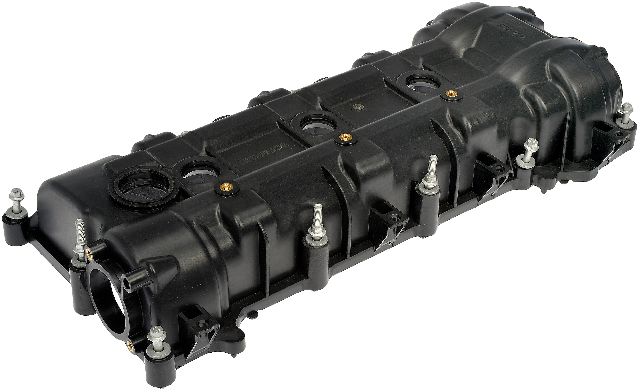
New Aftermarket Parts Available


The information in this article is provided for general reference and educational purposes only. Vehicle specifications, procedures, and part compatibility can vary by production date, trim level, and region. Always consult your vehicle's factory service manual and verify part numbers before purchasing or performing repairs. Safety-critical components such as airbags, seat belts, and braking systems should be installed by a qualified professional.
- Ram 3500:
- 🎬 Helpful Videos
- 🛍️ Shop This Part
- What's Unique About the 2014-2020 Ram 3500
- Diagnostic Flowchart
- Symptoms You May Notice
- Most Likely Causes
- Rare But Worth Checking
- Diagnosis Steps
- Parts You'll Likely Need
- Related Codes That Often Appear With This One
- Technical Service Bulletins (TSBs) & Recalls
- Platform-Specific Known Issues
- Mechanic-Grade Diagnostic Values
- Scan Tool Commands That Help
- Wiring & Ground Locations
- Real Owner Repair Stories
- OEM Part Supersession History
- Model Year Variations Within This Range
- 🎟️ Get 5% Off