

P0203 on 2021-2024 GMC Yukon: Injector Circuit Malfunction Causes & Fixes
On a 2021-2024 GMC Yukon, code P0203 is most often caused by a faulty cylinder 3 fuel injector or its wiring harness. GM has issued a service bulletin (22-NA-087) recommending replacement of both parts, often due to a broken terminal pin in the connector. Expect a shop repair to cost between $508 and $680.
- P0203 on a 2021-2024 Yukon means there is an electrical problem with the cylinder #3 fuel injector circuit.
- This is a known issue, and GM has issued a service bulletin (#22-NA-087) recommending the replacement of both the fuel injector and its wiring harness, often due to a broken pin in the connector.
- Do not drive extensively with this code, as it can lead to costly damage to the catalytic converter.
- Before suspecting an expensive PCM failure, thoroughly test the injector (resistance check, swap test) and its wiring (noid light, visual inspection for chafing), as they are the most probable causes.
What's Unique About the 2021-2024 Gmc YUKON
The fifth-generation GMC Yukon (2021-present), built on the GM T1 platform, has a known issue with fuel injector and wiring harness failures across its engine lineup (5.3L, 6.2L, 3.0L). General Motors has released Technical Service Bulletin (TSB) #22-NA-087 for 2022 models, which explicitly recommends replacing both the fuel injector and its wiring harness to correct a P0203 code. The bulletin notes the cause can be a broken terminal pin inside the injector harness connector. Another TSB, #21-NA-149, points to various engine harness chafing points on these vehicles that can lead to a host of DTCs, including injector circuit faults. This indicates a higher-than-average failure rate for these specific components on this platform and its mates like the Tahoe, Escalade, and Silverado/Sierra trucks.
Diagnostic Flowchart
Tap your situation to follow the diagnostic path that matches what you're seeing on this vehicle.
Symptoms You May Notice
- Check Engine Light is on
- Rough or shaking idle
- Engine misfire, which may be more noticeable under load or when accelerating
- Reduced engine power and poor acceleration
- Decreased fuel economy
- Engine may hesitate or stumble
- Replacing the spark plug or ignition coil on cylinder 3 without first diagnosing the fuel system. A Reddit user with a P0203 on a similar GM truck was advised to change spark plugs, which only temporarily resolved the issue before the code returned, indicating the original advice was a misdiagnosis. While a misfire can be caused by ignition components, the P0203 code specifically points to an electrical fault in the injector circuit.
Most Likely Causes
- Faulty Cylinder 3 Fuel Injector 🔴 High Probability As documented in GM TSB #22-NA-087, fuel injectors on this platform are a known failure point leading to this code. The internal coil winding of the injector can fail, creating an open circuit.
How to confirm: Measure the injector's internal resistance with a multimeter; it should be within the manufacturer's specified range (typically 11-14 ohms for gasoline engines). An easier method is to swap the cylinder 3 injector with another cylinder (e.g., cylinder 1). Clear the codes and run the engine. If the code changes to P0201, the injector is confirmed to be faulty.
Typical fix: Replace the fuel injector. It is highly recommended to also replace the wiring harness at the same time per TSB #22-NA-087.
Est. part cost: $75-$150 - Damaged Fuel Injector Wiring or Connector 🔴 High Probability TSB #22-NA-087 specifically calls for replacing the wiring harness along with the injector, indicating the harness is also a common point of failure, sometimes due to a broken internal pin. TSB #21-NA-149 also identifies multiple locations where the main engine harness can chafe against engine or chassis components, causing shorts or open circuits.
How to confirm: Visually inspect the wiring harness for any signs of cracking, melting, or chafing, especially where it passes over the camshaft cover or near brackets. Check the electrical connector at the injector for corrosion, backed-out, or bent pins. Use a noid light to confirm the injector is receiving a pulse signal from the PCM while the engine is cranked.
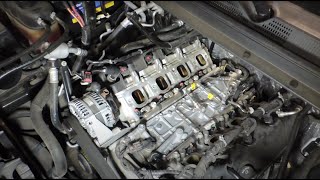
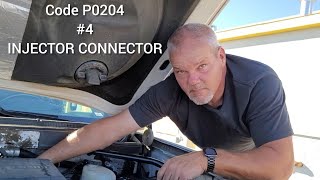
Typical fix: Repair the damaged section of wire or replace the entire fuel injector wiring harness pigtail. 🎬 See how to replace a damaged injector connector pigtail. Given the TSB, replacement is the recommended path.
Est. part cost: $25-$50 - Powertrain Control Module (PCM) Fault ⚪ Low Probability
How to confirm: This should only be considered after the injector and wiring have been thoroughly tested and ruled out. A professional will need to test the injector driver circuit within the PCM, as a failed driver transistor can mimic an open circuit.
Typical fix: The PCM would need to be repaired or replaced and programmed to the vehicle.
Est. part cost: $500-$1000
Rare But Worth Checking
- Blown Fuel Injector Fuse:
- Chassis Harness Damage from Oversized Tires:
Diagnosis Steps
- Read the trouble codes with an OBD-II scanner and confirm P0203 is present. Note any other codes, especially P0303.
- Visually inspect the cylinder 3 fuel injector and its electrical connector. Look for loose connections, corrosion on the pins, or damage to the wiring harness. Per TSB #21-NA-149, pay close attention to harness routing near the cam cover and other brackets.
- Disconnect the injector and use a noid light to test for a pulse signal from the PCM while the engine is cranked. A flashing light indicates the PCM and wiring are likely okay. A steady light or no light points to a wiring or PCM driver issue.
- If the noid light test passes, check the resistance of the fuel injector itself using a multimeter. Disconnect the injector and measure across its two pins. Compare the reading to the manufacturer's specification (e.g., 11-14 ohms) or to a known good injector on another cylinder. An open circuit (infinite resistance) or a reading far out of spec means the injector is bad.
- If the noid light does not flash, check for 12-volt power at one pin of the injector connector with the key on. If power is present, the issue is on the ground-side control wire back to the PCM. If power is not present, check the fuse for the fuel injectors.
- Perform an injector swap. Move the cylinder 3 injector to another cylinder (like cylinder 1) and move the cylinder 1 injector to cylinder 3. Clear the codes and run the engine. If the fault code changes to P0201, the injector is faulty. If P0203 returns, the problem is in the wiring or PCM.
- If all tests point away from the injector and wiring, the final step is to suspect a faulty injector driver in the PCM, which requires professional diagnosis.
Parts You'll Likely Need
- Fuel Injector
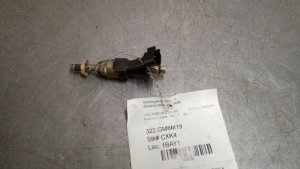
(OEM #Varies by engine. 3.0L Diesel: 55506244. 5.3L/6.2L Gas: 12668390 (or equivalent like 12711732). Always verify with VIN.)— This is the most common failure part for a P0203 code on this vehicle, as confirmed by GM's own service bulletins.
Trusted brands: ACDelco, GM Genuine Parts
OEM price range: $100-$150
Aftermarket price range: $60-$90 - Fuel Injector Wiring Harness Connector
(OEM #Varies by engine. 3.0L Diesel Harness: 55513485. Gas engines may use pigtail connectors like ACDelco PT2160 or Dorman 85850. Always verify with VIN.)— The wiring harness is also a known failure point according to TSB #22-NA-087 and should be considered for replacement along with the injector.
Trusted brands: ACDelco, Dorman, Standard Motor Products
OEM price range: $30-$50
Aftermarket price range: $20-$40
Related Codes That Often Appear With This One
- P0303 — P0303 means "Cylinder 3 Misfire Detected." A P0203 fault will prevent the injector from delivering fuel, which directly causes a misfire in that cylinder. The P0203 is the cause, and P0303 is the effect.
- P0201, P0202, P0204, P0205, P0206 — If multiple injector circuit codes are present, it strongly suggests a problem with the wiring harness that is common to several injectors, a blown fuse for an injector bank, or a failing PCM.
Technical Service Bulletins (TSBs) & Recalls
- 22-NA-087: Recommends replacing the fuel injector and the wiring harness for MIL illumination with DTC P0203. Specifies the cause can be a broken terminal pin in the harness connector.
- 21-NA-149: Details multiple potential engine harness chafing locations that can cause injector circuit faults on 2019-2023 GM Trucks and SUVs.
- PIE0791B: Concludes an engineering investigation into Check Engine Lamps with DTC P0203 on 2024 models.
- PIE0791A: An earlier version of the investigation into DTC P0203.
- PIE0791: The initial version of the investigation into DTC P0203.
- 20-NA-104: Describes how non-OE oversized tires can cause harness damage in the wheel well, leading to various electrical faults.
Platform-Specific Known Issues
- GM issued Technical Service Bulletin #22-NA-087 for some 2022 models, which advises technicians to replace both the fuel injector and the wiring harness to correct a P0203 code, noting the cause can be a broken terminal pin in the connector.
- TSB #21-NA-149 (revising several previous bulletins) details multiple potential engine harness chafing points that can cause injector circuit codes (P0201-P0206) and other electrical issues on 2019-2023 GM trucks and SUVs.
- Earlier bulletins (#PIE0791, #PIE0791A, #PIE0791B) indicate that GM was actively investigating issues related to the Check Engine Lamp with DTC P0203 set on 2024 models, suggesting this is a persistent issue for the platform.
- Owners on forums like tahoeyukonforum.com have discussed injector failures on these vehicles, corroborating the TSB findings and highlighting this as a common problem for the T1 platform.
Mechanic-Grade Diagnostic Values
- Fuel Injector Coil Resistance (Gasoline Engines) — expected: 11-14 Ohms at room temperature.. Failure: A reading outside of this range, or an open circuit (infinite resistance), indicates a faulty injector coil.
- Injector Circuit Voltage Spike (Scope Test) — expected: A sharp voltage spike of approximately 50-70 volts immediately after the PCM commands the injector to close.. Failure: The absence of this inductive spike on the injector control wire when viewed on an oscilloscope points to an open in the injector's internal coil winding.
Scan Tool Commands That Help
- GM GDS2 (Global Diagnostic System 2): Injector Balance Test / Cylinder Power Balance — This function allows a technician to individually disable injectors while monitoring engine RPM drop for each cylinder. If disabling cylinder 3 causes no change in RPM, it confirms that cylinder is not contributing, which is the expected result for a P0203 fault. It helps verify the symptom before disassembly.
- GM GDS2 (Global Diagnostic System 2): Fuel Injector Test — This is an active test that commands a specific injector to fire with the engine off. The technician can listen for an audible click from the injector solenoid. If no click is heard from the cylinder 3 injector but others click, it points strongly to a bad injector or a complete open in the wiring to it.
Wiring & Ground Locations
- Connector X160 — A key inline harness connector for the fuel injector wiring.. TSB #21-NA-149 specifically calls out checking for poor terminal tension or a missing terminal locking feature at connector X160 when diagnosing P0201-P0206 codes. A poor connection here can interrupt the circuit for cylinder 3.
- G114 - Engine Harness Ground — Typically located on the engine block or cylinder head.. While the injector circuit is controlled via a PCM driver, a poor main engine harness ground can cause erratic behavior and voltage drops across multiple components. GM issued EI bulletin PIE0548 to investigate loose G114 connections on related trucks, indicating its importance for overall electrical stability.
- Cylinder 3 Injector Control Wire (PCM Connector) — On older but similar GM truck platforms, the control wire for injector 3 was a Pink/Black wire at pin 43 of the C1 (Blue) PCM connector. Technicians use this information to test for continuity from the PCM to the injector, confirming if a wire break exists in the harness.. This is the final test point. If the injector and its local wiring are good, but there's no signal from the PCM, testing for continuity at the PCM pin itself can determine if the fault is a broken wire in the harness or a failed PCM driver.
- Harness Chafe near Crankcase Pressure Regulator — On the 3.0L LM2 Duramax, the engine harness can short out on the PCV hose clamp, approximately 4 inches from the crankcase sensor connector.. TSB #21-NA-149 explicitly links this chafe point to injector codes P0201-P0206. The damaged harness can cause a short or open on the cylinder 3 injector control circuit.
Helpful Videos
Used OEM Parts in Stock

New Aftermarket Parts Available


The information in this article is provided for general reference and educational purposes only. Vehicle specifications, procedures, and part compatibility can vary by production date, trim level, and region. Always consult your vehicle's factory service manual and verify part numbers before purchasing or performing repairs. Safety-critical components such as airbags, seat belts, and braking systems should be installed by a qualified professional.
- Gmc YUKON:
- 🎬 Helpful Videos
- 🛍️ Shop This Part
- What's Unique About the 2021-2024 Gmc YUKON
- Diagnostic Flowchart
- Symptoms You May Notice
- Most Likely Causes
- Rare But Worth Checking
- Diagnosis Steps
- Parts You'll Likely Need
- Related Codes That Often Appear With This One
- Technical Service Bulletins (TSBs) & Recalls
- Platform-Specific Known Issues
- Mechanic-Grade Diagnostic Values
- Scan Tool Commands That Help
- Wiring & Ground Locations
- 🎟️ Get 5% Off