

P0203 on 1998-2005 Dodge RAM 2500: Injector Circuit Fixes & Causes
On 1998-2005 Dodge RAM 2500s, especially with the 5.9L Cummins diesel, P0203 is most often caused by a faulty injector wiring harness or a bad connection at the valve cover gasket pass-through. Before replacing the injector, inspect and clean the wiring connectors. This is often a low-cost fix.
- For a P0203 on a 1998-2005 Ram 2500, especially a Cummins, suspect the wiring before the injector.
- The most likely culprit is the main injector harness connector (the front one for cylinders 1-3) being contaminated with oil.
- A simple and often effective first step is to clean this connector with electronic contact cleaner.
- A manufacturer TSB confirms that this wiring issue is a very common problem and should be checked before spending money on a new injector.
- If the injector is bad, use a quality brand like Bosch, as fuel system components are critical for engine health.
What's Unique About the 1998-2005 Dodge RAM 2500
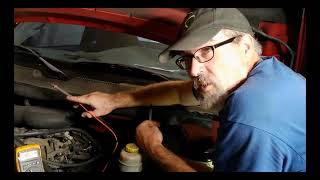
For the 1998-2005 Dodge RAM 2500, this code is particularly common on the 5.9L Cummins diesel engine. The design of the injector wiring harness, which passes through the valve cover gasket, is a well-known weak point. Over time, heat, vibration, and oil contamination can degrade the wiring and connectors, leading to the exact electrical faults that trigger a P0203 code. 🎬 Watch: A quick overview of P0203 causes and common fixes. This is so common that a Technical Service Bulletin (TSB 9002688) was issued advising technicians to check this wiring before replacing the injector itself. On Common Rail engines, injectors 1, 2, and 3 are grouped in Bank 1; a significant fault on one injector circuit can sometimes cause the ECM to shut down the entire bank to protect the driver circuit, potentially setting codes for all three.
Diagnostic Flowchart
Tap your situation to follow the diagnostic path that matches what you're seeing on this vehicle.
Generation note: The 1998-2005 year range covers two distinct generations of the Dodge Ram. The second generation (1994-2002) and the third generation (2003-2009). For the 5.9L Cummins, the second generation (1998.5-2002) used a 24-valve engine with a Bosch VP44 injection pump. The third generation (2003-2005) introduced a high-pressure common-rail fuel system. While the P0203 code applies to both, the specific wiring harnesses and injector designs differ. The common-rail engines (2003+) use three separate injector wiring harnesses under the valve cover (one for every two injectors), which are a frequent failure point.
Symptoms You May Notice
- Check Engine Light is on
- Rough or shaking idle
- Engine misfire, felt as a stumble or jerk during acceleration
- Reduced engine power and sluggish performance
- Increased fuel consumption
- Difficulty starting the engine or stalling
- Engine surge or stumble
- Replacing the fuel injector without first checking the wiring harness and connectors. The TSB #9002688 specifically warns against this, as the wiring is a more frequent cause of the problem.
Most Likely Causes
- Faulty Injector Wiring Harness or Connector 🔴 High Probability On 5.9L Cummins engines, the injector wiring harness passes through the valve cover gasket. This area is subject to intense heat, vibration, and oil exposure, which degrades the wiring and connectors over time, causing opens or shorts. This is a very common failure point, especially on the 2003-2005 models.
How to confirm: Visually inspect the main injector harness connector (for cylinders 1-3) for oil contamination, corrosion, or loose pins. Unplug the connector, clean both sides thoroughly with electrical contact cleaner, and check for a firm connection. Use a multimeter to check for continuity between the PCM and the injector connector; resistance should be less than 1.0 ohm. Also check for shorts between the high and low side driver circuits and for shorts to ground.
Typical fix: Clean the connector with electronic cleaner. If the connection is loose, some owners use a small pick (the "ice pick trick") to slightly bend the female pins for a tighter fit. If the connector or harness is damaged, replace the injector wiring harness. On 2003-2005 models, there are three harnesses under the valve cover; the front one serves cylinders 1 and 2, the middle serves 3 and 4, and the rear serves 5 and 6. It is often the middle harness that fails for a P0203. The permanent fix is to address the source of the oil leak (often the valve cover gasket connector pass-through).
Est. part cost: $5-$20 for cleaner, $75-$150 for a new harness - Failed Fuel Injector 🟡 Medium Probability
How to confirm: After confirming the wiring is good, test the injector's internal resistance with a multimeter. For Cummins engines, the resistance should be very low, between 0.2 and 0.5 ohms. For Magnum gas engines, it should be around 12-13 ohms. A more definitive test is to swap the cylinder 3 injector with another cylinder (e.g., cylinder 1). Clear the codes and run the engine. If the code changes to P0201, the injector is faulty.
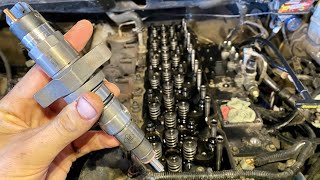
Typical fix: Replace the faulty fuel injector. 🎬 Watch this step-by-step guide to replacing 5.9 Cummins injectors. It is often recommended to replace the injector tube and any associated seals at the same time.
Est. part cost: $250-$500 for a single Bosch injector - Faulty Powertrain Control Module (PCM) ⚪ Low Probability
How to confirm: This should only be considered after all other possibilities (wiring and injector) have been exhaustively ruled out. A professional will need to test the injector driver circuit within the PCM, often using a lab scope to check the waveform. The PCM looks for a voltage spike when the injector turns off; a bad driver can fail to produce this spike, triggering the code even if the injector is firing.
Typical fix: Replace and reprogram the PCM.
Est. part cost: $300-$800
Diagnosis Steps
- Retrieve the stored trouble code(s) with an OBD-II scanner.
- Visually inspect the main injector harness connector for cylinders 1-3. On Cummins engines, this is the front-most large connector near the valve cover.
- Check for oil saturation, corrosion, or pushed-out pins in the connector. Oil wicking through the valve cover pass-through is extremely common.
- If oil or dirt is present, disconnect the battery, then thoroughly clean the male and female sides of the connector with QD Electronic Cleaner and let it dry completely.
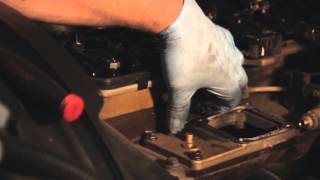
- For a more robust connection, some owners use a small, sharp tool (like an ice pick) to carefully and slightly tweak the female pins in the connector to ensure a tighter grip on the male pins. This is known as the "ice pick trick" in own 🎬 See how to perform this simple injector harness repair.er forums.
- Reconnect the connector, ensuring it clicks securely. Reconnect the battery, clear the codes, and start the engine to see if the code returns.
- If the code returns, test the injector resistance. Disconnect the pigtail nuts from the #3 injector solenoid. Using a multimeter set to ohms, measure the resistance between the two posts on the injector. For a Cummins, it should be very low, between 0.2-0.5 ohm. For a gas engine, expect around 12-13 ohms. An open circuit (infinite resistance) indicates a bad injector.
- If resistance is within spec, perform a continuity test on the wiring harness between the PCM connector and the injector connector to check for opens or shorts. Resistance should be less than 1.0 ohm on both the high and low side circuits.
- As a final confirmation, consider swapping the #3 injector with another one (e.g., #1). If the fault code moves to P0201, the injector is confirmed to be the problem.
- If the wiring and injector test good, the issue may be with the PCM injector driver, which requires professional diagnosis, likely with an oscilloscope.
Parts You'll Likely Need
- Injector Wiring Harness (2003-2005 Common Rail)
(OEM #Cummins 3966805 (also cross-references to 3957309, 3964316, Mopar 5139865AA))— This is the most common failure point on 2003-2005 5.9L Cummins engines due to heat and oil degradation. Three are used per engine, one for each pair of injectors.
Trusted brands: Cummins (OEM), Mopar, Dorman
OEM price range: $110-$140
Aftermarket price range: $75-$100 - Fuel Injector — If the wiring is confirmed to be good, the injector itself may have an internal electrical failure (open or shorted coil).
Trusted brands: Bosch
OEM price range: $400-$500
Aftermarket price range: $250-$350 - Valve Cover Gasket with Wiring Pass-through
(OEM #68086182A$ (part number from TSB, may have variants))— The source of oil contamination in the harness connector is often a leaking seal where the harness passes through the valve cover. Replacing the gasket set (which includes the integrated harness) is the complete fix. The TSB lists this part.
Trusted brands: Mopar, Fel-Pro
OEM price range: $100-$150
Aftermarket price range: $60-$90
Related Codes That Often Appear With This One
- P0303 — P0303 means 'Cylinder 3 Misfire Detected'. Since P0203 indicates an electrical problem with the cylinder 3 injector, that cylinder won't get fuel, which directly causes a misfire. A P0203 will almost always be accompanied by a P0303.
- P2146 — This code means 'Fuel Injector Group A Supply Voltage Circuit/Open'. On Cummins engines, injectors 1, 2, and 3 are in Group A. A fault in the #3 injector circuit can trigger this group code, often causing the ECM to shut down all three injectors in that bank as a protective measure.
Technical Service Bulletins (TSBs) & Recalls
- 9002688: Advises checking the injector wiring loom and/or connector in the valve cover gasket before replacing injectors for P020x codes.
Platform-Specific Known Issues
- A known issue, documented in NHTSA TSB #9002688, is the injector wiring loom and/or connector in the valve cover gasket failing and causing P020x codes. The bulletin explicitly states to check this before replacing injectors.
- On CumminsForum.com, a user with a P2146 code (related to injector bank 1) ultimately traced the issue to a faulty injector wiring harness after eliminating the ECM and injectors as the cause.
Mechanic-Grade Diagnostic Values
- Fuel Injector Coil Resistance (5.9L Cummins Common Rail) — expected: 0.2 - 0.5 Ohms. Failure: Reading over 1.0 Ohm or an open circuit (infinite resistance) indicates a bad injector.
- Fuel Injector Coil Resistance (Magnum V8/V10) — expected: 11 - 14 Ohms. Failure: A reading significantly outside this range indicates a faulty injector coil.
- Injector Circuit Continuity (PCM to Injector) — expected: Less than 1.0 Ohm. Failure: Resistance higher than 1.0 Ohm indicates high resistance in the wiring, which can cause the code.
- Injector Inductive Kick (Lab Scope) — expected: A sharp voltage spike of 50-70+ Volts when the injector driver turns off.. Failure: A low or missing voltage spike indicates a problem with the injector coil or, more likely, a weak injector driver in the ECM/PCM. The ECM specifically looks for this spike to confirm circuit integrity.
- Injector Circuit Short to Ground — expected: Greater than 10k Ohms. Failure: Resistance less than 10k Ohms indicates a short to ground in the injector driver circuit.
Scan Tool Commands That Help
- DRB III or Witech: Injector Kill Test / Cylinder Contribution Test — This bidirectional command allows the technician to manually disable cylinder #3's injector. If disabling the injector causes no change in engine idle speed or smoothness, it confirms that the cylinder was not contributing, validating the P0203 fault. This helps isolate the problem to a specific cylinder.
- DRB III or Witech: DRB III Simulator — For modern shops that no longer have a physical DRB III tool, the Witech diagnostic platform can run a 'DRB III Simulator' to access all the original diagnostic functions for these older vehicles.
Wiring & Ground Locations
- ECM Connector C1, Pin 15 — On the Engine Control Module (ECM) for 2003-2005 Cummins models.. This is the pin for the Injector #3 High Side Driver circuit. The wire is typically Light Green/Brown. Testing for continuity and shorts should be done at this pin.
- ECM Connector C1, Pin 14 — On the Engine Control Module (ECM) for 2003-2005 Cummins models.. This is the pin for the Injector #3 and #4 Low Side Driver (return) circuit. The wire is typically Brown/White. A fault on this shared wire could potentially affect both cylinders.
- G102 — Typically located on the driver's side of the engine block, near the front.. This is a primary engine ground. A loose or corroded connection at G102 can create a floating ground, causing erratic behavior and fault codes in multiple electronic systems, including the injector circuits.
- Injector Harness (Under Valve Cover) — There are three separate harnesses under the valve cover on 2003-2005 Cummins engines.. The harness for cylinders 1 & 2 is PN 3966805. The harness for cylinders 3 & 4 is PN 3966806. The harness for cylinders 5 & 6 is PN 3966807. For a P0203, the middle harness (3966806) is the one to inspect.
Real Owner Repair Stories
- CumminsForum user (2004.5 Dodge Ram 5.9L Cummins) — P0203 and P2146 codes, rough running.
❌ Tried (didn't work) Replaced #3 fuel injector, Replaced the under-valve-cover injector harness for cylinders 3 & 4, Checked wiring continuity from the main harness plug to the ECM
✅ What actually fixed it The final cause was a failed injector driver for Bank 1 (cylinders 1-3) within the Engine Control Module (ECM). Replacing the ECM resolved the issue. - Turbo Diesel Register forum user (2004 Dodge Ram 5.9L Cummins) — Intermittent P0203 and P2146, rough running, smoke, and high EGTs, especially under load.
❌ Tried (didn't work) Clearing codes would temporarily fix it.
✅ What actually fixed it The user performed resistance tests on the injectors and found two were out of spec. The final fix was replacing the valve cover gasket, which has an updated design to prevent the common harness shorting issue that causes these codes. - YouTube Auto Repair Channel (Dodge Ram with Magnum V8) — P0203 code and a pronounced misfire.
❌ Tried (didn't work) The customer had already replaced the PCM with a remanufactured unit, but the code persisted., Injector resistance tested good at ~12.7 ohms., Wiring continuity and load tests on both power feed and control side of the harness passed.
✅ What actually fixed it Using an oscilloscope, the technician found the inductive kick (flyback voltage) on the cylinder 3 injector circuit was very low compared to a known-good cylinder. This indicated the driver in the remanufactured PCM was faulty, even though it was still able to fire the injector. A second replacement PCM fixed the problem.
OEM Part Supersession History
Various early part numbers→Cummins 3966806 / Mopar 5179053AB— This is the under-valve-cover injector wiring harness for cylinders 3 and 4 on 2003-2005 Cummins engines. It is a common failure item. Note that three separate harnesses are used, and this is the specific one for cylinder 3.
Heads up: The harness for cylinders 1 & 2 is 3966805, and for 5 & 6 is 3966807. They are physically different and cannot be interchanged.
Model Year Variations Within This Range
- 2003-2004 vs 2004.5-2007: The injector nozzles and piston bowls are different. Early '03-'04 injectors have 8-hole nozzles with a wider spray angle, while later '04.5+ injectors have 5-hole nozzles with a tighter spray angle. While the injector bodies are physically interchangeable, using the wrong year injector can cause poor combustion, smoke, and piston damage because the spray pattern will not match the piston bowl shape.
- 2003-2004 vs 2004.5-2005: The electrical connector at the injector itself changed. Early models used two separate ring terminals secured with nuts on two posts. Later models (starting in 2004.5) switched to a single integrated push-on style connector that is part of the injector connector tube assembly. This affects how one would test resistance at the injector.
Helpful Videos

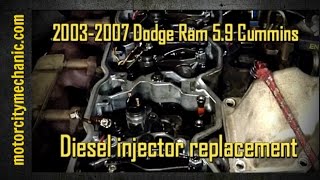
Used OEM Parts in Stock

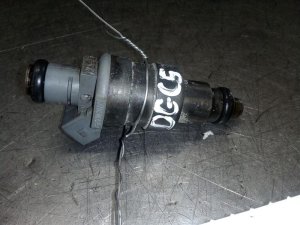
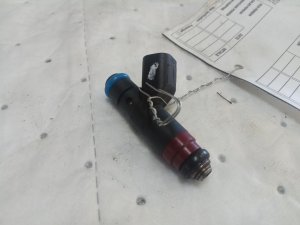


New Aftermarket Parts Available


The information in this article is provided for general reference and educational purposes only. Vehicle specifications, procedures, and part compatibility can vary by production date, trim level, and region. Always consult your vehicle's factory service manual and verify part numbers before purchasing or performing repairs. Safety-critical components such as airbags, seat belts, and braking systems should be installed by a qualified professional.
- Dodge RAM 2500:
- 🎬 Helpful Videos
- 🛍️ Shop This Part
- What's Unique About the 1998-2005 Dodge RAM 2500
- Diagnostic Flowchart
- Symptoms You May Notice
- Most Likely Causes
- Diagnosis Steps
- Parts You'll Likely Need
- Related Codes That Often Appear With This One
- Technical Service Bulletins (TSBs) & Recalls
- Platform-Specific Known Issues
- Mechanic-Grade Diagnostic Values
- Scan Tool Commands That Help
- Wiring & Ground Locations
- Real Owner Repair Stories
- OEM Part Supersession History
- Model Year Variations Within This Range
- 🎟️ Get 5% Off