

P0203 on 2009-2013 Chevrolet Malibu: Injector Circuit Malfunction Causes and Fixes
P0203 on a 2009-2013 Chevy Malibu means there's an electrical fault in the cylinder 3 fuel injector circuit. The most common causes are a bad fuel injector, a damaged wiring harness, or a faulty ECM. Expect to pay $80-$200 for a new injector, while an ECM replacement can be significantly more.
- P0203 points to an electrical problem in the cylinder 3 injector circuit, not a fuel mixture or spark problem.
- Before buying parts, thoroughly inspect the wiring harness for damage, as this is a known issue on Malibus (TSB #PIP4924C).
- A bad injector is a common cause, which can be confirmed by testing its resistance or swapping it with another cylinder.
- If you have multiple injector codes (P0201, P0202, P0203, etc.), the problem is more likely to be a widespread wiring issue or a faulty ECM.
- Do not drive extensively with this code, as the resulting misfire can damage your expensive catalytic converter.
What's Unique About the 2009-2013 Chevrolet MALIBU
For this generation of Chevrolet Malibu and other GM vehicles from the same era, injector circuit codes like P0203 are specifically called out in Technical Service Bulletin (TSB) #PIP4924C. This bulletin warns technicians about wiring harnesses rubbing through and causing shorts or open circuits at multiple common locations. Furthermore, an owner complaint to the NHTSA (ODI #10705647) highlights a case where multiple injector codes, including P0203, led to a diagnosis of a failed Engine Control Module (ECM), which GM recommended replacing. This suggests that while a single injector or wire is a likely cause, a faulty ECM is a documented possibility on these cars, especially if other injector codes are present.
Diagnostic Flowchart
Tap your situation to follow the diagnostic path that matches what you're seeing on this vehicle.
Generation note: This range covers the end of the 7th generation (2009-2012) and the first year of the 8th generation (2013) Malibu. While engine options like the 2.4L I4 were common across these years, the underlying diagnostic principles for P0203 remain the same. The wiring harness chafing issue described in TSB PIP4924C is prevalent across many GM models from this period using the same engines. Component locations and wiring harness routing may differ slightly between generations.
Symptoms You May Notice
- Check Engine Light is on.
- Engine misfire, which can feel like a rough idle, shaking, or sputtering.
- Reduced engine power and poor acceleration.
- Hesitation during acceleration.
- Worse than normal fuel economy.
- Engine may stall at idle.
- Replacing the spark plug or ignition coil for cylinder 3. While these parts can cause a misfire (P0303), they will not cause an injector circuit code (P0203). P0203 is specifically an electrical fault 🎬 Watch this breakdown of P0203 causes and common fixes. related to the injector circuit.
Most Likely Causes
- Damaged Fuel Injector Wiring or Connector 🔴 High Probability GM issued TSB #PIP4924C specifically for this issue, noting that the fuel injector wiring harness can rub against engine components. Common chafe points are against the intake plenum, valve cover bolts, the fuel line, and on the side of the cylinder head under the plenum. A related TSB, PI0631, also points out other under-hood wire chafe locations.
How to confirm: Visually inspect the wiring harness leading to the cylinder 3 fuel injector. Look for any signs of chafing, melting, or corrosion. Pay close attention to the areas mentioned in the TSB. Perform a 'wiggle test' on the connector and wiring with the engine running to see if it affects the misfire. A user on 2CarPros.com found multiple injector power wires melted together within the harness loom, causing a short that repeatedly blew the fuse.
Typical fix: Repair the damaged section of wire or replace the injector connector pigtail. In the case of melted wires, they must be separated and insulated.
Est. part cost: $10-$40 - Faulty Cylinder 3 Fuel Injector 🔴 High Probability
How to confirm: Use a multimeter to test the resistance of the fuel injector's internal coil. For the 2.4L Ecotec engine, a good injector should have a resistance of around 11-14 ohms for Port Fuel Injected (PFI) engines or 1.1-2.0 ohms for Gasoline Direct Injection (GDI) engines. A reading that is significantly different, infinite (Open Loop), or zero indicates a bad injector. You can also swap the cylinder 3 injector with another cylinder (e.g., cylinder 2) and see if the trouble code follows (e.g., changes to P0202).
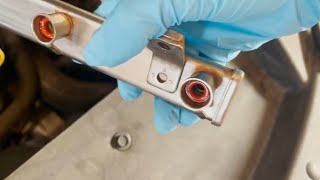
Typical fix: Replace the faulty fuel injector. 🎬 Watch: Step-by-step fuel injector replacement on a 4-cylinder Malibu.
Est. part cost: $80-$200 - Faulty Engine Control Module (ECM) ⚪ Low Probability An NHTSA owner complaint (ODI #10705647) for a 2011 Malibu shows that multiple injector codes (P0201, P0202, P0203, P0204) led to a GM-recommended ECM replacement. The internal driver circuit for the injector can fail, though this is less common than wiring or injector failure.
How to confirm: This is typically diagnosed after ruling out the injector and wiring. A 'noid light' test can confirm if the ECM is sending a pulse signal to the injector. If the wiring is confirmed to be good but the noid light does not flash, the ECM driver has likely failed. This is a stronger possibility if multiple injector codes are present at once, as documented in the NHTSA complaint and a similar case on a 2012 Malibu on Reddit.
Typical fix: Replace the ECM. This must be programmed to the vehicle's VIN.
Est. part cost: $250-$600
Diagnosis Steps
- Read the codes with an OBD-II scanner and confirm P0203 is present. Note any other codes, especially other P020x or P030x codes.
- Locate cylinder 3. On the 2.4L 4-cylinder engine, it is the third cylinder from the front (the side with the belts).
- Visually inspect the wiring harness and connector for cylinder 3's fuel injector. Look for obvious damage, corrosion, or loose connections, paying special attention to the chafe points identified in TSB PIP4924C: against the intake plenum, valve cover bolts, fuel line, and side of the cylinder head.
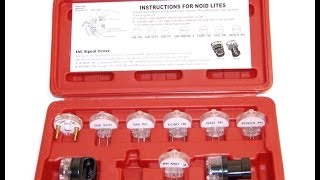
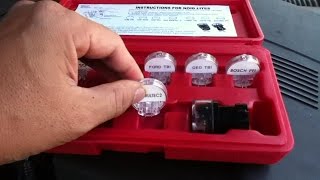
- Perform a noid light test. 🎬 See how to use a noid light kit for testing. Disconnect the injector and plug a 'noid light' into the electrical connector. Crank the engine. If the light flashes, the ECM and wiring are sending the control signal, and the injector itself is likely faulty.
- If the noid light does not flash, check for 12V power on one of the pins in the connector with the key on. If power is missing, check the relevant fuse. A 2008 Malibu with a V6 experiencing multiple injector codes had a blown fuse due to shorted power wires in the harness.
- If power is present but the noid light doesn't flash, the problem is in the ground-side control wire going back to the ECM or the ECM itself. Check for continuity on that wire.
- If the noid light flashes (confirming the circuit is okay), test the injector. Measure the resistance across the two terminals of the injector with a multimeter. It should be around 11-14 ohms for PFI engines (most 2009-2012) or 1.1-2.0 ohms for GDI engines (some 2010-2013). If the resistance is very different, infinite (open), or zero (shorted), the injector has failed.
- If all wiring and the injector test good, and especially if multiple injector codes are present, the ECM is the most likely remaining cause.
Parts You'll Likely Need
- Fuel Injector
(OEM #12633784 (Supersedes 12613163))— The fuel injector itself can fail electrically, causing an open or short in the circuit. This is a very common fix for a solitary P0203 code. Part number 12613163 is also cited for 2010-2012 models, but 12633784 is a more current replacement for many 2.4L GDI applications in this range.
Trusted brands: ACDelco, Bosch, Standard Motor Products
OEM price range: $120-$180
Aftermarket price range: $70-$110 - Fuel Injector Connector Pigtail — The plastic connector at the injector can become brittle and fail, or the wires can break right at the connector, necessitating a new pigtail to be spliced in. This is a common repair for harness damage at the injector.
Trusted brands: Dorman (e.g., 85137), ACDelco, Standard Motor Products
OEM price range: $25-$40
Aftermarket price range: $10-$25 - Engine Control Module (ECM) — A documented failure point on these vehicles, especially when multiple injector codes are present. The internal driver that fires the injector fails. [ODI #10705647]
Trusted brands: ACDelco
OEM price range: $300-$500
Aftermarket price range: $200-$400 (Remanufactured)
Related Codes That Often Appear With This One
- P0303 — P0303 means 'Cylinder 3 Misfire Detected'. Since the P0203 code indicates the injector circuit isn't working, cylinder 3 isn't getting fuel, which directly causes a misfire.
- P0201, P0202, P0204 — When multiple injector circuit codes appear together, it points away from a single bad injector and strongly suggests a systemic problem, such as a damaged wiring harness common to all injectors, a blown fuse, or a failing ECM, as documented in NHTSA ODI #10705647 and various forum discussions.
Technical Service Bulletins (TSBs) & Recalls
- PIP4924C: SES Light And Misfire With Injector Codes - Advises technicians to inspect the fuel injector wiring harness for rubbing through or internal wire opens at several common locations, including against the intake plenum, valve cover bolts, fuel line, and side of the head.
- PI0631: (Referenced within PIP4924C) - Provides additional information on other potential under-hood wire chafe locations.
Platform-Specific Known Issues
- TSB #PIP4924C explicitly warns of the fuel injector wiring harness rubbing through against engine parts. Common chafe points are against the intake plenum, valve cover bolts, fuel lines, and the side of the cylinder head under the plenum.
- NHTSA Owner Complaint #10705647 documents an instance on a 2011 Malibu where codes P0201, P0202, P0203, and P0204 were all present, and the ultimate fix was replacing the ECM as recommended by GM.
- A repair documented on 2CarPros.com for a 2008 Malibu V6 with codes P0201, P0203, and P0205 found that the power wires (pink/black) for the injectors had melted together inside the main harness, causing a direct short that kept blowing the fuse. The fix was to separate and insulate the wires.
Mechanic-Grade Diagnostic Values
- Fuel Injector Coil Resistance (PFI Engines) — expected: 11 - 14 Ohms. Failure: A reading of infinite ohms (open), zero ohms (shorted), or a value significantly outside the expected range.
- Fuel Injector Coil Resistance (GDI Engines) — expected: 1.1 - 2.0 Ohms. Failure: A reading of infinite ohms (open), zero ohms (shorted), or a value significantly outside this very low resistance range.
Scan Tool Commands That Help
- GM Tech 2 / GDS2: Injector Balance Test / Cylinder Power Balance — This function allows a technician to command the ECM to shut off each injector one-by-one while monitoring engine RPM drop. If disabling cylinder 3 causes no change in engine speed or roughness, it confirms that cylinder is not contributing, pointing strongly to a fuel, spark, or compression issue. This helps isolate the problem to a specific cylinder functionally.
- GM Tech 2 / GDS2: Fuel Injector Balance Test (Pressure Drop Method) — This test measures the drop in fuel rail pressure as the scan tool pulses each injector for a precise duration. If the pressure drop for cylinder 3 is significantly different from the others, it indicates a clogged or malfunctioning injector. A pressure drop within 3 PSI of the average is typically considered good.
Wiring & Ground Locations
- G107 — On the lower left side of the 2.4L engine block.. This is a primary engine block ground. A poor connection here can cause erratic behavior and unexplained electrical faults in various engine sensors and actuators, including the injector circuits.
- G105 / G106 — On the left rear of the 2.4L engine block, often near the cylinder head.. These are additional critical engine grounds. The ECM and its related components rely on clean ground paths. A loose or corroded ground at these locations can introduce resistance and voltage fluctuations, potentially triggering circuit codes like P0203.
- ECM Connector X1 — The main engine wiring harness connector at the Engine Control Module.. The control (ground pulse) wire for the injector runs from the ECM to the injector. On similar 2.4L GM platforms, the injector control wires are located in this connector. Testing for continuity from this connector's pin to the injector connector is the definitive way to confirm the wire is not broken.
Real Owner Repair Stories
- Reddit user in r/MechanicAdvice (2012 Chevrolet Malibu LS, ~75k miles) — Intermittent misfiring, shuddering at idle and highway speeds, occasional stalling. Check engine light was on.
❌ Tried (didn't work) Replaced spark plugs and ignition coils.
✅ What actually fixed it The vehicle was throwing codes P0201, P0202, P0203, and P0204 simultaneously. The diagnostic printout and advice from others pointed to a faulty ECM as the most likely cause, which aligns with the official NHTSA complaint (ODI #10705647) for the same issue.
OEM Part Supersession History
Various (e.g., 12613163)→12633784— Part consolidation and design updates.
Heads up: Part number 12633784 is for Gasoline Direct Injection (GDI) engines (LAF, LEA, LUK). Earlier Port Fuel Injected (PFI) engines (LE5) use a different style of injector. It is critical to verify the engine type before ordering parts.
Model Year Variations Within This Range
- 2009-2012: Most 2.4L engines in this period were the LE5 variant, which uses Port Fuel Injection (PFI). These injectors have a higher electrical resistance (approx. 11-14 ohms) and are physically different from GDI injectors.
- 2010-2013: Starting in 2010 and becoming standard by 2013, GM switched to 2.4L engines with Gasoline Direct Injection (GDI), including variants LAF, LEA (FlexFuel), and LUK (eAssist Hybrid). These high-pressure injectors have a very low electrical resistance (approx. 1.1-2.0 ohms). Using the wrong diagnostic spec or part will lead to misdiagnosis.
Helpful Videos

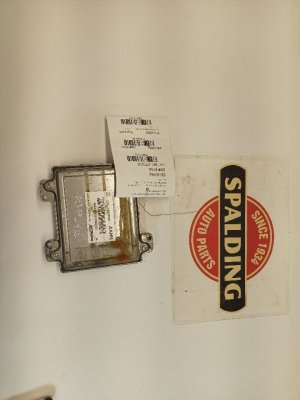
Used OEM Parts in Stock



New Aftermarket Parts Available



The information in this article is provided for general reference and educational purposes only. Vehicle specifications, procedures, and part compatibility can vary by production date, trim level, and region. Always consult your vehicle's factory service manual and verify part numbers before purchasing or performing repairs. Safety-critical components such as airbags, seat belts, and braking systems should be installed by a qualified professional.
- Chevrolet MALIBU:
- 🎬 Helpful Videos
- 🛍️ Shop This Part
- What's Unique About the 2009-2013 Chevrolet MALIBU
- Diagnostic Flowchart
- Symptoms You May Notice
- Most Likely Causes
- Diagnosis Steps
- Parts You'll Likely Need
- Related Codes That Often Appear With This One
- Technical Service Bulletins (TSBs) & Recalls
- Platform-Specific Known Issues
- Mechanic-Grade Diagnostic Values
- Scan Tool Commands That Help
- Wiring & Ground Locations
- Real Owner Repair Stories
- OEM Part Supersession History
- Model Year Variations Within This Range
- 🎟️ Get 5% Off