

P0203 on 2009-2014 Buick Enclave: Injector Circuit Malfunction Causes and Fixes
On a 2009-2014 Buick Enclave, code P0203 indicates an electrical fault in the cylinder 3 fuel injector circuit. The most common cause is a failed fuel injector, followed by wiring issues. Replacing the injector is a moderately difficult DIY job as it requires removing the upper intake manifold to access the rear bank of cylinders where cylinder 3 is located.
- P0203 on a Buick Enclave means there's an electrical problem with the cylinder 3 fuel injector circuit.
- The most likely cause is a failed fuel injector, but the wiring harness should always be inspected for damage as per GM service bulletins.
- Cylinder 3 is on the rear bank against the firewall, requiring removal of the upper intake manifold for access.
- The engine will run rough and have a misfire (P0303) until the issue is fixed. Avoid driving, especially if the check engine light is flashing, to prevent catalytic converter damage.
- When replacing the injector, it is mandatory to also replace the single-use intake manifold gaskets.
What's Unique About the 2009-2014 Buick ENCLAVE
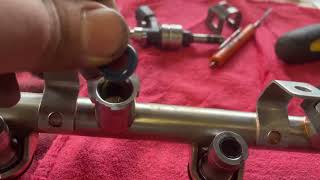
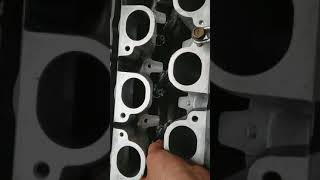
The Buick Enclave from this era uses a 3.6L V6 engine (either the LLT or LFX version). While the P0203 code itself is standard, on this transverse-mounted engine, cylinder 3 is on the rear bank against the firewall. Accessing this injector requires removing the upper intake manifold 🎬 Watch this walkthrough for removing the intake and injectors., making replacement more labor-intensive than on other vehicles. Additionally, GM has issued technical service bulletins, like #PIP4924D, that mention this code in relation to broader engine misfire issues, sometimes pointing towards wiring harness problems as a potential cause.
Diagnostic Flowchart
Tap your situation to follow the diagnostic path that matches what you're seeing on this vehicle.
Symptoms You May Notice
- Check Engine Light is on (steady or flashing)
- Engine runs rough or vibrates, especially at idle
- Noticeable engine misfire, sometimes felt as a 'popping' or 'jerking'
- Poor or hesitant acceleration
- Reduced fuel economy
- In some cases, the engine may stall or enter 'limp mode'
- Replacing spark plugs or ignition coils. While these can cause a misfire (e.g., P0303), they do not cause a P0203 circuit code. The P0203 code is specifically for the fuel injector's electrical circuit, not a combustion failure. A P0203 fault will cause a P0303, but a P0303 can happen for many reasons without a P0203.
Most Likely Causes
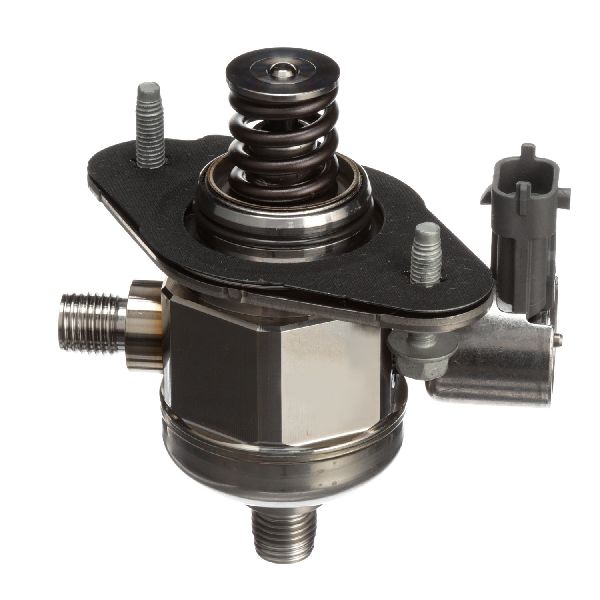
- Failed Fuel Injector (Cylinder 3) 🔴 High Probability Fuel injectors on the 3.6L V6 can fail over time due to internal coil shorts, opens, or becoming clogged. The direct injection system (LLT/LFX) 🎬 Watch a professional guide on GM direct injection replacement. runs at very high pressure, which can contribute to wear. Several owner forums and repair videos for GM vehicles with this engine point to injector failure as the most common fix for a P020x code.
How to confirm: After verifying the wiring is good, swap the cylinder 3 injector with another cylinder's injector (e.g., cylinder 1). If the trouble code moves to the new cylinder (e.g., P0201), the injector is faulty. You can also test the injector's resistance with a multimeter; it should be within the manufacturer's specified range (typically 1.2-1.8 ohms for the LFX engine). An infinite reading means an open circuit, and a very low reading indicates a short.
Typical fix: Replace the faulty fuel injector. It is often recommended to replace all injectors on the same bank (Bank 1: cylinders 1, 3, 5), or all six, if they are original and have high mileage, along with the intake manifold gaskets which must be replaced when the manifold is removed.
Est. part cost: $40-$150 - Wiring Harness or Connector Issue 🟡 Medium Probability The engine wiring harness can become brittle from heat cycles and may chafe against engine components, leading to an open or short in the circuit for the cylinder 3 injector. TSB #PIP4924D specifically advises technicians to inspect the fuel injector wiring harness for rubbing or internal wire opens. On similar GM platforms, TSBs have been issued for broken terminal pins inside the injector harness connector itself.
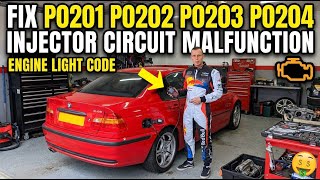
How to confirm: Visually inspect the wiring harness leading to the cylinder 3 injector for any signs of damage, melting, or corrosion. Use a noid light at the injector connector to verify the ECM is sending a pulse signal. If there is no pulse, trace the wiring back to the ECM 🎬 See how to diagnose injector circuit malfunction codes. to find the break or short. Wiggle the harness while the engine is running to see if it triggers the misfire, indicating an intermittent connection.
Typical fix: Repair the damaged section of wire or replace the injector pigtail connector. In severe cases, a section of the engine harness may need to be replaced.
Est. part cost: $15-$50 for a pigtail, much more for a full harness.
Rare But Worth Checking
- Faulty Engine Control Module (ECM): This is the least likely cause. The ECM's internal driver for the injector circuit can fail, but all other possibilities (injector, wiring) must be exhaustively ruled out first before condemning the ECM. This should be the last resort after all other diagnostic steps have failed.
- Carbon Buildup on Intake Valves: While not a direct cause of the P0203 electrical code, severe carbon buildup is a well-known issue on the 3.6L direct injection (LLT/LFX) engines. This buildup can disrupt airflow and cause misfires (P0303), which can sometimes complicate diagnosis. In rare cases, it could potentially lead to conditions that stress the injector. Cleaning the valves is a separate, labor-intensive job.
Diagnosis Steps
- Connect an OBD-II scanner to verify code P0203 is present and check for any other codes, like P0303. Review freeze frame data.
- Clear the codes and test drive the vehicle to see if the code returns immediately.
- Locate Cylinder 3. On the transverse 3.6L V6, the cylinders against the firewall are Bank 1 (odd-numbered: 1, 3, 5, from passenger to driver side). The cylinders near the radiator are Bank 2 (even-numbered: 2, 4, 6). Cylinder 3 is the middle cylinder on the rear bank.
- Due to access issues (intake manifold removal required), initial electrical checks are crucial. First, inspect the visible portions of the engine wiring harness for any obvious chafing, melting, or damage, particularly where the harness routes near the back of the engine.
- If you can access the main ECM connector, you can perform wiring checks from there. Using a factory wiring diagram, identify the two wires for the cylinder 3 injector. Perform a continuity test on both wires from the ECM connector back to the injector connector (if accessible) to find any open or short circuits.
- Once the intake manifold is removed for access, disconnect the electrical connector at the cylinder 3 injector. Use a noid light to test the connector. Have a helper crank the engine; the noid light should flash, indicating the ECM and wiring are sending a signal.
- If the noid light flashes, the problem is almost certainly the injector itself. If it does not flash, the problem is in the wiring or the ECM.
- To confirm a bad injector, turn off the engine and use a multimeter to measure the resistance across the two pins of the fuel injector. Compare the reading to the manufacturer's specification (see Model-Year Variations). An infinite reading means an open circuit, and a very low reading indicates a short.
- A definitive test is to swap the cylinder 3 injector with another one (e.g., cylinder 1). Reassemble and see if the code follows the injector (now showing P0201). If it does, the injector is bad. If the code remains P0203, the issue is in the wiring to that specific cylinder.
- If both the wiring and injector test good, the fault may lie with the ECM, but this is rare and should be the last consideration.
Parts You'll Likely Need
- Fuel Injector
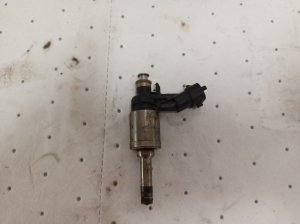
(OEM #12638530 (may be superseded by 12669384))— This is the most common component to fail for a P0203 code. The internal coil windings can short out or break over time. Part number 12638530 has been superseded by 12669384.
Trusted brands: ACDelco, Bosch, Standard Motor Products
OEM price range: $90-$150
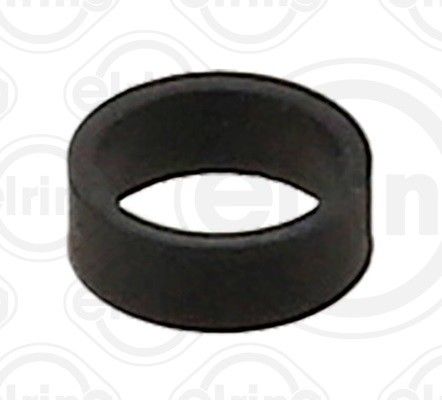
Aftermarket price range: $40-$90 - Upper and Lower Intake Manifold Gasket Set — These gaskets are single-use and must be replaced anytime the intake manifold is removed to access the fuel injectors on the 3.6L V6 engine. Reusing old gaskets will cause vacuum leaks.
Trusted brands: ACDelco, Fel-Pro, Mahle
OEM price range: $40-$70
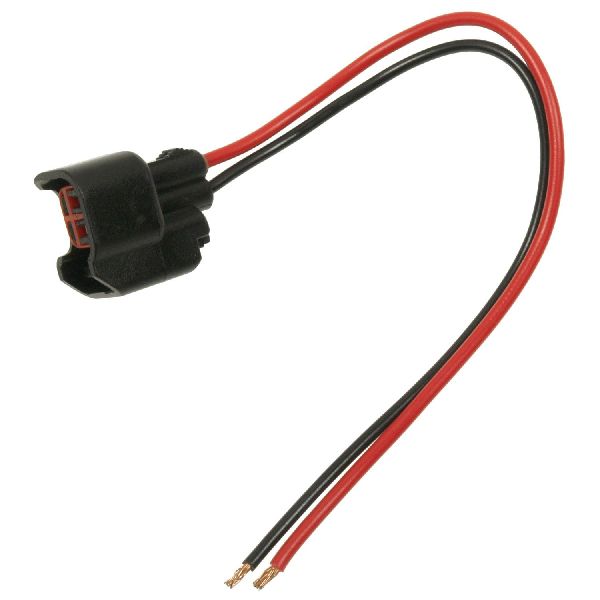
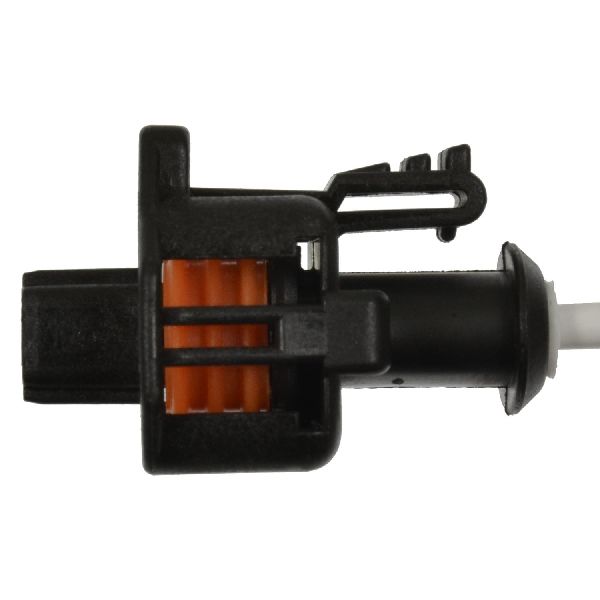
Aftermarket price range: $20-$40 - Fuel Injector Connector Pigtail — The plastic connector and its wiring can become brittle and fail, causing an open or short in the circuit. This is needed if the connector or wires right at the injector are damaged.
Trusted brands: ACDelco, Dorman
OEM price range: $25-$50
Aftermarket price range: $15-$30
Related Codes That Often Appear With This One
- P0303 — P0303 means 'Cylinder 3 Misfire Detected'. Since a P0203 fault prevents proper fueling of cylinder 3, a misfire is the direct result, and this code is almost always present alongside it.
- P0201, P0202, P0204, etc. — If multiple injector circuit codes are present, it strongly suggests a systemic problem like a damaged wiring harness affecting several injectors, a blown fuse, or a faulty ECM, rather than multiple individual injector failures. TSBs from GM often group all P020x codes together.
Technical Service Bulletins (TSBs) & Recalls
- PIP4924D: Mentions P0203 in a list of DTCs related to engine misfires on 2009 models. It advises inspection of the injector wiring harness for damage.
Platform-Specific Known Issues
- A Technical Service Bulletin (TSB #PIP4924D) was issued for 2009 models (and other GM vehicles) that lists P0203 among other codes related to engine misfires. The bulletin explicitly directs technicians to inspect the fuel injector wiring harness for rub-through or internal wire opens and to repair or replace the harness as needed.
Mechanic-Grade Diagnostic Values
- Fuel Injector Resistance (2012-2014 LFX Engine) — expected: 1.2 - 1.8 Ohms. Failure: A reading of 0 ohms (short), infinity/OL (open), or significantly outside the specified range indicates a failed injector coil.
- Fuel Injector Resistance (2009-2011 LLT Engine) — expected: 150k - 210k Ohms (for Piezo type injectors). Failure: A reading outside this very high resistance range indicates a failed Piezo injector. Note this is drastically different from the LFX engine.
- Injector Circuit Voltage (Key On, Engine Off) — expected: ~12 Volts (Battery Voltage). Failure: No voltage on the power feed wire at the injector connector indicates a problem upstream in the harness or with the power supply relay/fuse.
- Wiring Continuity (ECM to Injector Connector) — expected: Less than 1.0 Ohm. Failure: Resistance greater than 1.0 Ohm, or an 'OL' (Open Loop) reading, indicates a break in the wire.
- High-Pressure Fuel System (at idle) — expected: 2,000-5,000 kPa (290-725 psi). Failure: While not a direct cause of a P0203 circuit code, pressure readings outside this range can indicate other fuel system issues that may complicate diagnosis.
Scan Tool Commands That Help
- GM GDS2 / Professional Bidirectional Scanner: Injector Test / Cylinder Power Balance — This function allows a technician to disable individual injectors one by one while the engine is running. If disabling cylinder 3 causes no change in engine RPM, it confirms that cylinder was not contributing, verifying the impact of the P0203 fault.
- GM GDS2 / Professional Bidirectional Scanner: Fuel Injector Balance Test — This automated test fires each injector for a set duration while monitoring the fuel rail pressure drop. It can identify a mechanically sticking or clogged injector, helping to differentiate a flow problem from the P0203 electrical circuit fault.
- Kent Moore AFIT (Active Fuel Injector Tester): Injector Electrical Measurement & Flow Test — This is a specialized dealer tool that performs comprehensive electrical and flow tests on the injectors without full removal, providing detailed analysis beyond a standard multimeter or scan tool.
Wiring & Ground Locations
- ECM Connector X1 — At the Engine Control Module (ECM) in the engine compartment. For the LFX engine, the X1 connector can be identified as being black with a blue Terminal Position Assurance (TPA) clip.. This is the main connector where the injector control circuits originate. Testing for continuity and shorts between this connector and the injector pigtail is the definitive way to confirm wiring integrity.
- TSB-Identified Chafe Points — The injector wiring harness where it passes over or near the intake plenum, valve cover bolts, fuel lines, and the side of the cylinder head.. GM TSB #PIP4924D specifically identifies these as common areas where the harness rubs through, causing an open or short that triggers P0203 and related codes. This is the most likely location for a wiring failure.
- Ground G110 / G112 — On similar GM platforms, these are critical engine harness grounds located near the front of the engine or near the battery.. A loose or corroded ground can introduce electrical noise and unstable voltage into the engine management system, potentially causing intermittent injector circuit faults. Verifying grounds are clean and tight is a crucial diagnostic step.
Real Owner Repair Stories
- Synthesized from multiple owner forums (Enclave/Acadia/Traverse) and TSB #PIP4924D (2010 Buick Enclave (and similar Lambda platform vehicles)) — Check engine light on with codes P0203 and P0303. Engine running very rough, especially at idle, with a noticeable misfire.
❌ Tried (didn't work) Replacing the spark plug and ignition coil for cylinder 3., Swapping the cylinder 3 fuel injector with cylinder 1; the code remained P0203.
✅ What actually fixed it After removing the intake manifold for the second time, a thorough inspection of the injector wiring harness revealed a spot where the loom had worn through and two wires had chafed against a sharp edge on the cylinder head, causing an intermittent short. The damaged wires were repaired using solder and heat-shrink tubing, and the harness was re-routed with protective loom. This is the exact failure mode described in TSB #PIP4924D.
"I Checked Everything" — The Actual Cause
- A common diagnostic dead-end for P0203 occurs when initial tests seem to pass. A technician may find that a noid light flashes at the connector (indicating a pulse from the ECM) and the fuel injector's resistance measures within spec. However, the code still returns. The actual cause is often an intermittent wiring fault that only occurs under specific conditions (e.g., heat or vibration). The wire's insulation may be internally broken or chafed just enough to short against the block when the engine warms up and vibrates, but tests fine when cold and stationary. A 'wiggle test' on the harness while monitoring the circuit is required to expose this type of failure.
When the Usual Fixes Don't Work
- While the most common fix is replacing the fuel injector, a significant number of cases, especially on this GM platform, are not resolved by an injector swap. As documented in TSB #PIP4924D, the root cause is frequently a chafed wiring harness. In these instances, replacing the injector is a waste of time and money. The code will remain P0203 even with a new injector, pointing definitively to a problem in the wiring or, rarely, the ECM itself. The definitive diagnostic step that separates these two failure paths is swapping the suspect injector with a known good one from another cylinder. If the code 'moves' to the new cylinder (e.g., becomes P0201), the injector is bad. If the code stays as P0203, the problem is in the wiring to that specific cylinder's connector.
OEM Part Supersession History
12638530→12669384— Standard part update for improved reliability or manufacturing process change.
Heads up: Other part numbers like 12632255 and 12611545 are also listed as interchangeable for the LLT engine. It is highly recommended to replace injectors as a full set, or at least a bank set, to ensure consistent fuel flow and atomization, as mixing old and new injectors can cause performance imbalances.
Model Year Variations Within This Range
- 2009-2011: These models use the 3.6L LLT V6 engine. This engine uses a Bosch ECM and may feature high-resistance Piezo-style direct injectors. The correct resistance measurement for these injectors is very high, in the range of 150,000-210,000 Ohms. Using the wrong resistance spec during diagnosis will lead to an incorrect conclusion.
- 2012-2014: These models use the updated 3.6L LFX V6 engine. This engine uses a Delphi ECM and low-resistance solenoid-style direct injectors. The correct resistance for these injectors is very low, typically 1.2-1.8 Ohms. The injectors, ECM, and some wiring are not interchangeable with the earlier LLT models.
Helpful Videos
Used OEM Parts in Stock


New Aftermarket Parts Available


The information in this article is provided for general reference and educational purposes only. Vehicle specifications, procedures, and part compatibility can vary by production date, trim level, and region. Always consult your vehicle's factory service manual and verify part numbers before purchasing or performing repairs. Safety-critical components such as airbags, seat belts, and braking systems should be installed by a qualified professional.
- Buick ENCLAVE:
- 🎬 Helpful Videos
- 🛍️ Shop This Part
- What's Unique About the 2009-2014 Buick ENCLAVE
- Diagnostic Flowchart
- Symptoms You May Notice
- Most Likely Causes
- Rare But Worth Checking
- Diagnosis Steps
- Parts You'll Likely Need
- Related Codes That Often Appear With This One
- Technical Service Bulletins (TSBs) & Recalls
- Platform-Specific Known Issues
- Mechanic-Grade Diagnostic Values
- Scan Tool Commands That Help
- Wiring & Ground Locations
- Real Owner Repair Stories
- "I Checked Everything" — The Actual Cause
- When the Usual Fixes Don't Work
- OEM Part Supersession History
- Model Year Variations Within This Range
- 🎟️ Get 5% Off