

P0202 on 2014-2020 Ram 3500 6.7L Cummins: Injector Circuit Open Causes and Fixes
P0202 on a Ram 3500 with the 6.7L Cummins most often means the #2 fuel injector has failed or its wiring is damaged. Before replacing the injector, thoroughly inspect the wiring harness, especially where it passes through the valve cover, as this is a common failure point. A healthy injector should have a resistance of less than 1.0 Ohm. An intermittent fault that clears on its own often points to a wiring issue rather than a failed injector.
- P0202 is an electrical circuit code for the #2 fuel injector, not a fuel flow code.
- Always inspect the wiring harness for damage, especially near the valve cover, before buying an expensive fuel injector.
- Use a multimeter to test the injector's resistance and the harness's continuity to pinpoint the electrical fault.
- On 2019-2020 models, be aware that this code can be a symptom of a much larger problem: a failing high-pressure fuel pump.
- Due to the extreme pressures of the diesel fuel system, this repair carries a risk of serious injury and is best left to professionals if you are not experienced.
What's Unique About the 2014-2020 Ram 3500
On the 6.7L Cummins engine, the wiring harness for the injectors is integrated with the valve cover gasket and passes through it. This design exposes the wiring to constant, intense heat, oil saturation, and vibration, which can make wires brittle and cause them to break or develop fretting corrosion at the connector pins over time. This makes a wiring issue a more probable cause for a P0202 code on this platform compared to others where the injector itself is the primary suspect. Additionally, 2019-2020 models used a Bosch CP4 high-pressure fuel pump that was subject to a major recall; its failure can contaminate the entire fuel system with metal debris, destroying injectors and leading to this code.
Diagnostic Flowchart
Tap your situation to follow the diagnostic path that matches what you're seeing on this vehicle.
Generation note: This range covers the end of the fourth generation (2014-2018) and the beginning of the fifth generation (2019-2020). While the code's meaning is the same, 2019-2020 models are known for potential high-pressure fuel pump (CP4) failures which can be a related cause, covered by NHTSA recall 21V-880 (FCA campaign Y78). The fuel injectors and some part numbers also differ between these generations.
Symptoms You May Notice
- Check Engine Light is on
- Rough or shaking idle
- Engine misfiring, which may be felt as a consistent stumble or vibration.
- Noticeable loss of power and poor acceleration.
- Increased black or white smoke from the exhaust.
- Poor fuel economy.
- Extended cranking time before the engine starts.
- Engine may stall unexpectedly.
- Replacing the fuel injector when the actual problem is a simple break in the wiring harness or a loose connection at the injector posts.
- Assuming a clogged or dirty injector, when P0202 specifically points to an electrical circuit fault (open or high resistance), not a fuel flow issue.
Most Likely Causes
- Faulty Injector Wiring Harness or Connector 🔴 High Probability The wiring harness passes through the valve cover gasket, where it is exposed to extreme heat and vibration, leading to brittle wires and broken connections. The connection points at the injector solenoid posts are a common point of failure due to fretting corrosion.
How to confirm: Visually inspect the wiring harness for any signs of cracking, melting, or damage. Use a multimeter set to Ohms to check for continuity from the main engine harness connector to the injector connector pigtail. A reading of 'OL' (Open Line) or resistance greater than 10 Ohms indicates a break in the wire. Also check for shorts to ground on both the high and low side driver circuits.
Typical fix: If a break is found in the pigtail, a new connector pigtail can be spliced in. If the break is within the valve cover pass-through harness, the entire valve cover gasket/harness assembly must be replaced. When replacing, ensure the injector terminal nuts are torqued correctly, typically to a very low value like 11-13 in-lbs.
Est. part cost: $50-$300 - Failed Fuel Injector #2 🟡 Medium Probability Injectors can fail electrically due to an internal open in the solenoid coil. On 2019-2020 models, metal debris from a failing high-pressure fuel pump can also cause catastrophic injector damage.
How to confirm: Disconnect the injector and measure the resistance across its two terminals with a multimeter set to Ohms. A healthy injector will have a resistance between 0 and 1.0 Ohm. An infinite reading ('OL') means the injector's internal coil is open and it must be replaced. Another definitive method is to swap injector #2 with an adjacent one (e.g., #1), clear codes, and see if the fault follows the injector (i.e., code changes to P0201).
Typical fix: Replace the faulty fuel injector. It is best practice to also replace the high-pressure connector tube and any associated seals to prevent leaks. The injector hold-down bolt and feed tube have a specific multi-step torque sequence that must be followed. After installation, the new injector's IQA code must be programmed into the ECM using a capable scan tool.
Est. part cost: $300-$700
Rare But Worth Checking
- Faulty Powertrain Control Module (PCM): This is the least likely cause. The PCM's internal driver for the #2 injector can fail, but this should only be considered after thoroughly testing and ruling out the injector and all associated wiring. This is more likely if codes for all three injectors in a bank (P0201, P0202, P0203) are present simultaneously. A tell-tale sign can be observing low injector firing voltage (e.g., ~25V instead of 50V+) on an oscilloscope.
Diagnosis Steps
- Read the trouble codes with an OBD-II scanner and note all active and pending codes. Note if other injector codes or fuel pressure codes are present.
- Locate cylinder #2 (the second cylinder back from the front of the engine).
- Carefully inspect the visible portion of the wiring harness going to injector #2 for any obvious signs of damage, melting, or corrosion at the connector.
- Disconnect the injector and test its internal resistance with a multimeter. Set the meter to Ohms. A reading between 0 and 1.0 Ohms is good. An 'OL' or infinite reading confirms a bad injector.
- If injector resistance is good, test the harness. Disconnect the valve cover pass-through connector and the PCM connector. Check for continuity on both wires (K12 and K612) from the injector connector back to the main engine harness connector. Resistance should be less than 10 Ohms. Also check for any shorts to ground or shorts between the driver circuits.
- A 'noid light' can be used to verify if the PCM is sending a pulse signal to the connector. Connect the noid light to the injector harness connector and start the engine. The light should flash, indicating the PCM is sending a signal. If there is no pulse but the wiring has continuity, the issue may be the PCM driver.
- If the diagnosis is inconclusive, swapping the #2 injector with another cylinder's injector (e.g., #1) is a definitive test. Clear the codes and run the engine. If the code changes to P0201 🎬 Watch: How to perform an injector kill test for diagnosis., the injector is bad. If the code remains P0202, the wiring is bad.
- For 2019-2020 models, if multiple injector codes or P0087 are present, inspect the fuel system for metal debris from a potential CP4 high-pressure fuel pump failure as per recall Y78.
Parts You'll Likely Need
- Fuel Injector
(OEM #68210105AA, R8210512AA (Reman, 2014-18) / 68444791AA, R8444791AA (Reman, 2019-20))— This is the component that fails if the internal solenoid coil breaks, causing an open circuit. On 2019-2020 models, it can also be destroyed by debris from a failed CP4 pump. Part numbers differ for 2019+ models.
Trusted brands: Bosch, Mopar
OEM price range: $450-$700
Aftermarket price range: $300-$450 - Valve Cover Gasket with Injector Harness
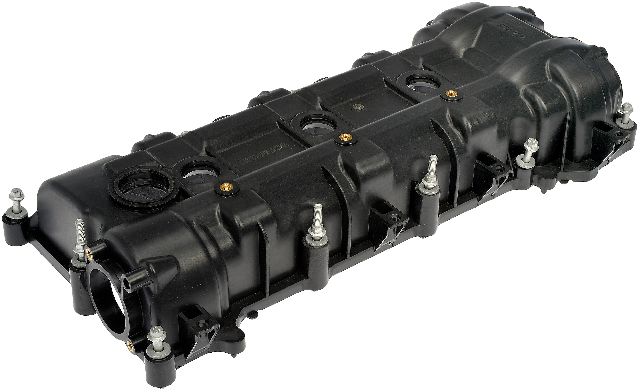
(OEM #5367847 (Cummins), 5179091AD (Mopar))— If the wiring fault is located in the section that passes through the valve cover, this entire assembly must be replaced. This is a common failure point due to heat and vibration.
Trusted brands: Mopar, Cummins
OEM price range: $200-$300
Aftermarket price range: $150-$250 - Fuel Injector Connector Tube — It is highly recommended to replace this tube when replacing an injector to ensure a proper high-pressure seal and prevent leaks.
Trusted brands: Bosch, Mopar
OEM price range: $40-$60
Aftermarket price range: $25-$40
Related Codes That Often Appear With This One
- P0302 — P0302 indicates a misfire on cylinder 2. Since P0202 means the injector circuit is open, cylinder 2 isn't receiving fuel, which directly causes a misfire.
- P0201, P0203 — The Cummins PCM groups injectors into banks (1-3 and 4-6). A short or issue in the main harness can sometimes cause the PCM to set codes for the entire bank as a protective measure.
- P0087 — As noted in TSB #18-099-22, this code for 'Fuel Rail Pressure Too Low' can appear alongside injector codes if the root cause is a failing high-pressure fuel pump, especially on 2019-2020 models with the CP4 pump.
- P2146 — This code ('Fuel Injector Group 'A' Supply Voltage Circuit/Open') indicates a fault in the supply voltage for injectors 1, 2, and 3. It often appears with P0202 and strongly points towards a wiring harness issue rather than a single injector failure.
Technical Service Bulletins (TSBs) & Recalls
- Bulletin #18-099-22 REV. A
- Bulletin #18-099-22
Platform-Specific Known Issues
- High-Pressure Fuel Pump (HPFP) Failure: On 2019-2020 models, the Bosch CP4 HPFP is known to fail, sending metal debris throughout the fuel system. This can destroy injectors and trigger multiple injector circuit codes. This issue led to NHTSA recall 21V-880 (FCA campaign Y78). The repair involves replacing the HPFP, fuel rails, all injectors, and flushing the entire fuel system.
- Intermittent Connection: Owners often report that the code appears intermittently, especially when the engine is hot. This often points to a hairline crack in a wire or a corroded terminal making a poor connection that worsens with thermal expansion, rather than a completely failed injector.
Mechanic-Grade Diagnostic Values
- Fuel Injector Coil Resistance — expected: Less than 1.0 Ohm, and greater than 0 Ohms. Failure: A reading of 'OL' (Open Line) or exactly 0 Ohms (shorted)
- Injector Terminal Nut Torque — expected: 11-13 in-lbs (1.25-1.5 N·m). Failure: Loose nuts can cause intermittent open circuits; over-tightening can break the injector terminal post.
- Injector Hold-Down Bolt Torque Sequence — expected: 1. Pre-torque to 44 in-lbs. 2. Loosen bolts. 3. Torque connector tube. 4. Final torque hold-down bolts to 71 in-lbs.. Failure: Improper torquing can lead to compression leaks or damage to the injector body.
- Fuel Injector Connector Tube Torque — expected: 37-41 ft-lbs (50-55 N·m). Failure: Improper torque can cause high-pressure fuel leaks.
- Fuel Rail Pressure During Cranking — expected: Approximately 4,000 PSI or higher. Failure: Failure to reach this pressure can indicate a leak in the high-pressure system (including injectors) and prevent starting.
- Total Injector Return Flow (Leak-off) — expected: Max 210 mL in 30 seconds during Fuel Pressure Override Test. Failure: Volume greater than 210 mL indicates excessive leakage from one or more injectors.
- Individual Injector Contribution to Return Flow — expected: Isolating one injector should not drop total return flow by more than 40 mL. Failure: If blocking one injector's return drops the total by more than 40 mL, that injector is leaking excessively internally.
Scan Tool Commands That Help
- wiTECH, Autel, Snap-on, or equivalent professional scanner: Injector Kill / Cylinder Contribution Test — Used to disable one injector at a time to see if engine performance changes. If killing cylinder #2 has no effect on the rough idle, it confirms that cylinder was not contributing, which is expected with a P0202. It helps isolate the problematic cylinder.
- wiTECH or equivalent: Fuel Pressure Override Test — This function commands the fuel pump to produce maximum rail pressure (approx. 26,000 PSI) while the engine is running at a set RPM. It is used specifically for performing an accurate injector return flow (leak-off) test to diagnose internal injector leaks.
- wiTECH, Autel, Snap-on, or equivalent: Injector Quantity Adjustment (IQA) Programming — This is a mandatory step after replacing a fuel injector. Each new injector has a unique 6-digit code that must be programmed into the PCM to ensure precise fuel trimming and optimal engine performance.
Wiring & Ground Locations
- PCM Connector C1 — Located on the driver's side of the engine block, this is one of the main connectors for the Powertrain Control Module.. This connector contains the driver circuits for injector bank 1 (cylinders 1, 2, and 3). Testing for continuity and shorts should start here.
- Injector #2 Circuit Pins (in C1) — Within the PCM C1 connector.. The specific pins for the cylinder #2 injector circuit are K12 (High Side Driver) and K612 (Low Side Driver). These are the exact points to test when diagnosing a wiring issue back to the PCM.
- Valve Cover Pass-Through Connector (Bank 1) — The FRONT large, circular electrical connector on the valve cover.. This is the main connection point for the internal harness for injectors 1, 2, and 3. It is a common point of failure due to oil contamination and vibration, and a fault here can cause P0202.
Real Owner Repair Stories
- ScannerDanner Forum (2008 Ram 6.7L Cummins (same engine family)) — No start initially, then very rough idle with white, eye-burning smoke. Engine would fall on its face with any throttle input.
❌ Tried (didn't work) Customer replaced all fuel injectors., Shop re-did injector job, found loose fuel supply tubes., Verified fuel lift pump pressure was good (10 PSI)., Load tested all PCM power and ground wires., Load tested all injector circuits from PCM through the valve cover harness., Injector return flow test was within spec.
✅ What actually fixed it A replacement (used) Powertrain Control Module (PCM) was installed and programmed. The original PCM had failing injector drivers, which were only providing ~22 volts to the injectors instead of the required 50+ volts, a fact discovered by scoping the injector waveforms.
OEM Part Supersession History
3975641, 5264950→5367847— The design was updated for improved oil resistance and electrical durability.
Heads up: This is the correct, updated part for the entire 2014-2020 range, replacing previous versions.
Model Year Variations Within This Range
- 2019-2020: These models use a Bosch CP4 high-pressure fuel pump, which is prone to failure and was subject to a major recall (NHTSA 21V-880). Failure contaminates the entire fuel system and is a primary suspect if multiple injector codes (P0201-P0206) and P0087 are present.
- 2019-2020 vs 2014-2018: The fuel injectors have different part numbers. For example, a 2014-2018 injector is Mopar #68210105AA, while a 2019-2020 Standard Output injector is Mopar #68444791AA. They are not interchangeable.
Helpful Videos
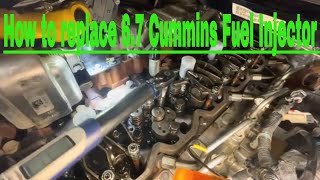
Used OEM Parts in Stock
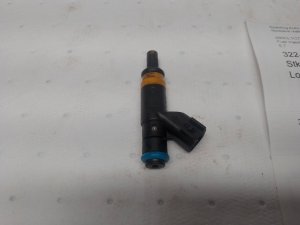


New Aftermarket Parts Available


The information in this article is provided for general reference and educational purposes only. Vehicle specifications, procedures, and part compatibility can vary by production date, trim level, and region. Always consult your vehicle's factory service manual and verify part numbers before purchasing or performing repairs. Safety-critical components such as airbags, seat belts, and braking systems should be installed by a qualified professional.
- Ram 3500:
- 🎬 Helpful Videos
- 🛍️ Shop This Part
- What's Unique About the 2014-2020 Ram 3500
- Diagnostic Flowchart
- Symptoms You May Notice
- Most Likely Causes
- Rare But Worth Checking
- Diagnosis Steps
- Parts You'll Likely Need
- Related Codes That Often Appear With This One
- Technical Service Bulletins (TSBs) & Recalls
- Platform-Specific Known Issues
- Mechanic-Grade Diagnostic Values
- Scan Tool Commands That Help
- Wiring & Ground Locations
- Real Owner Repair Stories
- OEM Part Supersession History
- Model Year Variations Within This Range
- 🎟️ Get 5% Off