

P0202 on 1998-2005 Dodge RAM 2500: Injector Circuit Malfunction Causes & Fixes
On a 1998-2005 Dodge RAM 2500 with the 5.9L Cummins diesel, P0202 almost always points to a problem with the wiring to the #2 injector, not the injector itself. The most common failure is the injector wiring harness located under the valve cover. This harness becomes brittle from heat and oil exposure. Before replacing the expensive injector, thoroughly inspect and test the harness and its connectors, as this is a much cheaper and more frequent fix.
- P0202 on a 5.9L Cummins points to an electrical issue with the #2 fuel injector.
- Do not immediately buy a new fuel injector. The most likely cause is the wiring harness under the valve cover.
- A visual inspection and multimeter tests on the harness and injector can pinpoint the problem without guesswork.
- This is a manageable DIY repair for someone with basic mechanical skills, saving significant labor costs.
- Always replace the valve cover gasket when performing this repair to prevent future oil leaks.
What's Unique About the 1998-2005 Dodge RAM 2500
On the 5.9L Cummins engine, the injector wiring harnesses are located underneath the valve cover, where they are constantly exposed to hot engine oil and vibration. This harsh environment causes the wiring insulation and connectors to become brittle and fail over time, making it a very common point of failure. A Technical Service Bulletin (TSB #9002688) from Dodge specifically advises technicians to check the wiring loom and connector in the valve cover gasket before replacing injectors for a P0202 code, confirming this is a well-known issue.
🎬 Watch: How to diagnose injector circuit malfunction codes like P0202.Diagnostic Flowchart
Tap your situation to follow the diagnostic path that matches what you're seeing on this vehicle.
Generation note: This year range covers two generations of the Dodge Ram and the 5.9L Cummins engine. The 1998.5-2002 models (part of the 2nd Gen Ram) use the 24-valve ISB Cummins with a Bosch VP44 injection pump. The 2003-2005 models (3rd Gen Ram) use the high-pressure common-rail Cummins. While both are prone to this code for similar reasons (wiring and injector issues), the specific part numbers for injectors and harnesses are different. The fundamental diagnostic process is the same for both.
Symptoms You May Notice
- Check Engine Light is on
- Rough, shaky idle
- Engine misfire or stumble, especially under load.
- Poor acceleration and loss of power.
- Decreased fuel economy.
- Engine may be hard to start or crank for an extended time.
- Excessive smoke from the exhaust.
- Replacing the fuel injector when the actual problem is the much cheaper under-cover wiring harness. The provided TSB #9002688 specifically warns against this exact misdiagnosis.
Most Likely Causes
- Faulty Injector Wiring Harness (Under Valve Cover) 🔴 High Probability The harness is located under the valve cover, where constant exposure to hot oil and vibration makes it brittle and prone to failure. This is the most common cause on the 5.9L Cummins, as confirmed by TSB #9002688.
How to confirm: Remove the valve cover and visually inspect the harness for brittle, cracked, or oil-saturated wires. Test continuity with a multimeter from the injector connector to the main harness plug. A user on dodgediesel.com noted that wires can also chafe where the harness passes through the valve cover grommet.
Typical fix: Replace the injector wiring harness for the affected bank of cylinders. There are three harnesses in total (one for every two injectors) on common-rail models. It is wise to replace all three while the valve cover is off.
Est. part cost: $50-$100 - Failed #2 Fuel Injector Solenoid 🟡 Medium Probability High mileage and heat cycles can cause the electronic solenoid part of the injector to fail internally, resulting in an open or high-resistance circuit.
How to confirm: After confirming the harness is good, test the resistance of the #2 injector's two terminals with a multimeter. It should be very low, around 0.5 Ohms (less than 1 ohm). Compare the reading to an adjacent injector; if it's significantly different (often open-circuit/infinite resistance), it has failed. You can also swap the #2 injector with another cylinder (e.g., #4) and see if the code follows (e.g., changes to P0204).
Typical fix: Replace the failed fuel injector. On common-rail engines (2003+), it is possible to replace just the solenoid on top of the injector, which is a much cheaper repair. A user on the Turbo Diesel Register forum successfully performed this repair for under $100.
Est. part cost: $250-$500 for a full injector, $40-$80 for just the solenoid. - Loose or Corroded Electrical Connector 🟡 Medium Probability Vibration can cause the main harness connectors at the side of the engine block or the pass-through connectors at the valve cover to work loose. Moisture can lead to corrosion on the pins.
How to confirm: Disconnect, inspect, and clean the main engine harness connectors and the valve cover pass-through connectors. A user on Diesel Truck Resource forums fixed their issue by simply unplugging, cleaning, and reconnecting the harness. A 'wiggle test' on the harness while the engine is running can often pinpoint a loose connection if the misfire changes.
Typical fix: Clean the connector pins with electrical contact cleaner and apply dielectric grease before reconnecting securely.
Est. part cost: $5-$10
Rare But Worth Checking
- Faulty Engine Control Module (ECM): This is very rare. The injector driver circuit within the ECM can fail, but all other possibilities should be exhausted before condemning the ECM. A failed ECM is often misdiagnosed when the real problem is a wiring short that wasn't found. This should only be considered if an entire bank of injectors (e.g., 1, 2, and 3) are setting codes simultaneously.
Diagnosis Steps
- Verify the presence of code P0202 with an OBD-II scanner. Note any other codes, such as P2146 or P0302, as they point towards a bank-wide wiring issue.
- Perform a 'wiggle test'. With the engine running, carefully wiggle the main engine wiring harness and the connectors at the valve cover to see if the idle quality changes or the misfire disappears.
- Shut off the engine and disconnect the batteries. Remove the plastic valve cover/beauty cover.
- Disconnect the harness from the #2 injector. Use a multimeter set to Ohms to measure the resistance across the two terminals of the injector solenoid. It should be very low (approx. 0.5 ohms, but under 1.0 ohm is acceptable). Compare it to the adjacent #1 or #3 injector. If the #2 injector reads as an open circuit (OL) or has very high resistance, the injector solenoid has failed.
- If the injector resistance is good, test the harness itself. Check for continuity on both wires for the #2 injector from the injector plug back to the main pass-through connector on the side of the engine.
- Visually inspect the entire under-cover harness for signs of damage, such as cracked insulation, exposed wires, or corroded pins, paying close attention to where it passes through the valve cover gasket.
- If the harness and injector test good, the issue may be in the main engine harness between the pass-through connector and the ECM, or, in very rare cases, the ECM itself.
Parts You'll Likely Need
- Fuel Injector Wiring Harness (Common Rail)
(OEM #3966805)— This is the most common failure point for a P0202 code on 2003-2005 common-rail engines due to its location under the valve cover. The TSB also points to this as a primary cause. Three are required per engine.
Trusted brands: Cummins, Dorman
OEM price range: $70-$100
Aftermarket price range: $40-$60 - Fuel Injector (Common Rail, 2003-2004)
(OEM #5263318 (Cummins), 0445120255 (Bosch))— If the wiring is confirmed to be good, the injector itself is the next most likely component to have failed. This part is for the early 3rd gen trucks.
Trusted brands: Bosch
OEM price range: $350-$500
Aftermarket price range: $200-$350 - Fuel Injector (Common Rail, 2004.5-2005)
(OEM #5263316 (Cummins), 0986435505 (Bosch))— For the mid-generation '600' series engine, a different injector was used. It's critical to verify the engine serial number or build date.
Trusted brands: Bosch
OEM price range: $380-$520
Aftermarket price range: $250-$400 - Valve Cover Gasket
(OEM #3954324)— The valve cover must be removed to access the injectors and harnesses, so it is best practice to replace the gasket to prevent oil leaks.
Trusted brands: Cummins, Fel-Pro
OEM price range: $80-$100
Aftermarket price range: $40-$60 - Injector Solenoid (Common Rail)
(OEM #F00RJ02697)— For a more budget-friendly repair on 2003+ models, if only the electronic portion of the injector has failed, the solenoid can be replaced independently.
Trusted brands: Bosch
OEM price range: $70-$90
Aftermarket price range: $30-$50
Related Codes That Often Appear With This One
- P2146 — This code ('Fuel Injector Group A Supply Voltage Circuit/Open') often appears alongside a specific injector code like P0202. It indicates a fault in the supply voltage circuit for injectors 1, 2, and 3, reinforcing the likelihood of a wiring harness issue affecting the entire bank.
- P0302 — This is the generic code for 'Cylinder 2 Misfire'. A P0202 will cause a misfire, so it's very common to see both codes together. The P0202 is the specific electrical cause, and the P0302 is the resulting mechanical effect.
Technical Service Bulletins (TSBs) & Recalls
- 9002688: Advises checking the wiring loom/connector in the valve cover gasket before replacing injectors for P0201-P0206 codes.
Platform-Specific Known Issues
- A Technical Service Bulletin (TSB #9002688) was issued for 2002 models, explicitly stating that before replacing injectors for codes P0201-P0206, the wiring loom and/or connector in the valve cover gasket should be checked as the root cause. This advice is widely applied by technicians to the 2003-2005 models as well, as they share a similar design vulnerability.
- Real Owner Experience: Harness Failure: A user on dodgediesel.com with a P0202 and P2146 code
Mechanic-Grade Diagnostic Values
- Fuel Injector Solenoid Resistance — expected: Less than 1.0 Ohm, and greater than 0 Ohms. A healthy injector is often around 0.3-0.5 Ohms.. Failure: A reading of infinite resistance (Open Loop / OL) or a significantly higher reading (e.g., over 1.2 Ohms) indicates a failed solenoid.
- Injector Harness Continuity (End-to-End) — expected: Less than 10 Ohms.. Failure: A reading higher than 10 Ohms indicates high resistance in the wiring, requiring harness repair or replacement.
- Injector Circuit Short to Ground — expected: Greater than 100k Ohms.. Failure: A low resistance reading (e.g., less than 10k Ohms) between an injector circuit wire and chassis ground indicates a short circuit.
- Cranking Fuel Rail Pressure (Common Rail) — expected: Minimum of 4,000 PSI to start.. Failure: If rail pressure does not reach 4,000 PSI while cranking, it can indicate a no-start condition, which could be caused by leaking injectors, though not directly an electrical P0202 fault.
Scan Tool Commands That Help
- DRB III (for 1998.5-2002) or StarSCAN/wiTECH (for 2003+): Injector Kill Test / Cylinder Contribution Test — This bidirectional command allows a technician to disable one injector at a time while the engine is running. When injector #2 is 'killed', if there is no change in engine RPM or sound, it confirms that cylinder #2 was not contributing in the first place, pointing directly to a problem with that injector or its circuit.
Wiring & Ground Locations
- G102 — Battery ground on the left front chassis, near the battery.. A poor main chassis ground can cause a host of floating voltages and erratic electrical issues across the engine, including problems with the ECM and injector circuits. Ensuring this ground is clean and tight is a fundamental first step in any electrical diagnosis.
- Injector Harness Pass-Through Connector — On the side of the cylinder head, where the internal under-cover harness connects to the main engine harness.. This is a major point of failure. Vibration and heat can cause this connector to become loose or corroded, creating an open or high-resistance fault for the injector bank. Wiggling this connector while the engine is running is a key diagnostic step.
- ECM Connector C1 (Common Rail) — This is one of the main connectors on the Engine Control Module (ECM), mounted on the driver's side of the engine block.. The injector driver circuits originate here. For example, on some models, the Injector #2 control wire is a Brown/Dark Blue wire at pin 9 of this connector. Testing for continuity between this pin and the injector connector is the definitive way to check the main harness wiring.
Real Owner Repair Stories
- Diesel Truck Resource Forums user 'MOAGGIE' (Dodge Ram with 5.9L Cummins) — Check engine light with code P0202, truck running rough. Later developed P2146 (Bank 1 short) as well.
❌ Tried (didn't work) Initial visual inspection of external wiring showed no obvious damage and all connections were tight. The problem was intermittent.
✅ What actually fixed it The user was advised to perform an Ohm test on the #2 injector solenoid and inspect the under-valve-cover harness. The appearance of the P2146 code strongly pointed to a wiring issue affecting the entire bank (cylinders 1-3) rather than a single injector failure. The final fix was not explicitly stated but all expert advice pointed to the internal harness or injector solenoid. - Diesel Truck Resource Forums user 'TNAF1' (2006 Dodge Ram with 5.9L Cummins, 199k miles) — Code P2149 (Injector Group 2 fault), running very rough, shaking, no power. Ohm test showed high resistance on #6 injector.
❌ Tried (didn't work) The owner replaced the ECM with a rebuilt unit, but the problem and code remained. This confirmed the issue was not the computer.
✅ What actually fixed it After confirming the wiring harness had good continuity from the main connector to the injector, the high resistance reading was isolated to the injector itself. The user was able to determine it was the injector solenoid, not the main harness, that had failed.
Model Year Variations Within This Range
- 1998.5-2002: These models use the Bosch VP44 rotary injection pump. While they still have electronic injectors, the control system is different from the later common rail. The TSB #9002688 was specifically for a 2002 model, highlighting that under-cover wiring issues were prevalent even before the common rail system.
- 2003-2005: These models use a Bosch high-pressure common rail system with a CP3 pump and solenoid-style injectors. This system operates at much higher fuel pressures (up to 26,000 PSI). The ability to replace just the injector solenoid is a feature of these common rail injectors. The injector part numbers also changed mid-2004, requiring verification by engine serial number.
Helpful Videos
Used OEM Parts in Stock

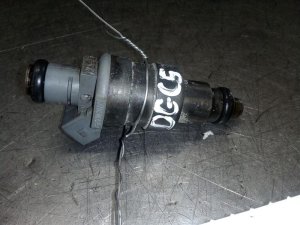
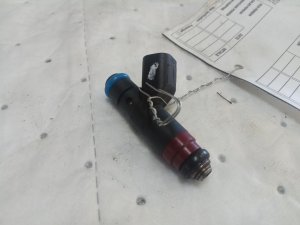


New Aftermarket Parts Available


The information in this article is provided for general reference and educational purposes only. Vehicle specifications, procedures, and part compatibility can vary by production date, trim level, and region. Always consult your vehicle's factory service manual and verify part numbers before purchasing or performing repairs. Safety-critical components such as airbags, seat belts, and braking systems should be installed by a qualified professional.
- Dodge RAM 2500:
- 🎬 Helpful Videos
- 🛍️ Shop This Part
- What's Unique About the 1998-2005 Dodge RAM 2500
- Diagnostic Flowchart
- Symptoms You May Notice
- Most Likely Causes
- Rare But Worth Checking
- Diagnosis Steps
- Parts You'll Likely Need
- Related Codes That Often Appear With This One
- Technical Service Bulletins (TSBs) & Recalls
- Platform-Specific Known Issues
- Mechanic-Grade Diagnostic Values
- Scan Tool Commands That Help
- Wiring & Ground Locations
- Real Owner Repair Stories
- Model Year Variations Within This Range
- 🎟️ Get 5% Off