

P0202 on 2010-2014 Chevrolet Equinox: Injector Circuit Malfunction Causes and Fixes
Code P0202 on a 2010-2014 Equinox most often means the fuel injector for cylinder #2 has failed or there is a wiring issue. It can also be caused by a damaged wiring harness or connector, a known issue cited in GM Technical Service Bulletins. Expect to pay $50-$100 for a single aftermarket injector and around $120-$180 for an OEM part.
- P0202 on your Equinox means there's an electrical problem with the fuel injector in cylinder 2.
- The most likely cause is a failed fuel injector, but you must rule out a wiring or connector problem before replacing it.
- A simple way to confirm a bad injector is to swap it with one from another cylinder and see if the trouble code follows it.
- Always check for a flashing signal at the injector connector with a 'noid light' to verify the wiring and ECM are sending the command to fire.
- Ignoring this code will lead to rough running, poor fuel mileage, and can cause expensive damage to your catalytic converter.
What's Unique About the 2010-2014 Chevrolet EQUINOX
For this generation of Chevrolet Equinox and its platform mates (like the GMC Terrain), General Motors has issued Technical Service Bulletins (TSBs) that include code P0202, indicating a known pattern of injector circuit issues. TSB PIP4924D specifically instructs technicians to carefully inspect the fuel injector wiring harness for chafing against the intake plenum, valve cover bolts, fuel lines, and the side of thecylinder head. Another TSB for the 3.6L V6, PI1067, points to the ECM wiring harness rubbing on the ECM's metal bracket as a source of chafed wires. This means that while the injector itself is a likely cause, a thorough inspection of these specific wiring harness locations is critical before replacing parts.
Diagnostic Flowchart
Tap your situation to follow the diagnostic path that matches what you're seeing on this vehicle.
Symptoms You May Notice
- Check Engine Light is on (may be flashing)
- Rough or shaking idle
- Engine misfire (may feel like a stumble or pop)
- Hesitation or lack of power during acceleration
- Poor fuel economy
- Engine may stall in some cases
- "Service Stabilitrak" message may appear on the 🎬 Watch: Diagnosing a rough idle and bad injector codes dash
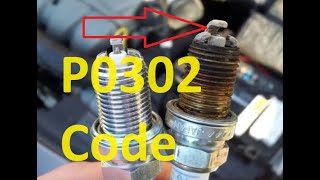
- Replacing the spark plug or ignition coil for cylinder 2. While these parts can cause a misfire (P0302), they do not cause an injector circuit code (P0202). The P0202 code specifically points to an electrical fault in the fuel injector's control circuit, not a lack of spark.
Most Likely Causes
- Faulty Cylinder 2 Fuel Injector 🔴 High Probability Injectors are electro-mechanical parts that wear out. The internal coil winding can develop an open or short circuit, leading to an incorrect resistance reading by the ECM. This is a common failure for many vehicles of this age.
How to confirm: Swap the cylinder 2 injector with an adjacent one (e.g., cylinder 1 or 3). Clear the codes and run the engine. If the code changes to P0201 or P0203, the injector is bad. Alternatively, check the injector's resistance with a multimeter set to Ohms. A good injector on these engines should read within a specific range (see 'Specific Diagnostic Values' section). An open circuit (infinite resistance) or a reading significantly different from the other injectors confirms a failed injector.
Typical fix: Replace the faulty fuel injector and its seals. It is often recommended to replace all injectors on a high-mileage engine, especially on the V6 where the intake manifold must be removed for access. 🎬 See this walkthrough for replacing fuel injectors on the 2.4L
Est. part cost: $50-$180 - Wiring Harness or Connector Issue 🟡 Medium Probability GM TSBs PIP4924D and PI1067 specifically call out wiring harness chafing as a known problem on this platform. Common rub-through spots are where the harness touches the intake plenum, valve cover bolts, fuel lines, and the sharp edge of the ECM bracket. Engine vibration causes the harness to rub over time, eventually exposing and breaking the thin wires for the injector circuit.
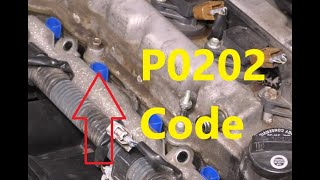
How to confirm: Visually inspect the wiring going to the cylinder 2 injector for any signs of damage, melting, or corrosion. Pay close attention to the areas mentioned in the TSBs. Check that the connector is fully seated and the terminals inside are not corroded or spread apart. Perform a 'wiggle test' on the harness with the engine running to see if it causes the misfire to appear or disappear. Use a noid light to confirm if an electrical pulse is reaching the injector connector. If the noid light flashes but the code persists, perform a continuity check from the injector connector pin back to the corresponding ECM pin. 🎬 Watch: A guide to causes and fixes for code P0202
Typical fix: Repair the damaged section of wire using solder and heat shrink tubing. Protect the repaired area with anti-abrasion tape or split-loom tubing. If the connector itself is damaged, replace the injector connector pigtail.
Est. part cost: $15-$40 - Faulty Engine Control Module (ECM) ⚪ Low Probability While rare, the internal driver circuit in the ECM that controls the injector can fail. This is uncommon compared to injector or wiring failures and should be the last item to suspect.
How to confirm: This is a diagnosis of exclusion. If the injector, wiring, and connectors have all been tested and confirmed to be good (using a noid light, multimeter, and visual inspection), the ECM is the likely remaining cause. This requires advanced diagnostics to confirm and should be left to a professional.
Typical fix: Replace and reprogram the Engine Control Module. A used module may be an option but will require programming to the vehicle's VIN.
Est. part cost: $300-$700
Diagnosis Steps
- Read the codes: Use an OBD-II scanner to confirm P0202 and check for any other codes, especially P0302 or P0200.
- Visual Inspection: Check the wiring harness and connector for cylinder 2's fuel injector. Look for obvious signs of damage, corrosion, or loose connections. On the V6, cylinder 2 is the middle cylinder on the front bank (radiator side). On the 2.4L I4, it is the second cylinder from the front (passenger side).
- Check for Signal with a Noid Light: Disconnect the injector and plug in a noid light. Crank or start the engine. The light should flash rapidly, indicating the ECM is sending a signal. If it doesn't flash, the problem is in the wiring or the ECM. If it does flash, the problem is likely the injector itself.
- Test Injector Resistance: Disconnect the injector and use a multimeter to measure the resistance across its two terminals. Compare this reading to the engine-specific values (see 'Specific Diagnostic Values'). A reading that is significantly different (especially infinite resistance, indicating an open circuit) confirms a bad injector.
- Swap the Injector: If you don't have a multimeter, swap the cylinder 2 injector with the cylinder 1 or 3 injector. Clear the codes and run the engine. If the code returns as P0201 or P0203, the injector is confirmed to be faulty.
- Inspect TSB-Indicated Areas: If the injector seems fine, carefully inspect the engine harness near the intake plenum, valve cover bolts, and ECM bracket for any signs of chafing or damage, as suggested by GM service bulletins PIP4924D and PI1067.
- Diagnose ECM: If all other tests pass, the ECM may be at fault. This step is best left to a professional.
Parts You'll Likely Need
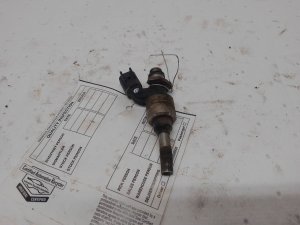
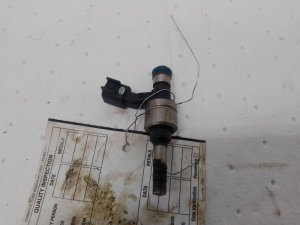
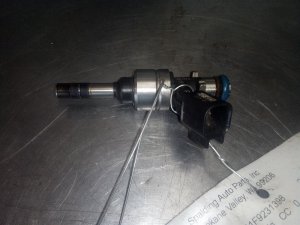
- Fuel Injector (Cylinder 2)
(OEM #12633784 (or superseded by 12670834 for 2.4L), 12634126 (for 3.0L/3.6L))— This is the most common cause of a P0202 code, due to internal electrical failure.
Trusted brands: ACDelco, Bosch, Hitachi, Standard Motor Products
OEM price range: $120-$180
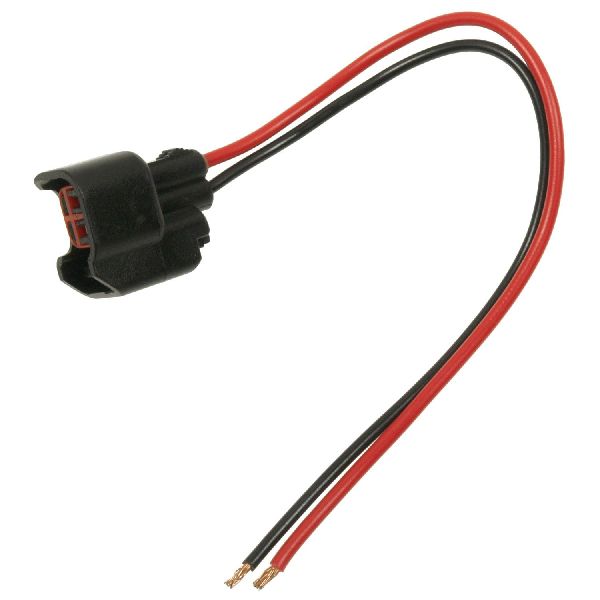
Aftermarket price range: $50-$100 - Fuel Injector Connector Pigtail — If the wiring or connector at the injector is damaged, corroded, or has a broken terminal pin, replacing the pigtail is the standard repair.
Trusted brands: ACDelco, Dorman
OEM price range: $25-$40
Aftermarket price range: $15-$30
Related Codes That Often Appear With This One
- P0302 — P0302 means 'Cylinder 2 Misfire Detected.' Since P0202 indicates a problem with fueling cylinder 2, a misfire is the direct and immediate result. You will almost always see P0302 alongside P0202.
- P0200 — P0200 means 'Injector Circuit Malfunction.' This is a more general code that may appear with P0202 if there is a problem affecting the injector driver system as a whole, such as a power or ground issue.
- P2149 — This code for 'Fuel Injector Group B Supply Voltage Circuit/Open' can appear on V6 models along with specific injector codes like P0202. It points to an issue with the shared power supply for one bank of injectors (Bank 2, which includes cylinder 2), often reinforcing the likelihood of a wiring harness problem.
Technical Service Bulletins (TSBs) & Recalls
- PIP4924D: Mentions a series of injector circuit DTCs, including P0202, related to misfires. It advises inspecting the fuel injector wiring harness for rub-through against the intake, valve covers, and fuel lines.
- PI1067: Specific to the 3.6L V6, this bulletin points to the ECM wiring harness chafing on the ECM bracket.
Platform-Specific Known Issues
- A known issue, referenced in GM Technical Service Bulletin #PIP4924D, involves a pattern of injector circuit codes (P0201-P0206) that can occur on these vehicles. The bulletin directs technicians to inspect the injector harness for chafing against engine components like the intake plenum and valve covers.
- TSB #PI1067 specifically for the 3.6L V6 engine warns of the ECM wiring harness rubbing through on the sharp edge of the ECM mounting bracket, causing various DTCs including injector circuit faults.
- On the 2.4L engine, high oil consumption can lead to other issues, but P0202 is almost always electrical. However, one owner on a forum noted that a mechanically stuck-open injector on a similar GM engine did not initially throw an injector code, but rather misfire and fuel pressure codes, highlighting diagnostic complexity.
Mechanic-Grade Diagnostic Values
- Fuel Injector Resistance (2.4L I4 LAF/LEA) — expected: 11 - 14 Ohms. Failure: A reading of infinity (Open Loop) or near zero (short), or a value significantly different from other injectors.
- Fuel Injector Resistance (3.0L V6 LF1/LFW) — expected: ~12 Ohms (High Impedance). Failure: A reading of infinity (Open Loop) or near zero (short), or a value significantly different from other injectors.
- Fuel Injector Resistance (3.6L V6 LFX) — expected: 1.2 - 2.5 Ohms (Low Impedance). Failure: A reading of infinity (Open Loop) or near zero (short), or a value significantly different from other injectors.
- Injector Pulse Width (at warm idle) — expected: 2 - 4 milliseconds (ms). Failure: A value of 0 ms on cylinder 2 while others are pulsing indicates the ECM is not commanding the injector, or the circuit is open.
- Injector Circuit Voltage Spike (Inductive Kick) — expected: ~50-80 Volts. Failure: Absence of this sharp voltage spike on an oscilloscope when the injector closes points to an open in the circuit or a shorted injector coil.
- High Pressure Fuel Rail Pressure (GDI Engines at Idle) — expected: 1.9 - 5.0 MPa (276 - 725 PSI). Failure: While not a direct cause of P0202, pressure outside this range indicates other fuel system issues.
Scan Tool Commands That Help
- GM GDS2 (or compatible high-end scan tool): Fuel Injector Balance Test — This is a definitive test for GDI injectors. The tool commands the fuel pump on, then pulses a single injector and measures the corresponding pressure drop in the fuel rail. Comparing the pressure drop across all cylinders can identify a clogged or electrically weak injector even if resistance is normal.
- Most professional scan tools: Cylinder Power Balance / Injector Kill — This function allows you to disable injectors one by one while monitoring engine RPM. When a healthy cylinder is disabled, RPM should drop noticeably. If disabling cylinder 2 causes little or no change in RPM, it confirms that cylinder is not contributing, reinforcing the P0202 fault.
Wiring & Ground Locations
- ECM Pin 32 (Connector C2/X2) — At the Engine Control Module (ECM), located in the left-front of the engine compartment. This is often in the black 73-way connector.. This is the specific control circuit pin for the cylinder 2 fuel injector. The wire is typically Light Green/Black. Testing for continuity between this pin and the injector connector is the final step to confirm if the wiring is intact or broken.
- G112 — On the lower left front of the 2.4L engine block, or the left rear of the V6 engine.. This is a primary ground for the Engine Control Module. A poor connection here can cause a host of erratic electrical issues, including injector driver faults. A voltage drop test from the ECM ground pins to the battery negative terminal should be less than 0.5V.
- G105 / G109 — On the top rear of the engine cylinder head on the 2.4L model.. These are critical engine grounds located near the injector harness. A loose or corroded ground here can cause electrical noise and faults. Their proximity to the known harness chafe points makes them important to check.
- Ground Stud (2.4L) — Under the alternator, on a stud next to the A/C compressor bracket.. This is a specific, often-overlooked PCM ground location on the 2.4L engine that is known to corrode or break, causing a wide range of electrical issues that can mimic a failed ECM or other components.
Real Owner Repair Stories
- YouTube user 'DCxCrush' (2010-2014 Chevrolet Camaro (with shared 3.6L LFX V6 engine)) — Check Engine Light with codes P0302 (Cylinder 2 Misfire) and P0202 (Injector Circuit).
❌ Tried (didn't work) Replacing wheel speed sensors (unrelated)., Swapping ignition coils between cylinders (misfire code did not move).
✅ What actually fixed it The spark plug for cylinder 2 was found to be extremely fouled. After replacing the spark plug, the issue persisted. The final fix was replacing the cylinder 2 fuel injector.
"I Checked Everything" — The Actual Cause
- For code P0202, the equivalent of a 'smoke test clean' scenario is when a noid light flashes correctly at the connector and the injector's resistance measures within spec, yet the code persists. In this case, the root cause is almost always an intermittent wiring issue or a failing ECM driver. The wiring harness may have a subtle break or chafing (as noted in TSB PIP4924D) that only opens the circuit under specific conditions like engine vibration or heat soak. Alternatively, the injector driver inside the ECM may be failing under load, a condition that basic tests at idle won't reveal.
OEM Part Supersession History
12642128→12634126— Standard part revision/update for V6 engines.N/A→N/A— N/A
Heads up: Critical Incompatibility: The 3.0L V6 (2010-2012) uses high-impedance injectors (~12 Ohms, e.g., P/N 12629927), while the 3.6L V6 (2013-2014) uses low-impedance injectors (~1.2-2.5 Ohms, e.g., P/N 12634126). They are not interchangeable. Installing the wrong type will cause immediate circuit faults.
Model Year Variations Within This Range
- 2010-2012 (V6 Only): These models used the 3.0L V6 engine (LF1/LFW). They require high-impedance fuel injectors with a resistance of approximately 12 Ohms.
- 2013-2014 (V6 Only): These models used the 3.6L V6 engine (LFX). They require low-impedance fuel injectors with a resistance between 1.2 and 2.5 Ohms. The TSB regarding harness chafing at the ECM bracket (PI1067) is particularly relevant to these years.
Helpful Videos
![Chevrolet Equinox Engine Rough Idle BAD INJECTOR [ P0201 P0202 P0203 P0300 ]](https://img.youtube.com/vi/ZmLJt6_r6Tc/mqdefault.jpg)
Used OEM Parts in Stock
New Aftermarket Parts Available


The information in this article is provided for general reference and educational purposes only. Vehicle specifications, procedures, and part compatibility can vary by production date, trim level, and region. Always consult your vehicle's factory service manual and verify part numbers before purchasing or performing repairs. Safety-critical components such as airbags, seat belts, and braking systems should be installed by a qualified professional.
- Chevrolet EQUINOX:
- 🎬 Helpful Videos
- 🛍️ Shop This Part
- What's Unique About the 2010-2014 Chevrolet EQUINOX
- Diagnostic Flowchart
- Symptoms You May Notice
- Most Likely Causes
- Diagnosis Steps
- Parts You'll Likely Need
- Related Codes That Often Appear With This One
- Technical Service Bulletins (TSBs) & Recalls
- Platform-Specific Known Issues
- Mechanic-Grade Diagnostic Values
- Scan Tool Commands That Help
- Wiring & Ground Locations
- Real Owner Repair Stories
- "I Checked Everything" — The Actual Cause
- OEM Part Supersession History
- Model Year Variations Within This Range
- 🎟️ Get 5% Off