

P0201 on 1998-2005 Dodge RAM 3500: Injector Circuit Malfunction Causes and Fixes
On a 1998-2005 Ram 3500 with the 5.9L Cummins, code P0201 usually points to a faulty #1 injector circuit. Before replacing the expensive injector, inspect the wiring harness that passes through the valve cover gasket, as this is a very common failure point mentioned in manufacturer bulletins. Replacing the gasket with its integrated harness often solves the problem for a fraction of the cost of an injector replacement.
- P0201 on a 5.9L Cummins Ram points to an electrical problem with the #1 fuel injector circuit.
- The most probable cause is a faulty wiring harness that runs through the valve cover gasket, not the injector itself.
- Always inspect the wiring under the valve cover for oil damage or breaks before spending money on a new injector.
- A simple resistance test or swapping the injector to another cylinder can definitively diagnose a bad injector.
- The issue affects both 2nd Gen (VP44) and 3rd Gen (Common Rail) versions of the 5.9L Cummins engine.
What's Unique About the 1998-2005 Dodge RAM 3500
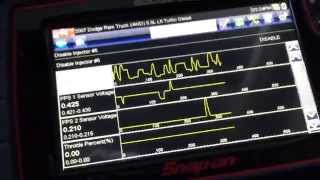
On the 5.9L Cummins engine, a primary suspect for a P0201 code is the unique design of the injector wiring. The harness passes through the valve cover gasket to connect to the injectors. Over time, exposure to engine heat, vibration, and oil can degrade this harness, causing shorts or open circuits. This is such a known issue that Dodge issued a Technical Service Bulletin (TSB #9002688) advising technicians to check this wiring loom before replacing the injector itself. On later common-rail engines, the ECM groups injectors into banks (1-3 and 4-6), and a short in one injector circuit can cause the ECM to shut down the entire bank to protect the driver, setting codes for all three injectors 🎬 Watch: Real-world diagnosis of multiple injector codes on a 5.9L. (e.g., P0201, P0202, P0203) simultaneously.
Diagnostic Flowchart
Tap your situation to follow the diagnostic path that matches what you're seeing on this vehicle.
Generation note: This range covers two distinct generations of the 5.9L Cummins. The 1998.5-2002 24-valve engine (part of the 2nd Gen Ram) uses a Bosch VP44 injection pump and is known for being significantly louder. The 2003-2005 engine (in the 3rd Gen Ram) uses a High-Pressure Common-Rail (HPCR) system with a Bosch CP3 pump and electronically controlled injectors, resulting in a much quieter engine. While the P0201 code's meaning is the same for both, the specific parts (injectors, wiring, ECM logic) and diagnostic values differ. However, the wiring harness under the valve cover is a known weak point on both versions.
Symptoms You May Notice
- Check Engine Light is on
- Engine misfire or runs rough, especially at idle
- Noticeable loss of power and acceleration
- Engine may stumble or hesitate
- Increased black or white smoke from the exhaust
- Decrease in fuel economy
- Engine shaking or vibrating excessively.
- Replacing the #1 fuel injector without first thoroughly inspecting the wiring harness under the valve cover. The TSB specifically warns against this, as the wiring is a more frequent culprit.
- Assuming the injector is bad when multiple injector codes (e.g., P0201, P0202, P0203) appear at once. This often points to a short in the harness that causes the ECM to shut down the entire injector bank.
Most Likely Causes
- Faulty Injector Wiring Harness / Valve Cover Gasket Connector 🔴 High Probability As noted in TSB #9002688, the wiring loom integrated into the valve cover gasket is a frequent failure point. Engine heat and oil saturation cause the wiring to become brittle and fail, leading to an open or shorted circuit where the harness passes through to the injectors.
How to confirm: Remove the valve cover and visually inspect the wiring harness and the pass-through connector for signs of oil contamination, chafing against the valve train, or broken wires. Check for continuity between the main engine harness and the injector connector. A resistance reading above 1.0 ohm indicates a problem in the harness.
Typical fix: Replace the valve cover gasket, which includes the new injector wiring loom. Use the part numbers specified in the TSB (e.g., 68069384A$, R8069384A$) as a reference. For 2003-2005 models, the Mopar part number is often cited as 5086954AA.
Est. part cost: $100-$250 - Failed #1 Fuel Injector 🟡 Medium Probability Fuel injectors are wear items that can fail electrically (solenoid burnout) or mechanically. Failures are common after 100,000 miles, and the high pressures of the common-rail system can contribute to wear.
How to confirm: With the engine off, measure the resistance across the two terminals of the #1 injector. It should be very low, typically less than 1.0 Ohm but greater than 0 Ohms (e.g., 0.2-0.5 Ohms). An infinite reading (O.L.) means it's open, and 0 Ohms means it's shorted. A definitive test is to swap the #1 injector with another one (e.g., #2). Clear the codes and run the engine. If the code changes to P0202, the injector is faulty. If P0201 returns, the problem is in the wiring or ECM.
Typical fix: Replace the faulty fuel injector. It is often recommended to replace all six if they are high-mileage, along with the high-pressure connector tubes to prevent leaks.
Est. part cost: $300-$650 per injector - Poor Connection at Injector or ECM ⚪ Low Probability Vibration and heat can cause the electrical connector at the injector or the main Engine Control Module (ECM) to become loose or corroded over time. The terminals on the injector itself can also become loose.
How to confirm: Disconnect, inspect, and clean the electrical connector for the #1 injector and the main engine harness connectors at the ECM. Check for loose pins or corrosion. Apply dielectric grease and reseat firmly. A 'wiggle test' on the harness while the engine is running may reveal an intermittent connection.
Typical fix: Clean and secure the connector. If the connector pigtail is damaged, it may need to be replaced.
Est. part cost: $15-$40 for a pigtail
Rare But Worth Checking
- Failed Engine Control Module (ECM): This is the least likely cause. The ECM's internal driver circuit for the #1 injector can fail, but all other possibilities, especially wiring and the injector itself, must be exhaustively ruled out first. A failure here would typically require sending the ECM for testing and repair or replacement.
Diagnosis Steps
- Read the trouble codes with an OBD-II scanner to confirm P0201 is active.
- Check for any other injector-related codes (P0202-P0206, P2146). If multiple are present, suspect a harness-wide issue or a short affecting an entire injector bank.
- Visually inspect the external engine wiring harness leading to the valve cover for any obvious damage, chafing, or melting.
- Remove the valve cover. Carefully inspect the injector wiring harness and the pass-through connector for oil saturation, brittle insulation, or broken wires, as recommended by TSB #9002688. Pay close attention to where wires may rub against the valve train.
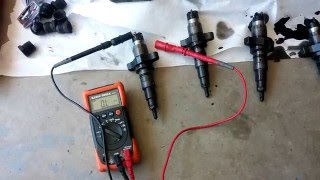
- Disconnect the #1 injector connector. Use a multimeter to measure the resistance of the injector solenoid. It should be less than 1.0 Ohm and greater than 0 Ohms. Compare the reading to an adjacent injector to verify.
- If injector resistance is good, check for a signal from the ECM. A noid light can be used on the injector connector while cranking the engine. A flashing light indicates the ECM and wiring to that point are likely good.
- If the noid light does not flash, check for continuity and shorts in the wiring between the ECM and the injector connector. Test both the high side and low side driver circuits back to the ECM connector.
- As a definitive test, swap the #1 injector with the #2 injector. Clear the codes and run the engine. If the code returns as P0202, the injector is confirmed bad. If P0201 returns, the problem is in the wiring or ECM.
Parts You'll Likely Need
- Valve Cover Gasket with Injector Harness
(OEM #5086954AA (for 2003-2005 models))— This is the most common fix, addressing the known failure point of the wiring that passes through the valve cover, as cited in TSB #9002688.
Trusted brands: Mopar, Fel-Pro
OEM price range: $150-$250
Aftermarket price range: $100-$180 - Fuel Injector
(OEM #Bosch 0986435503 (for 2003-2004.5) or Bosch 0986435505 (for 2004.5-2007))— If the injector itself has failed its resistance test or the code follows the injector when swapped to another cylinder, it needs replacement.
Trusted brands: Bosch (OEM)
OEM price range: $450-$650
Aftermarket price range: $300-$500 - Injector Connector Pigtail — If only the connector at the injector is damaged or corroded, replacing just the pigtail can solve the circuit issue without replacing the entire harness.
Trusted brands: Mopar, Dorman
OEM price range: $30-$50
Aftermarket price range: $15-$30
Related Codes That Often Appear With This One
- P0202, P0203, P0204, P0205, P0206 — If the main pass-through connector or harness develops a fault that affects multiple circuits, codes for other injectors may appear simultaneously. On common-rail engines, a short in one circuit can cause the ECM to disable the entire bank (cylinders 1-3 or 4-6) as a protective measure, triggering all three codes for that bank.
- P0301 — This code indicates a 'Cylinder 1 Misfire'. It is a direct consequence of the P0201 electrical fault, as the injector circuit problem prevents proper fueling, causing the cylinder to misfire.
- P2146 — This code stands for 'Fuel Injector Group A Supply Voltage Circuit/Open'. It is often seen with P0201, P0202, and P0203 on common-rail engines when a wiring short causes the ECM to shut down injector bank 1.
Technical Service Bulletins (TSBs) & Recalls
- TSB #9002688: Advises checking the wiring loom and/or connector in the valve cover gasket as a root cause for P0201-P0206 codes before replacing injectors.
Platform-Specific Known Issues
- The primary vehicle-specific issue is the degradation of the injector wiring harness where it passes through the valve cover gasket, which is a well-documented problem for this engine platform and the subject of a manufacturer TSB.
- Owner Experience: Chafed Harness Causes Multiple Codes: An owner on a Cummins forum reported getting P0201 and P2146 codes simultaneously. After replacing the #1 injector with no change, they removed the valve cover and found the injector harness had been rubbing against a rocker arm, causing a short. Replacing the valve cover gasket with its integrated harness resolved both codes.
Mechanic-Grade Diagnostic Values
- Fuel Injector Solenoid Resistance — expected: 0-1 Ohm. Must be greater than 0.. Failure: An open circuit (OL) or high resistance (e.g., 14 ohms) indicates a failed injector solenoid. A reading of exactly 0 ohms indicates a short.
- Injector Circuit to Ground Resistance — expected: No continuity (Open Line / O.L.).. Failure: Resistance below 10k Ohms indicates a short to ground in the injector circuit.
- Total Injector Return Flow (Common Rail) — expected: Less than 180ml in one minute at idle.. Failure: Fuel flow exceeding 180ml in one minute suggests excessive leakage from one or more injectors or connector tubes.
- Injector Hold-Down Bolt Torque — expected: 89 in-lbs (7.4 ft-lbs). Failure: Incorrect torque can lead to compression leaks or damage to the injector.
- Injector Connector Tube Nut Torque — expected: 37 ft-lbs. Failure: Improper torque can cause high-pressure fuel leaks at the injector-to-tube connection.
Scan Tool Commands That Help
- Professional Scan Tool (e.g., Snap-on, Autel, AlfaOBD): Injector Kill Test / Cylinder Performance Test — This function allows the user to selectively disable individual injectors while the engine is running. If disabling cylinder #1 causes no change in engine idle, it confirms that cylinder #1 was not contributing, strengthening the diagnosis of a fault in that circuit. This helps isolate the problem cylinder without disassembly.
- Professional Scan Tool (e.g., Snap-on, Autel): Injector Quantity Adjustment (IQA) Programming — After replacing a fuel injector on a common-rail engine, the new injector's specific flow rate code (IQA value) must be programmed into the ECM. This ensures the ECM can accurately trim the fueling for that cylinder. This is not a diagnostic test for P0201 but a required step after replacing an injector.
Wiring & Ground Locations
- ECM C1 Connector — On the engine block, driver's side. The C1 connector is one of two large multi-pin connectors for the Engine Control Module.. The high and low side driver circuits for the injectors originate here. For cylinder #1, the High Side Driver is on pin 1 and the Low Side Driver is on pin 11. Testing for voltage and continuity at these pins is critical for diagnosing wiring faults between the ECM and the injector.
- Main Engine Ground — A large black 2/0 cable connects the negative battery terminal to the front of the engine block on the driver's side.. A poor main engine ground can cause a host of electrical issues, including erratic behavior from control modules and sensors. While not a direct cause of a single injector code, verifying this ground is clean and tight is a foundational step in any electrical diagnosis.
- ECM Pin #22 (High Idle Ground) — On the rear-most ECM plug on the driver's side of the block, pin #22 (third row down, second pin over).. While this pin is for enabling the high-idle feature on manual transmission trucks, forum discussions about grounding this pin highlight the location and appearance of the ECM connectors, which is useful for anyone needing to access injector wiring pins in the same area.
Real Owner Repair Stories
- YouTube user diagnosing a 2006 Cummins (2006 Dodge Ram 2500 5.9L Cummins) — Engine was underpowered and threw codes P2146 (Injector Group A) and P0201.
❌ Tried (didn't work) The owner first suspected the wiring harness under the valve cover, but performed electrical tests to confirm.
✅ What actually fixed it Using a multimeter, the owner tested the resistance of the injectors. Injector #2 measured ~1 ohm. Injector #1 measured 14 ohms. The high resistance indicated the #1 injector solenoid had failed internally. After checking the harness for shorts and finding it was good, the owner concluded the injector itself was the sole cause. Replacing the injector fixed the issue. - Turbo Diesel Register forum user @HerbW (2007 Dodge Ram 5.9L Cummins) — P0204 (Cylinder 4) and P2149 (Group B) codes, terrible running condition.
❌ Tried (didn't work) Initial research pointed to either the injector or the wiring harness for cylinders 4, 5, and 6.
✅ What actually fixed it The owner tested the #4 injector with an ohmmeter and found it was 'open' (infinite resistance), while all other injectors were around 2 ohms. Another user dissected a failed solenoid and found that the internal posts that make contact can misalign, bend, and arc, causing the change in resistance or an open circuit. The fix was to replace the faulty injector.
OEM Part Supersession History
Bosch 0986435503 / Mopar R5135790AF (2003-2004)→Bosch 0986435505 / Mopar R8004082AC (2004.5-2007)— The 2004.5-2007 injectors have a different nozzle design (5-hole vs. 8-hole on early models) and spray pattern to accommodate changes in the piston bowl design for emissions and performance.
Heads up: The early (2003-2004) and late (2004.5-2007) injectors are NOT interchangeable due to different spray patterns designed for different piston bowls. Using the wrong injector can lead to poor performance, smoke, and potential engine damage.
Model Year Variations Within This Range
- 2003-2004 vs 2004.5-2005: The fuel injectors and piston bowls are different. Early 2003-2004 models used injectors with an 8-hole nozzle (e.g., Bosch 0986435503). The mid-2004.5 model year introduced a new piston bowl design and injectors with a 5-hole nozzle (e.g., Bosch 0986435505) for improved emissions. The parts are not interchangeable.
- 2003-2007 (Common Rail): The high-pressure connector tubes that link the fuel rail to the injectors can be upgraded. The original 5.9L tubes can be replaced with tubes designed for the later 6.7L engine (e.g., Bosch F00RJ01572). The 6.7L tubes have a slightly larger inner diameter for better flow and are considered a durability upgrade. They are a direct fit.
Helpful Videos

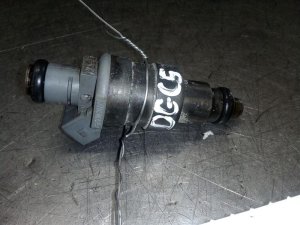
Used OEM Parts in Stock

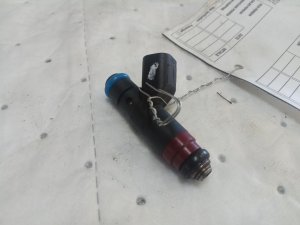


New Aftermarket Parts Available


The information in this article is provided for general reference and educational purposes only. Vehicle specifications, procedures, and part compatibility can vary by production date, trim level, and region. Always consult your vehicle's factory service manual and verify part numbers before purchasing or performing repairs. Safety-critical components such as airbags, seat belts, and braking systems should be installed by a qualified professional.
- Dodge RAM 3500:
- 🎬 Helpful Videos
- 🛍️ Shop This Part
- What's Unique About the 1998-2005 Dodge RAM 3500
- Diagnostic Flowchart
- Symptoms You May Notice
- Most Likely Causes
- Rare But Worth Checking
- Diagnosis Steps
- Parts You'll Likely Need
- Related Codes That Often Appear With This One
- Technical Service Bulletins (TSBs) & Recalls
- Platform-Specific Known Issues
- Mechanic-Grade Diagnostic Values
- Scan Tool Commands That Help
- Wiring & Ground Locations
- Real Owner Repair Stories
- OEM Part Supersession History
- Model Year Variations Within This Range
- 🎟️ Get 5% Off