

P0198 on 2016-2018 Volkswagen Golf: Engine Oil Temperature Sensor Fault Causes & Fixes
On a 2016-2018 VW Golf, code P0198 is almost always caused by a faulty oil level/temperature sensor in the oil pan or damaged wiring leading to it. A 'Circuit High' fault often points to an open circuit, like a broken wire or unplugged connector. Expect to pay $40-$100 for a new sensor, which can be replaced during a standard oil change.
- P0198 on a Mk7 Golf points to an issue with the oil level and temperature sensor circuit, located on the bottom of the oil pan.
- Before buying any parts, thoroughly inspect the wiring and connector for damage, as this is a very common and inexpensive fix. A broken connector clip is a known issue.
- The most common part to fail is the sensor itself, which can be replaced during a routine oil change.
- This code is often paired with P0196; both point to the same sensor circuit fault.
- Driving is possible, but the oil level warning system is disabled, so check your oil manually and repair the issue soon to prevent engine damage.
What's Unique About the 2016-2018 Volkswagen GOLF
On the Mk7 Volkswagen Golf and its platform mates (like the Audi A3), the P0198 code is frequently caused by issues external to the sensor itself. The wiring harness leading to the sensor is routed in a vulnerable position under the car and is prone to damage from road debris or chafing. Furthermore, the connector's locking tab is known to break, leading to a loose connection that mimics a sensor failure. A Volkswagen Technical Service Bulletin (TSB) also groups this fault with a yellow oil warning light, indicating it's a recognized issue pattern for service technicians. [NHTSA VIN-4-A-PIN-2018]
Diagnostic Flowchart
Tap your situation to follow the diagnostic path that matches what you're seeing on this vehicle.
Generation note: The 2016-2018 model years cover the Volkswagen Golf Mk7 generation, including the mid-cycle facelift (Mk7.5) which began appearing in 2017. The causes and fixes for code P0198 are consistent across this generation and other vehicles built on the same VW MQB platform.
Symptoms You May Notice
- Check Engine Light illuminated
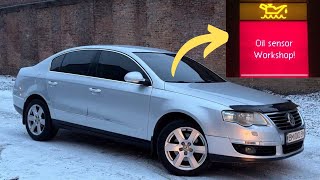
- "Oil Sensor: Workshop!" or similar message on the dashboard display
- Yellow oil warning light is on
- Oil temperature gauge on the instrument cluster is blank, reads an impossibly high/low temperature, or does not move
- In some cases, the ECM may enter a protective "limp mode," reducing engine power.
- Replacing the sensor without first thoroughly inspecting the wiring harness and connector. Many owners replace a good sensor only to find the P0198 code returns because the actual problem was a broken wire or a loose plug.
Most Likely Causes
- Damaged Wiring or Loose Connector 🔴 High Probability The sensor wiring is routed under the vehicle and is highly susceptible to road debris, bottoming out (especially on lowered vehicles), corrosion, or chafing against the oil pan or subframe. The connector's plastic locking tab can become brittle and break, causing a poor connection that is easily mistaken for a bad sensor.
How to confirm: Visually inspect the entire length of the wiring harness going to the oil level/temperature sensor on the oil pan. Check for breaks, chafing, or corrosion. Wiggle the connector to see if it is loose; a user on the Ross-Tech forums fixed their P0198 code by simply pushing the connector back on and securing it with safety wire after finding the locking tab broken.
Typical fix: Repair the damaged section of wire using a solder and heat shrink kit. If the connector is broken, it can be secured with a zip tie as a temporary fix. For a permanent repair, a new connector pigtail can be spliced in.
Est. part cost: $0-$30 - Failed Oil Level / Temperature Sensor 🟡 Medium Probability The sensor (VW part G266) is an electronic component operating in the harsh environment of the oil pan, subject to high heat and vibration, and can fail internally over time. Aftermarket sensors are also reported to have a higher failure rate, sometimes being faulty right out of the box.
How to confirm: If the wiring and connector are confirmed to be in good condition, the sensor itself is the next most likely culprit. Testing the sensor is difficult without specific tools, as it requires heating the sensor and measuring resistance changes. Replacement is the most common diagnostic step after ruling out wiring.
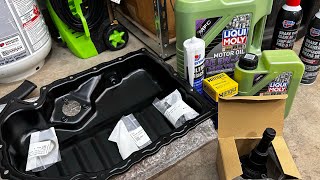
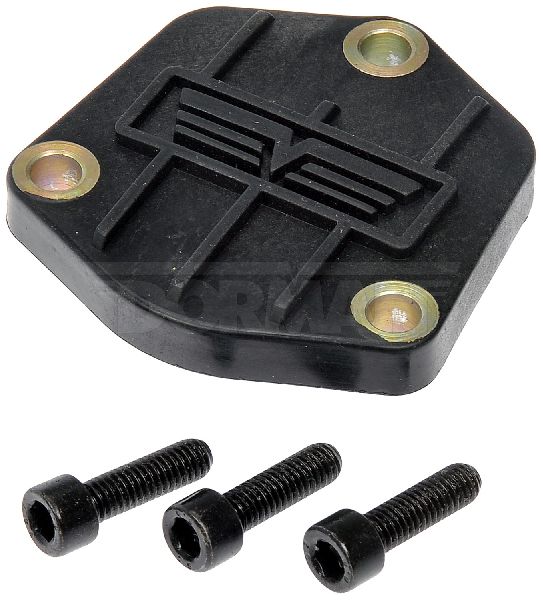
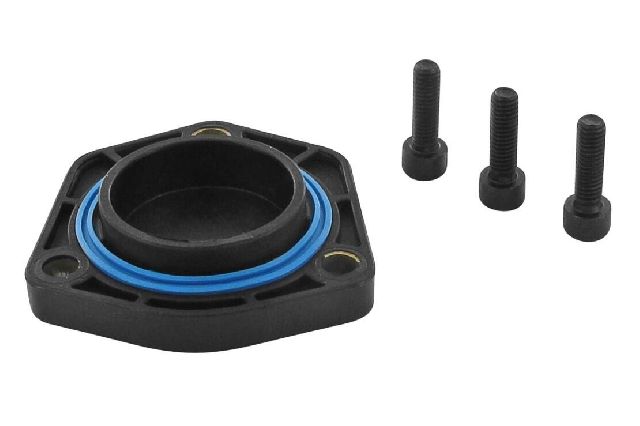
Typical fix: Replace the oil level/temperature sensor. This is done by draining the engine oil, removing three 10mm fasteners holding the sensor to the oil pan, swapping the sensor and its gasket, and refilling the oil.
Est. part cost: $40-$120 - Blown Fuse ⚪ Low Probability An internal short in the old sensor or a short in the wiring harness can cause the fuse that powers the engine sensor circuit to blow.
How to confirm: Check the fuse panel for a blown fuse related to the engine sensors. A common culprit is a 5-amp fuse, such as fuse SB7 in the engine bay fuse box. A multimeter can be used to check for continuity across fuses.
Typical fix: Replace the blown fuse. If it blows again immediately, there is a persistent short circuit in the wiring or the new sensor that must be found and repaired.
Est. part cost: $1-$5
Rare But Worth Checking
- Faulty Engine Control Module (ECM): This is extremely rare. Before considering ECM replacement, all other possibilities, especially wiring and the sensor itself, must be exhaustively ruled out by a professional. An ECM internal fault can misinterpret a normal sensor signal as being too high.
Diagnosis Steps
- Read the fault codes with an OBD-II scanner to confirm P0198 and any other related codes are present.
- Safely raise the vehicle and locate the oil level/temperature sensor on the bottom of the engine oil pan. It is a black plastic unit held in by three 10mm fasteners.
- Thoroughly inspect the electrical connector and wiring harness leading to the sensor. Look for any signs of damage, corrosion, chafing on the oil pan, or a loose connection. Pay close attention to the connector's locking tab, which is known to break.
- If wiring looks good, use a multimeter to check for correct voltage and ground at the connector with the ignition on. A 'Circuit High' code like P0198 often means there is an open in the circuit, preventing the signal from reaching the ECM. Check for 12V power at Pin 1 and a good ground (<1 Ω) at Pin 2.
- If the wiring and power/ground are correct, the sensor is the most likely cause. Replace the oil level/temperature sensor. This requires draining the engine oil completely.
- After replacing the sensor and its gasket, refill the engine with the correct specification of oil, clear the fault codes, and perform a test drive to ensure the code does not return.
Parts You'll Likely Need
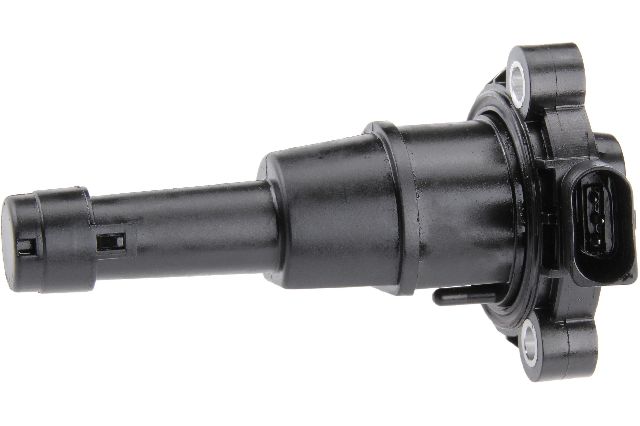
- Engine Oil Level / Temperature Sensor
(OEM #03F907660E)— This combination sensor is the primary component that fails or whose circuit is compromised, directly causing the P0198 code. This part number supersedes previous versions like 03F907660D.
Trusted brands: Hella (OEM supplier, part 6PR 008 079-071), Bosch, NTK, VEMO
OEM price range: $80-$120
Aftermarket price range: $40-$100
Related Codes That Often Appear With This One
- P0196 — P0196 (Engine Oil Temperature Sensor Circuit Range/Performance) relates to the same sensor. They often appear together when there is a fault in the sensor or its circuit, as seen in multiple forum discussions.
- B104129 / B104135 — A VW TSB lists these body control module codes alongside P0198 as part of a known fault pattern associated with the oil level thermal sensor, often accompanied by a yellow oil warning light. [NHTSA VIN-4-A-PIN-2018]
- 00562 — This is a VAG-specific fault code for 'Sensor for Oil Level/Temperature (G266): Open or Short to Plus' or 'Implausible Signal'. It is the manufacturer's equivalent to the generic P0196/P0198 codes.
Technical Service Bulletins (TSBs) & Recalls
- VIN-4-A-PIN-2018: A general information TSB that mentions a yellow oil warning light with fault P0198 related to the Oil Level Thermal Sensor. [NHTSA VIN-4-A-PIN-2018]
Platform-Specific Known Issues
- A Volkswagen Technical Service Bulletin (TSB #VIN-4-A-PIN-2018) for 2016-2018 models is a general information bulletin that lists common technician complaints. It explicitly links the P0198 fault code with a yellow oil warning light, advising technicians to be aware of it as a known pattern. [NHTSA VIN-4-A-PIN-2018]
- The wiring for the sensor is particularly vulnerable on lowered vehicles. A user on GolfMK7.com reported completely ripping the wire out of the sensor 🎬 Watch: How to upgrade to a steel oil pan for better protection after bottoming out on a dirt road.
Mechanic-Grade Diagnostic Values
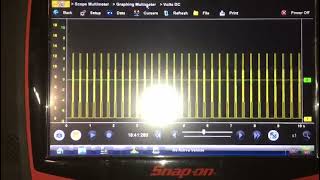
- Sensor Signal Voltage (Normal Operation) — expected: Typically 0.5V at 0°C (32°F) and rises to ~4.5V at 150°C (302°F).. Failure: A reading above 4.5V-5.0V with the key on, engine off, indicates a 'Circuit High' condition. A static 12V reading on the signal wire can also indicate a faulty sensor.
- Scan Tool Live Data (Open Circuit) — expected: A normal temperature reading that changes with the engine.. Failure: A default, fixed low temperature like -48°C is a typical reading from the ECU when there's an open circuit to the sensor.
- Sensor Connector Power Supply (Key On) — expected: 12V at Pin 1.. Failure: No voltage or significantly low voltage indicates a problem with the power supply, likely a blown fuse (e.g., 5A SB7) or a break in the power wire.
- Sensor Connector Ground — expected: Less than 1 Ω of resistance between Pin 2 and a known good chassis ground.. Failure: High or infinite resistance indicates a broken ground wire.
Hidden / Shadow Codes Worth Checking
- 00562: Sensor for Oil Level/Temperature (G266) with a status like 'Open or Short to Plus' or 'Implausible Signal'. This is the VAG-specific equivalent of P0198/P0196. (see via VAG-specific scan tools like VCDS (by Ross-Tech) or OBDeleven.)
- 15170: Engine Oil Temp. Sensor (G8): Signal too High. This is another fault identifier used within VCDS software that points directly to the P0198 condition. (see via VCDS by Ross-Tech.)
Scan Tool Commands That Help
- VCDS or OBDeleven: Measuring Value Blocks / Live Data — Use this to monitor the oil temperature and oil level reported by the G266 sensor in real-time. An open circuit may show a default low value like -48°C, while a fixed high value or no change as the engine warms up can indicate a faulty sensor or circuit.
Wiring & Ground Locations
- G266 Connector Pinout — On the oil level/temperature sensor, at the bottom of the oil pan.. Knowing the pinout is critical for testing. Pin 1 is the 12V power supply (often from a 5A fuse like SB7), Pin 2 is the ground (brown wire), and Pin 3 is the signal wire to the instrument cluster (brown/black wire).
- Ground Point 671 — A common ground point on the front of the left longitudinal member (frame rail) in the engine compartment.. While not exclusive to the G266 sensor, a corroded or loose main engine ground can cause a variety of sensor circuit faults. This is a key ground point to inspect for the engine harness.
Real Owner Repair Stories
- Ross-Tech Forums user 'MrNomad105' (2015 VW Golf Mk7) — P0198 and P0196 codes present. VCDS showed oil temp at 90°C and oil fill level at 120mm even with a cold engine.
❌ Tried (didn't work) Initial assumption was a failed sensor.
✅ What actually fixed it The sensor's electrical connector locking tab was broken, causing it to back off partially. The user pushed the connector fully on and secured it with aviation safety wire. The codes cleared and live data returned to normal (49°C temp, 92mm level). - Ross-Tech Forums user 'Morski' (VW Golf) — P0196 (Implausible Signal) and 00562 (Open or Short to Plus) for G266 sensor.
❌ Tried (didn't work) Checking temperature sensors.
✅ What actually fixed it The problem was solved by repairing a damaged pin within the G266 sensor's electrical connector.
"I Checked Everything" — The Actual Cause
- In an electrical context analogous to a clean smoke test, a visual inspection of the wiring harness may reveal no obvious damage, yet the fault persists. In one documented case for P0198, the wire was broken internally within its insulation near the connector. The issue was only found by wiggling the harness while monitoring voltage, which caused the reading to fluctuate, and then physically pulling on the wire, which came apart.
OEM Part Supersession History
03F907660D→03F907660E— Standard part revision and update by the manufacturer.
Heads up: 03F907660E is the correct and current replacement. An additional cross-reference number for this part is 06K907637B.
Model Year Variations Within This Range
- 2016-2018: The 2016-2018 range includes the pre-facelift Mk7 and the facelifted Mk7.5 (which began arriving in 2017/2018). While there are cosmetic, infotainment, and some transmission differences, the engine oil level/temperature sensor (G266), its wiring, location, and common failure modes for code P0198 are identical across these years.
Helpful Videos
We Have This Part in Stock



The information in this article is provided for general reference and educational purposes only. Vehicle specifications, procedures, and part compatibility can vary by production date, trim level, and region. Always consult your vehicle's factory service manual and verify part numbers before purchasing or performing repairs. Safety-critical components such as airbags, seat belts, and braking systems should be installed by a qualified professional.
- Volkswagen GOLF:
- 🎬 Helpful Videos
- 🛍️ Shop This Part
- What's Unique About the 2016-2018 Volkswagen GOLF
- Diagnostic Flowchart
- Symptoms You May Notice
- Most Likely Causes
- Rare But Worth Checking
- Diagnosis Steps
- Parts You'll Likely Need
- Related Codes That Often Appear With This One
- Technical Service Bulletins (TSBs) & Recalls
- Platform-Specific Known Issues
- Mechanic-Grade Diagnostic Values
- Hidden / Shadow Codes Worth Checking
- Scan Tool Commands That Help
- Wiring & Ground Locations
- Real Owner Repair Stories
- "I Checked Everything" — The Actual Cause
- OEM Part Supersession History
- Model Year Variations Within This Range
- 🎟️ Get 5% Off