

P0198 on 2016-2018 Volkswagen Beetle: Engine Oil Temperature Sensor and Coolant Pump Issues
On this VW Beetle, code P0198 is very often a secondary fault caused by a leaking coolant pump. The leaking coolant contaminates the engine oil level/temperature sensor or its wiring, causing a 'Circuit High' fault. Expect to inspect the coolant pump first, not just the oil sensor.
- For a 2016-2018 VW Beetle with an EA888 engine, P0198 is a strong indicator of a leaking coolant pump.
- Always inspect the coolant pump for leaks before replacing the oil temperature sensor.
- This code is often accompanied by P0196, B104129, and B104135, all pointing to the same root cause.
- Check the oil sensor's electrical connector for looseness or corrosion from coolant before replacing parts.
What's Unique About the 2016-2018 Volkswagen BEETLE
For this specific Beetle and its platform mates using the EA888 Gen 3 engine, P0198 is rarely an isolated electrical problem. Volkswagen issued TSBs (e.g., VIN-4-A-PIN-2018) that directly connect this code, along with P0196 and a yellow oil warning light, to a coolant leak at the plastic coolant pump and thermostat housing assembly. The plastic housing is known to warp or crack from constant heat cycling, causing leaks. Due to its location, the leaking pink/purple G13 coolant drips down onto and wicks into the wiring harness for the oil level/temperature sensor, causing corrosion and a short circuit that triggers the P0198 code.
Diagnostic Flowchart
Tap your situation to follow the diagnostic path that matches what you're seeing on this vehicle.
Symptoms You May Notice
- Check Engine Light on
- Yellow oil warning light illuminated
- Low coolant warning light on the dashboard
- Visible coolant leak (pink/purple fluid) or crusty residue under the engine, particularly on the passenger side near the front of the engine.
- Sweet smell of coolant after the engine has warmed up.
- Engine may enter 'limp mode' with reduced power
- Fluctuating engine temperature gauge or poor cabin heater performance.
- Replacing only the oil temperature sensor without checking for a coolant leak. If the pump is leaking, the new sensor or its wiring will likely be contaminated and fail again quickly.
- Assuming the code points to an actual oil temperature problem rather than an electrical circuit fault.
Most Likely Causes
- Leaking Coolant Pump/Thermostat Housing Causing Sensor/Wiring Failure 🔴 High Probability This is a well-documented, widespread failure on the EA888 Gen 3 engine. The plastic thermostat housing is prone to cracking and warping from heat cycles, causing leaks. Its location above the oil pan allows coolant to drip directly onto the oil level/temp sensor wiring. The issue is cited by VW in TSB VIN-4-A-PIN-2018.
How to confirm: Visually inspect the water pump and thermostat housing (located on the front of the engine, under the intake manifold) for signs of pink/purple coolant residue or active dripping. A cooling system pressure test will confirm the leak source definitively.
Typical fix: Replace the entire coolant pump and thermostat housing assembly. This is often sold as a kit. It is critical to then inspect the oil level/temperature sensor and its wiring connector for coolant contamination. Clean the connector with electrical contact cleaner or replace the connector pigtail if corroded. Replace the sensor if it has been saturated with coolant.
Est. part cost: $200-$450 for a water pump and thermostat housing kit - Failed Oil Level / Temperature Sensor (TOG Sensor) 🟡 Medium Probability The sensor may fail on its own, but failure is often induced by the aforementioned coolant leak or simple age. This sensor combines oil level and temperature functions and is formally known as the G266 sensor.
How to confirm: After ruling out a coolant leak, inspect the sensor connector for a loose connection or broken/damaged pins. Disconnect the sensor and test its wiring. Check live data with an OBD-II scanner; a fixed, illogical reading (like 155°C on a cold engine) points to an open circuit or failed sensor. A P0198 fault typically shows a constant high voltage (e.g., >4.8V, or even full battery voltage) on the signal wire.
Typical fix: Replace the oil level/temperature sensor (G266), which is located at the bottom of the engine oil pan, and ensure the connector is clean and securely fastened.
Est. part cost: $40-$100 - Damaged Wiring or Connector ⚪ Low Probability Wiring can become damaged from heat, vibration, or, most commonly on this vehicle, contamination from the coolant leak. The coolant wicks up into the harness, causing corrosion and high resistance or an open circuit. A damaged pin inside the connector can also cause this fault.
How to confirm: Visually inspect the wiring harness from the oil sensor to the ECM for breaks, corrosion, or coolant saturation. A Ross-Tech forum user found their fault was caused by a damaged connector pin. Perform a continuity test on the signal and ground wires and check for 12V power at Pin 1 of the connector with the key on.
Typical fix: Repair the damaged section of the wiring harness and clean or replace the connector. Ensure the harness is properly routed and secured away from heat sources and potential leak paths.
Est. part cost: $10-$50 for repair materials
Rare But Worth Checking
- Faulty Powertrain Control Module (PCM): This is extremely rare and should only be considered after all other possibilities, including the coolant pump leak, sensor, and wiring, have been thoroughly ruled out.
Diagnosis Steps
- Scan for all fault codes and check for P0196, B104129, B104135, or cooling system codes like P00B7 in addition to P0198. Note the VCDS code 00562 if available.
- Carefully inspect the coolant pump and thermostat housing area (under the intake manifold) for any signs of pink/purple crust or active coolant leaks. A flashlight and mirror may be necessary. This is the most likely root cause according to VW TSBs and extensive owner reports.
- If a leak is suspected, perform a cooling system pressure test to confirm the location and severity of the leak.
- Inspect the wiring and connector for the oil level/temperature sensor (G266, at the bottom of the oil pan) for any signs of coolant contamination, corrosion, or physical damage. Check if the connector is fully seated and if the locking tab and internal pins are intact.
- If no coolant leak is found, proceed with testing the oil sensor circuit. With the ignition on, unplug the sensor and use a multimeter to check for +12V at Pin 1 and a good ground at Pin 2 of the harness connector.
- Use a scan tool to monitor live data for the oil temperature. A static, illogical reading (e.g., 155°C on a cold day) or a signal voltage stuck above 4.8V suggests a sensor or wiring open circuit.
- Check the wiring harness for continuity on the signal wire (Pin 3) between the sensor connector and the ECM.
- If the coolant pump was leaking, replace it as a complete assembly with the thermostat housing. After fixing the leak, thoroughly clean the oil sensor connector with electrical cleaner or replace the pigtail if corrosion is severe. Replace the sensor itself if it was saturated in coolant.
Parts You'll Likely Need
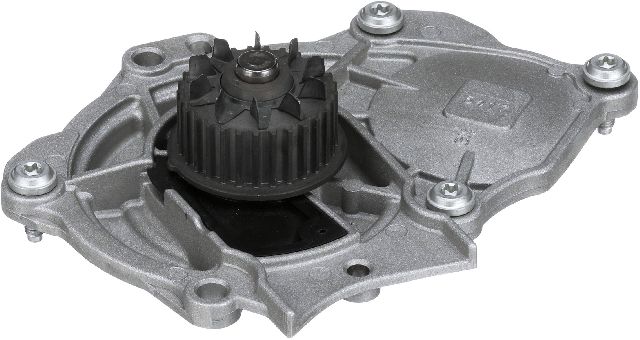
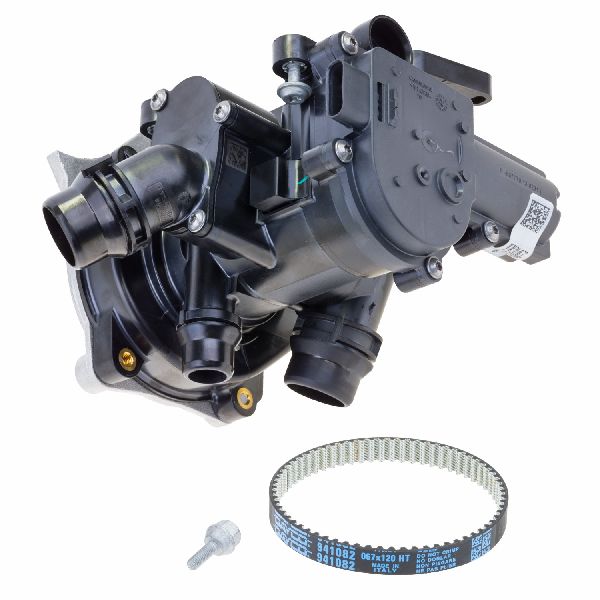
- Coolant Pump / Water Pump and Thermostat Housing Assembly
(OEM #06L121111P (supercedes 06L121111H, 06L121111K, 06L121111M))— This is the most common root cause of the problem on this vehicle, as documented in TSB VIN-4-A-PIN-2018. The plastic housing cracks, causing a leak that damages the oil sensor circuit. It should be replaced as a complete assembly.
Trusted brands: INA, Graf, Genuine Volkswagen
OEM price range: $350-$450
Aftermarket price range: $200-$300 - Engine Oil Level Temperature Sensor
(OEM #06L907660C (or similar))— This sensor's circuit is what logs the P0198 fault. It is often damaged by the coolant leak or can fail independently. A loose or damaged connector is also a possible cause.
Trusted brands: Hella, Bosch, Genuine Volkswagen
OEM price range: $80-$120
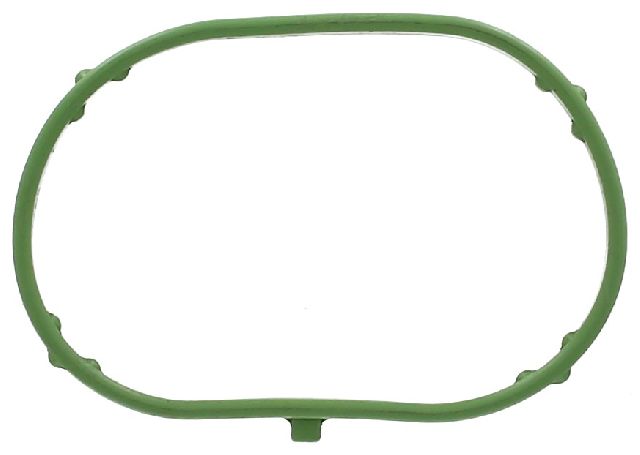
Aftermarket price range: $40-$80 - Intake Manifold Gasket — The intake manifold must be removed to access the water pump and thermostat housing, so this gasket should be replaced during the repair.
Trusted brands: Victor Reinz, Elring, Genuine Volkswagen
OEM price range: $20-$40
Aftermarket price range: $10-$25
Related Codes That Often Appear With This One
- P0196 — P0196 indicates an 'Engine Oil Temperature Sensor Range/Performance' issue. It is often set alongside P0198 because the coolant leak causes erratic, out-of-range signals, and is mentioned in the same VW TSB.
- B104129 — A VW-specific code for 'Oil Level Thermal Sensor: Range/Performance'. It points to the same combination sensor and is triggered by the same underlying fault, as noted in VW TSBs.
- B104135 — A VW-specific code for 'Oil Level Thermal Sensor: Signal Too Long High'. This directly corresponds to the P0198 'Circuit High' fault, confirming the issue is with the combined oil level/temp sensor.
- P00B7 — This code for 'Engine Coolant Flow Low/Performance' can be triggered by the failing water pump, directly indicating the root cause of the cooling system issue that leads to the secondary P0198 fault.
- 00562 — This is the corresponding fault code seen in VW-specific diagnostic tools like VCDS. It directly names the 'Sensor for Oil Level/Temperature (G266)' and often specifies 'Open or Short to Plus'.
Technical Service Bulletins (TSBs) & Recalls
- VIN-4-A-PIN-2018: Coolant leak at the coolant pump, Yellow oil warning light on with any of the following faults P0196 P0198 B104129 B104135.
- VW TSB 2049435/5: While not directly citing P0198, this TSB addresses the leaking water pump issue on these engines, indicating it's a recognized manufacturer problem.
Platform-Specific Known Issues
- A known issue, documented in Volkswagen TSB VIN-4-A-PIN-2018, links a leaking coolant pump directly to the illumination of the yellow oil warning light and the storage of fault codes P0198, P0196, B104129, and B104135.
Mechanic-Grade Diagnostic Values
- G266 Sensor Connector Voltage (Key On, Engine Off) — expected: Pin 1: ~12V (Battery Voltage), Pin 2: ~0V (Ground), Pin 3: Pulsed signal voltage (not a simple static voltage).. Failure: A P0198 fault often corresponds to the signal on Pin 3 being stuck at a high voltage, sometimes equal to battery voltage (~12V). Absence of 12V power on Pin 1 or high resistance on Pin 2 indicates a wiring issue before the sensor.
- Scan Tool Live Data - Engine Oil Temperature — expected: Should display a plausible temperature that slowly rises as the engine warms up.. Failure: A fixed, illogical high temperature reading, such as 155°C, even when the engine is cold. This indicates an open or shorted circuit.
- G266 Sensor Resistance — expected: The sensor is an NTC thermistor, so resistance should be high when cold and decrease as temperature rises. Specific Ohm-to-temperature charts are not readily available in public documents.. Failure: Infinite resistance (open circuit) or very low resistance when cold. However, testing via live data is more practical.
Hidden / Shadow Codes Worth Checking
- 00562: Sensor for Oil Level/Temperature (G266): Open or Short to Plus. This is the fault code displayed by VW-specific tools like VCDS and is more descriptive than the generic P0198. (see via VCDS (VAG-COM), OBDeleven, or other professional European vehicle scan tools.)
Scan Tool Commands That Help
- VCDS or similar VAG-specific tool: Live Data / Measuring Value Blocks (MVB) — Use this to monitor the 'Engine oil temperature' value from the G266 sensor. On some models, this may be found in the Instrument Cluster (Address 17), Measuring Block Group 003. Observing if the temperature is stuck at an extreme value or doesn't change with engine operation is a primary diagnostic step.
Wiring & Ground Locations
- G266 Sensor Connector — At the bottom of the engine oil pan, plugs directly into the oil level/temperature sensor.. This is the direct connection point for the faulty circuit. It is highly susceptible to contamination from coolant leaking from the water pump above it. Pin 1 is +12V power, Pin 2 is ground, and Pin 3 is the signal wire.
- Engine Harness Ground Lug — A common grounding point for the EA888 engine harness is a lug located on the passenger-side frame rail, behind the headlight assembly.. While not specific to the G266 sensor alone, a poor main engine ground can cause a variety of erratic sensor readings and electrical faults. It should be checked for corrosion and tightness if multiple electrical issues are present.
Real Owner Repair Stories
- Ross-Tech Forums user (Volkswagen (model not specified, but EA888 engine family with G266 sensor)) — Cooling fans running constantly, fault code 00562 (Sensor for Oil Level/Temperature G266, Open or Short to Plus).
❌ Tried (didn't work) Clearing fault codes (problem returned).
✅ What actually fixed it The problem was solved by addressing a damaged pin within the G266 sensor's electrical connector, not by replacing the sensor itself.
OEM Part Supersession History
06L121111F, 06L121111G, 06L121111H, 06L121111J, 06L121111K, 06L121111L, 06L121111M→06L121111P— The original plastic thermostat housings were prone to cracking and warping from heat cycles, causing coolant leaks. The 'P' revision is the latest version with material and design improvements for better durability.03F907660D, 03F907660E→06L907660C— Part consolidation and minor revisions for the oil level/temperature sensor across multiple VW/Audi platforms.
Heads up: Always verify the part number with the vehicle's VIN, but 06L907660C is the commonly cited part for this engine generation.
Model Year Variations Within This Range
- 2016-2017: These model years primarily used the 1.8T EA888 Gen 3 engine.
- 2018: For the 2018 model year, Volkswagen replaced the 1.8T with a 2.0T EA888 Gen 3B 'B-Cycle' engine. This engine uses a different combustion cycle (Miller cycle) for improved efficiency and has different internal components like pistons and a higher compression ratio. However, it shares the same fundamental EA888 Gen 3 architecture, including the failure-prone water pump/thermostat housing design that causes the P0198 issue.
Used OEM Parts in Stock


New Aftermarket Parts Available



The information in this article is provided for general reference and educational purposes only. Vehicle specifications, procedures, and part compatibility can vary by production date, trim level, and region. Always consult your vehicle's factory service manual and verify part numbers before purchasing or performing repairs. Safety-critical components such as airbags, seat belts, and braking systems should be installed by a qualified professional.
- Volkswagen BEETLE:
- 🛍️ Shop This Part
- What's Unique About the 2016-2018 Volkswagen BEETLE
- Diagnostic Flowchart
- Symptoms You May Notice
- Most Likely Causes
- Rare But Worth Checking
- Diagnosis Steps
- Parts You'll Likely Need
- Related Codes That Often Appear With This One
- Technical Service Bulletins (TSBs) & Recalls
- Platform-Specific Known Issues
- Mechanic-Grade Diagnostic Values
- Hidden / Shadow Codes Worth Checking
- Scan Tool Commands That Help
- Wiring & Ground Locations
- Real Owner Repair Stories
- OEM Part Supersession History
- Model Year Variations Within This Range
- 🎟️ Get 5% Off