

P0197 on 2016-2019 Volkswagen Golf: Engine Oil Temperature Sensor Circuit Low Causes and Fixes
On a 2016-2019 VW Golf with the 1.8T or 2.0T engine, code P0197 is overwhelmingly caused by a failed oil level and temperature sensor located in the oil pan. This integrated sensor sends a voltage signal to the ECU that is below the specified range, triggering the code. Replacing it is the common fix and requires draining the engine oil. Expect to pay $50-$100 for a quality aftermarket sensor (like Hella) and up to $150 for a genuine OEM part.
- P0197 on a Mk7 Golf points directly to a problem with the oil temperature sensor circuit, usually the sensor itself.
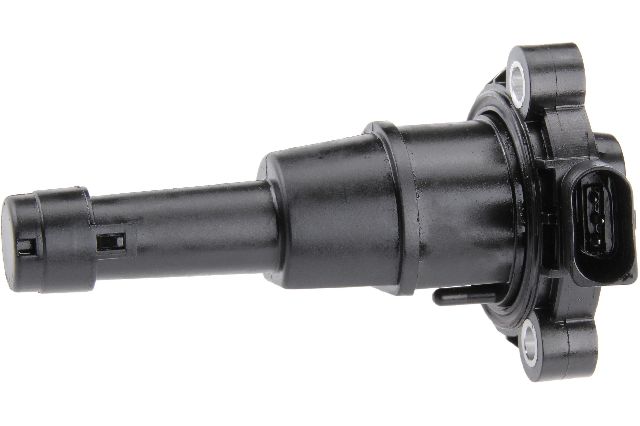
- The oil temperature and oil level sensors are a single unit located in the oil pan, part number 06L907660C.
- The most common fix is to replace this sensor, which requires a full oil change.
- Before replacing, perform a quick visual check of the sensor's wiring at the bottom of the engine for any obvious damage.
- Do not confuse the oil temperature/level sensor with the oil pressure switches, which are located elsewhere on the engine and are for a different fault.
What's Unique About the 2016-2019 Volkswagen GOLF

On the Mk7 Volkswagen Golf platform (and its MQB platform mates like the Audi A3), which includes the 1.8T and 2.0T GTI models, the engine oil temperature sensor is not a separate component. Instead, it is integrated into the oil level sensor, which is mounted at the bottom of the engine's oil pan with three bolts. This design means that replacing the sensor, the most common fix for P0197, requires draining the engine oil first. This is a key difference from vehicles where the sensor might be a more accessible, separate unit screwed into the oil filter housing or engine block.
Diagnostic Flowchart
Tap your situation to follow the diagnostic path that matches what you're seeing on this vehicle.
Symptoms You May Notice

- Check Engine Light is illuminated.
- Oil temperature gauge on the dashboard reads at its lowest value and does not move, even when the engine is warm.
- Yellow oil can symbol with a "visit workshop" or "Oil Sensor - Service Vehicle" message may appear on the instrument cluster.
- In some cases, the EPC (Electronic Power Control) light may also illuminate.
- Replacing the oil pressure switches. The Golf EA888 engine has one or two oil pressure switches (often blue and brown) located higher up on the engine, near the oil filter housing/alternator area. These are for oil *pressure* warnings (often triggering an EPC light) and will not fix a P0197 code, which is for oil *temperature*.
Most Likely Causes

- Faulty Oil Level / Temperature Sensor 🔴 High Probability The sensor is an electronic component located at the bottom of the oil pan, where it is exposed to constant, extreme heat cycles and potential contamination from oil sludge, leading to internal failure of the thermistor.
How to confirm: After confirming the P0197 code and seeing a stuck-low oil temperature reading in live data (e.g., -40°F/C), and after a visual check of the wiring, replacing the sensor is the most common and definitive step. Given its very high failure rate for this code, it is the primary suspect.
Typical fix: Replace the oil level/temperature sensor. This requires draining the engine oil, unplugging the sensor from the bottom of the oil pan, removing the three 10mm retaining bolts, and installing the new sensor with a new O-ring. Refill with new oil.
Est. part cost: $50-$150 - Damaged Wiring or Connector 🟡 Medium Probability The sensor's wiring is routed at the bottom of the engine, making it susceptible to damage from road debris, corrosion from road salt, or oil contamination from leaks. Some owners note the lack of a full belly pan exposes the wiring. A common failure is rodent damage to the wires near the connector.
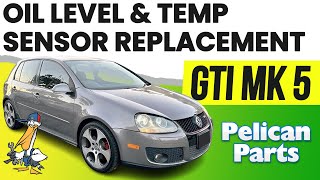
How to confirm: Visually inspect the wiring harness and connector leading to the sensor for any signs of chafing, breaks, melted plastic, or corrosion in the pins. Use a multimeter to check for a short to ground on the signal wire. With the sensor disconnected, the signal wire voltage should read near 5V. 🎬 See how to test and replace the sensor for P0197 codes.
Typical fix: Repair the damaged section of the wiring harness. If the connector is corroded or damaged, it may need to be cleaned with electrical contact cleaner or replaced with a pigtail connector.
Est. part cost: $15-$50
Rare But Worth Checking
- Faulty Powertrain Control Module (PCM/ECU): This is extremely rare. Before considering a PCM replacement, all other possibilities, including the sensor and the entire wiring circuit, must be exhaustively tested and ruled out. One forum user reported this as the final diagnosis after an auto electrician spent a full day testing wiring and multiple new sensors did not fix the issue.
Diagnosis Steps
- Read the trouble codes with an OBD-II scanner to confirm P0197 is present.
- Check the oil temperature reading in the scanner's live data. With a P0197 code, it will likely show a default low value (e.g., -40°F/C) that does not change as the engine warms up.
- Safely raise the vehicle and locate the oil level/temperature sensor on the bottom of the oil pan. It is a black plastic sensor held in by three 10mm bolts and has a single electrical connector.
- Visually inspect the connector and wiring harness for any signs of damage, corrosion, or oil saturation. Wiggle the connector to see if the live data reading changes.
- To test the circuit, disconnect the sensor. Use a multimeter to probe the signal wire in the harness connector. With the ignition on, it should read a reference voltage of approximately 5V. If the voltage is missing or very low, a wiring or ECU issue is likely. If the voltage is present, the sensor is almost certainly faulty.
- To replace the sensor, first drain the engine oil completely.
- Disconnect the electrical connector, remove the three 10mm bolts holding the sensor, and carefully pry the old sensor out of the oil pan.
- Install the new sensor with a new, lightly oiled O-ring. Tighten the bolts to the manufacturer's specification (typically around 9 Nm or 80 in-lbs, but verify for your specific model). Reconnect the electrical connector.
- Refill the engine with the correct type and amount of new oil.
- Clear the trouble code with the scanner and start the engine. Verify that the oil temperature gauge now functions correctly and the Check Engine Light does not return.
Parts You'll Likely Need

- Engine Oil Level / Temperature Sensor
(OEM #06L907660C)— This integrated sensor is the most common failure point for code P0197 on this vehicle. The original part number may be superseded by this one.
Trusted brands: Volkswagen (Genuine OEM), Hella (Often the OEM supplier), Vemo, Continental
OEM price range: $100-$150
Aftermarket price range: $50-$100
Technical Service Bulletins (TSBs) & Recalls
- VIN4APIN20190628: Notes that a customer may state the MIL is on with P0197, among other codes. This is a generic bulletin listing multiple possible codes.
- VIN4APIN20190617: Also lists P0197 as one of several possible codes when a customer reports a MIL-on condition. This is also a generic bulletin.
Platform-Specific Known Issues
- The NHTSA has logged Technical Service Bulletins (TSBs) that mention P0197 as one of several potential codes a customer might report, indicating it can be part of a broader electrical issue, though the bulletins do not specify a direct cause for P0197 itself. [Bulletin #VIN4APIN20190628, Bulletin #VIN4APIN20190617]
- Owner forums frequently discuss this specific failure. A common repair story involves the oil temperature gauge suddenly dropping to its lowest reading, followed by the Check Engine Light and P0197 code. The fix is consistently replacing the sensor during the next oil change.
Mechanic-Grade Diagnostic Values

- Engine Coolant/Oil Temperature Sensor Resistance (NTC Thermistor) — expected: Resistance decreases as temperature increases. A cold sensor (approx. 20°C/68°F) should read between 1,500-2,500 Ohms. A hot sensor (approx. 90°C/194°F) should read between 275-375 Ohms.. Failure: An infinite resistance reading (open circuit) or near-zero resistance (short circuit) indicates a failed sensor. If the resistance does not change smoothly as the sensor warms up, it is also faulty.
- Sensor Signal Wire Voltage (Key On, Engine Off) — expected: Approximately 5.0V reference voltage with the sensor disconnected.. Failure: A voltage reading near 0V indicates a short to ground in the wiring harness or a potential ECU fault. No voltage could indicate a broken wire or an ECU fault.
Scan Tool Commands That Help
- VCDS (VAG-COM): Measuring Blocks / Advanced Measuring Blocks — Use this to view live data for the engine oil temperature as seen by the ECU. For a P0197 fault, the value will typically be stuck at a default low like -40°C. This confirms the ECU is receiving an out-of-range signal. On controllers using the UDS protocol, you must use Advanced Measuring Blocks.
Wiring & Ground Locations
- Sensor Connector (3-pin) — On the bottom of the oil pan, connecting to the oil level/temperature sensor.. This is the primary point for testing. The wire colors are typically Black/Red, Brown, and Grey/Yellow. A damaged connector or wiring here is a common cause for P0197.
- Ground Point 15 — On the cylinder head.. This is a primary engine ground. A loose or corroded connection here can cause various sensor reading issues, including for the oil temperature sensor circuit.
- Ground Point 14 — On the gearbox.. Another critical ground point for the engine and transmission assembly. A poor connection can lead to erratic sensor behavior.
- Main Chassis Ground — On the chassis, behind the battery on the bulkhead, typically a stud with multiple brown wires.. This is a central grounding point for many systems. While less likely to cause a single sensor code, a poor connection here can create widespread electrical issues.
Real Owner Repair Stories
- Reddit user in r/jetta (2023 VW Tiguan (similar EA888 engine and sensor design)) — P0197 code, Check Engine Light.
❌ Tried (didn't work) Initial diagnosis pointed to a faulty sensor.
✅ What actually fixed it The user discovered rodent damage had chewed through the wires right at the sensor connector. The fix required splicing the wires back together. The user noted the lack of a full belly pan on some models makes this area vulnerable. - AudiWorld Forums user (2003 Audi A4 1.8T (older platform, but illustrates part compatibility issues)) — Incorrect oil level warnings after replacing the sensor.
❌ Tried (didn't work) Replacing the original sensor (part 'B') with the officially specified superseding part ('C').
✅ What actually fixed it The user found that despite looking identical and being the 'correct' superseding part, the 'C' version of the sensor did not function correctly in their earlier vehicle, causing false oil level warnings. They had to source the original 'B' version to resolve the issue, highlighting that part supersessions are not always backward-compatible without issue.
OEM Part Supersession History
03F907660D, 03F907660E→06L907660C— Part consolidation and potential design updates for the EA888 Gen3 engine family.
Heads up: While 06L907660C is the correct part for the 1.8T/2.0T EA888 Gen3, be aware that other engines (like the 1.4T) use different sensors (e.g., 04E907660C) that are not interchangeable. Always verify the part number with the vehicle's VIN.
Helpful Videos

Used OEM Parts in Stock

New Aftermarket Parts Available



The information in this article is provided for general reference and educational purposes only. Vehicle specifications, procedures, and part compatibility can vary by production date, trim level, and region. Always consult your vehicle's factory service manual and verify part numbers before purchasing or performing repairs. Safety-critical components such as airbags, seat belts, and braking systems should be installed by a qualified professional.
- Volkswagen GOLF:
- 🎬 Helpful Videos
- 🛍️ Shop This Part
- What's Unique About the 2016-2019 Volkswagen GOLF
- Diagnostic Flowchart
- Symptoms You May Notice
- Most Likely Causes
- Rare But Worth Checking
- Diagnosis Steps
- Parts You'll Likely Need
- Technical Service Bulletins (TSBs) & Recalls
- Platform-Specific Known Issues
- Mechanic-Grade Diagnostic Values
- Scan Tool Commands That Help
- Wiring & Ground Locations
- Real Owner Repair Stories
- OEM Part Supersession History
- 🎟️ Get 5% Off