

P0196 on 2016-2018 Volkswagen Beetle: Oil Temp Sensor and Water Pump Guide
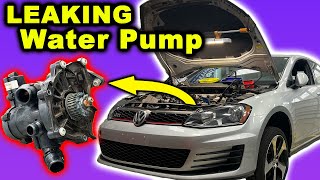
On a 2016-2018 VW Beetle, code P0196 is most often caused by a failing Engine Oil Temperature sensor or a leaking water pump. A leaking water pump is a very common issue on this EA888 Gen 3 engine and can cause overheating or drip coolant onto sensor wiring, triggering this code. Check for pink, crusty coolant residue on the front of the engine below the intake manifold.
- P0196 on a 2016-2018 Beetle is not just an oil sensor issue; it is very frequently a symptom of a failing water pump, a known weak point on this engine.
- Before buying any parts, inspect the front of the engine for signs of a pink/white crusty coolant leak around the water pump assembly.
- If a leak is found, replacing the water pump/thermostat assembly is the priority repair.
- If no leak is present, the next steps are to inspect the oil temperature sensor's wiring and connector (on the oil pan) for damage before replacing the sensor itself.
- Always use the correct VW-specification engine oil, as incorrect or degraded oil can contribute to this code.
What's Unique About the 2016-2018 Volkswagen BEETLE
For the 2016-2018 Beetle with the EA888 Gen 3 engine, code P0196 is uniquely and strongly tied to a very common and well-documented platform issue: premature failure of the water pump and thermostat housing assembly. A Volkswagen Technical Service Bulletin (TSB) directly links P0196 with a "coolant leak at the coolant pump". [Bulletin #VIN-4-A-PIN-2018] The plastic housing of the water pump assembly is notorious for cracking and leaking due to constant heat cycles. This leak can cause overheating (which affects oil temperature) or drip directly onto and damage the wiring for various sensors, including the oil temperature sensor. This makes diagnosing P0196 on this car different than on others where it might just be a simple sensor swap.
Diagnostic Flowchart
Tap your situation to follow the diagnostic path that matches what you're seeing on this vehicle.
Symptoms You May Notice
- Check Engine Light is on
- Yellow oil warning light may illuminate on the dashboard [Bulletin #VIN-4-A-PIN-2018]
- Engine temperature gauge running higher than normal or fluctuating
- Low coolant warning light on the dashboard
- A sweet, maple-syrup-like smell of coolant from the engine bay after driving
- Visible pink/white crusty residue from dried coolant on the front of the engine
- Reduced engine performance or limp mode activation
- Poor fuel economy
- Rough running, especially when the engine is cold
- Replacing only the oil temperature sensor without first thoroughly inspecting the cooling system. If a leaking water pump is the root cause, the new sensor may soon fail, or the code will return due to overheating or wiring damage from the ongoing leak.
Most Likely Causes
- Leaking Water Pump / Thermostat Housing 🔴 High Probability The EA888 Gen 3 engine uses a plastic water pump and thermostat housing assembly that is notorious for cracking and leaking over time due to constant heat cycles. This is a widely recognized failure point for this engine across many VW and Audi models. A class-action lawsuit was even filed regarding this issue.
How to confirm: Visually inspect the front of the engine, below the intake manifold, for signs of a leak. Look for pink or white crusty residue (dried coolant) on the housing, engine block, and surrounding components. You may also have a persistent low coolant level in the reservoir. The leak often originates from the seal between the thermostat housing and the pump itself.
Typical fix: Replace the entire water pump and thermostat housing assembly. Many owners and independent shops choose upgraded aftermarket kits with all-metal (aluminum) housings 🎬 See why upgrading to an aluminum housing prevents future leaks. to prevent a repeat failure. The job requires removing the intake manifold for access.
Est. part cost: $150-$400 - Faulty Engine Oil Temperature Sensor 🟡 Medium Probability The sensor itself can fail internally over time. It is a thermistor, and its resistance changes with temperature; this capability can degrade.
How to confirm: The sensor (VW part number G8 or G266) is located at the bottom of the oil pan. Check its wiring and connector for damage, corrosion, or melting (especially if the water pump has been leaking). Use a scan tool to monitor the oil temperature reading; if it's stuck (e.g., at -48°C, indicating an open circuit), jumps erratically, or never changes, the sensor is likely bad. The sensor's internal resistance can also be tested with a multimeter and a heat source like a hairdryer; resistance should decrease smoothly as temperature rises.
Typical fix: Replace the engine oil level/temperature sensor. It is a single unit (often part number 06L907660C) that screws into the bottom of the oil pan. An oil change is required to perform this repair.
Est. part cost: $40-$120 - Damaged Wiring or Connector 🟡 Medium Probability Coolant leaks from the common water pump failure can drip down and saturate wiring harnesses, causing corrosion or short circuits in the oil temperature sensor connector. The connector's locking tab is also known to become brittle and break, leading to a loose connection.
How to confirm: Visually inspect the wiring harness and connector leading to the oil temperature sensor on the oil pan. Look for green corrosion, melted plastic, or frayed wires. Check for a stable 5-volt reference signal and good ground at the connector with a multimeter. A loose connector can cause intermittent P0196 and P0198 codes.
Typical fix: Repair the damaged section of the wiring harness or replace the connector pigtail. If the connector is just loose, it may need to be secured with a zip tie or safety wire if the locking tab is broken.
Est. part cost: $15-$50 - Low, Old, or Incorrect Engine Oil ⚪ Low Probability
How to confirm: Check the engine oil level using the dipstick. If the level is very low, the sensor may not be properly submerged. If the oil appears thick and sludgy from a missed service interval, it can act as an insulator and cause inaccurate temperature readings.
Typical fix: Perform an engine oil and filter change using the correct VW-specification synthetic oil (e.g., VW 502 00).
Est. part cost: $70-$110
Rare But Worth Checking
- Faulty Engine Control Module (ECM): This is very uncommon. All other possibilities, especially the water pump, sensor, and wiring, should be thoroughly ruled out before considering the ECM as the cause.
Diagnosis Steps
- Read all fault codes with an OBD-II scanner. Note if P0198, P00B7, or VAG-specific code 00562 are also present.
- Check the engine coolant level in the reservoir. If it is low, this is a strong indicator of a leak.
- With the engine cool, remove the plastic engine cover. Thoroughly inspect the water pump and thermostat housing on the front of the engine (under the intake manifold) for signs of pink/white coolant residue, indicating a leak. A pressure test of the cooling system can help confirm a leak.
- Check the engine oil level and condition. Ensure it is full and not sludgy.
- Safely raise the vehicle and locate the oil temperature sensor on the bottom of the engine's oil pan. Inspect its wiring and connector for any signs of corrosion, melting, physical damage, or coolant contamination. Ensure the connector is fully seated and the locking tab is not broken.
- Use a scan tool to view live data from the Engine Oil Temperature sensor. Watch the reading as the engine warms up. It should rise steadily and plausibly with the coolant temperature. If it is stuck at a single value (like -48°C), jumps erratically, or doesn't rise, the sensor or wiring is suspect.
- If a coolant leak at the water pump is confirmed, this is the most likely root cause and should be repaired first. The repair is labor-intensive, requiring removal of the intake manifold.
- If no leak is found but the sensor data is illogical, test the sensor's resistance and check for proper voltage/ground at the connector before replacing the sensor.
Parts You'll Likely Need
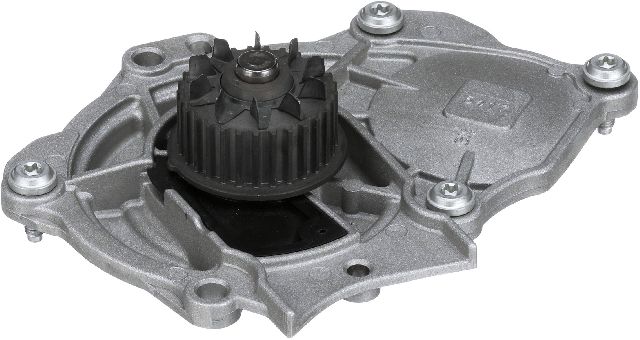
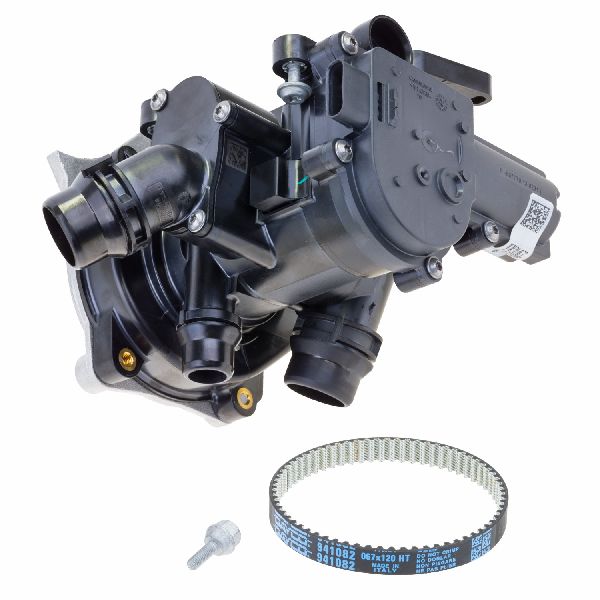
- Water Pump & Thermostat Housing Assembly
(OEM #06L121111H (or newer revisions like 06L121111J, K, L, M))— This is the most common point of failure on the EA888 engine and is directly linked to code P0196 in a manufacturer TSB. The plastic housing cracks, causing coolant leaks. [15, Bulletin #VIN-4-A-PIN-2018, 32]
Trusted brands: INA (OEM), Graf, Gebia, Pierburg
OEM price range: $250-$400
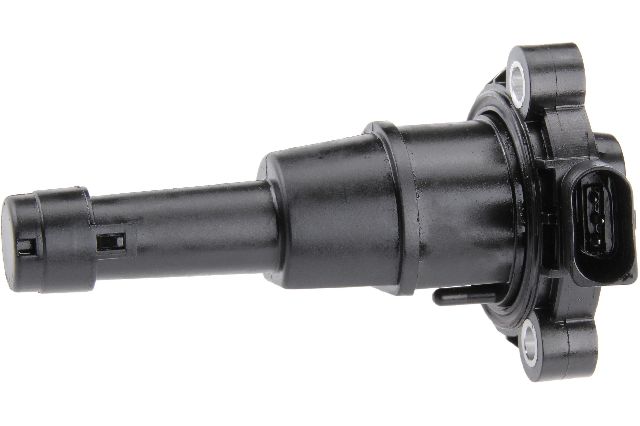
Aftermarket price range: $150-$300 - Engine Oil Level / Temperature Sensor
(OEM #06L907660C)— This sensor provides the direct reading for oil temperature. It can fail internally or be damaged by external factors like leaks, giving the ECU an irrational signal.
Trusted brands: Hella (OEM), Bosch, Febi Bilstein, Meyle
OEM price range: $80-$120
Aftermarket price range: $40-$70
Related Codes That Often Appear With This One
- P0198 — P0198 is 'Engine Oil Temperature Sensor Circuit High'. The same TSB from VW groups P0196 and P0198 together, indicating they share a common root cause on this vehicle, often related to the water pump leak or a loose/damaged sensor connector. [Bulletin #VIN-4-A-PIN-2018, 8]
- P00B7 — 'Engine Coolant Flow Low/Performance'. This code can appear if the failing water pump is not circulating coolant effectively, which directly relates to the most common cause of P0196 on this platform.
Technical Service Bulletins (TSBs) & Recalls
- VIN-4-A-PIN-2018: Groups 'coolant leak at the coolant pump' and 'Yellow oil warning light' with fault code P0196, pointing to a direct link between these issues on this platform.
Platform-Specific Known Issues
- A Technical Service Bulletin (TSB #VIN-4-A-PIN-2018) was issued by Volkswagen for a condition presenting with a coolant leak at the coolant pump, a yellow oil warning light, and fault code P0196 or P0198. [Bulletin #VIN-4-A-PIN-2018]
- A class-action lawsuit was filed against VW for premature water pump failures on EA888 engines, leading to a warranty extension for some vehicles (typically 8 years/80,000 miles), though eligibility may vary.
Mechanic-Grade Diagnostic Values
- Engine Oil Temperature Sensor (G8/G266) Live Data Reading (Scan Tool) — expected: Should rise steadily from ambient temperature as the engine warms.. Failure: A reading that is stuck, jumps erratically, or reads a default low value like -48°C indicates an open circuit or sensor failure.
- Voltage at Sensor Connector (Key On, Engine Off) — expected: Approximately 5V reference signal on one pin, and a good ground (<0.1V) on another.. Failure: No 5V reference signal or a bad ground points to a wiring or ECM issue, not a sensor failure.
- Wiring Harness Continuity — expected: ≤ 0.2 Ω on signal and ground wires between the sensor connector and the ECM.. Failure: Higher resistance indicates corrosion or a break in the wire.
- Wiring Harness Resistance to Ground — expected: > 10 kΩ on the signal wire with the sensor and ECM disconnected.. Failure: Lower resistance indicates a short to ground in the harness.
Hidden / Shadow Codes Worth Checking
- 00562: Oil Level Thermal Sensor Open Circuit / Short Circuit to B+. This is a more specific VAG fault code that points directly to an electrical fault in the sensor circuit, helping to distinguish it from a simple performance range issue. (see via VCDS (VAG-COM) or other professional VAG-specific diagnostic tools.)
Wiring & Ground Locations
- Oil Temp Sensor (G8/G266) Connector — Plugged into the bottom of the engine oil pan.. This is the primary connection point. Pin 1 should have key-on battery voltage, Pin 2 is ground, and Pin 3 is the signal wire. Checking for voltage, ground, and physical integrity here is a critical diagnostic step.
- Engine Ground Strap G15 — On the engine cylinder head.. A poor engine ground can cause a variety of sensor reading issues, including for the oil temperature sensor. Ensure this connection is clean and tight.
- Chassis Ground G642 — On the frame in the left front of the engine compartment.. This is a primary ground point for components in the engine bay. A corroded or loose connection here can lead to floating grounds and erratic sensor behavior.
Real Owner Repair Stories
- Ross-Tech Forums user (2015 VW Golf with EA888 engine) — Check Engine Light with codes P0196 and P0198. Scan tool showed illogical oil temperature and level readings.
❌ Tried (didn't work) Initially suspected a bad sensor.
✅ What actually fixed it Upon physical inspection, the locking tab on the oil temperature sensor's electrical connector was found to be broken, causing it to back off and make a poor connection. The connector was pushed on securely and held in place with aviation safety wire. This resolved the fault codes without replacing any parts. - YouTube repair channel (Audi/VW with EA888 engine) — P0196 and 00562 fault codes, oil temperature warning.
❌ Tried (didn't work) The owner had already replaced the oil temperature sensor, but the problem persisted.
✅ What actually fixed it Diagnosis found the connector to the sensor was partially melted from an internal short in the original failed sensor. Furthermore, there was no power at the connector. The root cause was a combination of a failed sensor that shorted, a damaged connector pigtail, and a blown 5-amp fuse in the dashboard-side fuse box. The final fix was replacing the sensor, the connector pigtail, and the fuse.
When the Usual Fixes Don't Work
- While the most common causes are a leaking water pump or a failed sensor, a significant number of cases are resolved by addressing the sensor's electrical connector. Before ordering expensive parts, it is critical to physically inspect the connector on the bottom of the oil pan. A locking tab that has become brittle and broken can cause the connector to vibrate loose, leading to intermittent P0196 and P0198 codes. In one documented case, simply re-seating the connector and securing it with safety wire permanently fixed the issue.
OEM Part Supersession History
06L121111H→06L121111J, then 06L121111K, then 06L121111L, then 06L121111M.— Revisions by the manufacturer to improve the durability of the plastic housing and seals to combat the common leaking issue.
Heads up: All revisions (H, J, K, L, M) are generally interchangeable, but it is always recommended to install the latest available revision to get the most updated design.
Model Year Variations Within This Range
- 2018: For the 2018 model year, some 2.0L EA888 engines were updated to the 'Gen 3B' variant. This version uses a modified combustion process (Budack-cycle) for improved efficiency and torque. While the P0196 fault causes remain the same, be aware that engine management and some internal components may differ from the 2016-2017 'Gen 3' engines.
Helpful Videos
Used OEM Parts in Stock

New Aftermarket Parts Available



The information in this article is provided for general reference and educational purposes only. Vehicle specifications, procedures, and part compatibility can vary by production date, trim level, and region. Always consult your vehicle's factory service manual and verify part numbers before purchasing or performing repairs. Safety-critical components such as airbags, seat belts, and braking systems should be installed by a qualified professional.
- Volkswagen BEETLE:
- 🎬 Helpful Videos
- 🛍️ Shop This Part
- What's Unique About the 2016-2018 Volkswagen BEETLE
- Diagnostic Flowchart
- Symptoms You May Notice
- Most Likely Causes
- Rare But Worth Checking
- Diagnosis Steps
- Parts You'll Likely Need
- Related Codes That Often Appear With This One
- Technical Service Bulletins (TSBs) & Recalls
- Platform-Specific Known Issues
- Mechanic-Grade Diagnostic Values
- Hidden / Shadow Codes Worth Checking
- Wiring & Ground Locations
- Real Owner Repair Stories
- When the Usual Fixes Don't Work
- OEM Part Supersession History
- Model Year Variations Within This Range
- 🎟️ Get 5% Off