

P0193 on 2010-2015 Hyundai Tucson: Fuel Rail Pressure Sensor High Input Causes and Fixes
On a 2010-2015 Tucson with a GDI engine, P0193 almost always means the Fuel Rail Pressure Sensor (FRPS) has failed. The sensor is located under the intake manifold, making it a labor-intensive repair. Expect shop costs to range from $350 to $600. This is a very common issue shared with the Kia Sportage and Hyundai Sonata which use the same Theta II engine.
- P0193 on this Tucson almost always points to a failed Fuel Rail Pressure Sensor (FRPS) or its wiring.
- This is an electrical code, not a mechanical one. Do not replace the expensive high-pressure fuel pump unless it has been specifically diagnosed as faulty.
- Diagnosis requires a scan tool to read live voltage from the sensor; a reading stuck near 5V is a key indicator of a failed sensor.
- The repair is complex due to the sensor's location under the intake manifold and involves working with a high-pressure fuel system, making it a difficult and potentially hazardous DIY job.
- Always inspect the wiring harness and connectors for damage before replacing the sensor, as a bad connection can mimic a failed part.
What's Unique About the 2010-2015 Hyundai Tucson
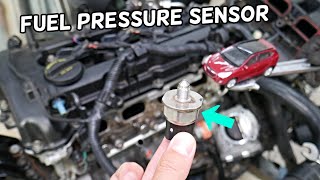
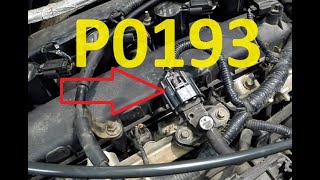
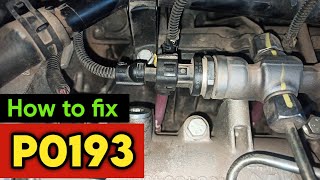
The 2010-2015 Tucson uses the Theta II GDI (Gasoline Direct Injection) engine, which operates with a very high-pressure fuel system. This engine and its associated issues are shared across several Hyundai and Kia models, including the Sonata, Santa Fe, and Kia Sportage. For this specific code, the most common failure point is the Fuel Rail Pressure Sensor (FRPS) itself. A key challenge is that the sensor is located on the fuel rail under the plastic intake manifold, making replacement significantly more labor-intensive and difficult than on many other vehicles. A YouTube video by 'Draft Gear' on a 2015 Sonata with the same engine clearly documents the process of removing the manifold for access.
Symptoms You May Notice
- Check Engine Light is on
- Engine may be hard to start or cranks but won't start
- Hesitation or stumbling during acceleration
- Rough idle
- Sudden loss of engine power
- Engine may stall unexpectedly
- Vehicle enters 'limp mode' (reduced power)
- Replacing the high-pressure fuel pump (HPFP). P0193 is an electrical circuit code, not a mechanical pressure code. While the HPFP can fail, it typically triggers other codes like P0087 (low pressure).
Most Likely Causes
- Failed Fuel Rail Pressure Sensor (FRPS) 🔴 High Probability The sensor is a very common failure point on the Theta II GDI engine family across multiple Hyundai and Kia models. It can fail internally, causing it to send a constant high voltage signal. There are also reports of new aftermarket sensors being faulty out of the box.
How to confirm: Use a scan tool to monitor live data. A voltage reading from the FRPS that is stuck near 5 volts with the Key On, Engine Off (KOEO), strongly indicates a failed sensor. Disconnecting the sensor should cause the voltage to drop to 0V; if it does, the sensor is confirmed bad.
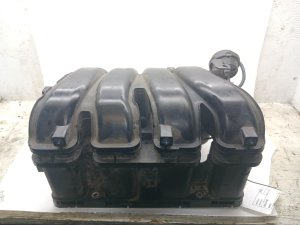
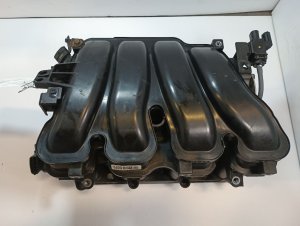
Typical fix: Replace the Fuel Rail Pressure Sensor. This requires removing the intake manifold for access. It is highly recommended to also replace the intake manifold gaskets at the same time to prevent vacuum leaks.
Est. part cost: $60-$150 - Wiring Harness or Connector Issue 🟡 Medium Probability The wiring harness and its connectors, particularly an intermediate connector under the intake manifold, are exposed to significant heat and vibration, which can lead to corrosion, loose pins, or broken wires over time. This can cause an intermittent open or short that perfectly mimics a failed sensor.
How to confirm: Visually inspect the wiring harness for any signs of damage, melting, or corrosion. Perform a 'wiggle test' on the harness and connectors while monitoring the sensor's voltage on a scan tool; fluctuations in the reading indicate a wiring fault. Check for 5V reference, ground, and signal continuity with a multimeter at the sensor connector.
Typical fix: Repair the damaged section of the wiring harness or clean/re-seat the connector. In some cases, a new connector pigtail may be needed.
Est. part cost: $10-$50
Rare But Worth Checking
- Faulty Powertrain Control Module (PCM): This is extremely rare. The PCM should only be considered as the cause after all other possibilities, including the sensor and all related wiring, have been exhaustively tested and ruled out. A PCM failure could involve a faulty analog-to-digital converter or internal voltage regulator.
Diagnosis Steps
- Connect a high-quality OBD-II scanner and verify the P0193 code is present. Check for any other codes like P0191 or P0088.
- Access the live data stream on the scanner and monitor the 'Fuel Rail Pressure Sensor Voltage' PID with the Key On, Engine Off (KOEO). A voltage reading stuck at or near 5V confirms the 'circuit high' condition.
- Turn the ignition off and disconnect the battery. Locate and disconnect the Fuel Rail Pressure Sensor connector. The sensor is on the fuel rail, under the intake manifold.
- Reconnect the battery and turn the ignition back on (engine off). Check the voltage reading on the scanner again. If the voltage drops to near 0V, the sensor is internally shorted and must be replaced.
- If the voltage remains high with the sensor disconnected, there is a short to power in the signal wire. Inspect the wiring harness between the sensor and the ECM for damage, paying close attention to the intermediate connector under the intake.
- If the voltage reading was not stuck high initially, perform a 'wiggle test' by gently moving the wiring harness and connector for the FRPS while watching the live data. If the voltage fluctuates wildly or spikes, repair the wiring harness or connector.
- If wiring and sensor test good, use a multimeter to check for a good ground and 5V reference at the sensor connector. An open ground circuit can also cause a P0193 code.
- As a last resort after all other tests are negative, the ECM may be at fault.
Parts You'll Likely Need
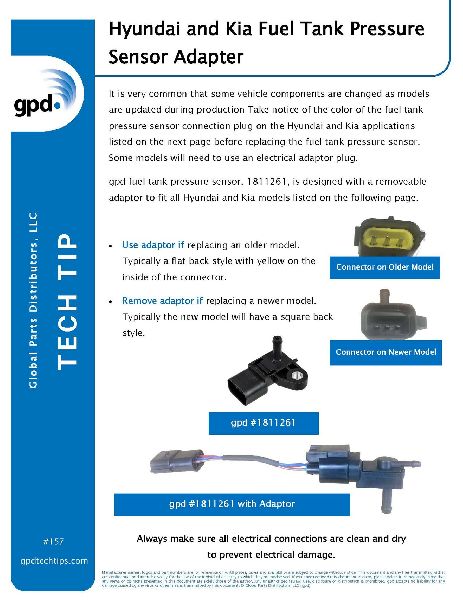
- Fuel Rail Pressure Sensor
(OEM #35340-2G710)— This is the most common cause of P0193 on this platform, as the sensor is a known failure point. It is crucial to use a high-quality OEM or reputable aftermarket part, as cheap sensors are known to fail quickly.
Trusted brands: Hyundai Genuine, Bosch (often the OEM supplier), Delphi, Standard Motor Products (SMP)
OEM price range: $100-$180
Aftermarket price range: $60-$120 - Intake Manifold Gasket Kit — The intake manifold must be removed to access the sensor. The gaskets are one-time use and must be replaced to prevent vacuum leaks upon reassembly.
Trusted brands: Fel-Pro, Mahle, Hyundai Genuine
OEM price range: $25-$40
Aftermarket price range: $15-$30
Related Codes That Often Appear With This One
- P0191 — P0191 indicates 'Fuel Rail Pressure Sensor Circuit Range/Performance'. An intermittent wiring issue or a failing sensor can cause the signal to be both erratic (P0191) and too high (P0193) at different times. They often appear together due to the same root causes.
- P0088 — P0088 means 'Fuel Rail/System Pressure - Too High'. While P0193 points to an electrical circuit fault (high voltage), P0088 indicates the ECM believes the actual fuel pressure is too high. A faulty sensor sending a high signal can trigger both codes.
- P0192 — P0192 indicates 'Fuel Rail Pressure Sensor Circuit Low'. A faulty intermediate wiring harness connector under the intake manifold has been known to cause intermittent P0192 and P0193 codes simultaneously as connections break and short.
Platform-Specific Known Issues
- The location of the Fuel Rail Pressure Sensor under the intake manifold makes this a significantly more labor-intensive job than on engines where it is easily accessible.
- There have been multiple documented reports of intermittent issues caused by a poor connection at a harness-to-harness connector located under the intake manifold, which can perfectly mimic a sensor failure.
- Recall Campaign 180 (NHTSA 18V-934) was issued for some 2014-2015 models to inspect the high-pressure fuel pipe for leaks, highlighting known sensitivities in the GDI fuel system, though not a direct cause of P0193.
Mechanic-Grade Diagnostic Values
- Fuel Rail Pressure Sensor (FRPS) Signal Voltage — expected: 0.5V to 4.5V (KOER - Key On, Engine Running). Failure: Voltage is stuck above 4.75V for more than 0.14-0.2 seconds.
- FRPS Signal Voltage (KOEO - Key On, Engine Off) — expected: ~0.5V. Failure: Voltage is stuck at or near 5.0V, indicating an internal sensor short or a short-to-power in the signal wire.
- Low-Pressure Fuel Line Pressure — expected: 338-348 kPa (49-50 PSI). Failure: Significantly lower or erratic pressure can indicate a failing in-tank pump, starving the high-pressure pump. This does not directly cause P0193 but is a related system health check.
- FRPS Circuit Continuity (End-to-End) — expected: Below 1.0 Ω. Failure: A reading of OL (Open Line) or significantly higher resistance indicates a break in the wire.
- FRPS Signal Wire to Ground (Short Test) — expected: 10 kΩ or higher (ideally OL). Failure: A low resistance reading indicates a short to ground in the signal wire.
- Fail-Safe Mode Fuel Pressure — expected: When P0193 is active, the ECM ignores the sensor and defaults to a fixed pressure value, often around 330 bar.. Failure: N/A - This is the ECM's response to the fault.
Scan Tool Commands That Help
- Hyundai GDS or equivalent professional scan tool: Depressurize Fuel System — This is a critical safety function that must be used before attempting to disconnect any high-pressure fuel lines, including replacing the FRPS. The command is typically found in the ECM menu under 'Fuel System' or 'Actuation Tests'. It commands the Fuel Pump Control Module to shut off the low-pressure pump, allowing the engine to run until the high-pressure rail is depleted.
Wiring & Ground Locations
- FRPS Connector — On the end of the high-pressure fuel rail, located under the plastic intake manifold.. This is the primary test point for the sensor circuit. Pinout is typically: Pin 1 (Power), Pin 2 (Signal), Pin 3 (Ground).
- Intermediate Harness Connector — Under the intake manifold, connecting the FRPS pigtail to the main engine harness.. This is a known, high-failure point due to heat and vibration. Corrosion or loose pins here can cause intermittent P0193/P0192 codes and perfectly mimic a failed sensor. It is often missed during diagnosis.
- PCM / ECM — Located in the left rear of the engine compartment.. This is the termination point for the sensor wiring, used for end-to-end continuity testing.
- FRPS Signal Wire at ECM — On similar Hyundai/Kia models, the signal wire runs to Pin 27 of the right-hand ECM connector.. Knowing the specific ECM pin allows for a definitive end-to-end continuity test of the signal wire, bypassing intermediate connectors to isolate a break or short in the main harness.
- Fuel Injector Harness Ground — A ground connection point associated with the fuel injector wiring harness.. A documented case showed that a loose ground pin on the injector harness can cause a P0193 code, likely due to electrical noise or a floating ground affecting the shared sensor ground reference.
Real Owner Repair Stories
- Reddit r/MechanicAdvice user (SUV with P0193 (context implies similar GDI engine)) — P0193 code appeared after replacing fuel injectors.
❌ Tried (didn't work) Initial diagnosis was inconclusive.
✅ What actually fixed it The root cause was a bad ground at the fuel injector harness. Re-seating the loose ground pin in the connector resolved the P0193 code. - Go-Parts Repair Database / Multiple Forum Reports (Hyundai/Kia with Theta II GDI Engine) — Intermittent P0191 and P0193 codes, hesitation, stalling.
❌ Tried (didn't work) Replacing the Fuel Rail Pressure Sensor did not fix the issue in some cases.
✅ What actually fixed it The problem was a loose and/or corroded intermediate wiring harness connector located under the intake manifold. Wiggling the harness would cause the fault to appear/disappear. Cleaning and firmly re-seating the connector resolved the codes permanently. - NHTSA ODI #11258755 (Hyundai Owner) — An owner reported that while driving to a dealership, the problem cleared up temporarily, but the OBDII code read P0193 upon arrival.
- NHTSA ODI #11480564 (Hyundai Sonata Owner) — A report describes a vehicle reading code P0193 for the fuel rail pressure sensor, with the owner noting they were told it could possibly be an engine issue after experiencing ignition problems.
OEM Part Supersession History
35340-2G710→35340-2G710 is the primary part number for this vehicle range.— N/A
Heads up: Be aware that the related Hyundai Sonata using the same engine had a part number change between the 2014 and 2015 model years. While not confirmed for the Tucson, it is critical to verify the correct part number using the vehicle's VIN before ordering to avoid incompatibility.
Model Year Variations Within This Range
- 2010-2015: The related Hyundai Sonata platform saw a change in the FRPS part number between 2014 and 2015. While the primary part number for the Tucson in this range appears to be consistent, this indicates a potential for mid-generation updates. Always confirm the part number with the vehicle's VIN, especially for 2014-2015 models.
Diagnostic Flowchart
Other Known Issues on This Vehicle
Issues unrelated to this code that are worth knowing about as an owner of this generation:
- Catastrophic Engine Failure (Connecting Rod Bearing Wear) 🔴 High — Very common across the Theta II GDI engine family. Caused by manufacturing debris (metal shavings) restricting oil flow, leading to bearing wear, engine knocking, and eventual seizure or fire. Often preceded by excessive oil consumption. (Ref: Subject of multiple recalls, warranty extensions, and a major class-action lawsuit (e.g., NHTSA Recall 15V-568). Hyundai/Kia developed a Knock Sensor Detection System (KSDS) software update to monitor for failure.)
- Excessive Oil Consumption 🟠 Medium — Widespread issue on Theta II GDI engines, often a precursor to more serious engine failure. Can be exacerbated by faulty PCV valves. (Ref: Addressed in various TSBs related to oil consumption testing and repair, such as TSB 21-EM-003H.)
- Worn Steering Coupler 🟠 Medium — A very common failure item, typically after 80,000 miles. The flexible rubber coupler (Part # 56315-2K000-FFF or similar) in the electronic power steering column disintegrates, causing a distinct 'clunking' or 'clicking' noise and excessive play in the steering wheel, especially at low speeds. (Ref: Covered by an extended warranty (TSB 17-ST-002-1) for some models, but not a formal recall. It is a widely known and documented repair.)
- Carbon Buildup on Intake Valves 🟡 Low — An inherent issue with all Gasoline Direct Injection (GDI) engines, including the Theta II. Because fuel is injected directly into the cylinder, it doesn't wash over and clean the intake valves, leading to carbon deposit buildup over time, which can cause misfires and reduced performance.
Used vs. New Parts: Buying Guide for This Vehicle
When a used part is the smart pick: For this repair, a used part is generally a poor choice for the sensor itself due to the high failure rate and extensive labor to access it. However, a used wiring harness pigtail or intermediate connector from a junkyard is a smart choice if the original is found to be damaged or corroded.
Donor-vehicle mileage cap: roughly under 80000 miles for the part to have meaningful remaining life.
What to inspect on the donor part:
- For a wiring connector: check for intact locking tabs, absence of green or white corrosion on the pins, and flexible (not brittle) wire insulation.
- For a harness section: ensure there are no nicks, cuts, or melted spots on the loom or wires.
OEM-only on this vehicle (don't cheap out):
- Fuel Rail Pressure Sensor (FRPS)
Aftermarket brands forum-validated for this vehicle:
- Bosch (often the OEM supplier)
- Delphi
- Standard Motor Products (SMP)
Brands owners have reported issues with on this vehicle:
- Unbranded 'white-box' sensors from online marketplaces (e.g., Amazon, eBay, AliExpress). The risk of premature failure or being dead-on-arrival is high, and the labor to re-do the job negates any initial cost savings.
Real Owner Stories
Aggregated from forums and TSBs cited above. Mileages and costs reflect what owners reported in those sources.
2015 Hyundai Sonata 2.4L GDI
Symptoms: P0193 Error code present on a Theta II engine.
What fixed it: Replacement of the Fuel Rail Pressure Sensor, which involved depressurizing the fuel system and removing the intake manifold.
Source hint: YouTube: 'P0193 Error - Hyundai Sonata 2015 2.4L and Similar Engines (THETA II) Fuel Rail Pressure Sensor' by user Draft Gear
2010-2015 Hyundai Tucson 2.4L GDI
Symptoms: Code P0193 appeared immediately after the owner had replaced the fuel injectors.
What fixed it: Repairing a bad ground pin on the fuel injector harness.
Source hint: Reddit r/MechanicAdvice
Documented NHTSA Reports
Symptoms: Intermittent stalling or ignition issues followed by a P0193 code.
Owner Experience: According to NHTSA ODI #11258755, an owner experienced the problem clearing up temporarily before the P0193 code was confirmed at a dealership. Another report, NHTSA ODI #11480564, mentions a vehicle reading code P0193 for the fuel rail pressure sensor and the owner being informed of potential engine-related complications.
Related OBD-II Codes
Frequently Asked Questions
Where is the Fuel Rail Pressure Sensor located on my 2010-2015 Tucson 2.0L/2.4L GDI?
Does Recall Campaign 180 apply to my P0193 code?
Can I just replace the sensor myself to fix the P0193 code?
Is there a specific wiring issue I should look for on my Tucson?
Why did my P0193 code stay active after I replaced the sensor with a new one?
Could my Tucson's steering 'clunk' be related to this fuel code?
Helpful Videos
Used OEM Parts in Stock


New Aftermarket Parts Available


The information in this article is provided for general reference and educational purposes only. Vehicle specifications, procedures, and part compatibility can vary by production date, trim level, and region. Always consult your vehicle's factory service manual and verify part numbers before purchasing or performing repairs. Safety-critical components such as airbags, seat belts, and braking systems should be installed by a qualified professional.
- Hyundai Tucson:
- 🎬 Helpful Videos
- 🛍️ Shop This Part
- What's Unique About the 2010-2015 Hyundai Tucson
- Symptoms You May Notice
- Most Likely Causes
- Rare But Worth Checking
- Diagnosis Steps
- Parts You'll Likely Need
- Related Codes That Often Appear With This One
- Platform-Specific Known Issues
- Mechanic-Grade Diagnostic Values
- Scan Tool Commands That Help
- Wiring & Ground Locations
- Real Owner Repair Stories
- OEM Part Supersession History
- Model Year Variations Within This Range
- Diagnostic Flowchart
- Other Known Issues on This Vehicle
- Used vs. New Parts: Buying Guide for This Vehicle
- Real Owner Stories
- 2015 Hyundai Sonata 2.4L GDI
- 2010-2015 Hyundai Tucson 2.4L GDI
- Documented NHTSA Reports
- Related OBD-II Codes
- Frequently Asked Questions
- 🎟️ Get 5% Off