

P0193 on 2014-2016 GMC Yukon XL: Fuel Rail Pressure Sensor High Causes & Fixes
For a 2014-2016 GMC Yukon XL, code P0193 usually means the Fuel Rail Pressure Sensor (FRPS) has failed or its wiring is damaged. The ECM detects a voltage signal from the sensor that is higher than the normal range, typically over 4.75V. Replacing the sensor is the most common fix. For the direct-injection 2015+ models, this repair is more involved and costly due to the intake manifold removal required for access.
- P0193 on your Yukon XL points to a high voltage signal from the fuel rail pressure sensor, most often caused by a faulty sensor itself.
- Other likely causes include damaged wiring or a bad connector creating a short circuit.
- Symptoms are serious and include hard starting, stalling, and reduced power, so the issue should be addressed promptly.
- The 2014 model and 2015-2016 models have different fuel systems, so ensure you are purchasing the correct parts for your specific year.
- Before replacing expensive components like the ECM or fuel pump, always test the sensor and its wiring first, as this is the most probable and cost-effective solution.
What's Unique About the 2014-2016 Gmc YUKON XL
The 2014-2016 Yukon XL spans two different generations with distinct fuel systems. The 2014 model is the last of the GMT900 platform. The 2015-2016 models are the first of the K2UG platform, featuring new EcoTec3 direct-injection engines. These direct-injection systems operate at much higher fuel pressures, making the fuel rail pressure sensor and high-pressure fuel pump critical components. On the 2015+ models, the fuel rail pressure sensor is located under the intake manifold, making replacement a more labor-intensive job that requires removing the manifold. This significantly increases repair time and cost compared to the 2014 model.
Diagnostic Flowchart
Tap your situation to follow the diagnostic path that matches what you're seeing on this vehicle.
Generation note: The specified year range covers two generations. The 2014 model year is the final year of the third generation (GMT900). The 2015 and 2016 model years are the beginning of the fourth generation (K2UG), which introduced direct-injection EcoTec3 engines (5.3L L83 and 6.2L L86 V8s). While the P0193 code applies to both, the parts and specific locations will differ. The 2015+ models have both a low-pressure in-tank fuel pump and a high-pressure, mechanically-driven fuel pump, with the P0193 code referring to the sensor on the high-pressure rail.
Symptoms You May Notice
- Check Engine Light is on
- Engine is hard to start or won't start
- Reduced engine power and poor acceleration (may enter 'Limp Mode')
- Engine may stall, run rough, or hesitate
- Decreased fuel economy
- Strong fuel smell in some cases
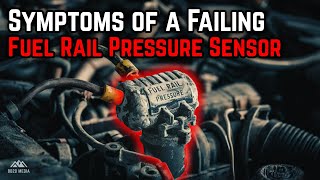
- Black smoke from exhaust on startup 🎬 Watch: Common signs and symptoms of a bad fuel pressure sensor
- Replacing the fuel pump when the issue is the fuel rail pressure sensor or its wiring.
- Replacing the fuel injectors without diagnosing the fuel pressure control system first.
- Not checking for simple wiring faults before replacing the sensor, especially on 2015+ models where sensor replacement is labor-intensive.
Most Likely Causes
- Faulty Fuel Rail Pressure Sensor (FRPS) 🔴 High Probability The sensor is a common failure point due to constant exposure to heat and vibration in the engine bay. On the 2015+ EcoTec3 engines, it is located in the valley under the intake manifold, where heat is significant. It can fail internally, causing it to send a constant high voltage signal.
How to confirm: With the key on and engine off, use a multimeter to test the sensor's signal wire. A reading near 5 volts indicates the sensor is likely shorted internally. A scan tool can also show if the 'actual' pressure reading is pegged high and doesn't change. TSB #PIP5279A explicitly advises replacing the sensor if standard diagnostics are inconclusive.
Typical fix: Replace the fuel rail pressure sensor. On 2015+ models, this requires removing the intake manifold.
Est. part cost: $60-$160 - Wiring or Connector Issue 🟡 Medium Probability Engine harnesses can become brittle over time. Wires can chafe against other components, or the connector pins can corrode, leading to a short-to-voltage condition. GM has issued bulletins for other models regarding wire harness chafing issues on this platform, indicating a potential vulnerability.
How to confirm: Visually inspect the wiring harness and connector for the FRPS for any signs of damage, melting, or corrosion. Perform a wiggle test on the connector while monitoring the sensor voltage on a scan tool to see if the reading changes. Check for a 5V reference and good ground at the connector.
Typical fix: Repair the damaged section of the wiring harness or replace the connector pigtail.
Est. part cost: $15-$50 - Faulty Fuel Pump Driver Module (FPDM) ⚪ Low Probability The FPDM (also called the Fuel Pump Control Module) is a known failure point on these GM trucks, often leading to no-start conditions. While it more commonly causes low pressure codes, a faulty module can sometimes lead to erratic fuel pressure control that may contribute to this code, especially alongside others like P0089.
How to confirm: Diagnosis is complex and usually involves monitoring commanded vs. actual fuel pressure with a high-level scan tool. Checking for related FPDM recalls or TSBs is also a good step. An advanced scanner can command the fuel pump to test its response.
Typical fix: Replace the Fuel Pump Driver Module.
Est. part cost: $70-$150
Rare But Worth Checking
- Faulty Engine Control Module (ECM): This is very rare. The ECM should only be considered after all other possibilities, including the sensor and wiring, have been thoroughly ruled out. An ECM failure can cause it to misinterpret a normal signal as high.
- High-Pressure Fuel Pump Issue (2015-2016 models): On direct-injection models, a failing high-pressure fuel pump could theoretically cause pressure spikes, though this is less common than a sensor or wiring fault for a 'circuit high' code. A recall was issued for some 2014-2015 models for a leaking high-pressure fuel pump, indicating known issues with this component.
Diagnosis Steps
- Connect an OBD-II scanner and confirm the presence of P0193. Check for any other stored codes and review the freeze-frame data to see the conditions when the code was set.
- Using the scanner's live data function, monitor the fuel rail pressure sensor voltage and pressure reading. If the voltage is stuck near 5V and the pressure reads an abnormally high, static value, it points towards a sensor or circuit fault.
- Visually inspect the Fuel Rail Pressure Sensor and its electrical connector for any signs of damage, corrosion, or loose connections. On 2015+ models, this requires accessing the area under the intake manifold.
- Inspect the wiring harness leading to the sensor for any chafing, melting, or breaks. Pay close attention to areas where the harness may rub against engine components.
- With the Key On, Engine Off (KOEO), disconnect the sensor and use a multimeter to test the connector. Verify you have a 5-volt reference signal and a good ground.
- Test the signal wire. With the sensor disconnected, the signal wire voltage should be low. If it still reads 5V, there is a short-to-voltage in the harness that must be repaired.
- If the wiring and voltages check out, the Fuel Rail Pressure Sensor itself is the most likely culprit. TSB #PIP5279A directs technicians to replace the sensor if diagnostics are inconclusive.
- If replacing the sensor does not fix the issue, further diagnosis of the Fuel Pump Driver Module or ECM may be required, though this is less common.
Parts You'll Likely Need
- Fuel Rail Pressure Sensor
(OEM #12673824)— This sensor is the most common cause of a P0193 code. It fails internally and sends an incorrect high voltage signal to the ECM. This part number is applicable to the 2015-2016 K2UG platform with EcoTec3 engines.
Trusted brands: ACDelco, Bosch, Standard Motor Products
OEM price range: $90-$160
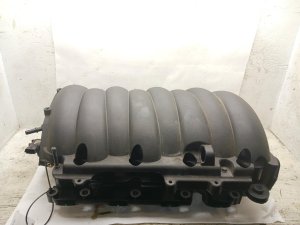
Aftermarket price range: $45-$85 - Intake Manifold Gaskets — For 2015-2016 models, the intake manifold must be removed to access the fuel rail pressure sensor. It is critical to replace the intake manifold gaskets during reassembly to prevent vacuum leaks.
Trusted brands: ACDelco, Fel-Pro
OEM price range: $40-$70
Aftermarket price range: $25-$50
Related Codes That Often Appear With This One
- P0192 — P0192 is 'Fuel Rail Pressure Sensor Circuit Low'. Seeing both P0192 and P0193 can indicate an intermittent wiring problem or a failing sensor that is fluctuating between open and shorted states. TSB #PIP5279A lists both codes together as a potential group.
- P0089 — P0089 is 'Fuel Pressure Regulator Performance'. This code often appears with P0193 because the ECM sees a pressure reading that doesn't match what the fuel pressure regulator is commanded to do, pointing to a systemic issue.
- P228C / P228D — These codes relate to 'Fuel Pressure Regulator Control Performance'. Like P0089, they indicate a problem with the fuel pressure control system and are often logged alongside sensor circuit faults like P0193, as noted in TSB #PIP5279A.
- P0300-P0308 — Misfire codes (e.g., P0302 for cylinder 2) can occur because the incorrect fuel pressure reading causes the ECM to deliver the wrong amount of fuel, leading to an improper air/fuel mixture and misfires.
Technical Service Bulletins (TSBs) & Recalls
- Bulletin #PIP5279A: Mentions that vehicles may store DTCs P0193, P0192, P0089, P228C, and others. Crucially, it advises technicians to replace the fuel rail pressure sensor (FRPS) if published service information diagnostics do not lead to a conclusive repair.
Platform-Specific Known Issues
- A GM Technical Service Bulletin (TSB), #PIP5279A, was issued for 2014-2016 models that experience a Service Engine Soon light with P0193, along with other fuel system codes. It advises following standard diagnostics and, if inconclusive, considering sensor replacement.
Mechanic-Grade Diagnostic Values
- Fuel Rail Pressure Sensor (FRPS) Signal Voltage (2015+ models) — expected: 1.5V - 1.8V with Key On, Engine Off (KOEO).. Failure: Voltage is stuck near 5.0V, or exceeds 4.75V for more than 1 second.
- Scan Tool High-Pressure Fuel Reading (2015+ models) — expected: 500-600 PSI at idle.. Failure: Reading is fixed at a high default value, such as 4,626 PSI, which occurs when the signal wire is shorted to the 5V reference.
- High-Pressure Fuel Reading During Cranking (2015+ models) — expected: 300-400 PSI.. Failure: Pressure is extremely low or does not build, which may point to other codes like P00C6 but provides context for the high-pressure system's health.
- Low-Side Fuel Pressure (2014 model) — expected: 55-62 PSI with Key On, Engine Off (KOEO) for non-Flex Fuel models.. Failure: Pressure is significantly outside this range, indicating a problem with the in-tank fuel pump or regulator.
Scan Tool Commands That Help
- GDS2 / High-Level Scan Tool: Fuel System Data Stream (Desired vs. Actual Fuel Rail Pressure) — This is a primary diagnostic step to see if the ECM's commanded pressure matches the actual pressure reported by the sensor. For P0193, you will likely see the 'Actual' value pegged at a maximum reading, while the 'Desired' value is much lower.
- GDS2 / High-Level Scan Tool: Fuel Pump Control — Allows the technician to command the low-pressure fuel pump on and off to verify its operation independently, helping to rule out issues with the low-pressure side of the system.
- GDS2: Camshaft Position Actuator Solenoid Valve Control — In cases of a crank-no-start accompanied by fuel pressure codes like P00C6, GM directs technicians to cycle the cam phaser solenoid. This can help unstick a phaser that may be affecting the high-pressure fuel pump's drive mechanism.
Wiring & Ground Locations
- FRPS Connector Wires (2015+) — At the Fuel Rail Pressure Sensor, located under the intake manifold in the engine valley.. Knowing the wire functions is critical for testing. On similar GM direct injection engines, the wires are typically Red (5V Reference), Orange (Signal), and Green (Ground). A short between the Red and Orange wires will cause a P0193.
- Frame Grounds (K2UG Platform) — Located on the frame rails behind both front wheels.. These are major chassis ground points. They are in a location prone to corrosion from wheel splash. A poor ground connection here can cause a variety of unpredictable electrical issues, including floating voltages in sensor circuits.
- Engine Block Ground — Main ground cable runs from the negative battery terminal to the engine block and frame.. This is the primary ground for the engine and its sensors. Corrosion or looseness at the engine block connection can create high resistance, affecting the ground reference for many sensors, including the FRPS.
- Engine Harness Chafe Points — General engine bay, particularly where the harness crosses over the camshaft cover or near brackets and the alternator.. GM has issued TSBs (e.g., 21-NA-149) for engine harness chafing on this truck platform. A wire-to-wire short within the harness could supply incorrect voltage to the FRPS signal circuit, triggering P0193 even if the sensor and its connector are fine.
OEM Part Supersession History
12623130→12673824— Standard part update for improved reliability or manufacturing process change.
Model Year Variations Within This Range
- 2014 (GMT900): Uses a port fuel injection system with a low-side fuel pressure of approximately 55-62 PSI. The fuel pressure sensor is typically easier to access.
- 2015-2016 (K2UG): Uses a direct injection system (EcoTec3) with both a low-pressure in-tank pump and a high-pressure mechanical pump. The P0193 code refers to the sensor on the high-pressure rail, which operates at much higher pressures (~500-600 PSI at idle). The sensor is located under the intake manifold, making replacement significantly more labor-intensive.
Helpful Videos
We Have This Part in Stock



The information in this article is provided for general reference and educational purposes only. Vehicle specifications, procedures, and part compatibility can vary by production date, trim level, and region. Always consult your vehicle's factory service manual and verify part numbers before purchasing or performing repairs. Safety-critical components such as airbags, seat belts, and braking systems should be installed by a qualified professional.
- Gmc YUKON XL:
- 🎬 Helpful Videos
- 🛍️ Shop This Part
- What's Unique About the 2014-2016 Gmc YUKON XL
- Diagnostic Flowchart
- Symptoms You May Notice
- Most Likely Causes
- Rare But Worth Checking
- Diagnosis Steps
- Parts You'll Likely Need
- Related Codes That Often Appear With This One
- Technical Service Bulletins (TSBs) & Recalls
- Platform-Specific Known Issues
- Mechanic-Grade Diagnostic Values
- Scan Tool Commands That Help
- Wiring & Ground Locations
- OEM Part Supersession History
- Model Year Variations Within This Range
- 🎟️ Get 5% Off