

P0193 on 2014-2016 Chevrolet Suburban: Fuel Rail Pressure Sensor High Input Causes & Fixes
On a 2014-2016 Suburban, P0193 indicates a high voltage signal from a fuel pressure sensor, typically over 4.75V. For 2015-2016 models with direct injection, this is likely the high-pressure sensor under the intake manifold, a labor-intensive repair. For the 2014 model, it's the more accessible sensor on the fuel line. Always inspect wiring for chafing near the ECM bracket or corrosion at the connector, as per GM service bulletins, before replacing the sensor.
- First, confirm if your Suburban is a 2014 model or a 2015-2016 model, as the faulty part and repair process are different.
- For 2015-2016 models, the likely culprit is the high-pressure sensor (ACDelco #12673824) under the intake manifold.
- For 2014 models, the likely culprit is the fuel line sensor (ACDelco #13516496) located under the vehicle.
- Always test the wiring for a short-to-power before replacing the sensor. A new sensor will not fix a wiring problem.
- Do not replace the expensive fuel pumps until the much more common sensor and wiring faults have been completely ruled out.
What's Unique About the 2014-2016 Chevrolet SUBURBAN
The 2014-2016 Suburban spans two different vehicle generations with completely different fuel systems, which is the key to diagnosing this code. The 2014 model (GMT900 platform) uses a standard port fuel injection system with a single pressure sensor on the low-pressure fuel line. The 2015-2016 models (K2XX platform) feature a direct injection (DI) engine (RPOs L83, L86) with two sensors: a low-pressure sensor and a high-pressure sensor on the fuel rail. For these newer models, P0193 almost always refers to a problem with the high-pressure fuel rail sensor or its circuit.
Diagnostic Flowchart
Tap your situation to follow the diagnostic path that matches what you're seeing on this vehicle.
Generation note: This range covers two Suburban generations. The 2014 model is the final year of the 11th generation (GMT900 platform), which uses a port-injection fuel system. The 2015-2016 models are the first years of the 12th generation (K2XX platform), which use a direct-injection (DI) fuel system with engines like the 5.3L L83 and 6.2L L86. The cause and repair for P0193 are different between these generations.
Symptoms You May Notice
- Check Engine Light is on
- Engine is hard to start or requires long crank times.
- Rough idle or stalling, sometimes stalling immediately after starting.
- Hesitation, surging, or stumbling during acceleration.
- Reduced engine power and performance, possible 'limp mode'.
- Noticeable smell of fuel or black smoke from the exhaust, indicating a rich condition.
- Decreased fuel economy.
- Replacing the high-pressure fuel pump (on 2015-2016 models) before confirming the sensor or wiring is the fault. The pump is significantly more expensive and less likely to cause a purely electrical circuit code like P0193.
- Replacing the in-tank low-pressure fuel pump. This pump is unlikely to cause a 'Circuit High' fault on the rail pressure sensor.
- Replacing the ECM before thoroughly inspecting the wiring harness for chafing, as warned in GM service bulletins.
Most Likely Causes
- Faulty High-Pressure Fuel Rail Sensor (2015-2016 Models) 🔴 High Probability This sensor is part of the direct injection system and is identified in GM Technical Service Bulletin #PIP5279A as a likely culprit when diagnostics are inconclusive for a range of fuel pressure codes.
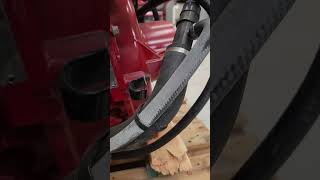
How to confirm: Using a scan tool, observe the fuel rail pressure reading with the key on, engine off. If it shows an abnormally high, fixed value (e.g., 4,000+ PSI) or a voltage reading stuck above 4.75V 🎬 Watch: How to test GM Gen V fuel rail pressure, the sensor or its circuit is faulty. Test the sensor's wiring before replacement.
Typical fix: Replace the high-pressure fuel rail sensor located under the intake manifold. This requires removing the intake manifold for access.
Est. part cost: $70-$160 - Wiring Harness or Connector Issue 🟡 Medium Probability GM has issued bulletins (e.g., 21-NA-149) for the K2XX platform regarding engine harness chafing. The harness can rub against sharp edges on the ECM/TCM bracket, upper control arm, or shock tower, causing a short to voltage. Additionally, TSB 20-NA-197 notes that corrosion within the sensor's electrical connector can cause this fault.
How to confirm: Visually inspect the sensor connector for corrosion or blackening from dielectric grease breakdown. Carefully inspect the wiring harness loom for chafing, especially where it routes near the back of the engine and around metal brackets. Perform a continuity test and check for a short to power on the signal wire with the sensor disconnected.
Typical fix: Repair the damaged section of the wiring harness or replace the connector pigtail (GM Part #19367009 mentioned in TSB 20-NA-197). Secure the repaired harness away from sharp edges.
Est. part cost: $15-$50 - Faulty Fuel Line Pressure Sensor (2014 Models) 🔴 High Probability As the primary sensor for the port-injection fuel system, this component's failure directly impacts engine operation and is a common point of failure for fuel pressure related codes on the GMT900 platform.
How to confirm: Monitor the fuel pressure reading on a scan tool. If the value is stuck high or does not correlate with actual pressure (measured with a mechanical gauge), the sensor is likely bad. Test the wiring for shorts.
Typical fix: Replace the fuel pressure sensor located on the fuel line, typically under the vehicle near the driver's side.
Est. part cost: $40-$100 - Faulty Engine Control Module (ECM) ⚪ Low Probability
How to confirm: Requires professional-level diagnostics to rule out all other possibilities. If a known-good sensor and perfect wiring still result in the code, the ECM's internal circuit may be at fault.
Typical fix: Replace and reprogram the Engine Control Module.
Est. part cost: $400-$800
Diagnosis Steps
- Depressurize the fuel system before disconnecting any fuel lines. This can be done by removing the fuel pump relay and running the engine until it stalls.
- Connect an OBD-II scanner and confirm P0193 is the primary code. Note any other codes present.
- View live data on the scanner. Observe the 'Fuel Rail Pressure' (FRP) and its corresponding voltage with the key on, engine off. A reading that is stuck at a very high number or a voltage above 4.75V indicates a circuit high fault.
- Identify your vehicle's generation. For 2015-2016 models, locate the high-pressure sensor on the fuel rail at the back of the engine, under the intake manifold. For 2014 models, locate the sensor on the fuel line under the vehicle.
- Visually inspect the sensor's electrical connector for corrosion, damage, or loose connections. Also inspect the engine wiring harness for signs of chafing against the engine, frame, or brackets.
- Disconnect the sensor. The live data voltage reading on the scan tool should change to a very low value (near 0.02V). If the reading stays high, there is a short to power in the wiring harness that must be found and repaired.
- If the reading drops when disconnected, use a multimeter to check for a 5-volt reference and a good ground at the connector.
- If the wiring and connector are confirmed to be good, the fuel pressure sensor itself is the most likely cause of the problem.
- Replace the appropriate sensor for your model year.
Parts You'll Likely Need
- High-Pressure Fuel Rail Sensor (2015-2016 Models)
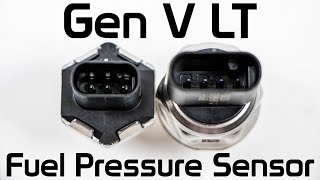
(OEM #12673824)— This is the primary sensor for the direct injection system 🎬 Learn more about how Gen V LT fuel sensors work and is the most common failure point for P0193 on the K2XX platform, as suggested by GM's TSB PIP5279A.
Trusted brands: ACDelco, Bosch
OEM price range: $75-$160
Aftermarket price range: $50-$110 - Fuel Line Pressure Sensor (2014 Models)
(OEM #13516496)— This is the main fuel pressure sensor for the port-injection system on the GMT900 platform and is the primary cause of P0193 for this model year.
Trusted brands: ACDelco, Delphi, Standard Motor Products
OEM price range: $45-$100
Aftermarket price range: $30-$60
Related Codes That Often Appear With This One
- P0192 — This is the opposite code, 'Fuel Rail Pressure Sensor Circuit Low'. Seeing both or either points to an intermittent problem with the same sensor or circuit.
- P0089 — This code for 'Fuel Pressure Regulator Performance' is often triggered alongside P0193, as noted in GM TSB #PIP5279A.
- P228C — 'Fuel Pressure Regulator 1 Exceeded Control Limits - Pressure Too Low.' This is also listed in TSB #PIP5279A and indicates the system is struggling to maintain correct pressure, often due to faulty sensor readings.
- P069E — Indicates the Fuel Pump Control Module (FPCM) has detected a fault. A bad fuel pressure sensor reading can cause the FPCM to log a fault.
Technical Service Bulletins (TSBs) & Recalls
- PIP5279A: For 2014-2015 models with DI engines (L83, L86, etc.), this bulletin groups P0193 with other fuel pressure codes and advises replacing the Fuel Rail Pressure Sensor (FRPS) if standard diagnostic procedures are inconclusive.
Platform-Specific Known Issues
- The most significant issue is the mid-cycle platform change. The 2014 (GMT900) and 2015-2016 (K2XX) Suburbans have different fuel systems, requiring different parts and repair procedures for the same code.
- On 2015-2016 models, replacement of the high-pressure sensor is labor-intensive, requiring the removal of the intake manifold.
- The engine wiring harness on 2015-2016 K2XX models is known to be susceptible to chafing against the ECM/TCM bracket and other sharp edges, which can cause a short circuit and trigger a P0193 code. This should be inspected before replacing parts.
Mechanic-Grade Diagnostic Values
- Fuel Rail Pressure Sensor (FRPS) 5-Volt Reference Circuit (2015-2016) — expected: 4.8V - 5.2V between the 5V reference circuit terminal and ground.. Failure: Voltage outside this range points to a wiring issue or a fault in the ECM.
- Fuel Rail Pressure Sensor (FRPS) Low Reference Circuit (2015-2016) — expected: Less than 5 ohms of resistance between the low reference circuit terminal and a known good ground.. Failure: Resistance higher than 5 ohms indicates an open or high resistance in the ground circuit.
- Fuel Rail Pressure Sensor (FRPS) Signal Voltage, KOEO (2015-2016) — expected: Approximately 1.5V to 1.8V with Key On, Engine Off.. Failure: A reading above 4.5V, especially near 5V, indicates a short to voltage or a faulty sensor. The ECM will set P0193 if the voltage is high for more than 6 seconds.
- Scan Tool FRPS Voltage with Sensor Disconnected (2015-2016) — expected: Less than 0.02V.. Failure: If the voltage remains high after disconnecting the sensor, there is a short to power in the signal wire of the harness.
- High-Side Fuel Pressure at Idle (2015-2016) — expected: 500 - 1,000 PSI.. Failure: While P0193 is an electrical code, pressure readings that are nonsensically high (e.g., maxed out on the scan tool) confirm the sensor is reporting an invalid value.
Scan Tool Commands That Help
- GDS2 / Professional Scan Tool: Fuel Pump Enable/Disable — This function is used to safely relieve fuel system pressure before opening any lines, such as when replacing the fuel rail pressure sensor. By disabling the pump and running the engine until it stalls, pressure is bled from the system.
- GDS2 / Professional Scan Tool: Fuel Rail Pressure Test — While more useful for low-pressure codes, this function can command maximum rail pressure at idle. It helps test the overall health of the high-pressure system, though P0193 is typically an electrical fault.
Wiring & Ground Locations
- B47 Fuel Rail Pressure Sensor Connector (2015-2016) — On the high-pressure fuel rail, at the rear of the engine, underneath the intake manifold.. This is the 3-pin connector for the sensor. Pin A is the 5V Reference, Pin C is the Low Reference (ground), and the center pin is the signal wire. Testing voltage and resistance at this connector is a primary diagnostic step.
- ECM Connector X2 (2015 L83 Engine) — The Engine Control Module is located on the driver's side of the engine bay.. The fuel rail pressure sensor wires terminate here. Specifically for the high-pressure sensor: the 5V reference is on Pin 24 (Brown/Red), the signal is on Pin 8 (Black/Yellow), and the low reference is also on Pin 8. This information is critical for checking wire continuity from the sensor to the ECM.
- G103 / G104 (Engine Grounds) — G103 is on the front of the passenger side cylinder head. G104 is on the rear of the driver's side cylinder head.. Poor engine grounds can cause a variety of sensor issues and electrical noise. While not a direct cause of a 'circuit high' fault (which is usually a short to power), ensuring these main engine grounds are clean and tight is a foundational step in any electrical diagnosis.
Real Owner Repair Stories
- Tahoe Yukon Forum (2015 Chevrolet Suburban) — Reduced engine power, code P0191 (Fuel Rail Pressure Sensor Performance) initially.
❌ Tried (didn't work) Replaced nearly the entire fuel system, Replaced the ECU
✅ What actually fixed it The user's problem was related to the fuel rail pressure sensor circuit. Although the specific final fix isn't detailed as P0193, the experience of replacing many expensive components without success highlights the importance of correctly diagnosing the sensor and its specific circuit before replacing the ECU or fuel pumps.
OEM Part Supersession History
12623130→12673824— Standard part update/revision by GM.
Heads up: The mating connector for this sensor is sometimes required, referenced as GM part number PT2923 or 13587299.
Helpful Videos
We Have This Part in Stock



The information in this article is provided for general reference and educational purposes only. Vehicle specifications, procedures, and part compatibility can vary by production date, trim level, and region. Always consult your vehicle's factory service manual and verify part numbers before purchasing or performing repairs. Safety-critical components such as airbags, seat belts, and braking systems should be installed by a qualified professional.
- Chevrolet SUBURBAN:
- 🎬 Helpful Videos
- 🛍️ Shop This Part
- What's Unique About the 2014-2016 Chevrolet SUBURBAN
- Diagnostic Flowchart
- Symptoms You May Notice
- Most Likely Causes
- Diagnosis Steps
- Parts You'll Likely Need
- Related Codes That Often Appear With This One
- Technical Service Bulletins (TSBs) & Recalls
- Platform-Specific Known Issues
- Mechanic-Grade Diagnostic Values
- Scan Tool Commands That Help
- Wiring & Ground Locations
- Real Owner Repair Stories
- OEM Part Supersession History
- 🎟️ Get 5% Off