

P0193 on 2009-2017 Audi Q5 3.0L TDI: Fuel Rail Pressure Sensor Circuit High
On the Audi Q5 3.0L TDI, code P0193 almost always points to a faulty Fuel Rail Pressure Sensor (G247), part number 05A906051. This sensor sends an abnormally high voltage signal (typically over 4.8V) to the engine computer, often causing sudden stalling, hard starting, or limp mode. Replacing the sensor is the most common fix, with quality OEM-brand parts costing between $70 and $200.
- P0193 on your Audi Q5 3.0L TDI indicates an electrical fault in the fuel rail pressure sensor circuit, with the sensor itself being the most common culprit.
- Key symptoms include engine stalling, hard starting, a flashing glow plug light, and rough idling.
- Do not continue to drive the vehicle, as the engine could shut down unexpectedly, posing a serious safety risk.
- Diagnosis involves checking the sensor's voltage output with a scan tool (expect >4.8V with KOEO) and inspecting the wiring for damage.
- Replacing the Fuel Rail Pressure Sensor (G247), part number 05A906051, is the most probable fix.
What's Unique About the 2009-2017 Audi Q5
The 3.0L TDI engine uses a high-pressure common rail fuel system that is critical for its performance and efficiency. The Fuel Rail Pressure Sensor (G247) is a key component in this system. While sensor failure is common across many modern diesel engines, on the Audi platform, it's a frequent culprit for drivability issues like stalling and hesitation. Owners often report that a faulty G247 sensor can cause sudden engine shutdown, creating a significant safety concern. This issue is shared across other VAG products using the same 3.0L TDI engine, such as the VW Touareg and Porsche Cayenne Diesel.
Symptoms You May Notice
- Check Engine Light is on
- Flashing glow plug light on the dashboard
- Engine stalling, sometimes suddenly while driving
- Hard starting or no-start condition
- Rough or unstable idle
- Hesitation and poor acceleration
- Reduced engine power or 'limp mode'
- Increased fuel consumption
- Replacing the high-pressure fuel pump (HPFP) when only the sensor is at fault.
- Replacing the fuel pressure regulator (N276) when the issue is electrical (circuit high) rather than mechanical (pressure too high). A P0193 code specifically points to an electrical fault in the sensor circuit. 🎬 Watch: How to diagnose a P019300 circuit high fault
Most Likely Causes
- Faulty Fuel Rail Pressure Sensor (G247) 🔴 High Probability The sensor is a sensitive electronic component operating in a high-pressure, high-heat environment, making it a common failure point over time. Internal electronics can short, causing the signal voltage to stick high.
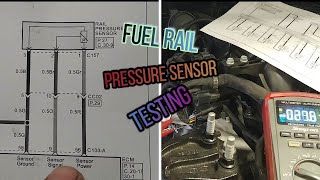
How to confirm: With the ignition on and engine off (KOEO), use a VCDS or other advanced diagnostic scanner to read live data from the fuel rail pressure sensor. If the voltage reads abnormally high (e.g., close to 5.0V, specifically >4.8V) or the pressure reading is nonsensical (e.g., showing high pressure when the engine is off), the sensor is almost certainly faulty. You can also backprobe the sensor's signal wire with a multimeter to verify the high voltage reading.
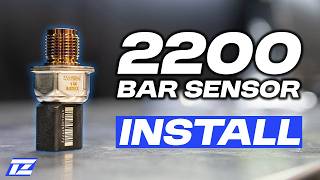
Typical fix: Replace the fuel rail pressure sensor. This requires relieving the high-pressure fuel system first to prevent injury or fire. Access to the sensor on the fuel rail can be tight. Ensure the new sensor is a quality OEM brand like Bosch to avoid premature failure. 🎬 Watch: How to install a new rail pressure sensor
Est. part cost: $70 - $200 - Wiring Harness or Connector Issue 🟡 Medium Probability Engine vibrations and heat can cause wiring insulation to degrade or connector pins to become loose or corroded over time. A short circuit between the signal wire and the 5V reference wire is a common cause for a 'circuit high' fault.
How to confirm: Visually inspect the wiring harness and connector leading to the fuel rail pressure sensor for any signs of damage, melting, or corrosion. Perform a wiggle test on the harness while monitoring the sensor's live data on a scan tool; any fluctuations indicate a wiring fault. With the sensor disconnected, use a multimeter to check for voltage on the signal wire; there should be none. If there is voltage, there is a short to power somewhere in the harness.
Typical fix: Repair the damaged section of wiring or replace the connector pigtail. This can involve soldering in a new section of wire and heat-shrinking for protection.
Est. part cost: $20 - $50
Rare But Worth Checking
- Faulty Engine Control Module (ECM): This is extremely rare. An internal failure in the ECM's analog-to-digital converter could misinterpret the sensor's signal. Before condemning the ECM, all other possibilities, including the sensor and its entire circuit, must be exhaustively tested and ruled out. Some specialized services can test the ECM.
Diagnosis Steps
- Connect an OBD-II scanner (VCDS is recommended for VAG vehicles) and confirm that P0193 is the active code. Record any other codes present and review freeze-frame data.
- Use the scanner to view live data. Observe the 'Fuel Rail Pressure' reading and the corresponding sensor voltage with the Key On, Engine Off (KOEO). A P0193 code is typically set when this voltage is abnormally high, often above 4.8V. The pressure should read near zero with the engine off.
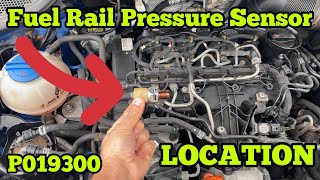
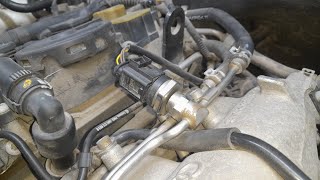
- Visually inspect the fuel rail pressure sensor (G247) and its electrical connector. Look for any signs of damage, corrosion, fluid intrusion, or loose connections.
- Disconnect the sensor connector. Check for 5V reference voltage and a good ground at the connector terminals using a multimeter. The third wire is the signal wire.
- Inspect the signal wire for a short to voltage. With the sensor disconnected, the signal wire at the ECM side should not have voltage present. If it does, there is a short in the harness that must be traced.
- If the 5V reference and ground are good, and there are no visible wiring issues, the fuel rail pressure sensor is the most likely cause of the fault.
- Before replacing, it's critical to relieve the fuel pressure from the rail. This can be done by pulling the fuel pump fuse and running the engine until it stalls, or by using a scan tool function if available. Always wear safety glasses when working with the fuel system.
- If a new, high-quality sensor does not resolve the issue, a more in-depth diagnosis of the wiring harness for an intermittent short circuit is required. In very rare cases, the ECM itself may be the problem.
Parts You'll Likely Need
- Fuel Rail Pressure Sensor
(OEM #05A906051)— This sensor is the most common failure point for a P0193 code, as it directly measures fuel rail pressure and its internal electronics can fail, causing a high voltage signal.
Trusted brands: Bosch, OEM Audi/VW, Vemo
OEM price range: $150-$200
Aftermarket price range: $70-$120
Related Codes That Often Appear With This One
- P0088 — P0088 (Fuel Rail/System Pressure - Too High) can sometimes appear with P0193. While P0193 points to an electrical circuit fault, a sensor failing 'high' can be interpreted by the ECM as a genuine high-pressure event, triggering P0088 as well.
- P0192 — P0192 is the opposite code, 'Fuel Rail Pressure Sensor Circuit Low.' Seeing codes for both high and low input can indicate an intermittent wiring problem, a loose connector, or a completely failed sensor sending erratic signals.
- P0191 — P0191 (Fuel Rail Pressure Sensor Circuit Range/Performance) indicates the sensor's reading is irrational compared to other engine data. This often accompanies P0193 as the sensor begins to fail, pointing directly to the sensor or its circuit as the problem.
Technical Service Bulletins (TSBs) & Recalls
- While no TSB is specific to only P0193, Volkswagen TSB 23 17 02 for the identical 3.0L TDI engine in the Touareg covers diagnosis for a group of fuel pressure codes including P0088 and P0191, which are highly relevant and often appear with P0193. The procedure outlines a detailed fuel system diagnosis.
Platform-Specific Known Issues
- Owner Experience: Sudden Stall Resolved by Sensor Replacement: A user on a TDI forum described an incident where their Q5 3.0L TDI stalled abruptly in traffic and threw a P0193 code. After confirming the sensor was reading maximum pressure even with the engine off, they replaced the G247 sensor (part # 05A906051), which completely resolved the stalling and hard-start issues.
Diagnostic Flowchart
Other Known Issues on This Vehicle
Issues unrelated to this code that are worth knowing about as an owner of this generation:
- Oil Cooler and Seal Leaks 🔴 High — Very common as the vehicle ages, typically over 80,000 miles. Seals degrade causing oil or coolant to leak into the engine valley.
- Timing Chain Tensioner Wear 🔴 High — Can become an issue at higher mileage (100k+ miles), often exacerbated by extended oil change intervals. Symptoms include a rattling noise on cold startup.
- High-Pressure Fuel Pump (HPFP) Failure 🔴 High — While not as common as on earlier TDI engines, the Bosch CP4 pump can still fail, potentially sending metal debris through the entire fuel system, requiring a very expensive repair.
- Carbon (Soot) Buildup 🟠 Medium — Inherent to TDI engines, especially with frequent short trips. Carbon can clog the intake manifold and EGR system, leading to reduced performance.
- Leaking Panoramic Sunroof Drains 🟠 Medium — Common across all Q5 models of this generation. Clogged sunroof drains can lead to water leaking into the cabin, potentially damaging electronics.
Real Owner Stories
Aggregated from forums and TSBs cited above. Mileages and costs reflect what owners reported in those sources.
Audi Q5 3.0L TDI
Symptoms: The vehicle stalled abruptly in traffic and threw a P0193 code. The sensor was reading maximum pressure even with the engine off.
What fixed it: Replacement of the G247 sensor (part # 05A906051).
Source hint: Vehicle-specific issues: Owner Experience: Sudden Stall Resolved by Sensor Replacement
Audi Q5 3.0L TDI
Symptoms: Intermittent no-start conditions and stalling.
What fixed it: Replacing the G247 fuel rail pressure sensor.
Source hint: AudiWorld Forums
Audi Q5 3.0L TDI
Symptoms: Received a P0193 'short to plus' fault immediately after installing a new replacement sensor.
What fixed it: Replacing the faulty new sensor with a high-quality OEM part.
Source hint: Ross-Tech Forums
Related OBD-II Codes
Frequently Asked Questions
What is the specific part number for the fuel rail pressure sensor on my Audi Q5 3.0L TDI?
Does Volkswagen TSB 23 17 02 apply to my Audi Q5 3.0L TDI?
Why is my Q5 stalling suddenly and showing a flashing glow plug light?
Can I test the G247 sensor with VCDS before buying a new one?
Is the P0193 code related to the HPFP failure issues on the 3.0L TDI?
What should I check if a new sensor doesn't fix the P0193 'short to plus' fault?
Helpful Videos
We Have This Part in Stock


The information in this article is provided for general reference and educational purposes only. Vehicle specifications, procedures, and part compatibility can vary by production date, trim level, and region. Always consult your vehicle's factory service manual and verify part numbers before purchasing or performing repairs. Safety-critical components such as airbags, seat belts, and braking systems should be installed by a qualified professional.
- Audi Q5:
- 🎬 Helpful Videos
- 🛍️ Shop This Part
- What's Unique About the 2009-2017 Audi Q5
- Symptoms You May Notice
- Most Likely Causes
- Rare But Worth Checking
- Diagnosis Steps
- Parts You'll Likely Need
- Related Codes That Often Appear With This One
- Technical Service Bulletins (TSBs) & Recalls
- Platform-Specific Known Issues
- Diagnostic Flowchart
- Other Known Issues on This Vehicle
- Real Owner Stories
- Audi Q5 3.0L TDI
- Audi Q5 3.0L TDI
- Audi Q5 3.0L TDI
- Related OBD-II Codes
- Frequently Asked Questions
- 🎟️ Get 5% Off