

P0192 on 2014-2016 GMC Yukon: Fuel Rail Pressure Sensor Circuit Low Causes & Fixes
On a 2014-2016 GMC Yukon, code P0192 most often indicates a faulty fuel rail pressure sensor (FRPS) or a problem with its wiring. The PCM has detected the sensor's voltage signal is below its specified range, typically under 0.5V. A GM Technical Service Bulletin (PIP5279A) suggests replacing the sensor, OEM part number 12673824, if initial diagnostics are inconclusive. Expect to pay $70-$120 for the OEM sensor.
- P0192 on a 2014-2016 Yukon means the fuel rail pressure sensor circuit has a low voltage reading.
- The most likely cause is a failed Fuel Rail Pressure Sensor (FRPS), a fact supported by a GM Technical Service Bulletin.
- The second most likely cause is a wiring issue, such as a damaged wire or corroded connector.
- If the code appears after engine work, check for two swapped harness connectors on top of the engine before replacing any parts.
- The correct OEM replacement sensor is GM/ACDelco part #12673824.
What's Unique About the 2014-2016 Gmc YUKON
The 2014-2016 GMC Yukon uses a Gasoline Direct Injection (GDI) fuel system, which operates at much higher pressures (over 2,000 PSI) than older port injection systems. For this specific platform (GM's K2XX), General Motors issued Technical Service Bulletin #PIP5279A. The bulletin acknowledges a pattern of fuel pressure codes (including P0192, P0089, P228C) and advises technicians to replace the fuel rail pressure sensor if standard diagnostic procedures don't pinpoint another cause, indicating the sensor itself is a very common failure point.
Diagnostic Flowchart
Tap your situation to follow the diagnostic path that matches what you're seeing on this vehicle.
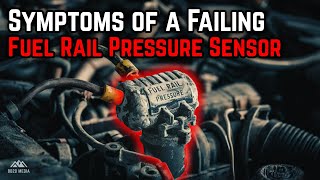
Symptoms You May Notice
- Check Engine Light is on
- Engine is hard to start or requires long cranking time
- Engine cranks but will not start
- Lack of engine power and hesitation during acceleration
- Rough idle or stalling
- Reduced fuel economy
- Engine goes into "limp mode" with reduced power
- Replacing the in-tank (low-pressure) fuel pump when the issue is with the high-pressure system (sensor, high-pressure pump, or wiring).
- Replacing the fuel rail pressure sensor without first checking for simple wiring issues like a corroded connector or a swapped harness plug after recent repairs.
Most Likely Causes
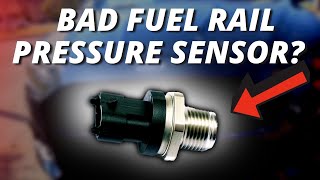
- Faulty Fuel Rail Pressure Sensor (FRPS) 🔴 High Probability A specific GM Technical Service Bulletin (PIP5279A) for this vehicle generation points to the FRPS as a likely culprit, recommending its replacement if other diagnostics are inconclusive. These sensors can fail internally, causing a short that pulls the signal voltage to ground.
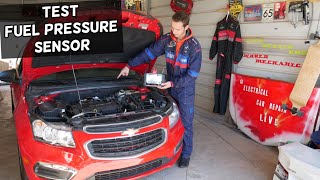
How to confirm: After verifying the wiring is intact, test the sensor's output voltage with a multimeter or advanced scan tool. If the voltage is stuck low (typically below 0.5V) regardless of engine state, the sensor has failed. Unplugging the 🎬 Watch: How to test the fuel pressure sensor with a multimeter. sensor should cause the voltage on the signal wire to jump to 5V; if it does, the sensor is bad. If it stays low, the wiring is the issue.
Typical fix: Replace the fuel rail pressure sensor. The OEM part is ACDelco #12673824 (which supersedes #12623130).
Est. part cost: $70-$120 for OEM - Wiring or Connector Issue 🟡 Medium Probability The wiring harness is subject to heat and vibration in the engine bay, which can lead to chafing, breaks, or corrosion in the connector pins over time. A user on the Chevy Forums reported P0192 appearing only after it rains, indicating a moisture-related short in the harness.
How to confirm: Visually inspect the wiring harness leading to the FRPS for any signs of damage, melting, or corrosion. Use a multimeter to check for the correct 5-volt reference and a good ground at the sensor connector. A reading of 0V on the reference wire or high resistance on the ground wire points to a wiring fault.
Typical fix: Repair the damaged section of the wiring harness or clean/replace the electrical connector. Applying dielectric grease can prevent future moisture intrusion.
Est. part cost: $5-$50 - Failing High-Pressure Fuel Pump ⚪ Low Probability While the code points to an electrical circuit fault, a failing high-pressure fuel pump (HPFP) can sometimes cause erratic pressure that the PCM misinterprets. The HPFP is a mechanical component that can wear out, especially over 100,000 miles.
How to confirm: This is typically diagnosed after replacing the FRPS and verifying wiring is good. A scan tool showing desired vs. actual fuel pressure can reveal a discrepancy. A mechanical gauge capable of reading GDI pressures is required for definitive diagnosis.
Typical fix: Replace the high-pressure fuel pump. This is a more involved and expensive repair.
Est. part cost: $200-$500
Rare But Worth Checking
- Swapped Wiring Harness Connectors: A well-documented case on a 2016 Silverado (same platform) showed that two main harness connectors on top of the engine were accidentally swapped during an engine replacement. These connectors are physically identical and can be interchanged, which reverses the polarity to the FRPS (ground on the 5V reference pin). This causes an immediate P0192 and a no-start. This is a crucial check if the code appears immediately after major engine work.
- Powertrain Control Module (PCM) Failure: While uncommon, the PCM itself can fail and be unable to correctly interpret the signal from the sensor. This should only be considered after all other possibilities, including wiring and the sensor itself, have been exhaustively ruled out.
Diagnosis Steps
- Scan for all stored DTCs. Note any other codes that appear alongside P0192, especially those listed in TSB PIP5279A (P0193, P0089, P228C, etc.).
- Perform a thorough visual inspection of the fuel rail pressure sensor and its wiring harness. Look for any obvious signs of damage, chafed wires, or corrosion on the connector pins. Pay special attention to areas where the harness might rub against the engine.
- With the key on and engine off, use a multimeter to test the sensor's connector (with it unplugged). Verify you have a 5-volt reference wire and a proper ground wire (less than 1 ohm of resistance to chassis ground). If 5V is not present, check for a swapped connector if recent work was done.
- If power and ground are good, reconnect the sensor and measure the signal wire's voltage (or view it on a scan tool). A reading below 0.5 volts typically indicates a faulty sensor or a short in the signal wire. A good sensor should read around 1.5V-1.8V with the key on, engine off.
- If wiring and sensor voltage seem inconclusive, follow the advice of TSB PIP5279A and replace the Fuel Rail Pressure Sensor (ACDelco #12673824).
- If the code persists after replacing the sensor, test the actual fuel pressure using a mechanical gauge capable of reading high GDI pressures to rule out a problem with the high-pressure fuel pump.
- As a final step, if all other components test good, the PCM may need to be tested or reprogrammed.
Parts You'll Likely Need
- Fuel Rail Pressure Sensor
(OEM #12673824)— This is the most common cause of P0192 on this platform, as identified by owner experiences and a manufacturer TSB. The OEM part is manufactured by GM/ACDelco and supersedes part number 12623130.
Trusted brands: ACDelco (OEM), Bosch, Delphi, Standard Motor Products
OEM price range: $70-$120
Aftermarket price range: $40-$80
Related Codes That Often Appear With This One
- P0193 — This code is for 'Fuel Rail Pressure Sensor Circuit High Input'. Seeing it with P0192 can indicate an intermittent wiring problem or a failing sensor sending erratic signals.
- P0089 — This code relates to 'Fuel Pressure Regulator Performance'. It often appears with FRPS codes because the PCM uses the sensor's data to control the regulator. It is also listed in TSB PIP5279A.
- P228C — 'Fuel Pressure Regulator 1 Exceeded Control Limits - Force Low'. This is another code mentioned in the same TSB as P0192 and points to a fuel pressure control problem.
- P127C — This is another fuel rail pressure related code that was present in the real-world example of swapped harness connectors on a 2016 Silverado.
Technical Service Bulletins (TSBs) & Recalls
- Bulletin #PIP5279A: Mentions that for concerns of an SES lamp with codes P0192, P0193, P0089, P228C, and others, if diagnostics are inconclusive, the Fuel Rail Pressure Sensor (FRPS) should be replaced. This applies to 2014-2015 Yukon, Sierra, Tahoe, Silverado and others with 4.3L, 5.3L, and 6.2L engines.
Platform-Specific Known Issues
- A known issue, documented in TSB #PIP5279A, involves a group of fuel pressure codes including P0192. The bulletin recommends replacing the fuel rail pressure sensor if other diagnostics fail to find a fault.
- Following major engine service, it is possible for two large wiring harness connectors near the fuel rail to be swapped, which will cause a P0192 code and a no-start condition.
- A user on a Chevrolet forum with a 2016 Silverado (same platform) reported the P0192 code only appears after rainfall, suggesting a vulnerability to moisture in the sensor's wiring harness or connector.
Mechanic-Grade Diagnostic Values
- Fuel Rail Pressure Sensor (FRPS) Signal Voltage — expected: 1.5V - 1.8V (Key On, Engine Off). Failure: Voltage below 0.5V or stuck at 0V indicates a short to ground or bad sensor. Voltage stuck at 5V indicates an open circuit.
- FRPS 5V Reference Voltage — expected: Approximately 5.0V at the sensor connector with key on.. Failure: 0V indicates an open in the reference circuit or a swapped connector.
- FRPS Ground Circuit — expected: Near 0V / less than 1 ohm resistance to chassis ground.. Failure: High resistance or voltage on the ground pin indicates a bad ground connection.
- High-Pressure Fuel Rail Pressure (Scan Tool) — expected: Approx. 500-600 PSI at idle.. Failure: Significantly lower pressure may indicate a mechanical pump or fuel supply issue.
- High-Pressure Fuel Rail Pressure (Cranking) — expected: Approx. 300-400 PSI while cranking.. Failure: Pressure that is very low or drops off quickly during cranking can indicate a problem with the high-pressure pump or cam actuator timing.
Scan Tool Commands That Help
- GDS2 (GM Dealer Scan Tool): Camshaft Position Actuator Solenoid Valve Control — In a crank-no-start situation where P0192 is accompanied by P00C6, cycling the cam phaser solenoid can help rule out a stuck actuator that is affecting high-pressure fuel pump operation.
- Advanced Scan Tool (e.g., iCarsoft CR MAX): Sensor Relearn / Fuel System Relearn — After replacing the fuel rail pressure sensor, a relearn procedure may be required to calibrate the new sensor to the ECM for accurate readings.
Wiring & Ground Locations
- Fuel Rail Pressure Sensor (FRPS) — On the high-pressure fuel rail, which is located under the intake manifold on the 5.3L and 6.2L V8 engines.. This is the primary sensor for the P0192 code. Its location under the intake manifold makes access difficult and labor-intensive.
- G103 (Engine Ground) — On the front of the passenger side (right side) cylinder head.. This is a critical ground point for engine sensors. A poor connection at G103 can cause erratic sensor readings and trigger various codes, including P0192.
- G101 (Engine Block Ground) — Located at the left front of the engine, lower block. Grounds the Engine Control Module (ECM).. As the primary ground for the ECM, a fault at G101 can cause a wide range of issues, including incorrect interpretation of sensor data like the FRPS.
- Swappable Harness Connectors — Two large, physically identical harness connectors located on top of the engine, near the fuel rail, that connect the injector/sensor harnesses to the main engine harness.. These connectors can be accidentally swapped during major engine work (like an engine replacement), which reverses the polarity to the FRPS, causing an immediate P0192 and a no-start condition.
Real Owner Repair Stories
- YouTube channel 'Pine Hollow Auto Diagnostics' (2016 Chevrolet Silverado 1500 5.3L V8) — Cranks but will not start.
❌ Tried (didn't work) The shop that replaced the engine was unable to diagnose the no-start condition.
✅ What actually fixed it Two main wiring harness connectors on top of the engine were swapped. The connectors were physically identical and could be plugged into the wrong mate. Correcting the connectors restored the 5V reference to the fuel rail pressure sensor and the truck started immediately.
OEM Part Supersession History
12623130→12673824— Standard part update/revision by General Motors.
Heads up: The parts are interchangeable for the specified 2014-2016 model years.
Model Year Variations Within This Range
- 2016-2017 (transition period): General Motors transitioned from a 4-wire fuel pressure/temperature combination sensor to a 3-wire fuel pressure-only sensor on the Gen V engines. While the 2014-2016 Yukon should have the same sensor, this is a critical point of awareness for anyone swapping engines or harnesses from a slightly different model year, as the harness and sensor must match.
Helpful Videos
We Have This Part in Stock


The information in this article is provided for general reference and educational purposes only. Vehicle specifications, procedures, and part compatibility can vary by production date, trim level, and region. Always consult your vehicle's factory service manual and verify part numbers before purchasing or performing repairs. Safety-critical components such as airbags, seat belts, and braking systems should be installed by a qualified professional.
- Gmc YUKON:
- 🎬 Helpful Videos
- 🛍️ Shop This Part
- What's Unique About the 2014-2016 Gmc YUKON
- Diagnostic Flowchart
- Symptoms You May Notice
- Most Likely Causes
- Rare But Worth Checking
- Diagnosis Steps
- Parts You'll Likely Need
- Related Codes That Often Appear With This One
- Technical Service Bulletins (TSBs) & Recalls
- Platform-Specific Known Issues
- Mechanic-Grade Diagnostic Values
- Scan Tool Commands That Help
- Wiring & Ground Locations
- Real Owner Repair Stories
- OEM Part Supersession History
- Model Year Variations Within This Range
- 🎟️ Get 5% Off